
NEWS
Ogun Deep Seaport: Abiodun Thanks Tinubu, Says 30-Year Dream Becoming Reality

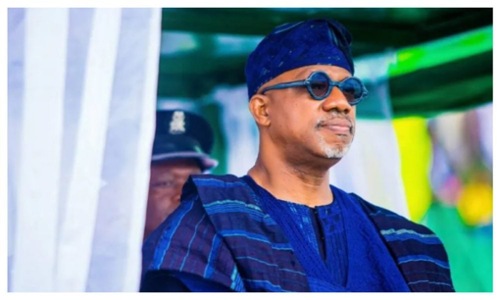
Ogun State Governor, Dapo Abiodun, has expressed appreciation to President Bola Ahmed Tinubu for his support towards the realisation of the Gateway Deep Seaport and Blue Marine Special Economic Zone in the state.
Abiodun described the deep seaport project as a long-standing vision that had been proposed and documented for nearly 30 years but remained unrealised until the intervention of the Tinubu administration.
ALSO READ: FG Preaches Support for Dangote Industrial City, Deep Seaport in Ogun, Ondo States
The governor, in a statement on Friday, acknowledged Tinubu as the “Facilitator-in-Chief” of the transformational project, crediting the President’s leadership and provision of strategic direction for helping to revive the initiative.
According to Abiodun, the vision of establishing a deep seaport along Ogun State’s coastline had been discussed and captured in official documents for decades, but had remained on the drawing board.
“Today, through the foresight, courage and determined leadership of President Tinubu, that long-standing aspiration is finally being transformed into reality,” the governor said.
Abiodun said the Gateway Deep Seaport and the Blue Marine Special Economic Zone would open a new chapter for Ogun State while strengthening Nigeria’s position in global trade, maritime commerce, industrialisation and economic development.
He added that major national projects require political will and leadership capable of turning long-standing plans into tangible development.
The governor also commended the Federal Government for what he described as its unwavering support and commitment towards making the project a reality.
“Posterity will indeed be kind to you, Mr. President,” Abiodun said.
The Gateway Deep Seaport project is expected to form part of Ogun State’s broader strategy to expand maritime infrastructure, attract investment and strengthen industrial and commercial activities along its coastline.




The Nigerian National Petroleum Company (NNPC) Limited has disclosed its support for healthcare infrastructure in Sokoto State through the donation and subsequent handover of an Infectious Diseases Hospital (IDH) to the state government.
The development was contained in the company’s September 2026 Monthly Operations and Financial Report, which also highlighted its financial performance, oil and gas production, pipeline infrastructure and other operational activities.
According to the report, the Sokoto State Commissioner for Health visited the NNPC Foundation and NNPC Limited on September 1, 2026, to present a letter of appreciation to the Foundation for donating the Infectious Diseases Hospital and handing it over to the Sokoto State Government.
SEE MORE: Tinubu Promises to Boost Local Production with NNPC Refineries
The engagement provided an opportunity for the state government to formally acknowledge the Foundation’s intervention and support towards strengthening healthcare infrastructure in Sokoto State.
The report identified the engagement as part of the NNPC Foundation’s public impact initiatives.
NNPC Records ₦509bn September Profit
On its financial performance, NNPC recorded a profit after tax of ₦509 billion in September 2026, representing an 18.1 per cent increase compared with the previous month.
The company’s revenue also rose to ₦4.608 trillion from ₦3.74 trillion recorded in August, representing an increase of approximately 23.2 per cent.
Cumulative statutory payments to the Federation increased by 17.4 per cent, rising from ₦9.49 trillion between January and August to ₦11.14 trillion between January and September 2026.
Crude Oil and Gas Production
The report showed that average crude oil and condensate production stood at 1.70 million barrels per day during the period.
Natural gas production increased to 7,789 million standard cubic feet per day, while total hydrocarbon production reached 3.04 million barrels of oil equivalent per day.
The monthly operational summary also presented production and sales trends for crude oil, condensate and natural gas.
Pipeline Infrastructure Records Progress
On infrastructure development, NNPC reported 100 per cent availability of its upstream pipelines.
The company also disclosed that the Obiafu-Obrikom-Oben (OB3) Gas Pipeline had reached 100 per cent completion, while the Ajaokuta-Kaduna-Kano (AKK) Gas Pipeline stood at 95 per cent completion.
According to the report, the OB3 River Niger Crossing pipeline had been commissioned and operationalised.
For the AKK pipeline, NNPC said sustained collaboration with stakeholders was helping to accelerate construction and pre-commissioning activities towards achieving early gas delivery to Abuja in 2026.
NNPC Reports 54% Retail Station Availability
The report also highlighted the availability of petrol at NNPC retail stations across the country, putting the nationwide Premium Motor Spirit (PMS) availability level at 54 per cent.
A geographical map showing retail station availability across different parts of Nigeria was included in the monthly operational summary.
NNPC Outlines Strategic Production Efforts
On efforts to sustain production growth, NNPC listed accelerated restoration of shut-in wells and facilities, production optimisation and well interventions among its priorities.
The company also highlighted efforts to strengthen facility reliability and preventive maintenance, address infrastructure and operational constraints, improve community engagement and resolve storage, tank-top and export infrastructure challenges.
These measures, according to the report, are aimed at sustaining production growth and improving operational efficiency across its oil and gas assets.

Former General Secretary of the Nigeria Labour Congress (NLC), John Ejoha Odah, has urged the Federal Government to develop a comprehensive employment strategy that provides jobs for young Nigerians before they graduate from educational institutions.
Odah said the government must adopt proactive employment planning by projecting the number of graduates expected to enter the labour market annually and making adequate arrangements to absorb them.
He made the call during an appearance on NTA’s Good Morning Nigeria on Wednesday, where he blamed the country’s persistent unemployment challenge on the failure of successive administrations to sustain national development plans.
ALSO SEE: Nigeria’s Unemployment Rate Drops To 4.3% In Q2 2024 – NBS
According to him, Nigeria’s political leadership has abandoned young people to their fate by failing to implement deliberate policies that create employment opportunities.
“The fundamental problem that we have in this country is the fact that our ruling elite have abandoned the Nigerian youth to their fate,” Odah said.
He explained that Nigeria previously operated five-year national development plans, which enabled the government to anticipate future employment needs and make arrangements for young people expected to graduate within two to five years.
The former NLC leader traced the worsening unemployment situation to the abandonment of national development plans between the late 1970s and 1985.
He also recalled the establishment of the National Directorate of Employment (NDE), explaining that the agency was created as a stopgap measure to provide employment and self-employment opportunities for young Nigerians.
Odah, however, stressed that the NDE was never intended to serve as the country’s primary driver of employment.
“What we need is a comprehensive employment scheme based on development programmes and industries,” he said.
He further disclosed that during his time in the labour movement, efforts were made to establish a national job summit involving the Ministry of Labour, the International Labour Organisation (ILO) and other government institutions.
According to him, the initiative produced an employment plan presented to the National Executive Council, targeting the creation of at least four million jobs within four years across the federal, state and local governments.
Odah said the proposal was developed around 2005 but was abandoned after the administration under which it was initiated left office.
He expressed concern that Nigeria has yet to establish a coherent employment strategy capable of addressing the needs of young people entering the labour market.
The former labour leader warned that failure to address youth unemployment could further encourage social challenges, including irregular migration, as Nigerians continue to seek better opportunities abroad.
NEWS
Sanusi Lists Tinubu’s Economic Gains, Reveals What Could Restore Nigeria’s 2005 Living Standards
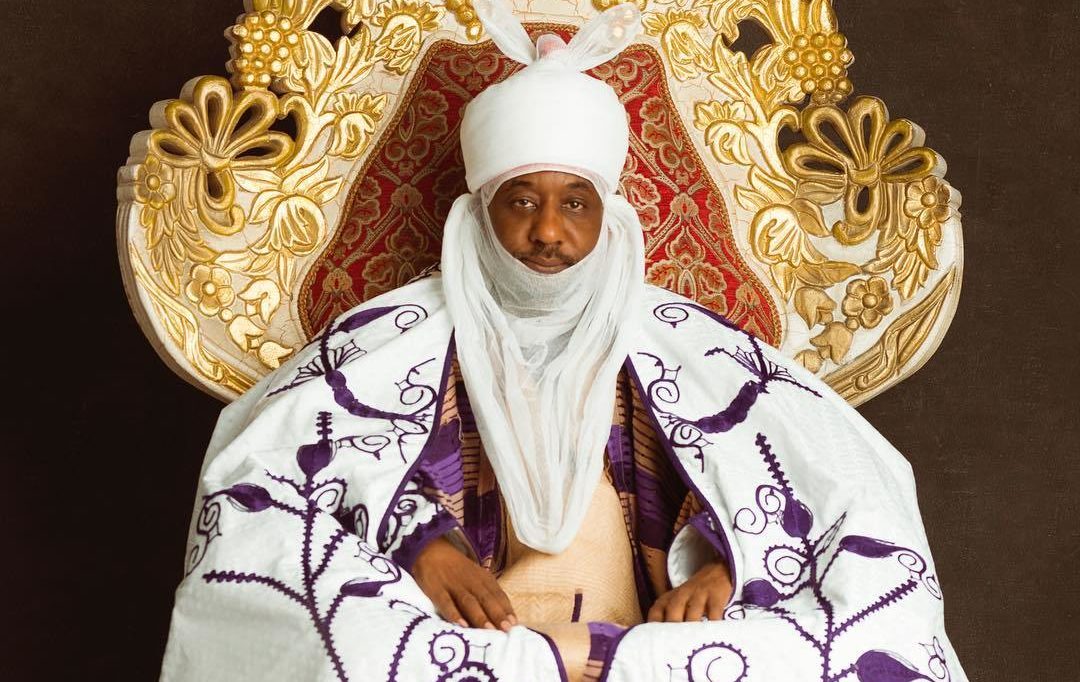
The Emir of Kano, Muhammadu Sanusi II, has highlighted improvements in Nigeria’s economic performance under President Bola Tinubu, saying the administration deserves credit for bringing the country back from the brink of economic collapse.
Sanusi made the remarks at the Oxford Global Think Tank conference, where he assessed the impact of the Tinubu administration’s economic reforms and acknowledged progress in key economic indicators.
SEE ALSO: Dangote IPO Will Spread Wealth Across Nigeria – Emir Sanusi
The former Governor of the Central Bank of Nigeria (CBN) pointed to the country’s 4.48 per cent Gross Domestic Product (GDP) growth in the second quarter of 2026, describing it as an improvement compared with the economic performance recorded during the administration of former President Muhammadu Buhari.
According to him, Nigeria’s economy grew by approximately 0.9 per cent during the Buhari years, while the latest growth figures indicate a stronger economic performance.
Sanusi also highlighted the decline in inflation, saying it had dropped from 30 per cent to 14.6 per cent, with projections indicating a possible reduction to 12.5 per cent by the end of 2026.
He further disclosed that Nigeria’s GDP per capita, measured in dollar terms, had increased by 47 per cent since 2023.
The Emir said sustaining the current growth trajectory could return the country’s GDP per capita to its 2005 level by the end of 2027.
“If we continue at this rate, by the end of next year, GDP per capita will be back to where it was in 2005,” he said.
On the country’s external reserves, Sanusi disclosed that they had reached $55 billion, although he cautioned that a significant portion of the inflows was driven by foreign portfolio investments, which he described as volatile.
He attributed some of the investor interest to high oil prices linked to the conflict around the Strait of Hormuz, alongside the attractive returns available in Nigeria’s financial market.
Sanusi also identified the Dangote Refinery as part of the country’s growing economic diversification, claiming that 20 per cent of Nigeria’s exports were coming from the facility.
According to him, the developments suggest that the country is laying the foundations for economic stability, although more work remains to be done.
“I’m not a fan of politicians, but we need to give credit to President Tinubu’s administration for bringing us back from the brink,” Sanusi stated.
He stressed that the progress recorded should be recognised as an initial step towards stability rather than an indication that Nigeria’s economic challenges have been fully resolved.






2027: Shettima Declares Nigeria’s Economy Fixed, Seeks Tinubu’s Re-election

Atiku Launches 2027 Campaign in Sokoto, Pledges to Tackle Insecurity

NNPC Reveals Sokoto Healthcare Intervention as September Profit Hits ₦509bn

Nigeria Must Create Jobs Before Graduates Leave School, Ex-NLC Chief Tells FG

JUST IN: Peter Obi, Kwankwaso Arrive in Calabar

Sanusi Lists Tinubu’s Economic Gains, Reveals What Could Restore Nigeria’s 2005 Living Standards

Trump’s Family Unveils New Cryptocurrency Platform

Senate Denies Receiving Petitions Against Tinubu’s Ambassadorial Nominees

Dangote Cement Lights Up Benue Host Communities With CSR Initiatives

Reps Recommend 3-year Jail Term For Aviation minister

Tems Sets New Record On Billboard Hot 100 Chart
