
NEWS
FG makes u-turn on subsidy removal says it is not on its card at the moment – Lawan

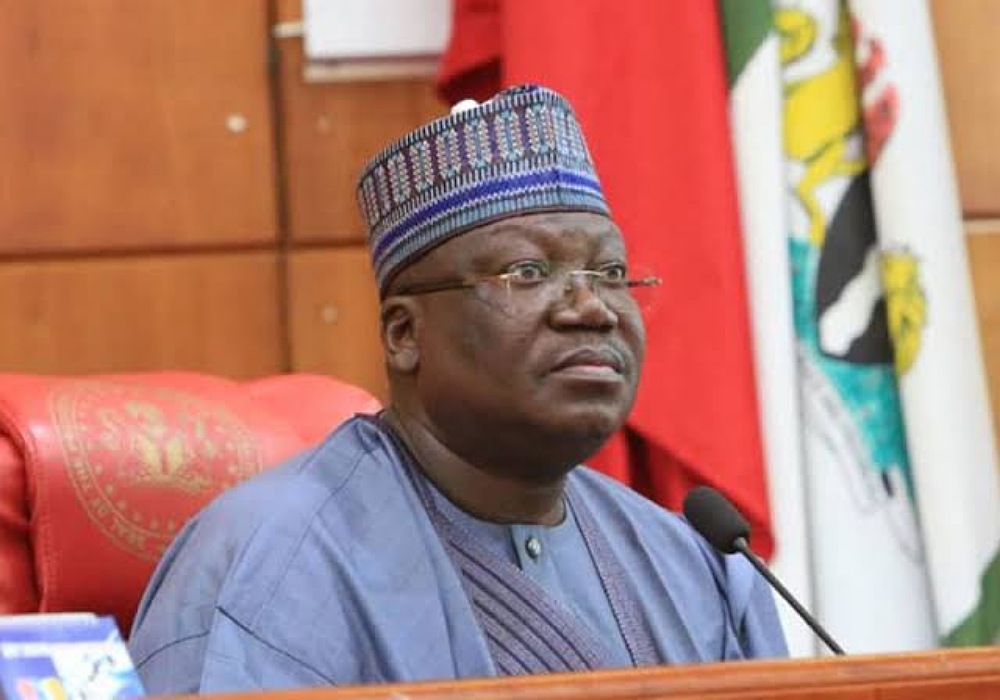
Lawan urges labour to shelve planned protests as it’s no longer necessary
John Akubo
The Federal Government has soft-pedal on its initial plan to remove subsidy on petroleum products saying it is clear to even the blind and audible to the deaf that the situation of the country does not allow for that at the moment
Recall that while presenting the 2022 budget the Federal Government had infused in the budget provision for subsidy untill June 2022 when it wanted to remove the subsidy which was passed and assented to.
In seeking for a soft landing based on the outcry from Nigerians the minister of Petroleum Resources Timipre Sylva and his counterpart in the ministry of Finance Hajia Zainab Ahmad as well as the Group managing Director NNPC limited Mele Kyari met with the national assembly leadership to ammend the law to provide for an extension of subsidy provision beyond June 2022
The Minister of Finance, Budget and Economic Planning, Hajia Zainab Ahmed, said that the Federal Government had postponed the planned removal of subsidy on petroleum products till further notice.
The meeting was convened at the instance of the President of the Senate, Ahmad Lawan.
The Finance Minister said the Federal Government initially had the plans to remove subsidy on petroleum products from July this year.
She said that was the reason adequate provision was made in the 2022 national budget for subsidy payment till June.
She said, “Provision was made in the 2022 budget for subsidy payment from January till June. That suggested that from July, there would be no subsidy.
”The provision was made sequel to the passage of the Petroleum Industry Act which indicated that all petroleum products would be deregulated.
“Sequel to the passage of the PIA, we went back to amend the fiscal framework to incorporate the subsidy removal.
“However, after the budget was passed, we had consultations with a number of stakeholders and it became clear that the timing was problematic.
“We discovered that practically, there is still heightened inflation and that the removal of subsidy would further worsen the situation and impose more difficulties on the citizenry.
“Mr. President (Muhammadu Buhari), does not want to do that. What we are now doing is to continue with the ongoing discussions and consultations in terms of putting in place a number of measures.
“One of these include the roll out of the refining capacities of the existing refineries and the new ones which would reduce amount of products that would be imported into the country.
“We therefore need to return to the National Assembly to now amend the budget and make additional provision for subsidy from July 22 to whatever period that we agreed was suitable for the commencement of the total removal’
The minister for state petroleum Resources Timipre Sulva said
“As far as I am concerned at this point it is a legislative duty.
“The law has been passed we are all aware but there is no law that is cast in stone. “It is clear to everyone that at this point in operationalizing the law is not possible within 6minths framework that has been provided for in the law and if that time frame provided for in the law is not feasible which has come to us as a result of operationalising the law then it is also a legislative responsibility now to see what can be done in extending that time frame for it to be in the purview of the law,
“Secondly the other legislative issue arising from it is the provision for the subsidy that is not there after June.
It is very clear to the blind and audible to the deaf that it is not feasible at this time to remove subsidy.
“I know that some nay sayers, or political pundits want to bring politics into it but it is not within the contemplation of this administration now to remove subsidy.”
The president of the Senate Ahmad Lawan said the meeting ordinarily shouldn’t have been opened for media coverage however he indicated that anything that will interest the public is worth coverage
The Senate President therefore urged the organised labour unions in the country to shelve their proposed nationwide protests as it was no longer necessary.
“There is need at one point to do away with subsidy but the President genuinely feel for Nigerians particularly the most vulnerable. Even though our economy is growing but we still have challenge getting better.
“Because of this feeling by the President and most of us in this administration believe that the issue of removal of subsidy should be handled with utmost care especially that sufficient planning needs to be done.
“Significant arrangement for absorbing the shock that will come with the removal should be done and the timing is such that the impacts and consequences will not add to hardships.
He said the sympathy for Nigerians is not about NLC.
“We are talking about every Nigerian. NLC is just an organised part of the system. Our concern is beyond NLC.
“I am taking this opportunity to speak to TUC and NLC to shelve this their plan to go on strike or demonstration. “It is totally unnecessary. There is not going to be removal of subsidy so let us not create unnecessary tension where there should be none.
“Please forget about the 27th of January deadline. We are supposed to come together and work assiduously to see that our country is stable that our people enjoy the benefits of Government programs and projects. “At the end of the day whatever decision we would be taking would be in the best interest of our people.”








The Nigerian Upstream Petroleum Regulatory Commission has warned investors operating under the Nigerian Gas Flare Commercialisation Programme that they risk losing their permits if they fail to make substantial progress in developing their awarded flare gas sites within one year.
The warning is part of renewed efforts by the Federal Government to end routine gas flaring by 2030 and ensure that gas currently being wasted through flaring is converted into productive economic value.
The Commission Chief Executive, Oritsemeyiwa Eyesan, issued the warning during a working visit to the Minister of State for Petroleum Resources (Gas), Ekperikpe Ekpo, in Abuja on Wednesday.
ALSO READ: 172 HCDTs Incorporated — NUPRC
According to a statement issued by the NUPRC Head of Corporate Communications and Media, Eniola Akinkuotu, Eyesan provided updates on the implementation of the Nigerian Gas Flare Commercialisation Programme and other initiatives being undertaken by the commission.
Eyesan said the regulator would no longer tolerate situations where flare gas sites awarded to investors remain undeveloped for extended periods.
She explained that the commission conducts an assessment one year after an award is granted to determine whether the investor has made considerable progress.
“One year after an award has been granted, the Commission conducts an evaluation to determine whether there has been considerable progress,” Eyesan said.
She added, “Where there is insufficient progress, the Commission will take appropriate regulatory action, including revocation of the award where necessary.”
The NUPRC boss disclosed that 43 flare gas sites were initially identified for award under the programme, while 27 sites have so far been successfully awarded to investors.
She noted that implementation activities were currently ongoing at the awarded sites.
The Nigerian Gas Flare Commercialisation Programme was established to enable investors to utilise gas that would otherwise be burnt through routine flaring for commercially viable projects.
The programme is expected to reduce environmental pollution, create employment opportunities, generate additional revenue and increase gas supply for power generation, industries and other productive activities.
Nigeria currently has more than 215 trillion cubic feet of proven gas reserves, while its estimated total gas resource base stands at about 600 trillion cubic feet.
Meanwhile, Eyesan also disclosed progress in the implementation of the Host Community Development Trust framework established under the Petroleum Industry Act.
She said 173 Host Community Development Trusts had been incorporated, with 147 already funded. More than 1,001 projects are currently ongoing across host communities, while over 200 projects have been completed and commissioned.
Speaking during the visit, Minister of State for Petroleum Resources (Gas), Ekperikpe Ekpo, called for a more aggressive implementation of the country’s gas commercialisation programme.
Ekpo stressed the need to accelerate efforts to achieve Nigeria’s target of eliminating routine gas flaring by 2030.
He said the country must move away from practices that cause environmental pollution and focus on transforming its gas resources into valuable products and services that can drive economic growth.
“The core objective is to add value to our gas resources by converting them into critical products and services. We must move away from environmental pollution and toward productive resource utilization,” the minister said.
The latest warning underscores the NUPRC’s tougher stance on undeveloped flare gas assets as Nigeria seeks to turn its enormous gas resources into economic opportunities while reducing the environmental impact of gas flaring.
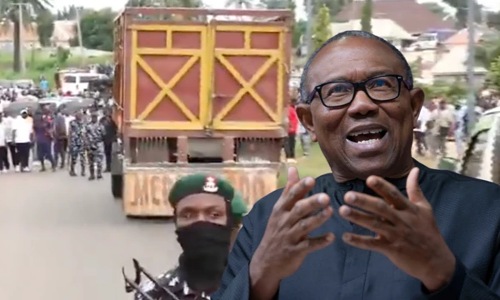
Tension has continued to trail the disruption of the convoy of the Nigerian Democratic Congress (NDC) presidential candidate, Peter Obi, in Benue State, with the police confirming the arrest of 46 suspects over the incident.
The suspects were arrested after Obi’s convoy was blocked by angry youths along the Makurdi-Gboko Federal Highway on Tuesday during the former Anambra State governor’s visit to the state.
SEE MORE: ‘It’s a Lie’ — Wike’s Aide Debunks Peter Obi’s ‘No Shishi’ Claim
Recall that Obi had travelled to Benue as part of his political campaign ahead of the 2027 presidential election and was also scheduled to visit Yelewata to commiserate with families and residents affected by the deadly June 2025 attacks in the community.
According to reports, trouble began a few metres away from the airport when Obi’s convoy encountered a large group of youths who had completely blocked the two-lane federal highway.
The blockade reportedly brought traffic to a standstill, with the road temporarily closed to other users.
The youths were said to have shouted “Peter Obi, go back!” as they prevented the convoy from proceeding towards Yelewata.
The Benue State Commissioner of Police, Cletus Nwadiogbu, who addressed journalists in Makurdi, confirmed that 46 suspects had been arrested in connection with the incident.
Nwadiogbu said investigations were still ongoing, adding that the police were also trailing some key leaders believed to be connected to the confrontation.
He warned that the Benue State Police Command would not tolerate political intolerance or any act capable of threatening peace and security as the country moves towards the 2027 general elections.
Obi Condemns Incident
Reacting to the incident, Obi condemned the blockade, describing the development as worrying and unacceptable.
The NDC candidate said he arrived in Makurdi at about 9am and was on his way to Yelewata to console families affected by the killings when his convoy was stopped.
Obi said he was particularly concerned that he was prevented from visiting a community where more than 270 people were reportedly killed during the 2025 attacks.
He questioned whether Nigerians were still living in a country where political candidates could move freely during campaign activities.
According to him, he decided not to confront the youths because doing so could have escalated the situation and endangered the lives of other people.
Obi also appealed to security agencies, including the Inspector-General of Police and other relevant authorities, to intervene and ensure that political actors are protected during their campaigns.
He further called on state governors to ensure that political activities are conducted peacefully, stressing that what happened in Benue should not be allowed to become normal in Nigeria’s democracy.
The former governor also urged young Nigerians not to allow themselves to be used as instruments by political interests, particularly by those responsible for the difficult economic conditions facing citizens.
Keyamo Condemns Blockade, Criticises Media Coverage
Minister of Aviation and Aerospace Development, Festus Keyamo, also condemned the obstruction of Obi’s movement, saying preventing a political candidate from accessing a location should not be tolerated in a democracy.
Keyamo noted that regardless of the reason behind the incident, whether it was allegedly caused by internal disagreements within the NDC, as suggested by the Benue State Government, or was linked to supporters of another political party, such conduct was unacceptable.
He also rejected arguments that Obi should not have attempted to visit Yelewata because the 2025 killings occurred more than a year ago or because the visit could have been politically motivated.
According to Keyamo, every political candidate should be allowed to move around freely and conduct political activities without intimidation or crude interference.
However, the minister used the incident to criticise what he described as partisan reporting by sections of the media.
Keyamo argued that similar confrontations involving candidates of the All Progressives Congress (APC) were sometimes described by the media as evidence of public “rejection”, while incidents involving opposition politicians were labelled as attacks allegedly carried out by “sponsored thugs” or “hoodlums”.
He said such differences in how political incidents are presented were unfair and urged the media to maintain greater balance in its coverage.
Keyamo also pointed to statements by some opposition politicians who, according to him, have claimed that APC candidates could not visit certain parts of the country without being stoned, beaten or otherwise harassed.
He questioned why such statements were not given the same scrutiny by what he described as partisan sections of the media.
The minister maintained that political disagreements should be settled through elections rather than violence.
He urged Nigerians who are angry with any candidate or political party to express their displeasure at the ballot box by voting against them rather than attacking or obstructing them during campaigns.
Benue Government Denies Involvement
The Benue State Government has denied any involvement in the incident and rejected allegations that Governor Hyacinth Alia or his administration sponsored youths to block Obi’s convoy.
In a statement issued by the governor’s Chief Press Secretary, Tersoo Kula, the state government described Obi’s allegation as unfounded.
The government said it had no knowledge of what Obi was referring to and suggested that the incident could have resulted from internal political disagreements within the NDC.
It also questioned whether Obi actually visited Makurdi on Tuesday, while accusing him of having a history of making statements the state government considers untrue about Benue.
The government maintained that Obi was not a threat to Governor Alia and argued that, even if there had been a genuine security concern surrounding his visit, recognised security agencies would have been responsible for handling the matter rather than political thugs.
The Alia administration further insisted that it does not engage, patronise or deploy thugs as instruments of governance or security.
With 46 people already arrested and the police continuing their investigation, attention is now focused on identifying the organisers of the blockade and determining the circumstances that led to the confrontation.
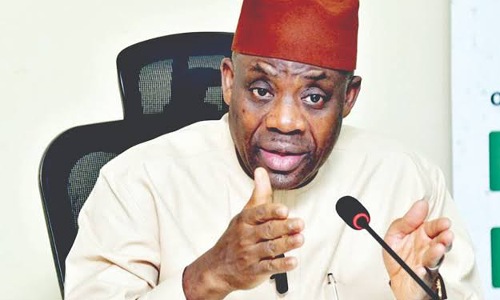
The Federal Government has released the Consolidated Academic Tools Allowance (CATA) for academic staff in federal universities, polytechnics and colleges of education, covering the period from January to August 2026.
The Minister of Education, Dr Tunji Alausa, disclosed this on Wednesday shortly after inaugurating the Ministerial Committee on Accreditation.
Alausa said the payment was made in line with the provisions of the 2025 agreement between the Federal Government and the Academic Staff Union of Universities.
SEE MORE: Bobrisky: Tunji-Ojo Orders Investigation Into Nigerian Correctional Service
CATA is a financial allowance designed to support academic staff in purchasing essential tools and materials required for teaching, research and other academic activities.
The minister said the funds had been released to the affected institutions and that they had been notified to commence payment to their academic staff.
“The full CATA payment has now been released by the Federal Government from January to August 2026 to all universities, all polytechnics and colleges of education,” Alausa said.
He also disclosed that payment to non-academic staff was being processed, adding that the funds were expected to become available within the next few weeks.
According to the minister, the release of the allowance demonstrates President Bola Tinubu’s commitment to improving the welfare of academic and non-academic workers in Nigeria’s tertiary institutions.
Alausa said the administration’s education reforms extended beyond staff welfare, noting that the government was also investing significantly in infrastructure across tertiary institutions, as well as basic and postgraduate education.
He maintained that the administration was committed to improving the quality of education available to Nigerian children and ensuring that the country’s education system could compete with global standards.






Accord Supporter Allegedly Banished From Osun Community Over Political Affiliation

Dangote IPO Aims to Transform Everyday Fuel Buyers into Refinery Shareholders

Dangote Discloses Strong Global Scramble for Refinery Stock
Goldman Sachs Foresees Crude Hitting $120/barrel

Regina Daniels Did Not Reconcile With Ned Nwoko — Mother Clarifies

‘Develop Flare Gas Sites or Lose Permits’ — NUPRC Warns Investors

Trump’s Family Unveils New Cryptocurrency Platform

Senate Denies Receiving Petitions Against Tinubu’s Ambassadorial Nominees

Dangote Cement Lights Up Benue Host Communities With CSR Initiatives

Reps Recommend 3-year Jail Term For Aviation minister

Tems Sets New Record On Billboard Hot 100 Chart
