
Energy
FG Seeks Africa, Global Partnerships for Affordable, Clean Energy—Tinubu

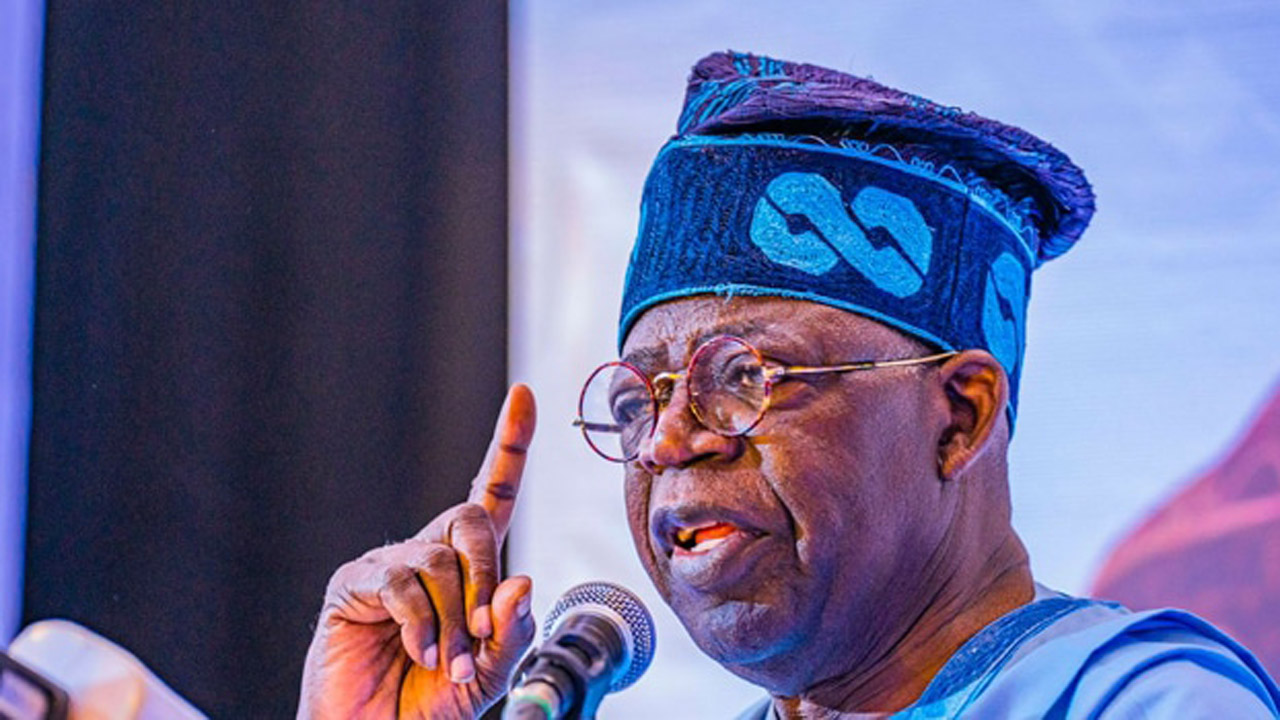
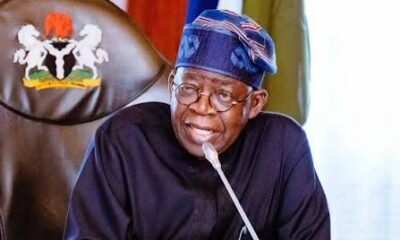
Nigeria’s President, Bola Ahmed Tinubu has expressed readiness to collaborate with African nations, global partners and the private sector to deliver cleaner, affordable, inclusive, and more secure energy.
President Tinubu, on Tuesday, in Abuja, opined that energy plays a critical role as the invisible force holding the modern world together, as well as the quiet architecture of balance among nations, and as the unseen hand that steadies economies and sustains societies.
He bared his mind while declaring open the 9th Nigeria International Energy Summit (NIES) at the State House Banquet Hall, Abuja.
The summit was attended by heads of delegation and senior government officials from across the globe, as well as leaders of international energy organisations, chief executives of global and indigenous energy companies, development finance institutions, and representatives of host communities.
President Tinubu, who was represented at the summit by his deputy, Vice President Kashim Shettima, observed that while energy remains central to peace, prosperity and global stability, Nigeria is focusing heavily on utilising its vast gas reserves as a transition fuel and expanding renewable energy capacity.
ALSO READ: FG Approved 28 New Oil Field Plans Worth $18.2bn in 2025 — Minister
“Energy must unite communities, stabilise economies, and secure futures. It must power factories, illuminate homes, fuel innovation, and build trust between government, investors, and citizens.
“Nigeria stands ready to collaborate with Africa, global partners, and the private sector to deliver energy that is secure, affordable, cleaner, and inclusive,” he declared.
The President recalled that though his administration inherited an energy sector that was rich in potential in 2023, the sector was “constrained by inefficiencies, uncertainty, and prolonged underinvestment.”
On how his administration broke the bottleneck, he declared, “We set to work without fanfare, guided by the clear understanding that energy cannot be treated simply as an economic commodity if stability is our goal.
“Energy is a catalyst for national security, industrial growth, social inclusion, and regional cooperation.”
President Tinubu assured all that his government was fully committed to “building an energy system that delivers reliability, transparency, sustainability, and shared prosperity.”
Outlining efforts by his administration to boost the energy sector, the President said his administration sustained and deepened the full implementation of the Petroleum Industry Act (PIA), consolidating its role as the linchpin of sector reform and strengthening regulatory institutions to ensure clarity of roles, transparency, and investor confidence.
He added, “Under our watch, Nigeria’s upstream activity recorded a historic rebound. Rig counts rose from eight rigs in 2021 to 69 rigs by late 2025, reflecting renewed exploration and drilling momentum.
“The sector secured Final Investment Decisions exceeding $8bn, including major offshore gas developments involving global energy companies.
“Foreign direct investment into the oil and gas subsector rebounded strongly, driven by regulatory certainty, fiscal reforms, and improved operating conditions.”
Under his watch, President Tinubu said crude oil theft, which had been a major constraint on production and revenue, declined significantly due to enhanced security coordination, surveillance, and regulatory enforcement, adding that the efforts paid off, restoring operational stability and improving Nigeria’s production reliability in international markets.
Apart from deliberate leadership appointments across key regulatory and development institutions that reinforced professionalism, accountability, and institutional effectiveness, the President stated that “early reforms, most notably fuel subsidy removal and foreign exchange liberalisation, repositioned the sector’s economics, improved market efficiency, and enhanced long-term investment attractiveness.”
“While these measures required national sacrifice, they laid the foundation for sustainability, fiscal resilience, and investor confidence.
“Industry stakeholders and independent experts have described these reforms as transformational, aligning Nigeria’s energy sector with global best practices,” he added.
Formally declaring the 9th NIES open, President Tinubu implored participants “to engage constructively, invest confidently, and partner purposefully with Nigeria.”
Earlier, Gambian President Adama Barrow observed that Nigeria’s policies have implications far beyond its borders, noting that working together through strategic partnerships is key to regional solutions and energy security.
On his part, the President of the Republic of Equatorial Guinea, Teodoro Obiang Nguema Mbasogo, maintained that Africa must cease to be merely an exporter of raw materials and focus on processing them for the betterment of future generations.
The Senate President, Godswill Akpabio, in a speech that was read on his behalf, averred that in Africa, energy is not just about resources but about inclusive and sustainable prosperity.
He assured all that the National Assembly is ready to work with relevant stakeholders through legislative backing, agreeing that when the energy system works, the economy grows more resilient.
Contributing, Nigeria’s Minister of State for Petroleum Resources (Oil), Senator Heineken Lokpobiri, said the gathering was a call to action to make energy a champion for advancement.
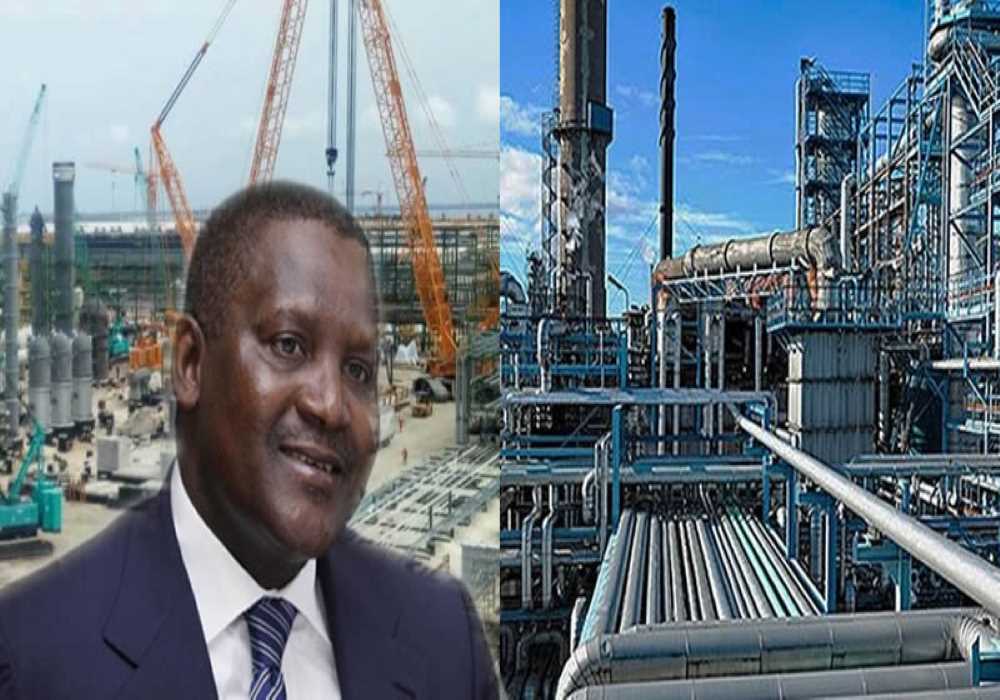
He commended the Dangote Refinery, BUA, and other refiners for making significant investments in Nigeria’s energy sector.
For his part, Minister of State for Petroleum Resources (Gas), Ekperikpe Ekpo, noted that while collaboration is essential in building a reliable energy system, President Tinubu’s Renewed Hope Agenda is already positioning gas as a cornerstone of Nigeria’s energy security.
He assured all that the government was strengthening oil and gas stability while supporting regional integration and building on the meaningful gains recorded in the sector.
On behalf of the Independent Petroleum Producers Group, the Managing Director and Chief Executive Officer of Aradel Holdings Plc, Adegbite Falade, said gas production in Nigeria has grown significantly since 2025, with indigenous producers increasingly allowed to thrive.
According to him, under President Tinubu’s leadership, the requisite reforms and executive orders have been approved, thereby increasing local ownership in the sector.
The Group Chief Executive Officer of NNPC Ltd., Bashir Ojulari, also stressed that Africa is at a turning point in the energy sector.
He said Nigeria is well-positioned to lead this charge, with over 37 billion barrels of oil potential, making the country an emerging global energy powerhouse.





Gas producers must stop treating methane reduction as an environmental cost, because methane released into the atmosphere represents lost gas, lost revenue and lost energy that could otherwise be recovered and sold.
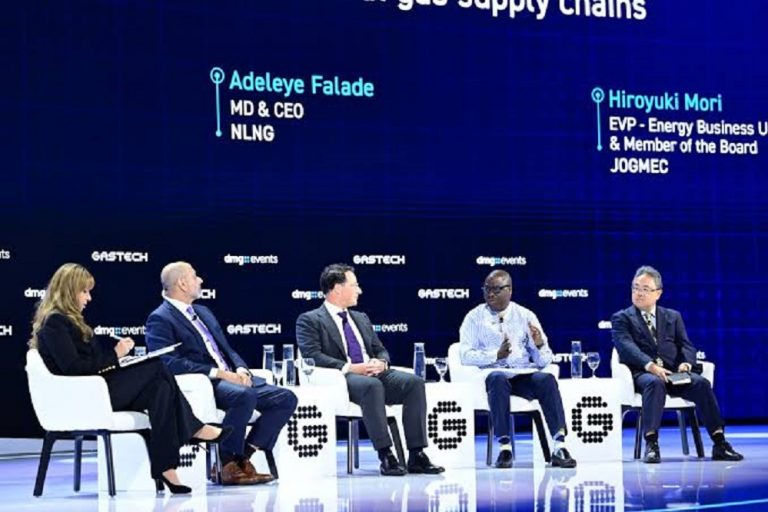
The Managing Director and Chief Executive Officer of Nigeria LNG Limited (NLNG) Adeleye Falade, made the declaration during a panel titled “Capturing the Lost Opportunity: Driving Global Alignment on Methane Abatement Across Natural Gas Supply Chains,” at the Gastech 2026 Exhibition and Conference in Bangkok, Thailand.
READ ALSO: Spike in Petrol Price Moves NLC to Demands Emergency Palliatives
Taking from the company’s experience, he highlighted that investments in methane abatement could pay for themselves while improving plant efficiency and asset reliability.
The NLNG CEO said the commercial value of recovering lost gas should become a central part of the global industry’s approach to methane management.
“Every tonne emitted is lost product, lost revenue and lost energy; gas we could have sold. Every molecule of methane avoided is both an emissions reduction and a recovered energy resource.”
According to him, the NLNG’s new boil-off gas compressor and start-up gas recovery project demonstrate the business case for methane reduction, with each project expected to deliver methane reductions of about 10–15 percent while also recording positive projected net present values. “The most compelling business case is the simplest one: the projects that cut our methane also pay for themselves.
“The same discipline that reduces methane also improves asset reliability and plant efficiency. The returns show up in more places than the emissions ledger,” Falade said.
He added that the starting point for methane abatement was credible measurement of gas losses, which enables companies to identify where methane is being lost, channel investment towards the right interventions and independently verify the results.
According to Falade, the NLNG had demonstrated that producers in developing economies could meet globally recognised standards for emissions measurement and reporting, despite infrastructure and other constraints.
He disclosed that the NLNG had achieved Gold Standard recognition under the Oil and Gas Methane Partnership (OGMP) 2.0 and became the first company in Africa to attain Level 5 methane emissions reporting.
Its measurement, reporting and verification system is independently assured by DNV in line with ISO 14064.
The NLNG’s methane-management programme includes site-wide optical gas imaging, a structured Leak Detection and Repair programme, as well as phased deployment of continuous monitoring and real-time emissions dashboards across its plant and vessels.
Falade said methane reduction was also being incorporated into the design of Train 7, which is expected to raise the NLNG’s LNG production capacity from 22 million tonnes per annum to 30 million tonnes.
The commercial case for emissions abatement was not new to Nigeria, he added, pointing to the NLNG’s longstanding role in converting gas that would otherwise have been flared into a marketable product.
According to him, the company’s activities have contributed to reducing Nigeria’s gas-flaring rate from above 65 percent to below 20 percent.
Beyond its own operations, Falade revealed that the NLNG was extending methane-management requirements across its supply chain through its Scope 3 Advocacy Plan.
The company engages feed-gas suppliers and contractors to measure, disclose and reduce emissions, while verified upstream emissions data and emissions-related criteria are incorporated into supplier selection and evaluation.
Falade also called for greater consistency in methane measurement and reporting requirements across jurisdictions, arguing that divergent standards make enforcement uneven and complicate meaningful comparisons between producers.
“The industry does not need weaker standards; it needs stronger, shared ones backed by real measurement,” he said.
On the tension between emissions reduction, energy access and affordability, Falade said developing economies should not be forced to choose between economic development and climate action.
“Developing economies cannot be asked to choose between economic development and emissions reduction. Both must progress together,” he said.
Other panellists were Zubin Bamji of the World Bank, Niels Dijksman of Brunei LNG and Hiroyuki Mori of JOGMEC.
The session was moderated by energy economist Dr Carole Nakhle of Crystol Energy.
Expectations are high that the $10 billion Train 7 project of the Nigeria Liquefied Natural Gas Limited (NLNG) would go into operation by the end of 2027.
Managing Director of NLNG, Adeleye Falade, made the disclosure on the side-lines of the Gastech conference, yesterday, in Bangkok, Reuters reported.
This is part of a grand strategy by the company to raise production and address persistent gas supply constraints.
READ ALSO: Banks Caution Against Scammers over Dangote IPO
Train 7 project, located on Bonny Island, Rivers State, is expected to increase NLNG’s production capacity to 30 million metric tonnes per annum (mtpa), from the current 22 mtpa.
The project has suffered repeated delays, including disruptions associated with the COVID-19 pandemic and the Russia-Ukraine war.
Falade also disclosed that NLNG remained under a force majeure declared in 2022 following widespread flooding that disrupted gas supplies to the company.
According to him, the company would lift the force majeure when it reaches a 90 per cent utilisation rate, with the plant currently operating at between 82 per cent and 83 per cent.
“We still have a delta of about 15 per cent that we need to close,” Falade said. “Operationally, we are able to do that, but our biggest constraint is gas supply, and we’re working with all the relevant people, including the government, to be able to get more gas to flow into the plant,” he added.
He said NLNG was focused on meeting its existing contractual obligations to buyers while the company worked to increase production.
Falade added that interest in additional LNG volumes and spot cargoes had increased after exports through the Strait of Hormuz were curtailed by the Iran war.
“People are looking at more diversified, reliable sources of supply,” he said.
“Our priority currently is to continue to make sure that we fulfil our obligations to our existing customers and maximize as much production opportunity as possible that we have,” he added.
The NLNG is majority-owned by the Nigerian National Petroleum Company Limited (NNPC Ltd), while Shell, TotalEnergies and Eni are its international partners.
Public concerns that the introduction of smart and self-service filling stations would lead to job losses in the downstream petroleum sector have been dismissed by the Nigerian National Petroleum Company Limited (NNPC Ltd).
According to the state oil major, the deployment of automated stations was part of efforts to improve efficiency and customer experience. It added that the technology would create new opportunities rather than simply eliminate existing jobs.
The NNPC Ltd also disclosed plans to transform about 900 of its existing retail outlets across the country into modern energy hubs, as it adapts its retail business to changing consumer needs and developments in the downstream sector.
READ ALSO: FHC Hands 10 Years Sentence to Nine Oil Thieves in Akwa Ibom
The disclosures were made in Abuja, during the commissioning of a 24-hour smart, self-service filling station at the headquarters of the Nigeria Immigration Service (NIS).
The Executive Director, Retail Operations and Mobility, NNPC Retail Limited, Shettima Kukawa, said the new model was designed to provide customers with faster, more convenient and technology-driven services.
Kukawa added that the transformation of the company’s retail outlets was not about simply replacing workers with machines, but about creating a modern retail environment capable of providing more services to customers.
He explained that the smart station allows motorists to purchase fuel through the NNPC fuel app, fund their digital wallets and dispense the exact quantity of fuel they have paid for using a self-service code.
The station has a storage capacity of 180,000 litres of Premium Motor Spirit (PMS) and 45,000 litres of Automotive Gas Oil (AGO), with 16 PMS pumps and two AGO pumps.
It also has a six-point electric vehicle (EV) charging facility and is primarily powered by a solar system with more than 200kWh capacity.
Managing Director, NNPC Retail Limited, Hubb Stokman, said the downstream industry was undergoing significant changes following fuel deregulation and the commencement of operations at the Dangote Refinery.
Stokman said consumers were also demanding more services at filling stations, pointing out that the traditional fuel-only model was no longer sufficient to meet their expectations.
“Today shows that the downstream industry is changing after the fuel deregulation and also the start-up of the Dangote Refinery. Our industry is rapidly changing, and I think that more than ever, we need to meet the needs of the Nigerian consumer and their wishes.
“They want to see more services, like a fast food restaurant, convenience shop, maybe a coffee shop, banks. They would like to have a lounge or car wash. All these things that you will see here,” he said.
Also speaking, the Executive Vice President, Downstream, NNPC Limited, Dr Mumuni Dagazau, said the company was moving beyond the traditional concept of a filling station by integrating technology and alternative energy solutions into its retail network.
He said the development represented the type of modern retail infrastructure that should be replicated across the country, stressing that Nigerians deserved improved quality and service.
“Our objective at NNPC is not simply to provide fuel, it is to provide reliable energy solutions and a better retail experience supported by technology and innovation.
“We deserve these sort of stations throughout this country. We need to move away from where we have been and deliver this sort of quality and the service to our people in the community,” Dagazau said.
On his part, the Comptroller-General of Nigeria Immigration Service, Kemi Nandap, commended NNPC Limited for integrating EV charging with conventional fuelling.
Represented by Saidu Daura, the Deputy Comptroller-General, Nandap said the development aligned with global trends in energy transition, climate action and smart mobility, describing it as a practical step towards a cleaner, more sustainable and technology-driven economy.
She said the shift to technologies such as electric mobility could create opportunities for investment, employment, skills transfer and industrial growth.
“Today’s commissioning goes beyond the opening of a service station. It is a statement of confidence in Nigeria’s future and a contribution to building a resilient, green, and technologically advanced nation,” she said.
Nandap called for stronger collaboration between government institutions, the private sector and other stakeholders to promote sustainable development and national progress.
The station operates round-the-clock and includes automated services designed to reduce waiting time and give motorists greater control over their transactions.






JUST IN: Atiku Set to Address World Press Conference in Abuja

‘No One Will Be Shielded’ — FG Vows Justice Over Death of 37 Miners

37 Miners’ Deaths: Interior Minister Arrives Minna, Set to Inspect Detention Centre

Atiku Demands Justice, Transparency Over Deaths of 37 Miners in NSCDC Custody

Ogun 2027: APC’s YAYI Donates 30-Seater Bus to Remo Council

Nigeria Joins Global INTERPOL Operation as AI Identifies 126 Foreign Terrorist Fighters

Trump’s Family Unveils New Cryptocurrency Platform

Senate Denies Receiving Petitions Against Tinubu’s Ambassadorial Nominees

Dangote Cement Lights Up Benue Host Communities With CSR Initiatives

Reps Recommend 3-year Jail Term For Aviation minister

Tems Sets New Record On Billboard Hot 100 Chart
