
NEWS
FMWH, FCTA Receive N130bn Sukuk Cheque, Under 2022 Budget

The Debt Management Office (DMO) has presented cheques of N130 billion being Proceeds of the 2022 Sovereign Sukuk offer to the implementing ministries.
The cheque presentation was done Minister of Finance, Budget and National Planning, Zainab Ahmed, at her office in Abuja, on Monday.
She highlighted that the issuance of sovereign sukuk, a project-tied debt instrument, is one of the many innovative and very successful initiatives of the President Muhammadu Buhari administration.
She maintained that said it was aimed at financing development of critical infrastructure.
The implementing ministries were the Federal Ministry of Works and Housing (FMWH) and the Federal Capital Territory Administration (FCTA).
According to Ahmad the facts on how much the initiative had helped to improve road infrastructure across the country were glaring.
She said, “As at date, this administration has invested the sum of N612.557 billion raised through Sovereign Sukuk between 2017 and 2021 for the construction and rehabilitation of key economic road projects.
“The projects are in the six geo-political zones and the FCT.
“In real terms, the amount has been used to construct and rehabilitate sections of 71 road projects covering 2,808 kilometers and four bridges by the FMWH.
“It has also aided the construction of sections of six road projects covering 99 kilometers and 19 bridges by the FCTA.”
She explained that the FMWH and the FCTA would be sharing N130 billion, being proceeds of 2022 Sukuk issue proceeds, successfully issued by the DMO on behalf of the Federal Government.
Ahmad added that the release would form part of the 2022 budget, which implementation had been extended to March 2023 by the National Assembly
“FMWH will get N110 billion and the FCTA will get N20 billion.
“The N130 billion will be released as part of the capital expenditure in the 2022 Appropriation Act, which has been extended by the National Assembly to March 31.
“As at November 2022, N1.88 trillion had been released as Capital Expenditure, which represents about 40 per cent performance when compared to the total Capital Budget of N4.7 trillion.
“This informed the need to extend the period to implement the capital component of the 2022 Budget,” Ahmad said.
In addition to the immense contributions of Sukuk to the funding of critical road infrastructure, Ahmad noted that the objectives of deepening the domestic capital market and financial inclusion are being achieved by the government.
Director-General, DMO, Patience Oniha, said that the office started the journey toward issuing a Sovereign Sukuk some years back, and had been diligently working with experts to perfect the process and documentation.
According to Oniha, these efforts paid off with the issuance of the first Sovereign Sukuk of N100 billion in September, 2017.
“The DMO has issued Sukuk four more times bringing the total amount raised as at Dec. 2022 to N742.56 billion.
“From the Sukuk issued between 2017 and 2021, a total of N612.56 billion was raised and deployed to the construction and rehabilitation of sections of 71 roads and four bridges covering a total of 2,820 km,” Oniha said.
She commended the implementing ministries and their various contractors for supporting the DMO in the Sukuk initiative.
According to her, the initiative has afforded the DMO the opportunity to demonstrate strong alignment with the policy of President Buhari on infrastructure development.
“Furthermore, the DMO has positioned itself as an agency for managing the public debt including borrowing on behalf of the Federal Government.
“It has also become an active stakeholder in the domestic capital market through innovation, investor engagement and collaboration with other stakeholders.
“These have deepened the market, created benchmarks for other borrowers and promoted financial inclusion by providing a retail product, FGN Savings Bond, as well as Sukuk and Green Bonds for ethical investors,” Oniha said.
According to her, the DMO remains committed to its mandate and market development activities.
Minister of Works and Housing, Babatunde Fashola, said that the Sovereign Sukuk had contributed immensely to raising badly needed funds for roads projects across the country.
Various construction companies, which had laid off many of the staff due to redundancy had recalled most of the staff members, partly due to the funding support from Sovereign Sukuk, Fashola pointed out.
He gave kudos to the former finance minister, Kemi Adeosun, the incumbent Minister of Finance, as well as the DMO director-general for initiating and sustaining the Sukuk initiative, respectively.






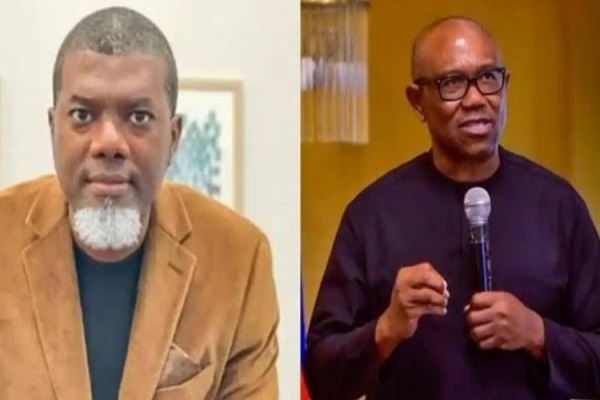
Former presidential aide Reno Omokri has criticised Afrobeats singer Peter Okoye over his call for Nigerians to retire older politicians and support former Anambra State Governor Peter Obi.
Okoye, popularly known as Mr P, made the remarks in a video that went viral on social media, urging Nigerians to move away from older politicians and support Obi.
“Let’s leave these old guys, dem done try. Let’s retire them,” Okoye said in the video, according to Omokri’s account.
SEE MORE: Reno Omokri Praises Tinubu’s Independence Day Address, Says Nigeria Is in ‘Sound Hands’
Reacting to the singer’s position in a post on Sunday, Omokri argued that age alone should not determine Nigerians’ choice of presidential candidates, insisting that a comparison of the ages of the leading presidential tickets does not support Okoye’s argument.
Omokri noted that Obi is 65 years old, while his proposed running mate, Rabiu Musa Kwankwaso, is 70. He put President Bola Tinubu’s age at 74 and Vice President Kashim Shettima’s at 60.
According to Omokri, the Obi-Kwankwaso ticket has a combined age of 135 years, compared with 134 years for the Tinubu-Shettima ticket.
He argued that, based on the average ages of the two tickets, the incumbent president and his deputy are marginally younger as a pair.
Omokri also compared the figures with those of Atiku Abubakar and Rotimi Amaechi, whose combined ages he put at 140 years.
Beyond the age argument, Omokri questioned Obi’s record as Anambra governor, contrasting it with Tinubu’s administration in Lagos State.
He listed schools and independent power projects he attributed to Tinubu’s tenure as Lagos governor, challenging Okoye to identify comparable projects initiated, completed and commissioned with government funds during Obi’s time in office.
Omokri further argued that Nigerians should consider candidates’ records in public office rather than relying primarily on their ages.
He also defended the Tinubu administration by citing the absence of a nationwide strike by the Academic Staff Union of Universities (ASUU) during its tenure and the federal government’s Nigerian Education Loan Fund (NELFUND) programme.
The Federal Ministry of Finance has challenged reports that Federal Government interest payments reached 124 per cent of revenue in the first half of 2026, describing the figure as misleading because it does not fully account for the scope of government debt obligations and revenue.
The ministry’s position comes in response to recent analysis citing the World Bank’s October 2026 Nigeria Development Update, which reported that interest payments exceeded federal revenue during the first six months of the year.
In a press release on Sunday and dated October 18, 2026, the ministry argued that the calculation compared interest payments that included obligations serviced on behalf of other tiers of government with federal revenue alone.
SEE ALSO: Nigeria Lands Fresh $1.25bn World Bank Loan to Drive Jobs, Reforms
According to the ministry, this approach overstates the ratio because the debt obligations and revenue used in the calculation should cover the same level of government.
“The interest figure includes debt the Federal Government services on behalf of other tiers of government, including external loans to states,” the ministry said.
It added that the revenue figure used in the calculation was incomplete because it excluded independent revenue earned by government agencies and enterprises but not yet remitted to the Treasury.
The ministry also explained that government revenue typically increases in the second half of the year because of the statutory timing of certain tax payments.
Citing the 2025 figures, it said the debt-service-to-revenue ratio stood at 156 per cent in the first half of the year but fell below 60 per cent on a full-year basis.
The ministry said the ratio had declined from 97 per cent before the current administration’s reforms, describing the figures as evidence of progress in the government’s fiscal position.
Revenue Growth Outpaces Interest Payments
The ministry also highlighted the changes in federal revenue and interest payments between the first halves of 2025 and 2026.
According to the statement, federal revenue increased by 72 per cent, rising from ₦3.6 trillion in the first half of 2025 to ₦6.2 trillion in the corresponding period of 2026.
Interest payments, meanwhile, rose by 38 per cent, from ₦5.6 trillion to ₦7.7 trillion over the same period.
“Revenue is therefore growing almost twice as fast as interest costs,” the ministry said.
It added that the interest-to-revenue ratio fell by 32 percentage points, from 156 per cent to 124 per cent, while the gap between interest payments and revenue narrowed from ₦2 trillion to ₦1.5 trillion.
The ministry maintained that the figures reflected the impact of the government’s reforms rather than evidence of fiscal distress.
Ministry Cites Full-Year Debt Projection
On debt sustainability, the ministry argued that a six-month snapshot should not be used as the sole measure of the country’s debt position.
It said the World Bank’s report projected Nigeria’s full-year 2026 debt service, covering both interest and principal payments, at 46 per cent of revenue.
“Debt sustainability is assessed on a full-year basis, not over six months,” the ministry stated.
It described the projected full-year figure as the appropriate benchmark for assessing the country’s debt-service position.
Finance Ministry Defends Government Borrowing
The ministry also defended the legality of the Federal Government’s borrowing, stating that all borrowing fell within the limits approved by the National Assembly under the 2026 Appropriation Act and the approved borrowing plan.
According to the statement, borrowing activities comply with the Fiscal Responsibility Act 2007 and the Debt Management Office (Establishment) Act 2003.
It added that borrowing information is published regularly by the Debt Management Office.
The ministry said it welcomed scrutiny of public finances but urged analysts and commentators to ensure that figures were compared on a consistent basis.
“We encourage analysts and commentators to apply the same rigour they seek to hold the government to: compare like with like, read figures in context, and seek clarification where the data is unclear,” the statement said.
The South-South Reawakening Group has opposed plans to align the proposed coastal road with the East-West Road, insisting that both projects should be constructed side by side.
The group’s convener, Joseph Ambakederimo, stated this during an interview on Arise TV on Sunday, arguing that the coastal road should be delivered as a separate infrastructure project rather than diverted to the existing East-West Road.
Ambakederimo said the coastal road had remained on the drawing board for many years and questioned why the project was now being considered for alignment with the East-West Road.
SEE ALSO: BREAKING: Joseph Boakai Takes Oath As Liberia’s President
“I posted on my LinkedIn handle when somebody posted the minister’s briefing. I said no. Mr. Minister, we want to see the coastal road side by side the East-West Road,” he said.
“We want to see that happen, not to do any alignment. Alignment of what? To where? We need that coastal road, and that road has been on the drawing board for so many years. So many, many years.”
He urged engineers to revisit their plans and address potential environmental challenges associated with constructing the road through the South-South region.
“I believe the feasibility of that road has been done. We know the processes of building roads, infrastructure all over the world. Pure and concrete feasibility would have been done. So let the engineers go back to the drawing board,” Ambakederimo said.
His comments come amid concerns over the proposed route of the coastal road and calls for the Federal Government to reconsider its approach to the project.
Ambakederimo maintained that the coastal road should be constructed alongside the East-West Road rather than aligned with it, stressing the importance of delivering the long-awaited infrastructure project to the South-South region.






Tinubu vs Obi: Omokri Fires Back at Peter Okoye Over Call to Retire Older Politicians
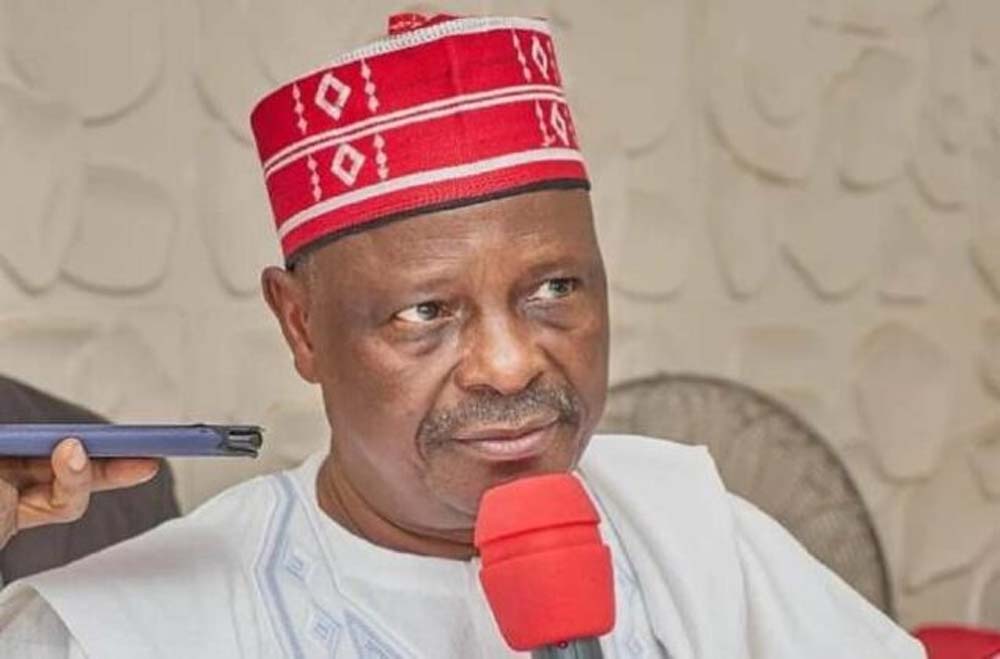
Kwankwaso Rejects ADC Claims, Says NDC Won’t Withdraw From 2027 Race
‘World Bank’s 124% Debt Interest Figure Misleading’ – Finance Ministry Insists

‘Election Rulings Have Diminished Nigeria’s Judiciary’ – Utomi

NDLEA Arrests 85-Year-Old Woman With 179kg of Cannabis in Edo

Ambakederimo Questions NNPC Over Crude Oil Sales, Upfront Payments

Trump’s Family Unveils New Cryptocurrency Platform

Senate Denies Receiving Petitions Against Tinubu’s Ambassadorial Nominees

Dangote Cement Lights Up Benue Host Communities With CSR Initiatives

Reps Recommend 3-year Jail Term For Aviation minister

Tems Sets New Record On Billboard Hot 100 Chart
