
Politics
Fresh ADC Twist: Faction Rejects Atiku Camp, Picks Chris Uba for 2027 Presidency

A fresh twist has emerged within the African Democratic Congress (ADC) ahead of the 2027 general elections, as a faction of the party has rejected the camp backing former Vice President Atiku Abubakar and instead unveiled businessman and academic, Prof. Chris Uba, as its presidential candidate.
The development comes days after another wing of the party reportedly produced Atiku as its presidential flagbearer following a nationwide primary election, deepening the leadership and candidate dispute within the ADC.
SEE ALSO: Atiku Floors Amaechi, Hayatu-Deen to Clinch ADC 2027 Presidential Ticket
Speaking during the formal presentation of candidates in Abuja on Sunday, the faction’s National Chairman, Bala Gombe, said the presidential ticket was zoned to Southern Nigeria in line with the principles of equity, fairness, inclusiveness, and federal character.
According to Gombe, three aspirants initially purchased the party’s Expression of Interest and Nomination Forms to contest for the presidential ticket.
They included Dr. Bashir Sani, Prince Williams Charles, and Prof. Chris Uba.
He explained that the party adopted the consensus option provided under the Electoral Act, leading to the emergence of Uba as the sole presidential candidate after the withdrawal of the other aspirants.
Gombe stated that the decision was taken in the interest of party unity and in compliance with relevant provisions of the Electoral Act, which recognize consensus as a lawful method of candidate selection.
He further announced the unveiling of 29 governorship candidates across the six geopolitical zones, saying they emerged through the party’s internal democratic processes.
Among those presented were Muhammad Usman Shuwa (Adamawa), Idris Adamu Yanoko (Kano), Shamsudin Muhammad (Kaduna), Ibrahim Al-Ameen Gumi (Zamfara), Babagana Mala (Borno), Musliu Babadele (Lagos), Rukayya Salami (Osun), Gbenga Gbenga (Oyo), Gada Suswan (Benue), Dijatu Abdul Salam (Nasarawa), and Christopher Benjo (Delta), among others.
The faction maintained that it had successfully concluded its governorship, National Assembly, and State House of Assembly primaries nationwide in accordance with the Constitution, the Electoral Act, and the party’s electoral guidelines.
The latest development signals growing internal divisions within the ADC as political parties intensify preparations, coalition talks, and strategic realignments ahead of the 2027 general elections.
Founded in 2005, the ADC has continued to position itself as an alternative political platform while seeking to strengthen its structures and expand its influence across Nigeria.
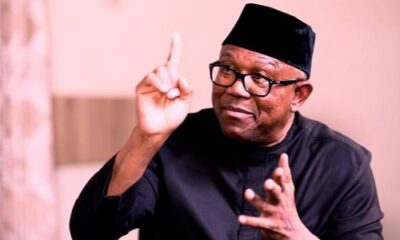


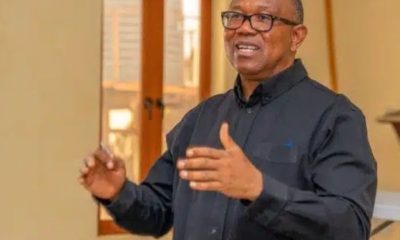


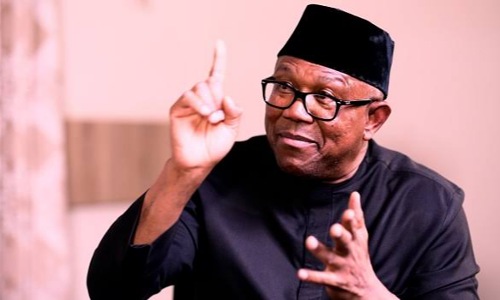
The presidential candidate of the Nigeria Democratic Congress (NDC), Peter Obi, has called for collective efforts to rebuild Nigeria, tackle corruption and end bad leadership, saying the country must work for everyone rather than a privileged few.
Obi made the call on in a statement titled “Rebuilding Nigeria” following his arrival in London from Basel, Switzerland, at 7 a.m. on Wednesday, October 21, 2026.
He disclosed that his busy schedule included several engagements and meetings with stakeholders in the United Kingdom, including British government officials and members of the Nigerian diaspora.
SEE ALSO: Peter Obi Slams Tinubu Over ₦7.7tn Debt Interest Against ₦6.2tn Revenue
According to him, he rounded off the day with an evening meeting organised by the COPDEM Chief and the NDC Director of Diaspora Affairs, which brought together other stakeholders in London.
Obi said the discussions centred on the collective responsibility of Nigerians to free the country from bad leadership, corruption and a lack of accountability, which he identified as challenges undermining national development.
He noted that these challenges had deprived millions of Nigerians of access to basic necessities, including quality healthcare, education and decent employment.
The former Anambra State governor stressed that Nigerians deserved a country where every life mattered, hard work was rewarded and citizens had a fair opportunity to succeed regardless of their backgrounds or connections.
“We must build a Nigeria where the child of nobody can become somebody without knowing anybody. A country that works for everyone, not just a privileged few,” he said.
Obi expressed optimism about the country’s future, declaring that “A New Nigeria is POssible.”
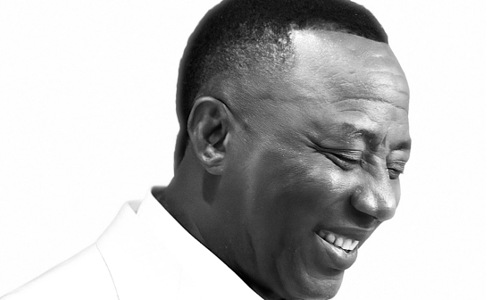
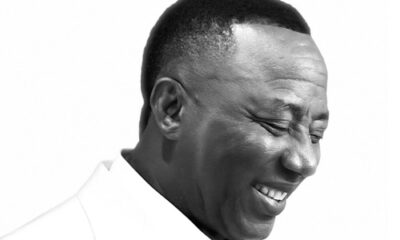
The African Action Congress (AAC) has asked President Bola Tinubu to approve the inauguration of its Presidential Campaign Council at the Presidential Villa, Aso Rock, Abuja, ahead of the 2027 general elections.
The party also requested food, drinks and other logistical support for 5,000 participants expected to attend the event from within and outside Nigeria.
The requests were contained in a letter dated October 21, 2026, and addressed to the President at the Presidential Villa. The party proposed November 11, 2026, for the inauguration ceremony.
SEE ALSO: 2027: Sowore Unveils Sweeping Agenda, Says AAC Will Transform Nigeria
In the letter, the AAC said its requests were based on the principles of multiparty democracy, political inclusiveness and equal treatment of political parties.
The party also referred to arrangements reportedly extended to the All Progressives Congress (APC) for a similar political engagement, arguing that its request should receive equal consideration.
The AAC said approving the requests would demonstrate the Presidency’s commitment to fairness and equal access to public institutions, regardless of political affiliation.
“We believe that granting this request would demonstrate the Presidency’s commitment to fairness, equal access, and the principle that public institutions must serve all Nigerians without partisan discrimination,” the letter stated.
The party further requested information on the applicable procedures and conditions for approval.
The letter was signed by the AAC National Secretary, Oshiokhue Philip Ikpeminoghena, on behalf of the party.
The proposed inauguration is part of the party’s preparations for the 2027 general elections.


The House of Representatives Committee on Petroleum Resources (Downstream) has launched investigations into petitions seeking the cancellation of gas distribution licences held by NIPCO Plc in five locations.
This is as the Committee accused the Executive Vice President (Downstream) of the Nigerian National Petroleum Company Limited (NNPC Ltd), Dr Mumuni Dagazu, of money laundering and abuse of office.
The Committee also constituted two sub-committees to conduct preliminary investigations into the petitions, which its Chairman, Ikenga Ugochinyere, described as serious complaints requiring urgent attention.
READ MORE: UNDC Assures on Readiness to Protect Oil, Gas Pipelines
The decision was announced on Monday in Abuja at the technical briefing marking the end of Downstream Week 2026.
The Sub-Committee investigating the allegations against Dagazau will be chaired by Aliyu Al-Mustapha, with Amobi Ogah as Deputy Chairman. It has seven days to conduct a preliminary investigation and report its findings to the main Committee.
The Sub-Committee examining the NIPCO petition will be chaired by Peter Aniekwe, while Shehu Dalhatu would serve as Deputy Chairman.
The petition against NIPCO calls for the investigation, suspension and cancellation of gas distribution licences issued by the Nigerian Midstream and Downstream Petroleum Regulatory Authority (NMDPRA) to the company for Lagos, Ogun, Oyo and Osun states, as well as the Lagos and Lekki Free Trade Zones.
In the second petition, the complainants accused Dagazau of money laundering and abuse of office. The Committee, however, stressed that the allegations had not been established and that the investigation would determine the merits of the complaints.
Addressing journalists at the event, Ugochinyere said the Committee had not reached any conclusion on either matter, assuring all parties of a fair hearing.
“These are allegations, and the Committee has reached no conclusion on them. All parties will be given a full and fair opportunity to be heard,” he said.
He added that the Committee would not ignore complaints touching on the integrity of the downstream petroleum sector and promised that Nigerians would be informed of the outcome of the investigations.
Neither NIPCO Plc nor Dagazau had publicly responded to the petitions as of the time of the briefing.
The investigations formed part of the Committee’s wider review of developments in the downstream petroleum sector during Downstream Week 2026, at which it also passed votes of confidence in President Bola Tinubu, the leadership of the NMDPRA and Alhaji Aliko Dangote.
The Committee said reforms in the sector were yielding results but identified pipeline security, reliable crude supply to domestic refineries and a properly regulated import market as areas requiring sustained government attention.
Ugochinyere praised the NMDPRA’s Chief Executive, Rabiu Umar, and the authority’s Executive Directors, saying their work had helped stabilise the sector.
Figures presented at the briefing indicated that “domestic refineries increased their contribution to national petrol supply by more than 75 per cent, with no supply shortfalls recorded and more than 25 days of national sufficiency maintained.”
The committee also cited “the commissioning of the Port Harcourt Petroleum Product Laboratory, the licensing of a petroleum liquid trading exchange and the finalisation of a framework for a national strategic stock of up to 20 days,” adding that, “plans are in place to raise the reserve to 90 days in 2027.”
Despite the progress, Ugochinyere insisted that energy security depended on effective pipeline protection and adequate crude supply to local refineries.
“There is no supply security without pipeline security,” he said, adding that importation should supplement verified shortfalls rather than become a permanent substitute for domestic production.
He also called for strict enforcement of the Domestic Crude Supply Obligation, saying local refineries must have reliable access to feedstock to remain viable.
The Committee disclosed that it had opened an inquiry into alleged underpayment for crude oil by some companies and questioned NNPCL over legacy transactions and refinery rehabilitation.
“We will not accept silence as an answer,” Ugochinyere warned.
The committee further urged the Federal Government to increase funding for pipeline surveillance and ensure timely provision of logistics to operators, arguing that improved security had contributed to the rise in crude oil production.
It expressed confidence that Nigeria could achieve its target of producing three million barrels of crude oil per day with sustained government support.
The committee also said it would continue to pursue amendments to the Petroleum Industry Act to strengthen provisions on crude supply to domestic refineries, licensing and protection of local refining investments, while maintaining a regulated import market.
Ugochinyere said the objective was to balance immediate security of supply with the long-term development of Nigeria’s domestic refining capacity.
“Our goal is balance: security of supply today, and a strong domestic refining industry for tomorrow,” he stressed.






Why Ebola Outbreaks Keep Returning to Africa, Dr Jean Kaseya Explains

Peter Obi Meets UK Officials, Diaspora Stakeholders on Rebuilding Nigeria

Grains-Laden Truck Falls on BRT Lane in Lagos

Ogun Police Chief Urges POWA to Turn Skills Centre into Industrial Hub

Thor Empowers Host Communities with 10 Cassava, Palm Oil Processing Plants

FG Puts Daily Gas Output at 8bcf

Trump’s Family Unveils New Cryptocurrency Platform

Senate Denies Receiving Petitions Against Tinubu’s Ambassadorial Nominees

Dangote Cement Lights Up Benue Host Communities With CSR Initiatives

Reps Recommend 3-year Jail Term For Aviation minister

Tems Sets New Record On Billboard Hot 100 Chart
