
NEWS
Fuel Scarcity: IPMAN Blames Private Depot Owners

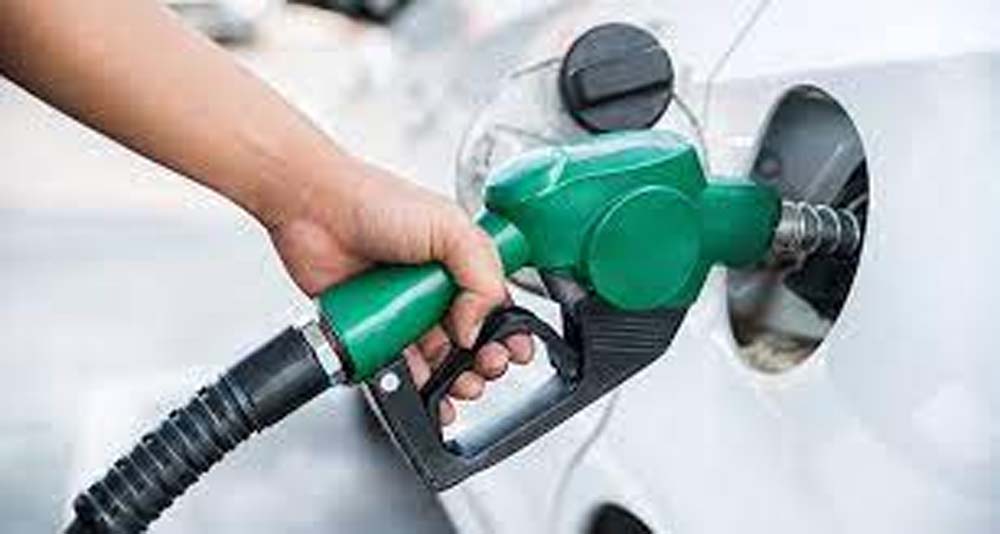
Nigerians have continued to groan over the scarcity of Premium Motor Spirit, popularly known as fuel in Lagos, Abuja, Akwa Ibom, Cross River and other cities in Nigeria.
This is as the Independent Petroleum Marketers Association of Nigeria, IPMAN, disclosed that the private depot owners should be blamed for the ravaging fuel scarcity.
It is gathered that citizens now resort to buying fuel at a whopping black market price of N500-700/Per litre because of the unending fuel unavailability.
The situation, newsmen gathered, was heightened over the weekend in Lagos and some major cities of the country, such as Calabar, capital of Akwa Ibom, where pump price has risen to N500 per litre.
In Calabar city, black market sellers have taken advantage of the scarcity selling for up to N700 per litre.
For instance, a keg of 5 litres of petrol is sold for at least N2500 in Maryland and Ajah of the State during the weekend.
In Abuja, along the Kubwa Expressway, only two of the over seven filling stations were seen dispensing fuel.
It is learnt that some filling stations have stock but refused to dispense the product. But black market sellers were seen with fuel on major roads in Abuja.
The development has caused untold hardship to Nigerians as transport fares, and prices of goods and services have been hiked in some cities.
However, the situation worsened in the last two days as commuters have trekked the distance to their destination in Lagos and Calabar.
Mrs Linda Iheanacho, a resident of Calabar, stated that she bought fuel at the price of N500/per litre on Sunday after spending hours on queue.
Similarly, Okon Mfon disclosed that for the past 3 days, getting fuel has been hell for most residents of Lagos.
He said life has been difficult for commuters and motorists in Lagos and its environs due to fuel scarcity.
Similarly, Emeka Ogenyi stated that his major fear has been on getting fuel for days now.
“You have the money but you can’t get fuel without staying on the queue for hours. This problem has been reoccurring for months. I call on the relevant authority to do the needful and save Nigerians from the avoidable stress and difficulties”, he said.
Reacting to the development in a chat with journalists on Sunday, Independent Petroleum Marketers Association of Nigeria (IPMAN) President, Elder Chinedu Okoronkwo, revealed that the Private Depot Owners are to be blamed for the scarcity.
He urged that the petrol distribution should be left in the hands of IPMAN, which will solve the issue of scarcity.
“There is enough product (fuel), but the distribution is the problem, it shouldn’t be left in the hands of private depot owners. Independent Petroleum Marketers Association of Nigeria, IPMAN, should deal directly with product distribution.
“Private Depot owners are the ones putting the country in this problem. The moment they say the Independent Petroleum Marketers Association of Nigeria, IPMAN, do the distribution directly, it will solve the problem and the price”, he said.
However, the Major Oil Marketers Association of Nigeria (MOMAN) has said that it is working with the Nigeria National Petroleum Company (NNPC) Ltd. to boost the distribution of petrol across the country.
The Chief Executive Officer of MOMAN, Mr Clement Isong said this in an interview with journalists during the weekend in a bid to address the current scarcity of petrol and long queues at filling stations.
Isong said the association had had a daily logistic emergency meeting with the downstream management of NNPCL on improving the supply of petrol.
He explained that the collaboration with NNPCL will enhance the distribution of petroleum products in the country.
“We are doing depot-to-depot check-in and check-out to enhance efficiency, and also have logistic supply meetings with NNPCL.
“There is also collaboration among our members to cushion supply to various MOMAN’s stations”, he stated.

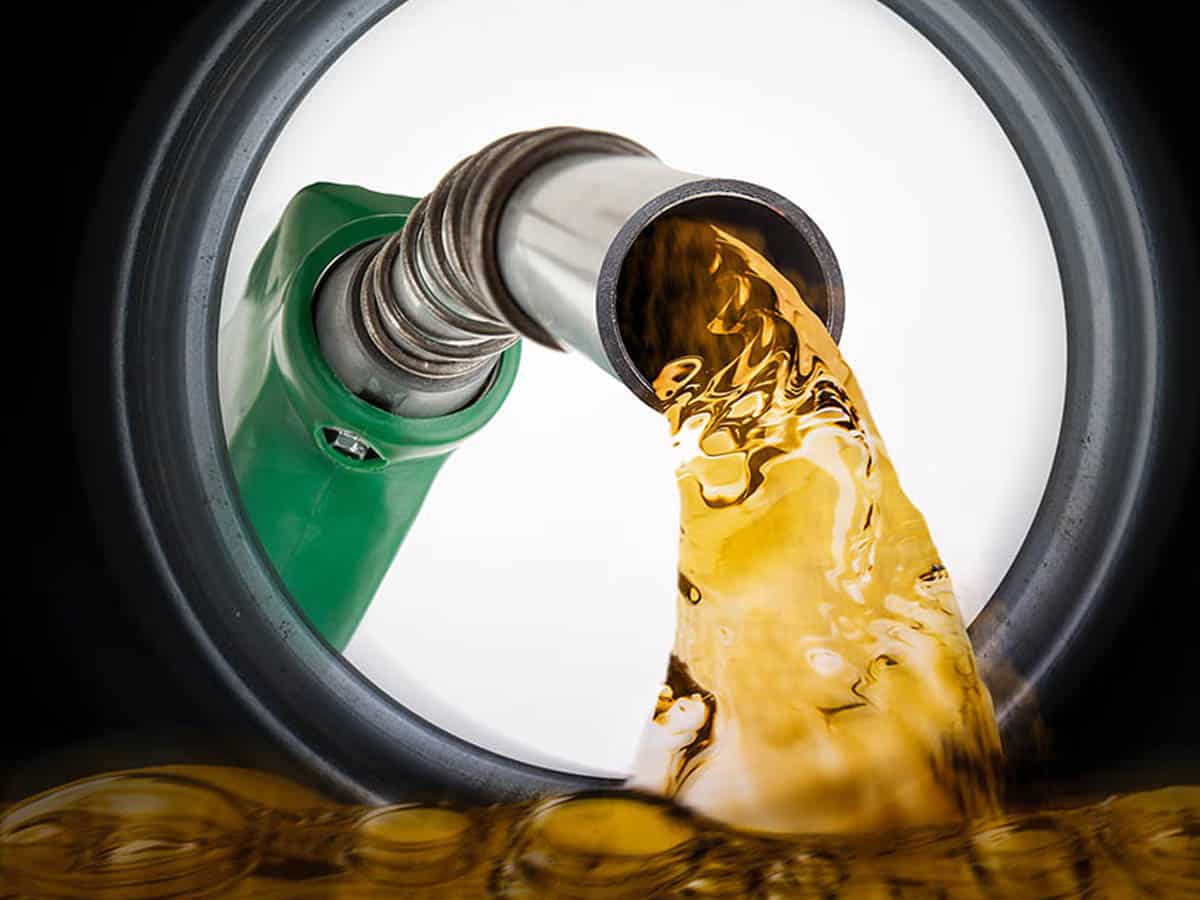

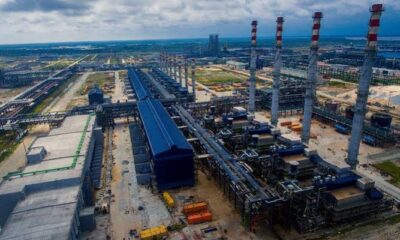



The Revenue Mobilisation, Allocation and Fiscal Commission (RMAFC) has commenced a fresh physical verification of disputed and newly drilled crude oil and gas well coordinates across nine states, in a move aimed at ensuring fairness and accuracy in the allocation of the 13 per cent derivation fund.
The exercise, covering the period from 2017 to date, was formally flagged off in Owerri, Imo State, on Wednesday, November 11, 2026, by the Commission’s Chairman, Dr Mohammed Bello Shehu.
The affected states are Delta, Ondo, Edo, Anambra, Imo, Bayelsa, Rivers, Cross River and Akwa Ibom.
SEE ALSO: How RMAFC Recovered Over N500bn For FG
Speaking at the flag-off ceremony, Shehu described the exercise as critical to ensuring transparency, accuracy and fairness in the administration of derivation revenue.
He explained that the Commission has a constitutional responsibility to monitor revenue accruals and disbursements from the Federation Account and ensure equitable distribution of derivation funds among oil and gas-producing states.
The RMAFC chairman stressed that determining the exact coordinates and geographical positions of oil and gas wellheads directly affects the legal and financial entitlements of the respective states.
He consequently charged members of the Inter-Agency Technical Committee (IATC) and deployed technical officers to carry out the assignment with diligence, precision and professionalism.
Shehu insisted that every verified coordinate, technical assessment and physical observation must be sufficiently accurate to withstand statutory scrutiny.
According to him, the exercise will involve examining disputed and newly drilled oil and gas well coordinates, physically verifying affected wellheads, plotting their locations using approved maps and considering relevant court decisions in resolving outstanding disputes.
He also directed that the committee’s harmonised technical report and findings be submitted exclusively to RMAFC for ratification and formal adoption.
The Inter-Agency Technical Committee comprises representatives of relevant technical institutions, including the Office of the Surveyor-General of the Federation (OSGoF), the National Boundary Commission (NBC) and the Nigerian Upstream Petroleum Regulatory Commission (NUPRC).
The Imo State Governor was represented at the event by the Commissioner for Petroleum, Hon. Emeka Mgbudem.
Other government officials and RMAFC commissioners in attendance included Hon. Adamu Abdu Fanda, Chairman of the Crude Oil Committee; Hon. Oladele Semiu Gboyega, Chairman of the Gas Committee; Hon. Ismail Mohammed Agaka, Chairman of the Public Affairs and Communication Committee; Ambassador Ayuba Jacob Ngbako; Hon. Akpan Imo Effiong; and Hon. Helen Bob Inafa.
Also present were the Imo State Commissioner for Lands, Surveyor Clement Nwabichie; Commissioner for Finance and Coordinating Economy, Mr Chucks Chukwuemeka; and Permanent Secretary, Ministry of Lands, Dr Angelina Ohiri.
The Commission disclosed that the verification exercise had been conducted previously but was being repeated to ensure that all issues raised were adequately addressed.
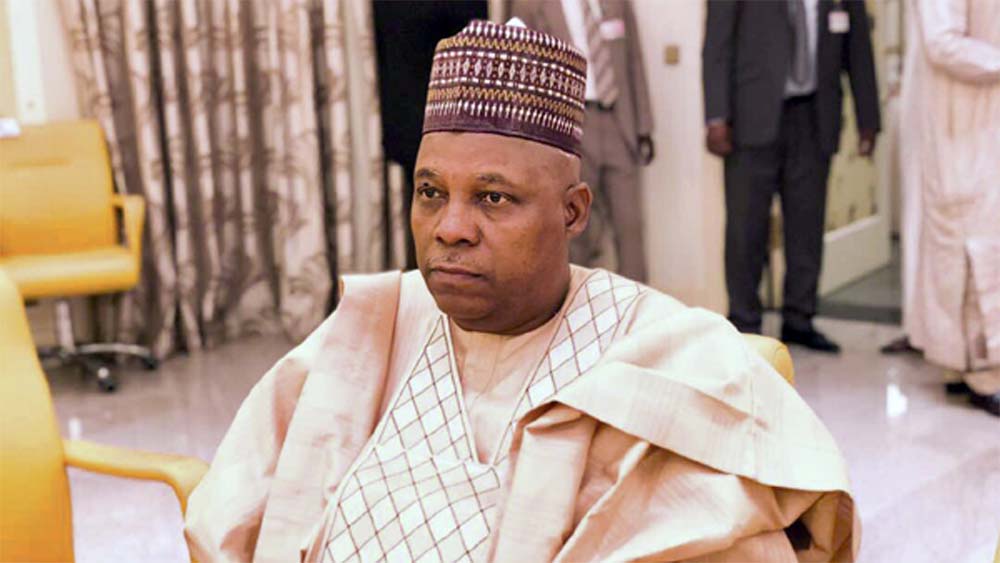
Vice President Kashim Shettima has paid a courtesy visit to the Palace of the Oba of Benin, Oba Ewuare II, ahead of the All Progressives Congress (APC) presidential campaign rally in Benin City, Edo State.
Shettima arrived at the historic royal palace on Thursday to pay homage to His Royal Majesty, Omo N’Oba N’Edo, Uku Akpolokpolo, Oba Ewuare II, CFR.
The visit highlights the significance of the Benin traditional institution, which has preserved its rich cultural heritage, kingship, artistry and diplomatic traditions for more than seven centuries.
SEE MORE: Shettima Arrives Jigawa for APC Presidential Campaign Rally, Tinubu to Inaugurate Four Projects
The Benin Palace remains one of Africa’s most historic royal institutions, representing the enduring legacy and cultural identity of the ancient Benin Kingdom.
The Vice President is in Edo State to participate in the APC presidential campaign rally scheduled to hold at the Samuel Ogbemudia Stadium in Benin City.

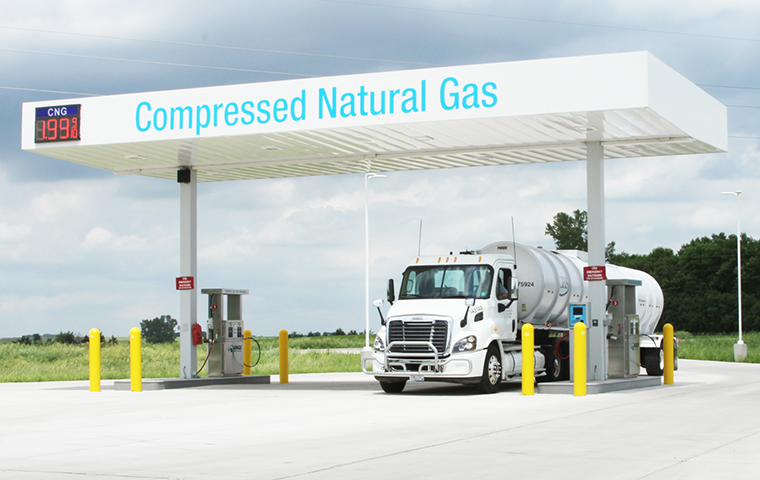
As part of efforts to expand access to cheaper alternative fuel and reduce transportation costs, the federal government has commissioned five Compressed Natural Gas (CNG) daughter and last-mile retail stations in Lagos State.
The facilities, developed by the Ibile Oil and Gas Corporation (IOGC) with support from the Midstream and Downstream Gas Infrastructure Fund (MDGIF), were commissioned on Wednesday by the Minister of State for Petroleum Resources (Gas), Ekperikpe Ekpo.
Speaking at the commissioning, Ekpo said Lagos occupied a special place in the public-service journey of President Bola Ahmed Tinubu, noting that his administration was extending the development philosophy pursued during his tenure as governor to the national level.
READ ALSO: NLNG, NCDMB Endow Research Chairs in Six Nigerian Varsities with $9m
He said Lagos had demonstrated the importance of long-term planning, institution building, infrastructure development and the mobilisation of private capital for economic growth.
According to him, the federal government is applying similar determination through the Renewed Hope Agenda to ensure that Nigeria’s abundant gas resources support industrial growth, businesses, transportation and job creation while reducing the cost pressures faced by citizens.
“Through the Renewed Hope Agenda, the President has made it clear that Nigeria’s abundant gas resources must work for Nigerians. They must power our industries, support businesses, improve transportation, create employment and, ultimately, reduce the cost pressures faced by ordinary citizens,” he said.
The five stations are located in Idimu and Abule Egba in Alimosho Local Government Area; Ogolonto in Ikorodu West Local Government Area; Ajah in Eti-Osa Local Government Area; and Oko-Oba in Agege Local Government Area.
Each facility has a CNG compression capacity of 24,000 standard cubic metres per day and a storage capacity of 9,800 standard cubic metres.
The stations are designed as last-mile retail outlets to bring CNG closer to consumers in their residential and business locations.
Ekpo said the facilities would improve access to alternative fuel for motorists and commercial transport operators, while supporting the government’s objective of expanding cleaner energy infrastructure nationwide.
“These stations represent access. They represent affordability. And they represent the determination of government to take the benefits of Nigeria’s gas resources directly to the people,” he said.
He disclosed that President Tinubu had directed the expansion of CNG infrastructure across the country, including the development of an additional 500 refuelling stations towards a planned national network of 1,000 stations.
He said the initiative was aimed at ensuring that the benefits of the country’s gas resources translated into lower transportation costs for Nigerians.
According to the minister, expanding CNG infrastructure in Lagos would provide motorists and commercial transport operators with viable alternative fuel options, while bringing cleaner energy closer to consumers.
“Our objective is therefore not simply to count the number of stations commissioned. Success must ultimately be measured by impact: whether the infrastructure helps reduce operating costs for transporters and businesses, whether those savings reach commuters, and whether Nigerian families begin to feel tangible relief,” he said.
Ekpo said the Ministry of Petroleum Resources (Gas), in collaboration with the Presidential CNG Initiative, MDGIF, state governments, investors and other industry stakeholders, was working to expand refuelling and associated infrastructure to improve access to cleaner and cheaper fuel.
He commended IOGC and the Lagos State Government for embracing the initiative, describing the project as an example of the federal government, state governments and private sector working together to develop critical infrastructure.
The minister also praised MDGIF for its catalytic role in supporting gas infrastructure development, assuring investors of the government’s commitment to providing an enabling environment for investments to translate into physical projects and economic benefits for Nigerians.






Tinubu’s SA Preaches Harnessing Oil Production for Industrial Growth
RMAFC Reopens Oil Wells Dispute, Begins Verification in Nine States

NNPC JV Deploys Football for Peace Amongst Rivers Host Comms
MDGIF Woos Foreign Investors for Nigeria’s $200bn Gas Infrastructure
Shettima Visits Oba of Benin Ahead of APC Presidential Campaign Rally in Edo

2027: Ika Artisans Pledge Five-Position Support for APC After Morka’s Engagement

Trump’s Family Unveils New Cryptocurrency Platform

Senate Denies Receiving Petitions Against Tinubu’s Ambassadorial Nominees

Dangote Cement Lights Up Benue Host Communities With CSR Initiatives

Reps Recommend 3-year Jail Term For Aviation minister

Tems Sets New Record On Billboard Hot 100 Chart
