
Other News
Full Text of President Buhari’s Democracy day speech

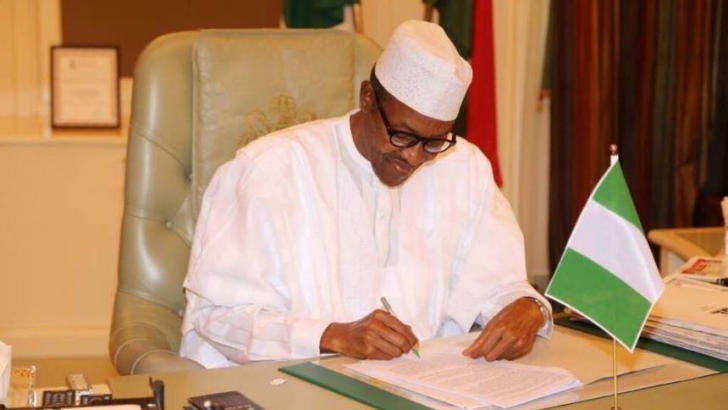
My compatriots,
It is one year today since our administration came into office. It has been a year of triumph, consolidation, pains and achievements. By age, instinct and experience, my preference is to look forward, to prepare for the challenges that lie ahead and rededicate the administration to the task of fixing nigeria. But i believe we can also learn from the obstacles we have overcome and the progress we made thus far, to help strengthen the plans that we have in place to put nigeria back on the path of progress. We affirm our belief in democracy as the form of government that best assures the active participation and actual benefit of the people. Despite the many years of hardship and disappointment the people of this nation have proved inherently good, industrious tolerant, patient and generous.
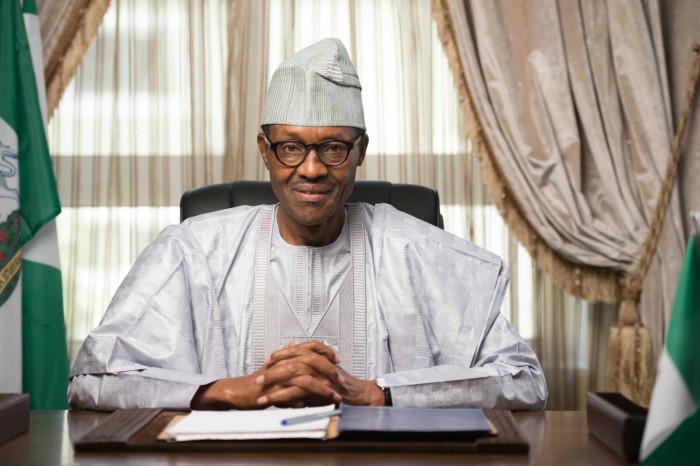
Nigeria’s President Buhari
The past years have witnessed huge flows of oil revenues. From 2010 average oil prices were $100 per barrel. But economic and security conditions were deteriorating. We campaigned and won the election on the platform of restoring security, tackling corruption and restructuring the economy. On our arrival, the oil price had collapsed to as low as $30 per barrel and we found nothing had been kept for the rainy day. Oil prices have been declining since 2014 but due to the neglect of the past, the country was not equipped to halt the economy from declining.
The infrastructure, notably rail, power, roads were in a decrepit state. All the four refineries were in a state of disrepair, the pipelines and depots neglected.
Huge debts owed to contractors and suppliers had accumulated. Twenty-seven states could not pay salaries for months. In the north-east, boko haram had captured 14 local governments, driven the local authorities out, hoisted their flags. Elsewhere, insecurity was palpable; corruption and impunity were the order of the day. In short, we inherited a state near collapse.
On the economic front, all oil dependent countries, nigeria included, have been struggling since the drop in prices. Many oil rich states have had to take tough decisions similar to what we are doing. The world, nigeria included has been dealing with the effects of three significant and simultaneous global shocks starting in 2014: a 70% drop in oil prices. Global growth slowdown. Normalization of monetary policy by the united states federal reserve.
Our problems as a government are like that of a farmer who in a good season harvests ten bags of produce. The proceeds enable him to get by for rest of the year. However, this year he could only manage 3 bags from his farm. He must now think of other ways to make ends meet.
From day one, we purposely set out to correct our condition, to change nigeria. We reinforced and galvanized our armed forces with new leadership and resources. We marshaled our neighbours in a joint task force to tackle and defeat boko haram. By the end of december 2015, all but pockets and remnants had been routed by our gallant armed forces. Our immediate focus is for a gradual and safe return of internally displaced persons in safety and dignity and for the resumption of normalcy in the lives of people living in these areas.
Efcc was given the freedom to pursue corrupt officials and the judiciary was alerted on what nigerians expect of them in the fight against corruption. On the economy, in particular foreign exchange and fuel shortages, our plan is to save foreign exchange by fast tracking repair of the refineries and producing most of our fuel requirements at home. And by growing more food in nigeria, mainly rice, wheat and sugar we will save billions of dollars in foreign exchange and drastically reduce our food import bill.
We resolved to keep the naira steady, as in the past, devaluation had done dreadful harm to the nigerian economy. Furthermore, i support the monetary authority’s decision to ensure alignment between monetary policy and fiscal policy. We shall keep a close look on how the recent measures affect the naira and the economy. But we cannot get away from the fact that a strong currency is predicated on a strong economy. And a strong economy pre-supposes an industrial productive base and a steady export market. The measures we must take, may lead to hardships. The problems nigerians have faced over the last year have been many and varied. But the real challenge for this government has been reconstructing the spine of the nigerian state. The last twelve months have been spent collaborating with all arms of government torevive our institutions so that they are more efficient and fit for purpose: that means a bureaucracy better able to develop and deliver policy that means an independent judiciary, above suspicion and able to defend citizen’s rights and dispense justice equitably. That means a legislature that actually legislates effectively and above all; that means political parties and politicians committed to serving the nigerian people rather than themselves.
These are the pillars of the state on which democracy can take root and thrive. But only if they are strong and incorruptible. Accordingly, we are working very hard to introduce some vital structural reforms in the way we conduct government business and lay a solid foundation on which we can build enduring change.
An important first step has been to get our housekeeping right. So we have reduced the extravagant spending of the past. We started boldly with the treasury single account, stopping the leakages in public expenditure.
We then identified forty-three thousand ghost workers through the integrated payroll and personal information system. That represents pay packets totaling n4.2 billion stolen every month. In addition, we will save twenty-three billion per annum from official travelling and sitting allowances alone.
Furthermore, the efficiency unit will cut costs and eliminate duplications in ministries and departments. Every little saving helps. The reduction in the number of ministries and work on restructuring and rationalization of the mdas is well underway. When this work is complete we will have a leaner, more efficient public service that is fit for the purpose of changing nigeria for the good and for good.
As well as making savings, we have changed the way public money is spent. In all my years as a public servant, i have never come across the practice of padding budgets. I am glad to tell you now we not only have a budget, but more importantly, we have a budget process that is more transparent, more inclusive and more closely tied to our development priorities than in the recent past. 30% of the expenditure in this budget is devoted to capital items. Furthermore, we are projecting non-oil revenues to surpass proceeds from oil. Some critics have described the budget exercise as clumsy. Perhaps. But it was an example of consensus building, which is integral to democratic government. In the end we resolved our differences.
We have, therefore, delivered significant milestones on security, corruption and the economy. In respect of the economy, i would like to directly address you on the very painful but inevitable decisions we had to make in the last few weeks specifically on the pump price of fuel and the more flexible exchange rate policy announced by the central bank. It is even more painful for me that a major producer of crude oil with four refineries that once exported refined products is today having to import all of its domestic needs. This is what corruption and mismanagement has done to us and that is why we must fight these ills.
As part of the foundation of the new economy we have had to reform how fuel prices had traditionally been fixed. This step was taken only after protracted consideration of its pros and cons. After comprehensive investigation my advisers and i concluded that the mechanism was unsustainable.
We are also engaged in making recoveries of stolen assets some of which are in different jurisdictions. The processes of recovery can be tedious and time consuming, but today i can confirm that thus far: significant amount of assets have been recovered. A considerable portion of these are at different stages of recovery. Full details of the status and categories of the assets will now be published by the ministry of information and updated periodically. When forfeiture formalities are completed these monies will be credited to the treasury and be openly and transparently used in funding developmental projects and the public will be informed.
On the niger delta, we are committed to implementing the united nations environment programme report and are advancing clean-up operations. I believe the way forward is to take a sustainable approach to address the issues that affect the delta communities. Re-engineering the amnesty programmes is an example of this. The recent spate of attacks by militants disrupting oil and power installations will not distract us from engaging leaders in the region in addressing niger delta problems. If the militants and vandals are testing our resolve, they are much mistaken. We shall apprehend the perpetrators and their sponsors and bring them to justice.
The policy measures and actions taken so far are not to be seen as some experiment in governance. We are fully aware that those vested interests who have held nigeria back for so long will not give up without a fight. They will sow divisions, sponsor vile press criticisms at home and abroad, incite the public in an effort to create chaos rather than relinquish the vice-like grip they have held on nigeria.
The economic misfortune we are experiencing in the shape of very low oil prices has provided us with an opportunity to restructure our economy and diversify. We are in the process of promoting agriculture, livestocks, exploiting our solid mineral resources and expanding our industrial and manufacturing base. That way, we will import less and make the social investments necessary to allow us to produce a large and skilled workforce.
Central bank of nigeria will offer more fiscal incentives for business that prove capable of manufacturing products that are internationally competitive. We remain committed to reforming the regulatory framework, for investors by improving the ease of doing business in nigeria.
Meanwhile, the first steps along the path of self-sufficiency in rice, wheat and sugar – big users of our scarce foreign exchange – have been taken. The labour intensive farming enterprise (life), will boost the economy and ensure inclusive growth in long neglected communities. Special intervention funds through the bank of agriculture will provide targeted support. Concerns remain about rising cost of foods such as maize, rice, millet, beans and gari. Farmers tell me that they are worried about the cost of fertilizers, pesticides and the absence of extension services. The federal and state governments are on the same page in tackling these hurdles in our efforts at increased food production and ultimately food security.
I would like to take this opportunity to express my appreciation for the increasing role that our women are playing in revitalizing the agricultural sector. Modern farming is still hard and heavy work and i salute our nigerian women in sharing this burden. In this respect i am very pleased to announce that the government will shortly be launching the national women’s empowerment fund, which i have approved to provide n1.6 billion in micro-finance loans to women across the nation to assist in rehabilitating the economies of rural communities, particularly those impacted by the insurgency and conflict.
With respect to solid minerals, the minister has produced a roadmap where we will work closely with the world bank and major international investors to ensure through best practices and due diligence that we choose the right partners. Illegal mining remains a problem and we have set up a special security team to protect our assets. Special measures will be in place to protect miners in their work environment.
For too long, ours has been a society that neglects the poor and victimizes the weak. A society that promotes profit and growth over development and freedom. A society that fails to recognize that, to quote the distinguished economist amartya sen “ poverty is not just lack of money. It is not having the capability to realize one’s full potential as a human being.”
So, today, i am happy to formally launch, by far the most ambitious social protection programme in our history. A programme that both seeks to start the process of lifting many from poverty, while at the same time creating the opportunity for people to fend for themselves. In this regard, five hundred billion naira has been appropriated in the 2016 budget for social intervention programmes in five key areas. We are committed to providing job creation opportunities for five hundred thousand teachers and one hundred thousand artisans across the nation. 5.5 million children are to be provided with nutritious meals through our school feeding programme to improve learning outcomes, as well as enrolment and completion rates. The conditional cash transfer scheme will provide financial support for up to 1 million vulnerable beneficiaries, and complement the enterprise programme – which will target up to 1 million market women; four hundred and sixty thousand artisans; and two hundred thousand agricultural workers, nationwide. Finally, through the education grant scheme, we will encourage students studying sciences, technology, engineering and maths, and lay a foundation for human capital development for the next generation
I would like to pay a special tribute to our gallant men and women of the armed forces who are in harm’s way so that the rest of us can live and go about our business in safety. Their work is almost done. The nation owes them a debt of gratitude.
Abroad, we want to assure our neighbours, friends and development partners that nigeria is firmly committed to democratic principles. We are ready partners in combating terrorism, cyber crimes, control of communicable diseases and protection of the environment. Following on the paris agreement, cop 21, we are fully committed to halting and reversing desertification. Elsewhere, we will intensify efforts to tackle erosion, ocean surge, flooding and oil spillage which i referred to earlier by implementing the united nations environment programme (unep) report.
We are grateful to the international community notably france, the us, uk and china for their quick response in helping to tackle the recent ebola outbreak in our sub-region. We also acknowledge the humanity shown by the italian and german governments in the treatment of boat people, many fleeing from our sub-region because of lack of economic opportunity. We thank all our partners especially several countries in the eu.
We appreciate the valuable work that the un agencies, particularly unicef, icrc, the world food program have been doing. We must also appreciate the world bank, the gates foundation, the global fund and educate a child of qatar are for the excellent work in our health, education and other sectors.
Fellow citizens let me end on a happy note. To the delight of all, two of the abducted chibok girls have regained their freedom. During the last one year, not a single day passed without my agonizing about these girls. Our efforts have centred around negotiations to free them safely from their, mindless, captors. We are still pursuing that course. Their safety is of paramount concern to me and i am sure to most nigerians. I am very worried about the conditions those still captured might be in. Today i re-affirm our commitment to rescuing our girls. We will never stop until we bring them home safely. As i said before, no girl should be put through the brutality of forced marriage and every nigerian girl has the right to an education and a life choice.
I thank you and appeal to you to continue supporting the government’s efforts to fix nigeria.






The Economic and Financial Crimes Commission (EFCC) and the National Judicial Institute (NJI) have called for specialised judges, improved digital evidence management and legal reforms to accelerate the prosecution of corruption and other financial crime cases in Nigeria.
The recommendations were contained in a communiqué issued at the end of the 8th Capacity Building Workshop for Justices and Judges, held in Abuja from October 13 to 15, 2026.
The workshop, organised by the EFCC in collaboration with the NJI, was themed “Investigation and Prosecution of Economic and Financial Crimes in a Digital Age.”
SEE MORE: EFCC Arrests Enugu Estate MD Over Alleged N128m Land Scam
According to a statement signed by the EFCC’s Head of Media and Publicity, Dele Oyewale, the workshop brought together justices and judges from across the country, alongside EFCC investigators and prosecutors, for three days of lectures and deliberations.
Participants resolved that designating specialised judges and court staff to handle corruption cases, alongside targeted training, would help address delays in the administration of justice.
According to the communiqué, delays in resolving corruption cases “will be greatly reduced by designating specialised judges and court staff to handle such cases as well as equipping such judges and courts with necessary skills through training to ensure efficient, certain and consistent application of existing laws in the administration of justice.”
The participants also called for a balance between protecting the rights of defendants and ensuring the speedy administration of justice.
They said the criminal justice system “must strike the proper balance between fairness, efficiency and legal certainty in the protection of individual rights on one hand and the speedy administration of justice, on the other hand.”
To achieve this, they recommended reviewing relevant provisions of the Administration of Criminal Justice Act where necessary.
EFCC, NJI Seek Better Digital Evidence Management
The participants called for stronger investigation standards, including improved digital management protocols, to ensure that prosecutions rely on credible and admissible evidence.
They also recommended a more coordinated approach to obtaining confessional statements, stressing that institutionalising video recording and other necessary safeguards would protect suspects’ rights and preserve the integrity of investigations.
On asset recovery, the communiqué described Non-Conviction Based Asset Forfeiture proceedings as “an effective tool for recovery of stolen assets.”
However, participants stressed that its use “must follow extant legal protocols, adherence to human rights standards and strong institutional oversight.”
They also called for procedural reforms to allow extensions of time for freezing suspected proceeds of financial crimes.
Participants Recommend AI Guidelines for Judiciary
The communiqué further called on Ministries, Departments and Agencies in the anti-corruption sector to work with the National Assembly and the Judiciary to develop governance protocols and policy guidelines for adopting and deploying artificial intelligence in the administration of justice.
Participants also urged stakeholders to familiarise themselves with existing laws and regulations governing the investigation, prosecution and adjudication of financial crime cases involving virtual assets.
These include the Investment and Securities Act (2025), the Executive Order on Virtual Assets Coordination (2026), the Rules on Digital and Virtual Assets Operations (2026) and the Proceeds of Crime Act (2022).
The workshop also highlighted the need for increased investment in digital forensic laboratories, technology infrastructure and specialised training for investigators, prosecutors and judicial officers.
Participants called for continuous training to equip judicial officers and anti-corruption agencies with the skills required to address evolving economic and financial crimes in line with global best practices.
On the use of open-source intelligence, they said investigators, prosecutors and judicial officers should treat it primarily as a source of investigative leads and corroboration, while ensuring that evidence relied upon in court complies with applicable evidential rules.
NJI, NJC Urged to Develop Certification Courses
The communiqué recommended that the NJI, working with the National Judicial Council (NJC), develop accredited certificate and diploma courses to equip judges and other relevant stakeholders with the skills required to improve justice delivery, subject to any necessary legislative review.
Participants also called for sustained coordination among stakeholders in the administration of criminal justice, particularly in sharing information on emerging trends in the investigation and prosecution of economic and financial crimes in the digital age.
They urged heads of courts to use insights from the workshop to develop policies clarifying judicial practice on the technical issues discussed.
The workshop featured nine interactive sessions covering the admissibility of confessional statements, garnishee proceedings, abuse of court processes, asset forfeiture, artificial intelligence in investigations and prosecutions, virtual asset recovery and digital forensics.
Attendees included justices of the Supreme Court and Court of Appeal, judges of the Federal High Court, State High Courts and the High Court of the Federal Capital Territory, alongside other stakeholders in the judiciary and anti-corruption sector.
Participants expressed appreciation to President Bola Ahmed Tinubu, who was represented at the workshop by Vice-President Kashim Shettima, as well as other stakeholders and organisers who contributed to its success.

The Lagos State Traffic Management Authority (LASTMA) has alerted motorists to traffic delays along Ogunnusi Road towards Ojodu-Berger due to ongoing rehabilitation work.
LASTMA disclosed this in a post on its official X account on Sunday, stating that the road rehabilitation was being carried out by the Lagos State Public Works Corporation (LSPWC).
According to the agency, “The ongoing work is affecting traffic flow, with vehicles moving at a slower pace in both directions.”
ALSO READ: Chaos On Lagos-Ibadan Expressway As LASTMA Shuts Otedola Bridge
To ease the situation, LASTMA said a contraflow arrangement had been introduced for motorists travelling from Omole Junction towards Vis Junction.
“A contraflow arrangement is in place for vehicles coming from Omole Junction towards Vis Junction to facilitate the movement of traffic,” the agency stated.
LASTMA added that its personnel had been deployed to manage traffic and ensure the continuous movement of vehicles around the affected area.
“Our personnel are on ground managing the traffic situation and ensuring the continuous flow of vehicular movement,” the agency said.
The traffic management authority advised motorists to remain patient and exercise caution while the rehabilitation work continues.
“Motorists are advised to exercise patience and drive with caution while the rehabilitation work continues,” LASTMA stated.

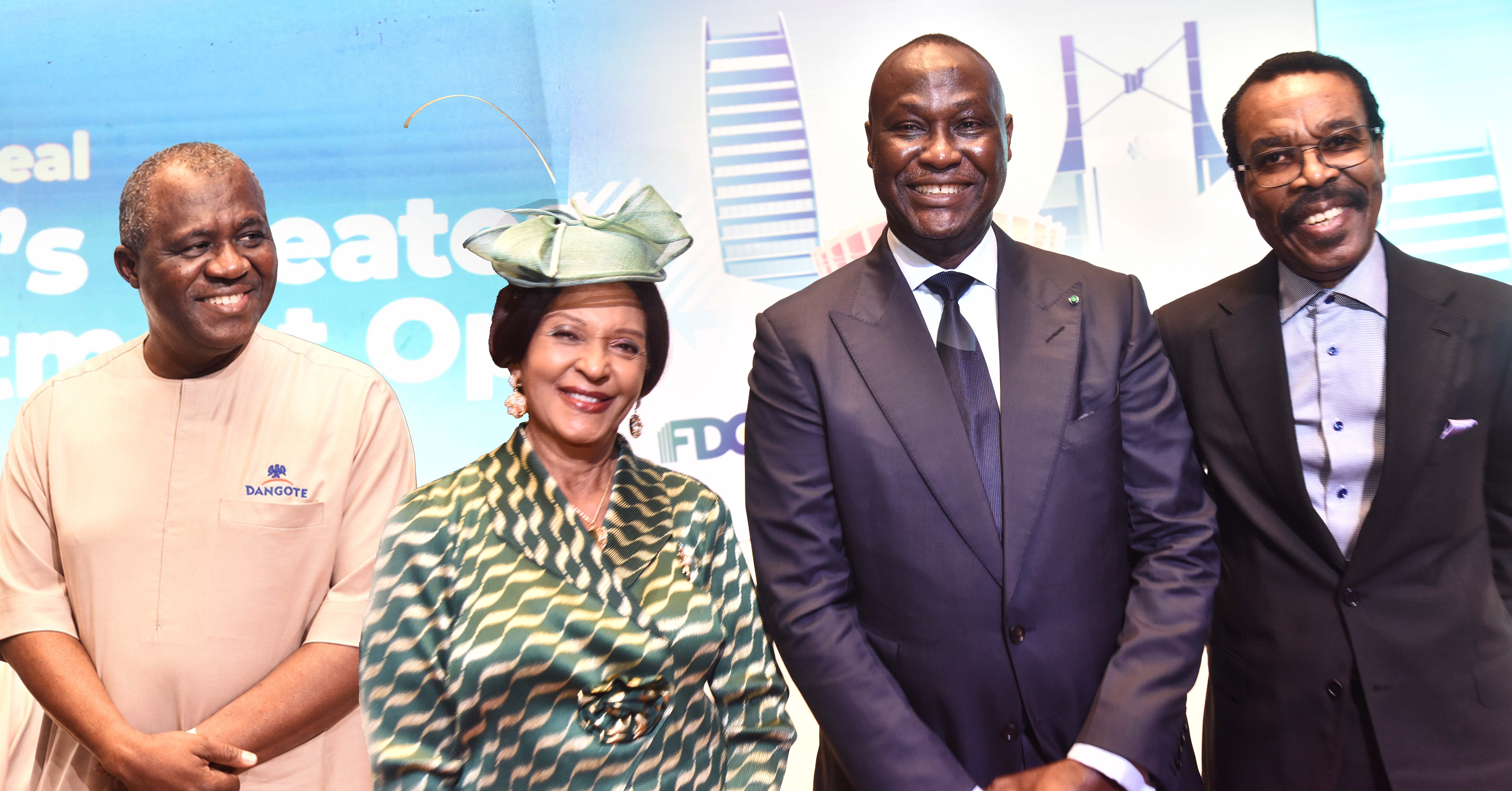
Leading economists, financial experts and industry stakeholders have described the Dangote Group’s investments as major drivers of industrialisation and economic transformation across Nigeria and Africa.
The experts cited the Group’s impact on job creation, import substitution, foreign exchange conservation and economic competitiveness.
They voiced their thoughts at the Lagos Economic Summit themed “The Real Deal: Africa’s Greatest Investment Opportunity,” where they urged governments to implement policies that strengthen local industries and accelerate economic diversification.
President and Chief Executive Officer of the Africa Finance Corporation (AFC), Samaila Zubairu, commended the Dangote Group’s sustained investments across Africa, describing them as critical to unlocking the continent’s economic potential.
He noted that while recent economic reforms have improved foreign exchange stability, strengthened reserves and eased inflationary pressures, the focus must now shift to growth in industry, productivity and employment.
READ ALSO: NMDPRA Shares July Domestic Cooking Gas Supply Details
Also speaking, Chief Executive Officer of the Centre for the Promotion of Private Enterprise (CPPE), Muda Yusuf, said industrialisation remains the most effective path to sustainable economic development.
He called for better alignment of trade and industrial policies, stressing that local manufacturers require strategic support to compete effectively and drive broader economic benefits.
Founder and CEO of Nairametrics, Ugodre Obi-Chukwu, said Africa’s growing population presents a significant industrial opportunity, noting that investments such as the Dangote Refinery are helping to retain capital within the continent while strengthening local production capacity.
In his keynote address, Managing Director of Financial Derivatives Company Limited, Bismarck Rewane, said Nigeria is gradually transitioning from a consumption-led economy to one driven by investment and production.
He added that sustained investments in productive sectors will continue to stimulate growth, create jobs and improve living standards.
Participants at the summit also advocated stronger credit infrastructure, improved national identification systems and increased investment in skills development to enhance the productivity and global competitiveness of Africa’s growing youth population.
Photo Caption: From Left – Chief Economist, Dangote Industries Limited, Dr. Hassan Mahmud; Lady Maiden Alex-Ibru; Chairman of Occasion/Special Guest of Honour, Samaila Zubairu; Key Note Speaker Session 1, Bismarck Rewane; during the Real Deal: Africa’s Greatest Investment Opportunity, Sponsored by Dangote Industry Limited in Lagos on Thursday 3, September 2026.






Renaissance, Sterling Bank Back Indigenous Oil and Gas Contractors Financially
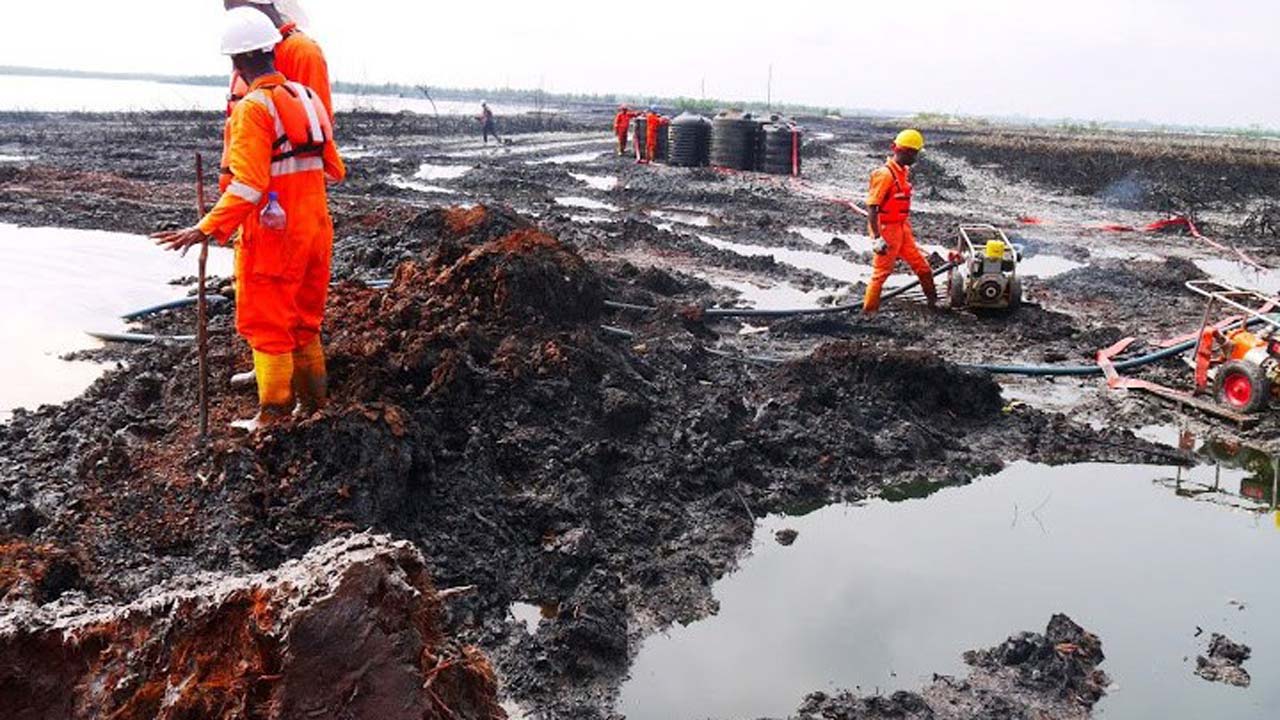
Group Demands Fair Share of NNPC Jobs for Ogoni Oil Exploration

NNPC Ltd Exploration Spending Down 87%
200 Imo Teachers Benefit from NCDMB’s Effective Curriculum Training
FG to Launch National Lead Poisoning Prevention Plan Wednesday

EndSARS Memorial: ‘Nigerians Still Deserve Answers’ – Atiku

Trump’s Family Unveils New Cryptocurrency Platform

Senate Denies Receiving Petitions Against Tinubu’s Ambassadorial Nominees

Dangote Cement Lights Up Benue Host Communities With CSR Initiatives

Reps Recommend 3-year Jail Term For Aviation minister

Tems Sets New Record On Billboard Hot 100 Chart
