Connect with us

NEWS

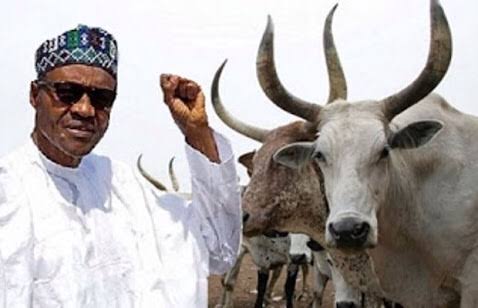
Herders Lament Buhari’s Neglect, Demand Justice

Published

on


Herders in Nigeria have expressed their disappointment with President Muhammadu Buhari, claiming that he has not adequately addressed their concerns since assuming office.


The Coalition of Pastoralists Association of Nigeria, representing the herders, stated that there has been a lack of engagement between President Buhari and the herding community.


Auwal Gonga, Vice President of Tabital Pulaaku International, Nigeria Chapter disclosed this while speaking at a press conference in Abuja.


Gonga was accompanied by Baba Ngelzarma, the National President of Miyetti Allah Cattle Breeders Association of Nigeria, and Salim Umar, President General of Fulbe Global Development and Right Initiatives.


He said, “He never engaged stakeholders. Even if he thinks he can’t engage us, we have members who are former ministers, and former governors among us. One of them is Isa Yuguda, why can’t Buhari call him and engage him? It is wrong for the government to have done so and that is why they have failed.”


Gonga called on the incoming administration to do better in uniting herders and farmers in the country.


“We are calling on the new government to change policy and strategy. It should create a ministry of livestock. Tanzania, and Cameron among others have it. We believe this coming administration will do well to unite both the farmers and the herders. Unfortunately, our brother Buhari failed.”


Contrarily, Umar refuted allegations that the herdsmen were responsible for the killings that occurred in various states, including Plateau, Oyo, Gombe, and Benue.


He emphasized that members of the herding community had also suffered as victims during these crises.


Umar further urged the security agencies to take swift action by apprehending and bringing to justice all individuals involved in these atrocious acts.


Umar said, “We call on the state governments to note that activities of the vigilante in the past had only resulted in more heightened reprisals from bandits who have been unleashing terror in the surrounding areas.


“The security agencies in charge of these areas should do more to protect the innocent people who are continuously harassed by bandits. We believe the security agencies have the wherewithal to put a stop to this dastardly act of cowardice against unarmed civilians.”
 

NEWS

Old Stock doesn’t Justify High Fuel Prices – FG

Published

on

Cost of stock of fuel purchased during the face-off between the United States and Iran should not be the determinant of fuel prices in the Nigerian market.

This is the position of the Nigerian government, who also cautioned petroleum marketers against using the cost of old stock as a benchmark for selling prices, insisting that the benefits of lower replacement costs must reflect on what consumers are paying.

According to the government, the continued disconnect between falling international crude oil prices and domestic petrol prices had become a source of concern. She therefore cautioned petroleum marketers against sustaining high pump prices of fuels, particularly the Premium Motor Spirit (PMS), despite declining global crude prices as doing so would deny Nigerians the benefits of lower replacement costs in a deregulated market.

The concerns were expressed at a stakeholders’ meeting on cost-reflective pricing of PMS held at the headquarters of the Nigerian Midstream and Downstream Petroleum Regulatory Authority (NMDPRA) on Monday in Abuja.

ALSO READ: Dangote Cement Unveils Sustainability Milestones

It was gathered that the government convened a stakeholders’ meeting on the fair and cost-reflective pricing of PMS, which brought together representatives of the Dangote Petroleum Refinery & Petrochemicals (DPRP), the Federal Competition and Consumer Protection Commission (FCCPC), the Petroleum Products Retail Outlets Owners Association of Nigeria (PEPROOAN), and other key players in the downstream petroleum sector.

In attendance were chief executives and representatives of TotalEnergies, Eterna Plc, Matrix Energy Group, the Depot and Petroleum Products Retailers Association of Nigeria (DPPRAN), the Major Energy Marketers Association of Nigeria MEMAN), the Independent Petroleum Marketers Association of Nigeria (IPMAN), the Nigerian Association of Road Transport Owners (NARTO), as well as officials of the NMDPRA.

During the meeting, the Minister of State for Petroleum Resources (Oil), Senator Heineken Lokpobiri, said temporary gains realised from inventories purchased when crude oil prices were higher should not become the basis for sustaining elevated pump prices after global oil prices have declined.

According to the minister, as marketers replenish their stocks at lower costs, reductions in procurement expenses should be reflected promptly in ex-depot and retail petrol prices in line with the principles of a competitive and efficient deregulated market.

Lokpobiri said the government understood that petrol pricing was influenced by several factors beyond crude prices, including exchange rates, logistics and supply chain costs, but insisted that marketers must distinguish between legitimate replacement costs and extraordinary gains arising from inventory management.

“I am aware that PMS pricing is influenced by several factors beyond crude oil prices, but it is equally important to distinguish between genuine replacement cost and windfall gains arising from inventory management.

“Temporary gains realised from inventories acquired at higher prices should not become the basis for sustaining elevated pump prices after replacement costs have declined. As inventories are replenished at lower costs, the benefits of those lower costs should be transmitted to consumers in a timely and transparent manner. That is the essence of a competitive and efficiently functioning market,” he stated.

The minister added that the government remained committed to protecting consumers in the post-subsidy era, stressing that deregulation was not designed to create opportunities for excessive pricing or market distortions but to deepen competition, improve efficiency and deliver value to Nigerians.

He further warned that sustaining high energy costs beyond what prevailing market conditions justify could worsen inflationary pressures and undermine the gains recorded in moderating the country’s inflation rate.

The minister urged petroleum marketers and operators to immediately transmit the benefits of falling global crude oil prices to Nigerian consumers, warning that deregulation should not be exploited to sustain high petrol prices and generate windfall gains.

His comments come amid growing public concerns over the slow pace of reductions in petrol prices despite the sharp moderation in crude oil prices in recent months.

According to the minister, international crude prices traded between $61 and $65 per barrel in January before surging above $118 per barrel in April following heightened geopolitical tensions in the Middle East. However, prices have since declined to around $71 per barrel after the easing of the tensions.

He noted that while the earlier rise in crude prices exerted upward pressure on petrol prices, the subsequent decline had not been reflected proportionately in domestic pump prices.

“Ordinarily, such movements in crude oil prices should be reflected in the pricing of refined petroleum products. While the initial increase in crude prices understandably exerted upward pressure on PMS prices, the subsequent moderation in crude oil prices has not translated into a commensurate reduction in pump prices across the domestic market.

“This disconnect has understandably raised concerns. PMS peaked at about N1,596 per litre in May and currently sells at around N1,296 per litre. While there has been some reduction, the adjustment has not been commensurate with the decline in underlying market conditions,” the minister said.

The minister warned that keeping energy prices artificially high could worsen inflationary pressures and undermine the economic gains achieved by the government over the past year.

He said energy remained a critical input across virtually every segment of the economy and that unjustified high fuel prices translated into higher transportation costs, food prices and production expenses.

“When the cost of energy remains elevated beyond what prevailing market conditions justify, the results translate to inflation. While considerable progress has been made in moderating inflation from the highs experienced in 2024, when inflation stood at 34 per cent, the latest figures show that inflation currently stands at 15.9 per cent.

“Sustaining high energy costs where underlying market fundamentals have improved risks undermining these gains and slowing down the recovery that Nigerians are beginning to experience,” he added.

The minister, however, commended the economic reforms of President Bola Tinubu, saying the removal of fuel subsidy, the crude-for-naira initiative and other executive interventions had laid the foundation for a more competitive and investment-driven downstream petroleum industry.

He said, “The Federal Government remains unwavering in its commitment to protect public interest post-deregulation. Deregulation was never intended to create opportunities for excessive pricing or market distortions but rather to promote efficiency, deepen competition and ultimately deliver value to Nigerians.”

Lokpobiri consequently directed the NMDPRA to intensify market surveillance and enforce pricing transparency across the downstream value chain.

“I urge the Authority to strengthen market surveillance and enforce pricing transparency across the supply chain to ensure that reductions in underlying costs are reflected promptly in ex-depot and retail prices. Consumers should have confidence that prices are determined fairly and not by information asymmetry or anti-competitive practices.”

He also called for the speedy operationalisation of the National Strategic Stock, describing it as a critical instrument for safeguarding national energy security and moderating future price shocks.

“The National Strategic Stock will strengthen national energy security, reduce exposure to supply disruptions and moderate price volatility. There is urgency in ensuring that this mechanism becomes fully operational,” he said.

Earlier in his opening remarks, the Authority Chief Executive of the NMDPRA, Rabiu Umar, said the meeting was convened at the directive of the minister to address the growing concerns surrounding petrol pricing and ensure that Nigerians benefit from improvements in global market conditions.

Umar recalled that a similar engagement with operators in the domestic gas sector had recently resulted in a noticeable reduction in liquefied petroleum gas prices, expressing optimism that the same collaborative approach could deliver results in the petrol market.

“Just two weeks ago, many of us gathered in a similar forum to discuss the domestic gas sector. The candid dialogue and the actionable wins we secured during that session are already bearing fruit. Notably, we have seen LPG prices coming down significantly across the market, and we look forward to seeing even more reduction within the next two weeks.

“It is exactly this kind of tangible success that inspired today’s gathering. When regulators and industry operators sit at the same table, we do not just debate challenges, we engineer solutions,” he said.

The NMDPRA boss acknowledged that global crude prices had moderated significantly in recent weeks but lamented that the domestic retail market had yet to adjust accordingly.

“As a responsible regulatory authority, it is our duty to step in alongside you, our valued partners, to interrogate the market forces, understand the operational bottlenecks and directly address this disconnect between falling replacement costs and sustained retail prices.

“Deregulation is not a licence for market distortion or unfair consumer pricing. It is intended to drive efficiency, maximise value and protect the public interest.

“Sustainable profitability for marketers and consumer welfare are not mutually exclusive. We need to build a transparent ecosystem where the benefits of market improvements are passed down to the Nigerian consumer in a timely and fair manner,” Umar added.

He stressed that the objective of the meeting was not to dictate prices but to collaborate with industry stakeholders on practical solutions that would keep businesses viable while protecting consumers.

Continue Reading

International News

Hamas Dissolves Gaza Government After 19 Years in Power

Published

on

Gaza Deadline Expires: Palestinians Flee Amidst Israeli Troop Buildup

The Palestinian Islamist movement, Hamas, has officially dissolved the governing body that administered the Gaza Strip for nearly 19 years, marking a major political development amid ongoing efforts to implement a ceasefire agreement with Israel.

The announcement was made on Monday by Ismail al-Thawabta, head of Hamas’ Government Media Office, who confirmed that the head of the government’s emergency committee, Mohammed al-Farra, had resigned and the committee had been dissolved to facilitate a peaceful transition of civilian governance.

ALSO READ: Israel Says Slain Al Jazeera Journalist Was Hamas Operative

According to al-Thawabta, administrative responsibilities will now be transferred to the National Committee for the Administration of Gaza (NCAG), a technocratic body established by the Board of Peace created by US President Donald Trump following the ceasefire brokered between Hamas and Israel in October 2025.

Hamas spokesperson Hazem Qassem described the decision as a significant step aimed at removing obstacles to the political process.

“Hamas has taken a new step in that it will no longer be in charge of the Gaza Strip in order to remove any pretexts for the occupation, which continues its aggression and war of extermination,” Qassem said.

He added that the movement is fully prepared to hand over governmental responsibilities to the NCAG and expressed hope that the committee would soon be allowed to enter Gaza and begin its work.

A Hamas official also revealed that the group had informed other Palestinian factions of the decision during recent meetings in Cairo. The factions reportedly welcomed the move, describing it as a serious effort to enable the new committee to assume responsibility for governing the territory.

The NCAG, headed by Palestinian technocrat Ali Shaath, has so far remained outside Gaza due to reported Israeli objections to its entry into the enclave.

Hamas has governed Gaza since 2007 after seizing control from rival Palestinian faction Fatah following its victory in the 2006 legislative elections.

ALSO READ: Israel Says Slain Al Jazeera Journalist Was Hamas Operative

Although the movement has repeatedly expressed its willingness to step away from day-to-day governance since the ceasefire took effect, negotiations over its disarmament and the future political administration of Gaza have remained deadlocked.

The first phase of the ceasefire agreement saw the release of Israeli hostages held by Hamas in exchange for Palestinian prisoners detained by Israel.

However, talks on the second phase—which includes Hamas’ disarmament and a gradual withdrawal of Israeli forces from Gaza—have stalled.

Israeli forces have instead expanded their military presence in the territory, reportedly controlling nearly 70 percent of Gaza.

Hamas insists that a Palestinian administration must first be established before it considers surrendering its weapons, while Israel continues to reject both Hamas remaining in power and an immediate return of the Palestinian Authority to govern Gaza.

The future governance of Gaza remains one of the biggest unresolved issues in negotiations aimed at securing a lasting peace in the region.

Continue Reading

NEWS

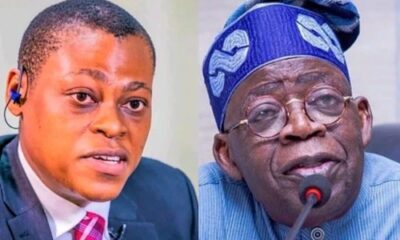
Peter Obi Demands Tinubu’s Resignation, Says Governance Has Collapsed

Published

on

Former Labour Party presidential candidate, Peter Obi, has called on President Bola Ahmed Tinubu to resign from office or abandon any plans to seek re-election in 2027, accusing his administration of failing to address Nigeria’s worsening insecurity and demonstrating what he described as a lack of compassion for victims.

Obi made the call in a statement shared on his X account on Monday after visiting Oyo State Governor Seyi Makinde over the continued captivity of schoolchildren abducted more than 50 days ago.

SEE ALSO: Tinubu’s Adviser Masari Bags International Leadership Award, Receives US Congressional Commendation

The former Anambra State governor said the Federal Government’s handling of the abduction and the country’s growing security challenges reflected a complete collapse of governance, adding that many Nigerians now feel abandoned.

According to him, the prolonged captivity of the schoolchildren and the increasing wave of kidnappings across the country highlight the consequences of poor leadership.

“The ultimate cost of uncompassionate leadership, as evident in the country today, is turning citizens’ frustration into deep, volatile resentment,” Obi said.

“It is even more traumatising when the leader presiding over that collapse demonstrates clear incapacity and a lack of compassion.”

Obi expressed sympathy with the Oyo State Government and the families of the abducted pupils, saying they had every reason to feel disappointed after more than 50 days without any meaningful progress in securing the children’s release.

He disclosed that he had repeatedly spoken about the incident and appealed to the kidnappers to free the children.

He also revealed that he travelled to Ibadan on July 3 with political economist Prof. Pat Utomi to express solidarity with Governor Makinde and the affected families.

During the visit, Obi said he shared his experience in tackling insecurity as governor of Anambra State and recalled how former Presidents Olusegun Obasanjo, Umaru Musa Yar’Adua and Goodluck Jonathan regularly contacted state governors whenever serious security challenges arose.

Obi, however, said he was shocked to learn that President Tinubu had allegedly not called Governor Makinde over the abduction.

Drawing comparisons with the 2014 Chibok schoolgirls’ abduction, Obi recalled that Tinubu was among those who strongly criticised then-President Goodluck Jonathan and called for his resignation over the handling of the crisis.

“I vividly recall that the current President, Bola Tinubu, led a team of vocal critics who called for President Jonathan’s immediate resignation over the incident. That call for immediate resignation should actually be the case in this matter,” he stated.

The Labour Party chieftain further claimed that more than 13 school kidnappings had occurred under the current administration, arguing that the continued abduction of schoolchildren and other Nigerians showed that governance had failed.

“The situation reflects a total lack of capacity and compassion, compounded by glaring insensitivity. Amid such an apparent display of incompetence, the President should either resign or, at the very least, abstain from seeking re-election for the sake of our dear country.

This call is patriotic, not political. A New Nigeria is Possible,” Obi concluded.

Continue Reading

Copyright © 2022. Biztellers, powered by Alphaxristi.

0
Would love your thoughts, please comment.x
()
x