
NEWS
Full Text Of President Tinubu’s Broadcast On Sunday August 4, 2023

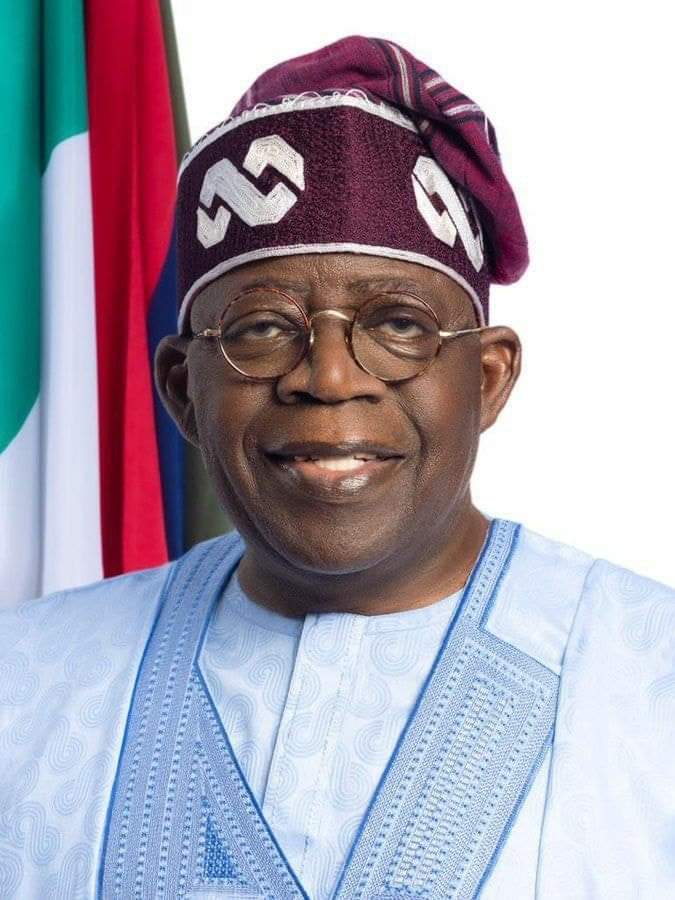
BROADCAST BY HIS EXCELLENCY BOLA AHMED TINUBU, PRESIDENT AND COMMANDER-IN-CHIEF OF THE ARMED FORCES OF THE FEDERAL REPUBLIC OF NIGERIA ON THE NATIONWIDE PROTEST SUNDAY 4TH AUGUST 2024
My fellow Nigerians,
I speak to you today with a heavy heart and a sense of responsibility, aware of the turmoil and violent protests unleashed in some of our states.
ALSO READ: President Tinubu To Address The Nation In National Broadcast
Notably among the protesters were young Nigerians who desired a better and more progressive country where their dreams, hopes, and personal aspirations would be fulfilled.
I am especially pained by the loss of lives in Borno, Jigawa, Kano, Kaduna and other states, the destruction of public facilities in some states, and the wanton looting of supermarkets and shops, contrary to the promise of protest organisers that the protest would be peaceful across the country. The destruction of properties sets us back as a nation, as scarce resources will be again used to restore them.
4. I commiserate with the families and relations of those who have died in the protests. We must stop further bloodshed, violence and destruction.
5. As President of this country, I must ensure public order. In line with my constitutional oath to protect the lives and property of every citizen, our government will not stand idly by and allow a few with a clear political agenda to tear this nation apart.
6. Under the circumstances, I hereby enjoin protesters and the organisers to suspend any further protest and create room for dialogue, which I have always acceded to at the slightest opportunity. Nigeria requires all hands on deck and needs us all – regardless of age, party, tribe, religion or other divides, to work together in reshaping our destiny as a nation. To those who have taken undue advantage of this situation to threaten any section of this country, be warned: The law will catch up with you. There is no place for ethnic bigotry or such threats in the Nigeria we seek to build.
7. Our democracy progresses when the constitutional rights of every Nigerian are respected and protected. Our law enforcement agencies should continue to ensure the full protection of lives and properties of innocent citizens in a responsible manner.
8. My vision for our country is one of a just and prosperous nation where each person may enjoy the peace, freedom, and meaningful livelihood that only democratic good governance can provide – one that is open, transparent and accountable to the Nigerian people.
9. For decades, our economy has remained anemic and taken a dip because of many misalignments that have stunted our growth. Just over a year ago, our dear country, Nigeria, reached a point where we couldn’t afford to continue the use oftemporary solutions to solve long-term problems for the sake of now and our unborn generations. I therefore took the painful yet necessary decision to remove fuel subsidies and abolish multiple foreign exchange systems which had constituted a noose around the economic jugular of our Nation and impeded our economic development and progress.
10. These actions blocked the greed and the profits that smugglers and rent-seekers made. They also blocked the undue subsidies we had extended to our neighbouring countries to the detriment of our people, rendering our economy prostrate. These decisions I made were necessary if we must reverse the decades of economic mismanagement that didn’t serve us well. Yes, I agree, the buck stops on my table. But I can assure you that I am fully focused on delivering good governance to the people.
In the past 14 months, our government has made significant strides in rebuilding the foundation of our economy to carry us into a future of plenty and abundance. On the fiscal side, aggregate government revenues have more than doubled, hitting over 9.1 trillion Naira in the first half of 2024 compared to the first half of 2023, due to our efforts at blocking leakages, introducing automation, and mobilising funding creatively without additional burden on the people. Productivity is gradually increasing in the non-oil sector, reaching new levels and taking advantage of the opportunities in the current economic ambience.
My dear brothers and sisters, we have come this far. Coming from a place where our country spent 97% of all our revenue on debt service; we have been able to reduce that to 68% in the last 13 months. We have also cleared legitimate outstanding foreign exchange obligations of about $5billion without any adverse impact on our programmes.
This has given us more financial freedom and the room to spend more money on you, our citizens, to fund essential social services like education and healthcare. It has also led to our state and Local Governments receiving the highest allocations ever in our country’s history from the Federation Account.
We have also embarked on major infrastructure projects across the country. We are working to complete inherited projects critical to our economic prosperity, including roads, bridges, railways, power, and oil and gas developments. Notably, the Lagos-Calabar Coastal Highway and Sokoto-Badagry Highway projects will open up 16 connecting states, creating thousands of jobs and boosting economic output through trade, tourism and cultural integration.
Our once-declining oil and gas industry is experiencing a resurgence on the back of the reforms I announced in May 2024 to address the gaps in the Petroleum Industry Act. Last month, we increased our oil production to 1.61million barrels per day, and our gas assets are receiving the attention they deserve. Investors are coming back, and we have already seen two Foreign Direct Investments signed of over half a billion dollars since then.
Fellow Nigerians, we are a country blessed with both oil and gas resources, but we met a country that had been dependent solely on oil-based petrol, neglecting its gas resources to power the economy. We were also using our hard-earned foreign exchange to pay for, and subsidise its use. To address this, we immediately launched our Compressed Natural Gas Initiative (CNG) to power our transportation economy and bring costs down. This will save over two trillion Naira a month, being used to import PMS and AGO and free up our resources for more investment in healthcare and education.
To this end, we will be distributing a million kits of extremely low or no cost to commercial vehicles that transport people and goods and who currently consume 80% of the imported PMS and AGO.
We have started the distribution of conversion kits and setting up of conversion centres across the country in conjunction with the private sector. We believe that this CNG initiative will reduce transportation costs by approximately 60 percent and help to curb inflation.
Our administration has shown its commitment to the youth by setting up the student loan scheme. To date, 45.6billion Naira has already been processed for payment to students and their respective institutions
I encourage more of our vibrant youth population to take advantage of this opportunity. We established the Consumer Credit Corporation with over N200billion to help Nigerians to acquire essential products without the need for immediate cash payments, making life easier for millions of households. This will consequently reduce corruption and eliminate cash and opaque transactions. This week, I ordered the release of an additional N50billion Naira each for NELFUND – the student loan, and Credit Corporation from the proceeds of crime recovered by the EFCC.
Additionally, we have secured $620million under the Digital and Creative Enterprises (IDiCE) – a programme to empower our young people, creating millions of IT and technical jobs that will make them globally competitive. These programmes include the 3Million Technical Talents scheme. Unfortunately, one of the digital centres was vandalised during the protests in Kano. What a shame!
In addition, we have introduced the Skill-Up Artisans Programme (SUPA); the Nigerian Youth Academy (NIYA); and the National Youth Talent Export Programme (NATEP).
Also, more than N570 billion has been released to the 36 states to expand livelihood support to their citizens, while 600,000 nano-businesses have benefitted from our nano-grants. An additional 400,000 more nano-businesses are expected to benefit.
Furthermore, 75,000 beneficiaries have been processed to receive our N1million million micro and small-business single-digit interest loans, starting this month. We have also built 10 MSME hubs within the past year, created 240,000 jobs through them and 5 more hubs are in progress, which will be ready by October this year.
Payments of N1 billion each are also being made to large manufacturers under our single-digit loans to boost manufacturing output and stimulate growth.
I signed the National Minimum Wage into law last week, and the lowest-earning workers will now earn at least N70,000 a month.
Six months ago in Karsana, Abuja, I inaugurated the first phase of our ambitious housing initiative, the Renewed Hope City and Estate. This project is the first of six we have planned across the nation’s geopolitical zones. Each of these cities will include a minimum of 1,000 housing units, with Karsana itself set to deliver 3,212 units
In addition to these city projects, we are also launching the Renewed Hope Estates in every state, each comprising 500 housing units. Our goal is to complete a total of 100,000 housing units over the next three years. This initiative is not only about providing homes but also about creating thousands of jobs across the nation as well as stimulating economic growth.
We are providing incentives to farmers to increase food production at affordable prices. I have directed that tariffs and other import duties should be removed on rice, wheat, maize, sorghum, drugs, and other pharmaceutical and medical supplies for the next 6 months, in the first instance, to help drive down the prices.
I have been meeting with our Governors and key Ministers to accelerate food production. We have distributed fertilisers. Our target is to cultivate more than 10 million hectares of land to grow what we eat. The Federal Government will provide all necessary incentives for this initiative, whilst the states provide the land, which will put millions of our people to work and further increase food production. In the past few months, we have also ordered mechanized farming equipment such as tractors and planters, worth billions of Naira from the United States, Belarus, and Brazil. I can confirm to you that the equipment is on the way.
My dear Nigerians, especially our youth, I have heard you loud and clear. I understand the pain and frustration that drive these protests, and I want to assure you that our government is committed to listening and addressing the concerns of our citizens.
But we must not let violence and destruction tear our nation apart. We must work together to build a brighter future, where every Nigerian can live with dignity and prosperity.
The task before us is a collective one, and I am leading the charge as your president. A lot of work has gone into stabilising our economy and I must stay focused on ensuring that the benefits reach every single Nigerian as promised.
My administration is working very hard to improve and expand our national infrastructure and create more opportunities for our young people.
Let nobody misinform and mis-educate you about your country or tell you that your government does not care about you. Although there have been many dashed hopes in the past, we are in a new era of Renewed Hope. We are working hard for you, and the results will soon be visible and concrete for everyone to see, feel, and enjoy.
Let us work together to build a brighter future for ourselves and for generations to come. Let us choose hope over fear, unity over division, and progress over stagnation. The economy is recovering; Please, don’t shut out its oxygen. Now that we have been enjoying democratic governance for 25 years, do not let the enemies of democracy use you to promote an unconstitutional agenda that will set us back on our democratic journey. FORWARD EVER, BACKWARD NEVER!
In conclusion, security operatives should continue to maintain peace, law, and order in our country by following the necessary conventions on human rights, to which Nigeria is a signatory. The safety and security of all Nigerians are paramount.
Thank God — and Thank you for your attention, and may God continue to bless our great Nation. Thank you very much.






Nigerian national Ekene Chukwuma has said he returned to Nigeria with assistance linked to Oseni Rufai rather than the Nigerians in Diaspora Commission (NiDCOM), while renewing allegations against the commission’s chairperson, Abike Dabiri-Erewa, over his travel documents.
Chukwuma made the remarks in an interview in which he explained how he returned to Nigeria after spending months at a deportation camp in India.
RELATED NEWS: Rufai Oseni Row: NiDCOM Breaks Silence on Nigerians Detained in India, Addresses Ekene’s Case
“My name is Kenneth Chukwu, from Enugu State,” he said, introducing himself before explaining how he returned to the country.
“I came back here with the assist of Osini Roufai, a good friend of him,” he said.
Chukwuma denied that NiDCOM facilitated his return, alleging that the commission had published false information about his case.
“NiDCOM made a lots of false, uh, news acquisition against me, which is still in Abike Dabiri handle in Twitter,” he said.
He also accused Dabiri-Erewa of sharing his expired international passport and a travel certificate he claimed was issued six months after he entered the detention camp.
“He also, she also posted my international passport that expired. He also, she also posted my TC that issued after 6 months,” he said.
His comments renew questions surrounding the handling of his case and the circumstances under which he obtained the documents needed to return to Nigeria.
Chukwuma’s detention in India previously sparked a public disagreement between ARISE News presenter Oseni Rufai and Dabiri-Erewa over NiDCOM’s response to reports of his situation.
Oseni raised concerns about Chukwuma’s detention and the commission’s handling of the case, while Dabiri-Erewa defended NiDCOM’s position and explained the process for submitting information to the commission.
NiDCOM subsequently issued its account of Chukwuma’s detention, stating that he had been arrested in India over a visa overstay and addressing the circumstances surrounding his travel documents.
The differing accounts prompted public debate about the commission’s response to Nigerians facing immigration difficulties abroad.
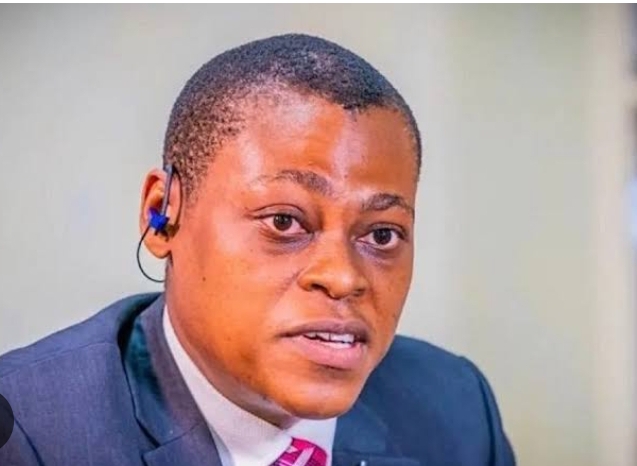
Rufai Oseni has challenged political analyst Olabode Sowunmi over the Federal Government’s 30-day petrol discount, questioning whether the intervention amounts to a return of fuel subsidy despite claims that the discount is being borne by the Nigerian National Petroleum Company Limited (NNPC).
The exchange occurred during an edition of The Morning Show on Arise News, where Oseni questioned Sowunmi about the financial implications of the petrol discount and other measures introduced to cushion the impact of fuel prices.
Oseni argued that several elements of the government’s intervention could be regarded as forms of subsidy, insisting that NNPC’s ownership structure must be considered when determining who ultimately bears the cost.
SEE MORE: ‘Another Speech to Tell Us, It Is Well’ — Oseni Rufai Reacts to Tinubu’s Address
“No matter how you try to explain it away, a subsidy is a subsidy,” Oseni said.
He challenged the argument that the discount should not be classified as a government subsidy simply because NNPC was responsible for providing it.
“We’re talking like NNPC is not owned by [the government] and heavily equity-based by the Ministry of Finance Incorporated,” he said.
Oseni identified the 30-day discount, forward sales of crude oil to domestic refineries, a proposed price ceiling, the removal of road levies and the consideration of an excess-profit tax among the measures he believed could amount to different forms of subsidy.
He argued that forward sales of crude oil to domestic refineries, with increased volumes as production grows, could help shield petrol pump prices from fluctuations in the international market.
Oseni also questioned the proposed negotiation of a price ceiling of ₦1,350 on landing and ex-country costs, arguing that government intervention to moderate prices contradicted the principle of allowing market forces to determine them.
“You are not supposed to come in to do this. Let me go back to your words: forces of market supply and demand should do this, but you have now come in to do this. That’s another form of subsidies,” he said.
He further cited the removal of road levies and cooperation with state governments under new tax laws as part of the measures requiring scrutiny.
After listing the interventions, Oseni demanded that Sowunmi explain their financial implications and identify who would ultimately pay for the petrol discount.
“But tie this with the most important question, actually, that you skipped: How much will this cost NNPC, and who pays for it? Don’t evade that question. Tell us the cost item and how much, who will pay for it,” Oseni said.
Sowunmi Defends His Position
In his response, Sowunmi argued that a government subsidy should be determined by whether the government bears the difference between the total cost of a product and its selling price.
He explained that a subsidy occurs when the government assumes the financial burden created by the gap between the cost of a product and the price at which it is sold.
“In the case of the discount that has been announced, it is borne by NNPC. So that cannot be…” Sowunmi said before Oseni interrupted.
Oseni challenged the distinction, insisting that NNPC’s ownership made it necessary to establish whether the cost could ultimately be linked to the government.
“Wait, not—who owns NNPC? Please answer. No, no, a straight question, and you can go ahead. Who owns NNPC?” Oseni asked.
Sowunmi responded that he had been invited to contribute to the discussion and should be allowed to complete his explanation.
“You asked, you asked NNPC because you believe—you asked me a question because you believe I have something to say. You cannot—you cannot tell me how to talk, so just be…” he said.
Oseni subsequently repeated his question about NNPC’s ownership, prompting Sowunmi to urge him to exercise patience.
“Basically, you need to be a bit patient and just…” Sowunmi responded.
The available transcript ends during the exchange, with no further explanation of the financial arrangements or conclusion to the discussion provided.
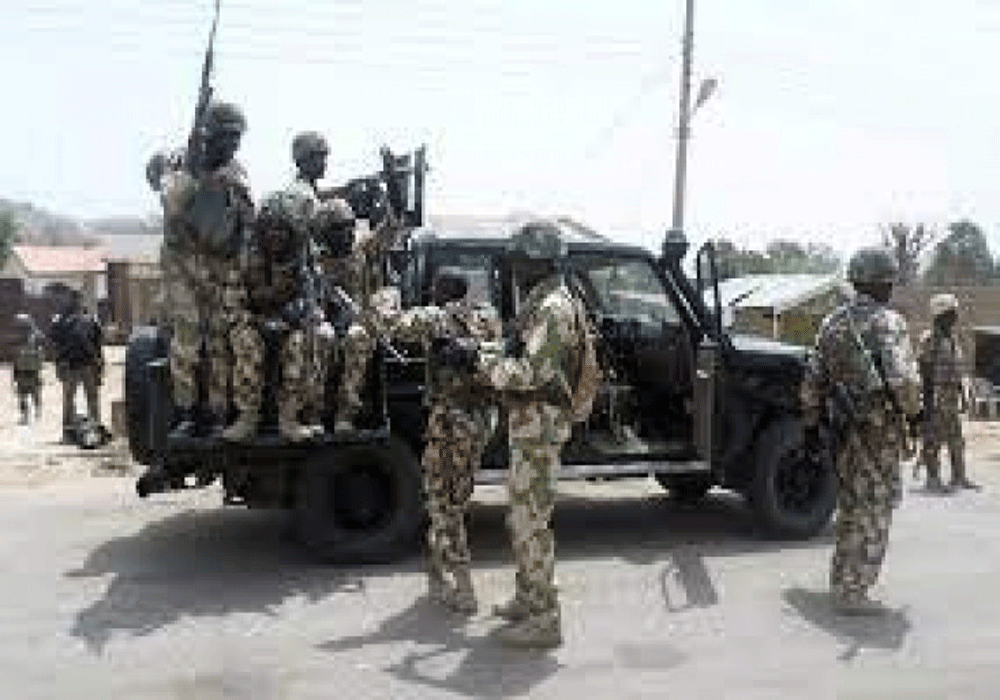
Human rights defender and Amnesty International volunteer, Lawrence Zongo, has been released from the custody of the Nigerian Army in Jos, Plateau State, after spending 10 days in detention.
His release comes after Amnesty International and the Take-It-Back (TIB) Movement demanded his immediate release, raising concerns over his alleged incommunicado detention at the Nigerian Army’s 3 Division headquarters in Jos.
ALSO READ: How Troops Forced Kidnappers to Abandon Abducted Army Lieutenant Colonel in Enugu
“Zongo is out,” a source privy to the information said on Thursday.
Zongo was arrested on October 5 while visiting relatives receiving treatment at a military hospital within Maxwell Khobe Cantonment, Rukuba Barracks, the headquarters of the Army’s 3 Division.
He had reportedly gone to the facility to assist family members who were attacked by gunmen in Meyango, Bassa Local Government Area of Plateau State, on Sunday night.
Sources familiar with the incident said one of Zongo’s first cousins died from injuries sustained in the attack before he arrived at the hospital late Monday morning.
Following his arrest, sources alleged that Zongo was held without charge and denied access to his lawyers and family members.
Sources also claimed that he was wearing Ray-Ban Meta smart glasses when he visited the military facility, suggesting that this might have contributed to the soldiers’ decision to detain him. However, the claim had not been independently verified.
On October 8, Amnesty International raised the alarm over what it described as the arbitrary and incommunicado detention of its member, demanding that the military either release him immediately or hand him over to the appropriate civilian authorities.
The organisation said efforts to gain access to Zongo had been unsuccessful and called on the Army to clarify the circumstances surrounding his arrest and detention.
On October 13, the Take-It-Back Movement’s Plateau State chapter also demanded his release, alleging that he remained in military custody without a clear explanation.
The movement said its members and executive committee representatives had discussed the matter during an appearance on JayFM Jos, insisting that the military should disclose the offence Zongo was suspected of committing and provide evidence justifying his continued detention.
The group also called for respect for Zongo’s fundamental rights and urged the Army to follow established legal procedures if there were allegations against him.
His release comes after days of pressure from rights advocates and activists over the circumstances surrounding his arrest and detention.
The Nigerian Army’s reasons for detaining Zongo and the circumstances surrounding his release were not immediately available.






Marketers Eye Portion of FG’s Petrol Discount

Tanzania Nears Completion of $42bn Equinor, Shell-Led LNG Project

IEA Puts UAE’s Oil Output at 5.3mbpd for September

Africa’s Energy Security Conversations Pull Industry Executives Together
‘Oseni Rufai Helped Me, Not NiDCOM’ — Ekene Chukwuma on Return to Nigeria

‘Who Owns NNPC?’ Rufai Grills Olabode Sowunmi Over Fuel Subsidy

Trump’s Family Unveils New Cryptocurrency Platform

Senate Denies Receiving Petitions Against Tinubu’s Ambassadorial Nominees

Dangote Cement Lights Up Benue Host Communities With CSR Initiatives

Reps Recommend 3-year Jail Term For Aviation minister

Tems Sets New Record On Billboard Hot 100 Chart
