
Gas
Funding Woes, Budget Inflation Hamper Nigeria’s AKK Gas Pipeline Project

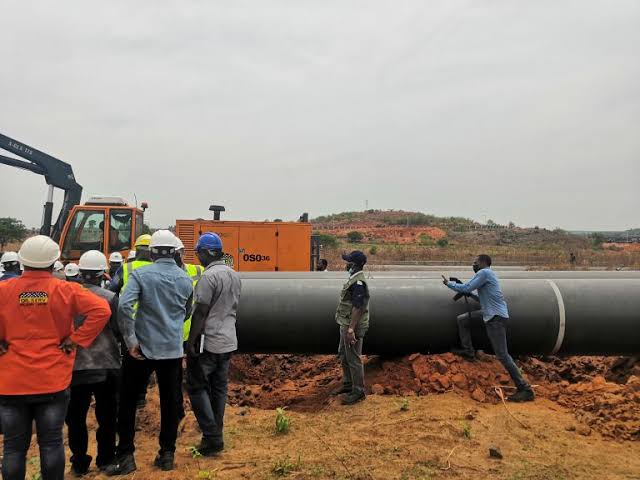
The Ajaokuta-Abuja-Kano (AKK) pipeline project in Nigeria has been faced with challenges as the initial financiers, the Infrastructure and Commercial Bank of China (ICBC), Infrastructure Bank of China, and China Export Credit Agency (SINOSURE), backed out of the project.
According to a report by the Guardian, the project has also been inflated to the tune of 570%, which caused the financiers to withdraw their support.
Despite these setbacks, the Nigerian National Petroleum Company Limited (NNPC Ltd) has been funding the project, and it has spent over $1.1 billion on it so far.
The report stated that the project cost in Nigeria is significantly higher than similar projects worldwide. For example, the 693 Kilometres Yucatan Peninsula Gas Pipeline in Mexico cost $266 million, the 460 kilometres Export La Moran Pipeline built between Argentina and Chile cost $360 million, and the 3,700 Kilometres Export Pipeline between Bolivia and Sao Paolo cost $1.8 billion.
In contrast, the AKK project has a final investment decision (FID) for EPC scheduled at $4,560,260 million, which is a 570% margin above global standards.
According to reports, this is due to procurement fraud caused by neglecting public procurement rules and global best practices as it relates to industry standards for EPC on project financing.
The report further stated that Nigeria has the highest cost of such a contract, part of the reason the funding companies exited as they “cannot afford to go into cahoots with Nigerians because they could be exposed when they submit their financial reports to their countries of origin.
“Globally the cost of high-pressure transmission gas pipelines is built at $800,000 per kilometer. In Nigeria, the final investment decision (FID) for EPC was scheduled at $4,560,260 million, which is a 570 per cent margin above global standards.
“Procurement fraud because we neglect public procurement rules and global best practices as it relates to industry standards for EPC on project financing, the economy is practically unable to fund any CAPEX through revenue, and even when funds are borrowed, it finds itself unable to maximize cost.” The report said.
Despite the funding challenges and allegations of fraud, the NNPC Ltd is committed to delivering the AKK project. The company has been funding the project without third-party finance, and the CEO of the NNPC Ltd, Mele Kyari, has expressed that they will continue to do so. He however, failed to disclose the reason third-party financiers exited the project.
Kyari has visited some of the project sites in Kogi State, where he disclosed that 70% of the welding work had been completed. He also expressed his hope that the project would be delivered on schedule.
He said: “So far, NNPC Ltd has funded over $1.1 billion of the project. To date, none of the project activities is abandoned as reported and we reassure all stakeholders that we have a line of sight to project delivery on schedule. NNPC Limited remains highly committed to the delivery of strategic national infrastructure projects through responsive project delivery, active collaboration with government security agencies and communities as well as deployment of technology.
“This is one of the most massive projects of proportion value to our country for economic growth. It is a must-deliver project and we have continued to fund it despite not having third-party finance support, we will deliver this project.
“We do not owe a dollar to our contractors, there are over 30 sites that are active today in this project. We are hopeful to deliver this project.” he added
The AKK project aims to deliver gas to the northern part of Nigeria, and it is one of the most massive projects in Nigeria, with significant value for economic growth.





No fewer than 40 journalists from print, broadcast, and digital media in Lagos participated in this year’s NLNG Change Your Story training workshop held in Lagos between March 11 and 13.
The workshop, themed “Re-calibrate, Create, Connect,” focused on artificial intelligence in journalism, data visualisation, digital tools for real-time reporting, and ways to combat misinformation.
During the 3-day capacity workshop, participants examined the changing landscape of journalism shaped by AI and digital communication. They also explored how new media technologies can support real-time reporting, extend audience reach across borders, and strengthen engagement on digital platforms.
Dr. Sophia Horsfall, General Manager, External Relations and Sustainable Development at Nigeria LNG Limited, charged the participants to apply the knowledge gained from the NLNG Change Your Story Capacity Workshop to improve the quality and credibility of their reporting. Horsfall, who spoke on the last day of it, described the workshop as part of NLNG’s broader effort to strengthen engagement with the media and support professional excellence in journalism. She encouraged participants to use the insights gained to improve the depth and credibility of their work.
“NLNG views this engagement as a strategic partnership. We provide the energy that powers nations and generates revenue for our nation; you provide the information that powers our minds. We have been proud to host you, but our pride will only be justified when we see the ‘New Standard’ in your next feature, your next broadcast, and your next investigative report. As you head back to your various stations, I urge you to take the spirit of this workshop with you,” she said.
The intensive programme combined expert-led discussions with practical sessions. Digital Communication specialist Mr. Dan Mason led sessions on digital storytelling, while media trainer Taiwo Obe facilitated a Journalism Clinic focused on newsroom practice and storytelling skills.
Mason described the NLNG programme as a relevant ingredient to grow the foundation for new digital skills among practitioners, noting that the Nigerian media industry is a vibrant sector with many energetic young people. “For me, it’s a really good place to work. I feel strongly that at each training session, people listened. ..It’s really about people going away with a little bit more confidence to say, I’m going to do this. I can do this. And in a way, that’s all you need.
“But, what you have here is the essential ingredient in developing journalism, which is the ability to make mistakes and then learn from them,” he said. He observed that Nigeria has an incredibly high rate of young people with an interest in news. According to him, research around the world shows that Nigeria stands out at the top, having young people who are interested in news.
“They care. In your use of mobile platforms, you are way ahead. People trust journalism and journalists. And while there may be issues with people or younger generations not wanting to look at the news, you’ve got such a great and strong foundation to build upon. So, I see hope and opportunity in Nigeria, though I also see the problems, because I’m a journalist. And I see fantastic opportunities here,” he added.
The Change Your Story initiative, launched by NLNG in partnership with The Journalism Clinic, is designed to strengthen professional capacity in the media industry. Since its launch in 2014, the programme has trained about 400 journalists from print, broadcast, and digital media across Nigeria.
The workshop, which began on Wednesday, concluded on Friday. At the end of the training, all participants were presented with certificates acknowledging their completion of the programme.
Nigeria LNG Limited (NLNG) has reinforced its commitment to strengthening journalism in Nigeria following the successful completion of the second edition of its #NLNGChangeYourStory workshop for 2026, held in Lagos.
Modupe Asudo
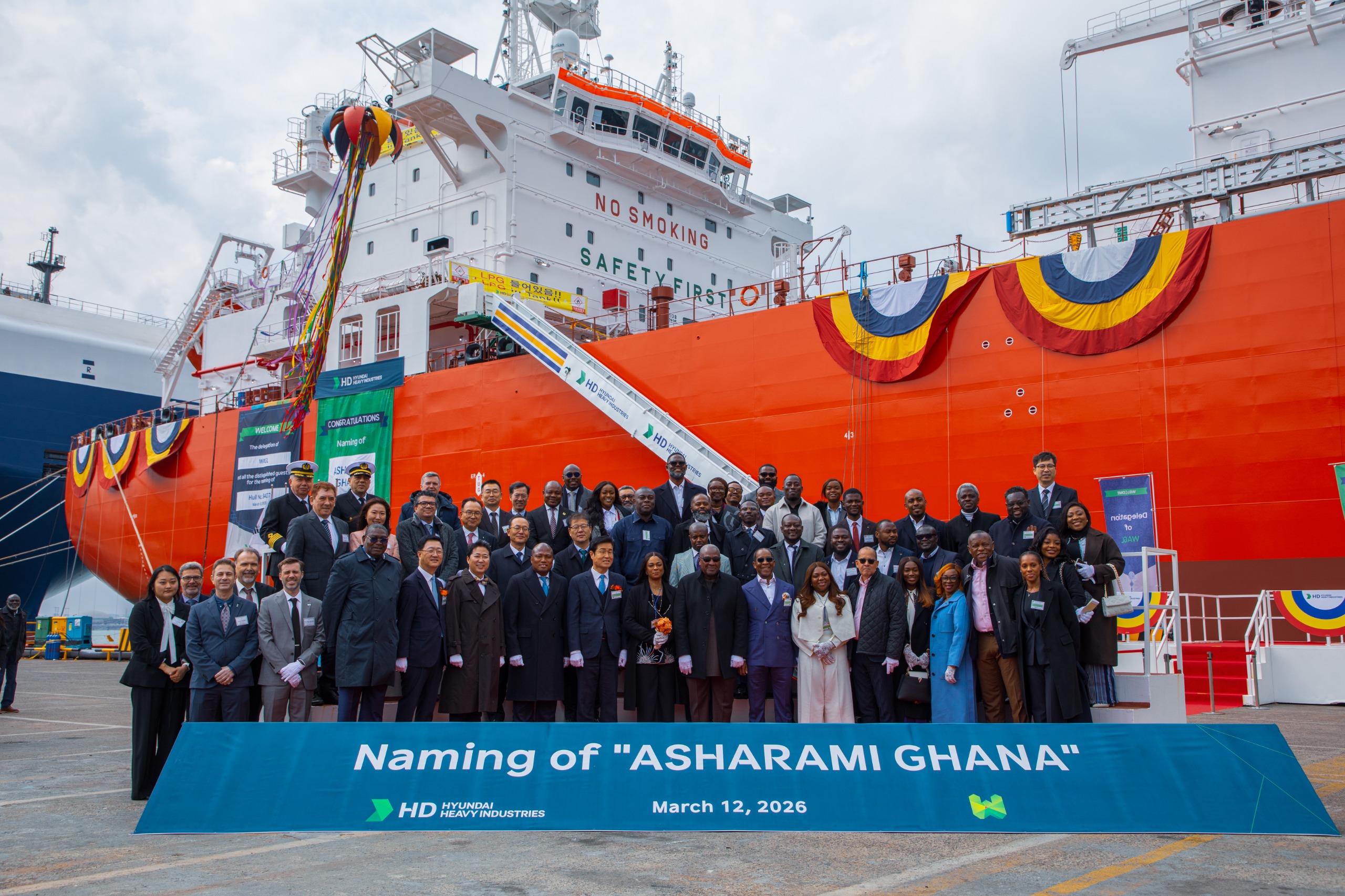
Sahara Group, a leading global energy and infrastructure conglomerate, has commissioned MT Asharami Ghana, a 40,000‑cubic‑metre Liquefied Petroleum Gas (LPG) carrier, expanding its fleet capacity, while strengthening Ghana’s clean energy supply chain and LPG distribution network.
The dual‑fuel vessel improves operational efficiency, enhances supply reliability, and supports lower‑emission LPG logistics as consumption grows across Ghana and the wider sub‑region.
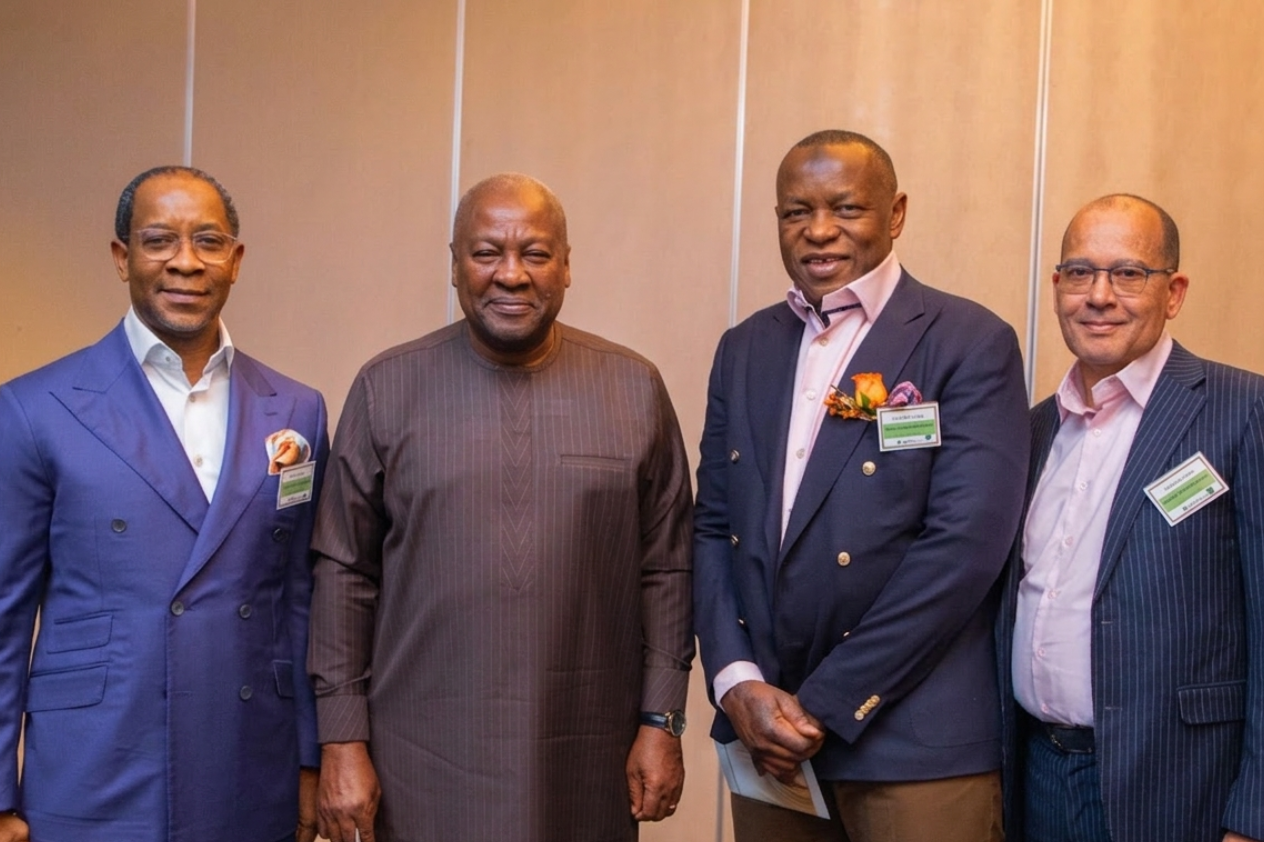
Ghanaian President Mahama and Sahara Executive Directors
Speaking at the commissioning in Ulsan, South Korea, President John Dramani Mahama described the vessel as “a significant milestone in strengthening the infrastructure that underpins the global LPG supply chain,” noting that expanded shipping capacity is critical to improving supply security, reliability and efficiency for countries that rely partly on LPG imports.
He commended Sahara Group, WAGL Energy and all partners involved for their “leadership, technical expertise and strategic foresight,” adding that the project reflects “the power of partnership” in advancing safe, efficient, and responsible energy distribution.
President Mahama wished the MT Asharami Ghana safe sails, expressing confidence that the vessel would inspire further investment and collaboration across Africa’s energy value chain.
According to Wale Ajibade, Executive Director, Sahara Group, the vessel supports Ghana’s clean energy ambitions through integrated infrastructure.
“MT Asharami Ghana is more than a vessel; it is part of a deliberate strategy to strengthen LPG supply security and support Ghana’s clean energy ambitions. It secures an additional 25,000-Metric-tonne stock security for the Ghana economy, alongside the soon to be commissioned 6000-metric-tonee of 12.000-metric-tonne land storage in Tema,” he said.
With the addition of Asharami Ghana, Sahara Group’s LPG carrier fleet now comprises six delivered vessels with a combined capacity of 202,000 cubic metres. Supported by partnerships with WAGL Energy, NNPC Limited and other stakeholders, an additional 270,000 cubic metres of capacity is under construction and due for delivery by September 2028.
Temitope Shonubi, Executive Director, Sahara Group, said Asharami Ghana is part of Sahara’s integrated LPG infrastructure strategy spanning shipping, storage, and downstream distribution globally, including the development of a 12,000‑metric‑tonne land‑based LPG storage terminal in Tema, with a 6,000‑metric‑tonne first phase scheduled for completion in May 2026.
He thanked Yaa Serwaa Alifo, MD of Asharami Ghana, for her resilience and insistence to dedicate a ship of “this magnitude solely to the Ghana Market and its landlocked neighbours.”
Ghana is targeting LPG adoption of 50 per cent of households by 2030, up from about 30 per cent today. Sahara’s investments will support clean energy access for more than 35 million people, while strengthening Ghana’s role in regional LPG trade to neighbouring and landlocked West African markets.
The commissioning comes in Sahara Group’s 30th anniversary year, guided by the Sahara Beyond XXX milestone, underscoring Sahara’s focus on building an enduring enterprise that delivers responsible growth, shared prosperity and long‑term impact across its markets.
Modupe ASUDO
The Nigerian Content Development and Monitoring Board has reiterated its commitment to advancing gender inclusion and sustainable capacity development in Nigeria’s oil and gas industry, spotlighting a $20m Women in Oil and Gas Intervention Fund.
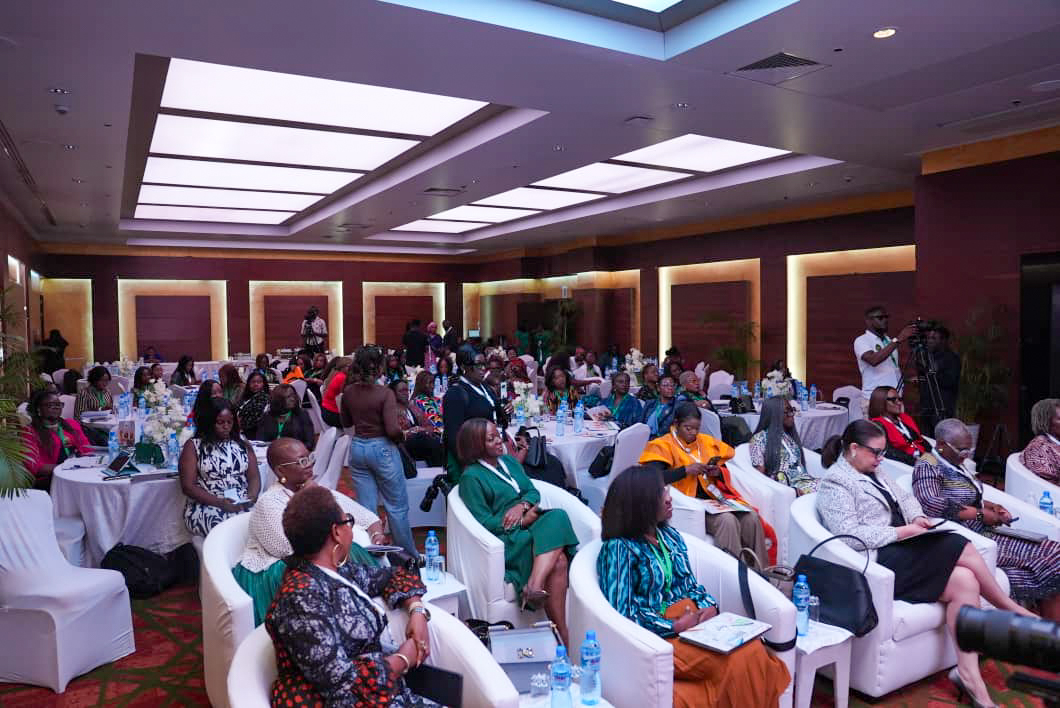
The Board made this known at the 3rd edition of the Diversity Sector Working Group’s Women in Oil and Gas Conference and Mentorship Programme, held on March 3, 2026, at Eko Hotels and Suites, Lagos.
The conference, organised in collaboration with the Nigerian Content Consultative Forum, was themed ‘Breaking Barriers, Shaping the Future’, with a strong focus on building bridges and empowering women for a sustainable energy future.
Delivering his goodwill message, the Executive Secretary of NCDMB, Engr Felix Omatsola Ogbe, described women’s empowerment as a strategic lever for strengthening Nigeria’s energy ecosystem, particularly at a time the global industry was undergoing profound structural change.
He explained that the sector’s navigation of energy transition, rapid technological innovation and rising sustainability expectations increasingly requires broader perspectives, adaptive leadership and inclusive participation to remain competitive and resilient.
Represented by the General Manager Midstream PCAD, Ms. Lekoma Phimia, the Executive Secretary framed inclusion not as social advocacy but as sound economics, stressing that diversity consistently delivers measurable performance outcomes across industries.
“Inclusive organisations are more innovative, more resilient and more profitable. When women thrive, industries thrive. When women lead, economies grow. When women are empowered, communities prosper,” he stated.
To illustrate this point, the Executive Secretary referenced the leadership impact of Ms. Oritsemeyiwa Eyesan, Executive Chairman of the Nigerian Upstream Petroleum Regulatory Commission, describing her tenure as clear evidence of women’s capacity to drive sector-wide transformation at the highest levels.
According to him, such leadership exemplifies how competence and inclusion are helping to steer the industry through a period of accelerated change.
While acknowledging the progress recorded, Ogbe observed that systemic barriers had continued to limit the full participation of women across segments of the oil and gas value chain, stressing that addressing the constraints requires deliberate, structured and sustained interventions.
At the centre of NCDMB’s empowerment showcase, the Executive Secretary highlighted the Women in Oil and Gas Intervention Fund, a landmark $20m initiative established in partnership with the Nigerian Export-Import Bank to provide affordable financing exclusively to women-owned businesses operating within Nigeria’s oil and gas sector.
He explained that the fund offers single-digit interest rate loans with repayment tenors of up to three years, targeted at eligible companies with approved industry contracts. According to him, the initiative is designed to accelerate local capacity and enable women entrepreneurs to transition from peripheral participation to ownership and leadership across the oil and gas value chain.
Ogbe further disclosed that a complementary intervention, implemented in partnership with the Bank of Industry, extends structured business training and additional access to capital to women-owned enterprises. He noted that many beneficiaries have expanded from small service providers into competitive vendors now supporting major oil and gas operators nationwide, particularly in logistics and marine services, safety equipment supply and environmental management — segments where female entrepreneurs have historically faced limited access to financing.
Beyond financing, the Executive Secretary highlighted NCDMB-supported skills development programmes executed in collaboration with institutions such as the Petroleum Training Institute and accredited industrial training centres in Rivers and Bayelsa states. He cited the training of women in welding and fabrication, noting that many graduates are employed in fabrication yards and contribute directly to major oil and gas projects.
“These women are earning dignified livelihoods, breaking stereotypes and inspiring a new generation,” Ogbe said, emphasising that collaboration remains critical to scaling impact, citing partnerships with financial institutions, development partners, training institutions and industry stakeholders.
He commended the NCCF Diversity Sector Working Group for sustaining advocacy and dialogue on inclusion. “We must move beyond inclusion towards leadership — more women in technical leadership roles, executive positions and industry boards,” he added.
In her remarks, the Chairman of NCCF Diversity Sector Working Group, Dr Alero Onosode, described the conference as a celebration of progress, leadership and possibility, noting that NCDMB’s sponsorship reflects its strong institutional commitment to inclusion and shared prosperity. She observed that convening the conference in March — International Women’s Day month — was symbolic, coming at a time of renewed activity and reform across Nigeria’s oil and gas industry.
“Alongside this momentum, we are seeing the rise of women into visible and influential leadership roles — regulators, CEOs, directors, engineers and policymakers shaping strategy and transforming spaces that were once dominated by a single voice,” Onosode said.
She explained that the conference theme challenged stakeholders to move from representation to impact, urging deliberate collaboration across sectors, generations and perspectives.
“Building bridges means women and men working together, turning diversity into strength and collaboration into results,” she stated, calling on industry leaders to prioritise mentorship, sponsorship and intentional partnerships.
The conference concluded with a renewed call for inclusive capacity development, with NCDMB reaffirming its commitment to empowering women, strengthening Nigerian content and ensuring that Nigeria’s energy future is sustainable, inclusive and economically transformative.






Showunmi Urges South-East to Judge Tinubu by Projects, Not Propaganda

2027: ‘North Has No Reason to Break Agreement’ — Gov Yusuf Backs Tinubu

Aircraft Averts Crash, After Losing Door Mid-Air in Abuja

Bandits Kill 70-Year-Old Man in Katsina, 27 Victims Rescued

‘Nigeria Is Doomed Under Tinubu’ — Kenneth Okonkwo Backs Atiku for 2027

Lagos: LASTMA Announces Traffic Restrictions Along Route to Toll Gate

Trump’s Family Unveils New Cryptocurrency Platform

Senate Denies Receiving Petitions Against Tinubu’s Ambassadorial Nominees

Dangote Cement Lights Up Benue Host Communities With CSR Initiatives

Reps Recommend 3-year Jail Term For Aviation minister

Tems Sets New Record On Billboard Hot 100 Chart
