
NEWS
Gov Adeleke Apprises NJC On Osun State CJ Drama

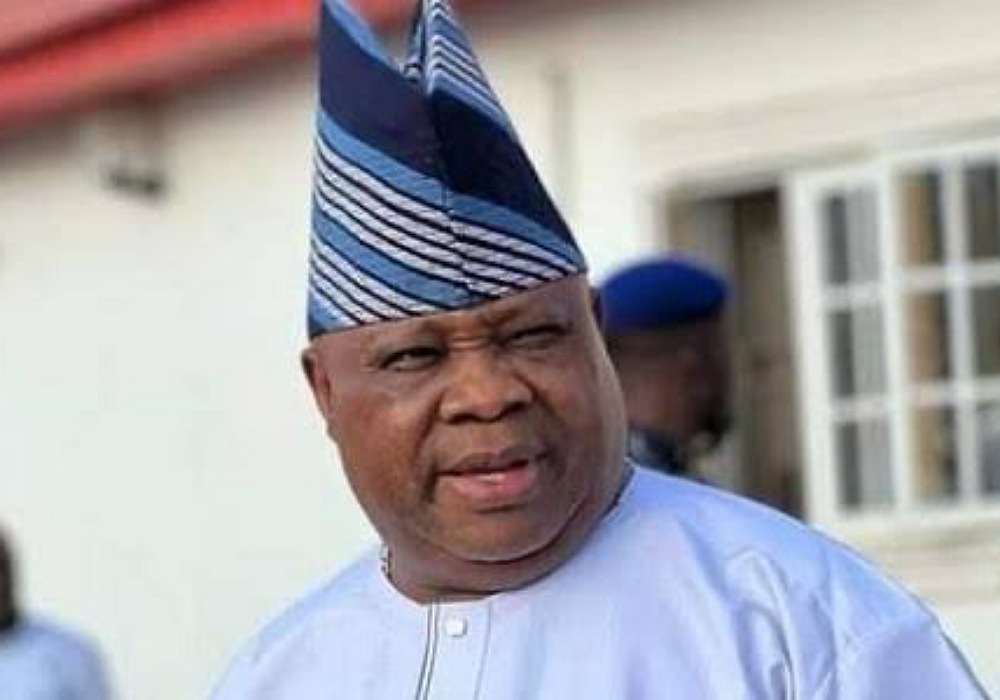
The government of Osun State updated the Chief Justice of the Nigeria (CJN) and the National Judiciary Council (NJC) on the truth about the Chief Justice (CJ) of Ousn State.
According to a statement received from Hon. Commissioner for Information and Public Enlightenment, Kolapo Alimi, on Sunday, the state vehemently denied allegations that “Governor Ademola Adeleke has removed the Chief Judge and appointed an acting Chief Judge.”
Rather, it clarifies that the Governor had only forwarded the resolution of the Osun State House of Assembly (OSHA) and the recommendation for an acting appointment to the CJN for decision and action.
The statement read in part, “With all sense of responsibility, it is important to set the records straight that Governor Adeleke has only duly notified the Chief Justice as the Chairman of the National Judicial Council (NJC) in writing about the resolutions of the House of Assembly following a series of petitions made against the sitting Chief Judge of Osun State.
“In the communication, Mr Governor intimated the CJN of the recommendation of the House that the Chief Judge should step aside and included his own submission for an acting appointment to fill the vacuum while the NJC reviews and decides on the petition.
“To that end, the Governor in the same letter recommended to the CJN, the appointment of the most senior judicial officer, Hon. Justice Olayinka David Afolabi for thorough consideration and further processing by the same NJC through the CJN.
“We urge the public to note that while the House of Assembly recommended the appointment of a replacement to the Governor in its resolution, the Governor, however, toed the line of law by writing the CJN on the entire development and submitting all materials for NJC as mandated national agency.
“We therefore wish to state categorically that Governor Adeleke has not appointed any judicial official as Acting Chief Judge and nobody has been sworn as Acting Chief Judge of Osun state.”
The statement described Gov Adeleke as a man of due process and rule of law “with a deep level of respect for the bar and the bench, the NJC and the constitution of the Federal Republic of Nigeria.
“We assure the public that Mr Governor is fully aware of the limit of his powers as well as the responsibilities of the various agencies of government and will therefore not act in any way to violate the constitution and rule of law.”






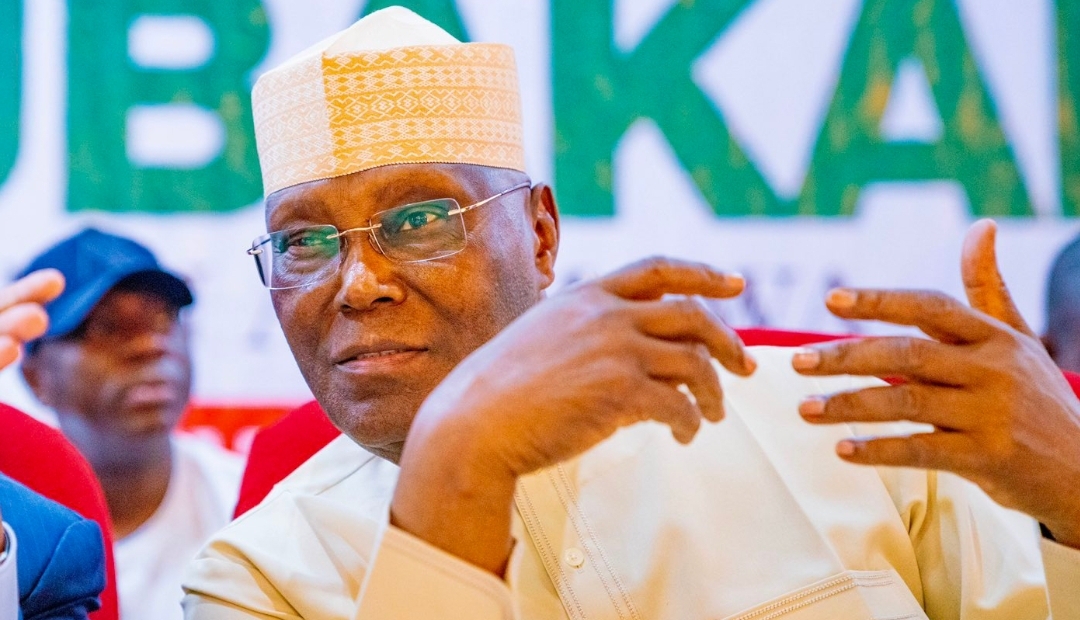
The Presidency has explained why former Vice President Atiku Abubakar’s proposed production subsidy for locally refined petrol could be difficult to implement, arguing that Nigeria lacks sufficient freely available crude oil to sustain the policy.
President Bola Tinubu’s Special Adviser on Media and Public Communications, Sunday Dare, made the position known in a statement issued on Sunday, October 11, 2026, titled “Atiku’s Demagoguery in the Face of Tinubu’s Logical Policies.”
Dare was responding to Atiku’s criticism of the Federal Government’s 30-day petrol discount offered through the Nigerian National Petroleum Company Limited (NNPC) Retail and its proposed fuel price modulation framework.
SEE ALSO: PETROAN Expects Fuel Discount to Combat Inflation
Atiku had described the temporary discount as a publicity stunt, questioning its sustainability and accusing Tinubu of adopting his economic proposal without incorporating the production subsidy he advocated.
However, the presidential aide argued that Atiku’s proposal failed to adequately account for Nigeria’s crude oil production arrangements, existing contractual obligations and the financial implications of subsidising petroleum products.
According to Dare, Nigeria produces approximately 1.8 million barrels of crude oil daily, but the Federal Government does not have unrestricted access to the entire volume.
He said joint ventures and production-sharing contracts, alongside production costs, royalties and profit-sharing arrangements, significantly reduce the quantity of crude available to the state.
“After accounting for these statutory and contractual obligations, Nigeria has fewer than 700,000 barrels per day of unencumbered ‘free crude’ to give away,” Dare stated.
He argued that using crude oil to fund a broad production subsidy without sufficient freely available supplies could undermine government revenues and expose the country to financial risks.
Dare maintained that domestic refineries, including the Dangote Petroleum Refinery, require substantial volumes of crude oil, making it difficult for the government to meet their needs solely from crude available for unrestricted allocation.
He argued that domestic refiners would still need to obtain additional crude through other arrangements, including purchases from international markets.
The presidential aide warned that a production subsidy without adequate crude supplies and clearly defined financial safeguards could recreate some of the problems associated with Nigeria’s former petrol subsidy regime.
He said such a policy could encourage opaque transactions, fraudulent claims and financial losses if its implementation was not properly structured.
Atiku has advocated shifting government support away from subsidising imported petrol towards supporting qualifying domestic refiners through preferential crude oil pricing, with the aim of reducing costs for consumers.
The proposal has become a subject of political and economic debate as Nigerians continue to grapple with high petrol prices and the wider cost-of-living crisis.
Presidency Defends 30-Day Petrol Discount
Dare also rejected the suggestion that NNPC Retail’s decision to forgo its profit margin temporarily amounted to a restoration of the former petrol subsidy.
He said the discount was initially introduced as part of activities marking Nigeria’s 66th Independence anniversary before being extended for another 30 days.
According to him, the arrangement allows NNPC Retail to absorb short-term market pressures without reinstating the previous system of government-funded fuel subsidies.
The presidential aide also defended the proposed N1,350-per-litre ceiling on ex-gantry costs, describing it as a mechanism to moderate sudden increases in fuel prices.
Under the framework outlined in the statement, refiners and importers would absorb temporary cost increases above the ceiling and recover those costs when market conditions improve.
Dare argued that the measure could help reduce the impact of abrupt fuel price changes on transport fares and household expenses.
The presidential aide further defended the administration’s broader economic reforms, including petrol subsidy removal and foreign exchange market reforms introduced in 2023.
He cited the expansion of compressed natural gas infrastructure, direct cash transfers to vulnerable households, support for small businesses and increased federal allocations to states and local governments as part of the government’s response to economic pressures.
Dare maintained that the administration was pursuing a combination of market-based pricing and targeted interventions to manage the effects of international oil market volatility.
He argued that the country needed structural economic measures rather than temporary interventions that could place additional pressure on public finances.
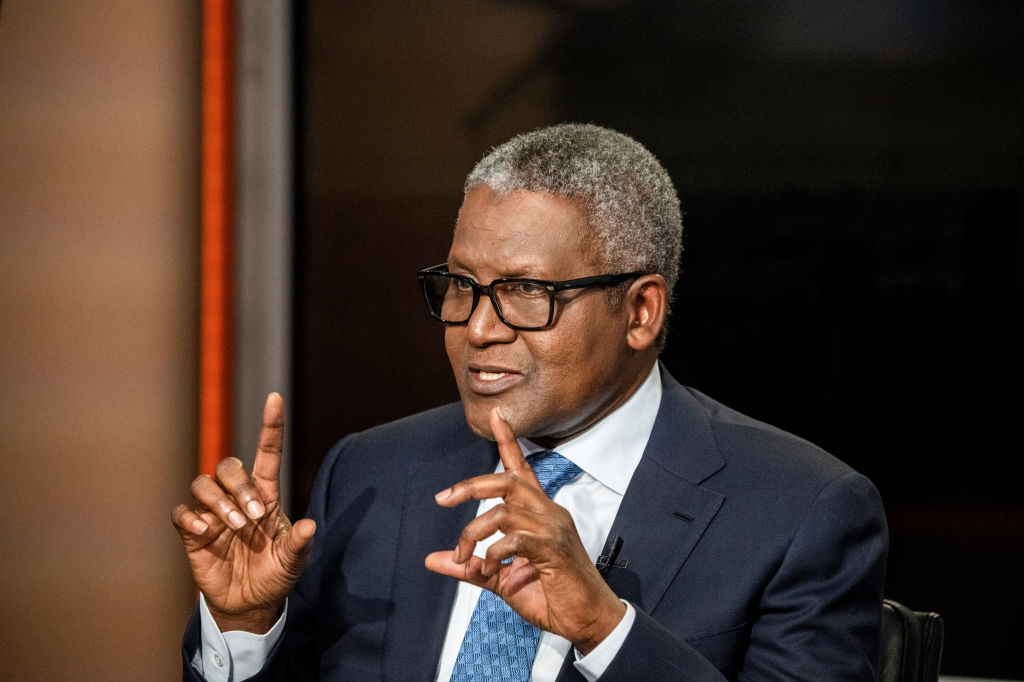
Kenyan presidential candidate Patrick Osoi has warned Nigerian billionaire Aliko Dangote against rushing to establish a proposed $16 billion refinery in Kenya, insisting that local businesspeople can undertake the project.
Osoi made the remarks while addressing supporters at a Lions Movement event, according to a video circulating online.
He said he expected Dangote to return to Nigeria by February 2027, when he anticipates being sworn in as Kenya’s president.
SEE MORE: Ndindi Nyoro Gives Ruto 14 Days to Disclose Dangote Refinery Deal
“I want to tell Aliko Dangote, please don’t rush to start the refinery because, when I’m sworn in as President of Kenya next year, you will be heading back to Nigeria,” Osoi said.
He argued that Kenya had businesspeople capable of establishing a refinery without depending on the Nigerian industrialist.
“We Kenyans have business people who can start the refinery. We also have business people in this country who can do that job. This is what we stand for. This is the home of all movements,” he added.
Osoi’s comments come amid plans by Dangote to establish a $16 billion oil refinery in Lamu, Kenya, with a proposed processing capacity of 700,000 barrels of crude oil per day.
Dangote and Kenyan President William Ruto performed the groundbreaking ceremony for the project on September 30, 2026.
The refinery is expected to take approximately 40 months to complete and serve Kenya and other East African countries, with the aim of strengthening regional refining capacity and reducing dependence on imported petroleum products.
However, the project has encountered opposition from some local residents over land ownership, compensation and environmental concerns.
A Kenyan court has also ordered the maintenance of the status quo in a land dispute involving the development.
Minna Onomroba Abell, Registrar of the Chartered Institute of Human Resource and Strategic Management, has said wage-related demands by the Nigeria Labour Congress (NLC) can be negotiated within two weeks, urging the Federal Government and organised labour to reach an agreement through constructive engagement.
Abell made this known during an interview on Arise News on Sunday, while assessing the feasibility of the NLC’s demands and its two-week ultimatum to the Federal Government.
SEE ALSO: Spike in Petrol Price Moves NLC to Demands Emergency Palliatives
He explained that while some of the demands could be addressed within the stipulated period, others would require more time because of prevailing economic conditions and the measures needed for implementation.
“On the wage aspect, negotiations and all that, yes, those can be achieved in two weeks,” he said.
According to him, the government could invite labour unions and other representatives to a roundtable discussion to review existing wages and awards and consider additional incentives, including tax relief measures.
He said such discussions would provide an opportunity for both parties to examine workers’ concerns and identify areas where immediate progress could be made.
However, Abell ruled out the possibility of returning to the economic conditions and price arrangements that existed when negotiations were held in 2024, citing changes in exchange rates, crude oil prices and the operational status of Nigeria’s refineries.
“But asking the government to go back to 2024 when the negotiation was held, it is not possible because there are a lot of factors that will lead to that,” he said.
The human resource expert also questioned conflicting claims about the operational capacity of Nigeria’s refineries, arguing that the issue should be considered in discussions about persistent increases in petrol prices.
He criticised labour representatives over what he described as an inconclusive struggle, questioning their previous claims about the operational status of the refineries.
“And I want to draw the attention of the NLC that they’ve been fighting a war or do I put it a war now? They’ve been fighting an unjust fight or inconclusive fights. Let me put it inconclusive,” he said.
Abell argued that labour representatives had previously told Nigerians that the refineries were operating at full capacity, only for subsequent developments to raise questions about their actual performance.
“They are the same people who went and came to tell Nigerians that the refineries are working to full capacity. And today, we find out that the refineries are not working to full capacity,” he said.
He further argued that full-capacity refinery operations could reduce the country’s reliance on imported petroleum products.
“So, you cannot be the one telling Nigerians that the refineries are working in full capacity and also come back that to say that the refineries are not working, because if they are working to full capacity, this importations of fuel and all that might not really be there as such,” he added.
Abell maintained that resolving the disagreements over wages and fuel prices would require proper engagement between the Federal Government and organised labour.
He urged both parties to reach an agreement that takes prevailing economic realities into account while addressing workers’ demands.
“The issue is that there should be an agreement and a proper discussion between the Federal Government and the labour unions to achieve these goals they are talking about,” he said.
He added that although some demands could be addressed immediately, others might require longer-term measures to ensure lasting results.
“However, there are some certain goals or demands that can be achieved in the immediate, but at the long run it will also fail,” Abell said.
His remarks come amid the NLC’s demands for action by the Federal Government on workers’ welfare and petrol prices, with the union giving the government a two-week ultimatum to address its concerns.






Fuel Discount: Presidency Explains Why Atiku’s Production Subsidy Proposal May Fail

‘Don’t Rush the Refinery’ – Kenyan Presidential Candidate Warns Dangote

2027 Election: ‘Look Beyond the Noise’ – Showunmi Urges Nigerians to Give Tinubu More Time

NLC Ultimatum: Wage Demands Can Be Resolved in Two Weeks – HR Expert

LASTMA Alerts Motorists to Traffic Delays on Ogunnusi Road
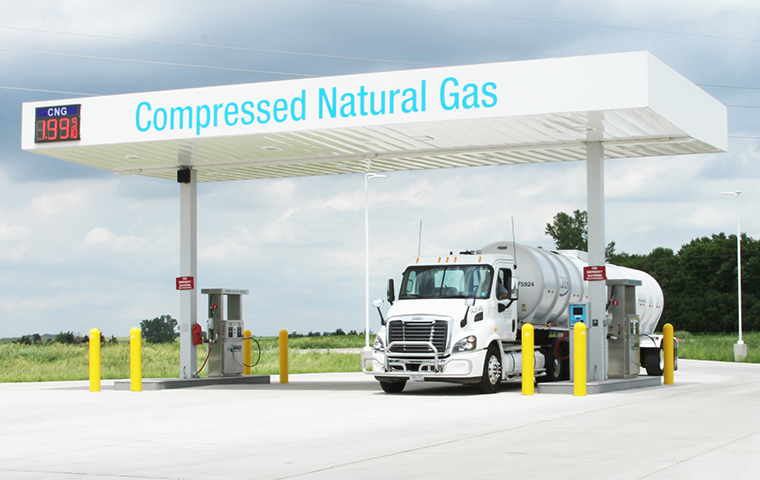
CNG Initiative: Why Tinubu’s Gov’t Moved Beyond Plan for 3,000 Buses – Coker

Trump’s Family Unveils New Cryptocurrency Platform

Senate Denies Receiving Petitions Against Tinubu’s Ambassadorial Nominees

Dangote Cement Lights Up Benue Host Communities With CSR Initiatives

Reps Recommend 3-year Jail Term For Aviation minister

Tems Sets New Record On Billboard Hot 100 Chart
