
Business
Guinness Nigeria Marks 75th AGM with Return to Profitability

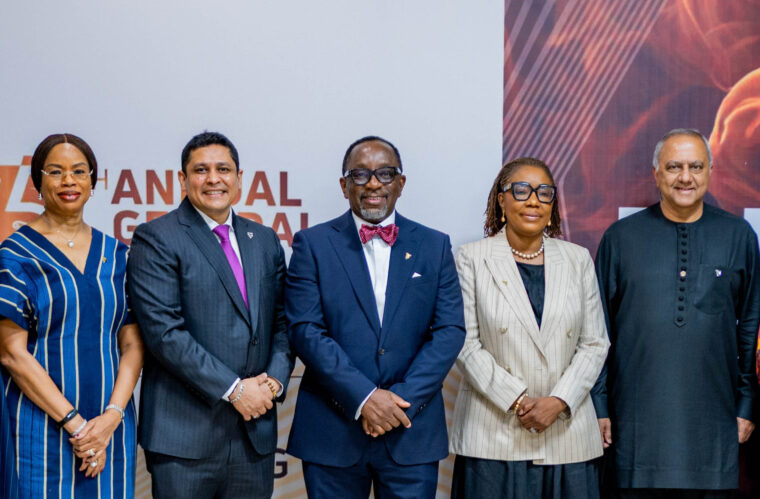
Nigeria’s leading total beverage alcohol company, Guinness Nigeria Plc, on Wednesday, April 15, hosted shareholders at its 75th Annual General Meeting in Lagos, reaffirming its strong performance and clear path to sustained growth.
The meeting followed the release of the Company’s Q1 FY2026 financial results, which included an interim dividend of ₦2.00 per ordinary share, signaling a return to rewarding shareholders and reinforcing confidence in the Company’s financial position.
At the AGM, shareholders reviewed the Company’s 18-month financial performance, reflecting a period of strategic transition, disciplined execution, and a return to profitability. The results underscore Guinness Nigeria’s focus on building a more agile and resilient business amid a dynamic operating environment.
Shareholders unanimously approved all resolutions presented, including the election and re-election of directors, as well as the appointment of Ernst & Young as Independent External Auditors, effective January 1, 2026, demonstrating continued confidence in the Company’s governance and leadership.
Speaking at the meeting, Chairman of the Board, Prof. Fabian Ajogwu, OFR, SAN, described the period as a defining phase in the Company’s journey, marked by resilience, transformation, and renewed momentum.
ALSO READ: Dangote, Pope Leo XIV, Trump, Xi Jinping, Others Named in TIME 100 Most Influential People for 2026
He noted that despite a challenging macroeconomic environment, the Company successfully navigated its transition phase and is now firmly on a path of sustainable growth and value creation.
“Earlier in April 2025, our Company attained the milestone of its 75th anniversary in Nigeria, a feat very few companies have achieved in Nigeria. This year also marked Guinness Nigeria’s turnaround with return to profitability. Worthy of note is the Company’s change of financial year end dates from 30th June to 31st December, starting this financial year.”
Managing Director, Girish Sharma, reaffirmed management’s focus on execution and long-term growth, highlighting the team’s clarity of direction and commitment to consistently delivering improved performance.
“My first AGM happened when I was less than a month old in Guinness Nigeria. We made a commitment that at the next AGM, we will declare a dividend. We’ve done that, and we’ve just started. The team understands the business, and the team knows what they need to do. I think we have absolute clarity in terms of where we want to go in the next five years. I think from here, it’s only going to get better,” he said.
Shareholders also expressed strong confidence in the Company’s outlook, commending its performance and expressing optimism about sustained returns in the years ahead.
One of them, Barrister Adetutu Siyanbola said she believes the company is on solid footing and moving in the right direction. “Next year, we are going to get a bigger and better final dividend added to the entire dividend that the chairman mentioned,” she said, and expressed her admiration of the quality of the board and the management team, and in their ability to deliver.
With a strengthened foundation, renewed profitability, and the continued trust of its shareholders, Guinness Nigeria remains firmly focused on delivering long-term value for all stakeholders while building on its 75-year legacy in Nigeria.
Photo Caption:
From Left: Independent Non-Executive Director, Mrs. Olusola Oworo; Managing Director/CEO, Mr. Girish Sharma; Chairman and Independent Non-Executive Director, Prof. Fabian Ajogwu; Independent Non-Executive Director, Mrs. Vivian Shobo, and Vice – Chairman and Non- Executive Director, Mr. Harkishin Aswani, all of Guinness Nigeria PLC at the company’s 75th Annual General Meeting held at the Civic Centre, Victoria Island, Lagos on Wednesday April 15


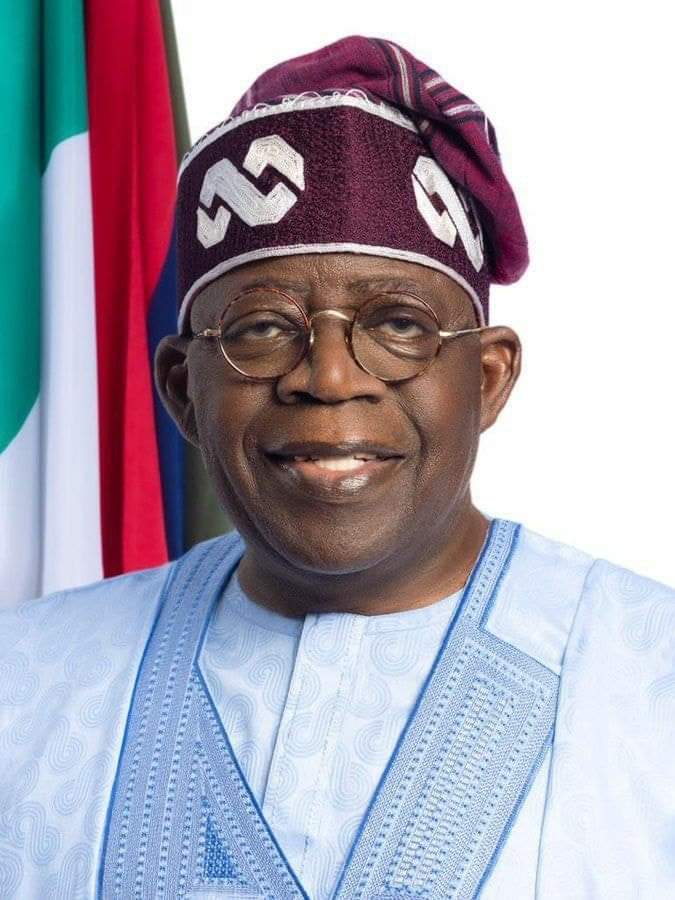
The Petroleum Products Retail Outlets Owners Association of Nigeria (PETROAN) has urged the Federal Government to add its member-stations to the petrol discount programme.
It cautioned that the current arrangement could limit the reach and deny vast consumers in underserved communities the benefits of the 30-day discount window.
The PETROAN also urged the FG to allocate at least 30 percent of the discounted petrol volume to outlets operated by its members.
READ ALSO: Tanzania Nears Completion of $42bn Equinor, Shell-Led LNG Project
The calls followed last week’s announcement by the Minister of Finance and Coordinating Minister of the Economy, Taiwo Oyedele, of a petrol discount at Nigerian National Petroleum Company Limited (NNPC Ltd) retail outlets, with priority given to public transport operators nationwide.
According to the National Publicity Secretary, Independent Petroleum Marketers Association of Nigeria (IPMAN), Chinedu Ukadike, the exclusion of independent marketers could undermine the programme’s effectiveness, particularly in communities where NNPC retail outlets have limited presence.
He argued that independent marketers, with their extensive nationwide distribution networks, were better positioned to extend the benefits of the intervention to consumers in remote and underserved areas.
“Independent oil marketers have over 90 percent coverage and presence in the nooks and crannies of this country. You are giving NNPC that is situated only in the town. So how do the poor masses, whom you intend to ensure that this petroleum product will alleviate their sufferings, how would they now get it?” Ukadike asked.
He said the association was not opposed to the government’s policy but insisted that independent marketers should be included to ensure wider access to the discounted product.
“But it’s government policies; we are not against government policies, but let it be all-inclusive; let independent marketers be part of it,” he said.
Ukadike also urged the government to extend the discount period to 60 days, citing logistical challenges that could delay the movement of petrol from coastal depots to other parts of the country.
“And the 30 days should be extended to 60 days. Because of the circulation of petroleum products, most times it takes two weeks for a truck to leave Apapa and get to Gombe, Maiduguri, because of the bad road and all the rest of them and loading process,” he added.
Similarly, PETROAN National President, Billy Gillis-Harry, urged the Federal Government to allocate 30 per cent of the discounted petrol volume to the association’s retail outlets to facilitate broader national distribution.
In the bid to transform Tanzania into the East African regional energy hub, the country is on the verge of concluding an agreement with a consortium of energy companies, including a $42 billion LNG project.
It was gathered that the project is designed to tap the 47.13 tcf of gas discovered in Tanzania’s deep offshore fields, part of the country’s estimated 57.54 tcf in total discovered reserves, the sixth-largest in Africa, behind Nigeria, Algeria, Senegal, Mozambique and Egypt.
READ ALSO: Shell Identifies Keys to Nigeria’s Energy Future
Equinor and Shell would be the lead operators, alongside involvement from ExxonMobil Pavilion Energy and Medco Energi, while state oil major, the Tanzania Petroleum Development Corporation (TPDC), would also hold an equity stake in the project.
“It’s almost there,” Khamis Mussa Omar, Tanzania’s finance minister, told Reuters.
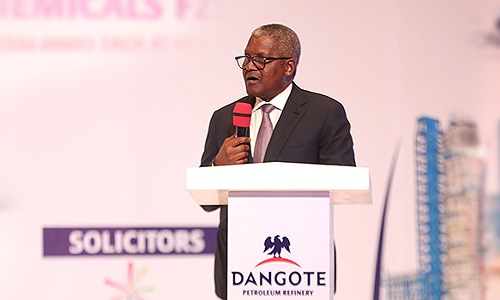
President of Dangote Group, Aliko Dangote, has reaffirmed his commitment to ensuring broad-based participation in the Dangote Refinery’s Initial Public Offering (IPO).
In a statement, the industrialist announced that investors applying with ₦50,000 and below will receive priority consideration as the company seeks to democratize ownership of one of Africa’s most significant industrial assets.
Dangote made the declaration during the final leg of the nationwide IPO roadshow held in Port Harcourt, Rivers State, where investors, financial market experts, business leaders and other stakeholders gathered to discuss the investment opportunity and its implications for Nigeria’s economic transformation.
READ ALSO: Sahara Champions Global Shipping Collaboration for $20m Mercy Ships Healthcare Impact
Speaking at the event, Dangote emphasised that the IPO should be viewed not merely as an investment opportunity, but as a chance for Nigerians to become shareholders in a landmark enterprise that is reshaping the country’s industrial landscape.
“We will prioritise people with ₦50,000 and below,” Dangote stated, underscoring the Group’s determination to make the offering accessible to small and medium-scale investors across the country.
He noted that while international and African investors had already committed substantial capital to the refinery, the IPO now offers Nigerians a rare opportunity to participate directly in the ownership of a world-class industrial project built on Nigerian soil.
According to him, investing in the refinery goes beyond financial returns, representing a vote of confidence in Nigeria’s future, institutional development, corporate governance standards and industrial capacity.
“African investors have invested in this refinery. Now it is time for Nigerians to invest in themselves and participate in a project that is creating value, jobs and opportunities for generations to come,” he said.
Dangote also encouraged prospective shareholders to adopt a long-term investment perspective, noting that participation in the IPO presents a pathway to wealth creation, portfolio diversification and increased public engagement with the capital market.
He added that wider participation in the stock market would deepen financial literacy, promote a savings and investment culture, and enable more Nigerians to better understand how businesses create value and contribute to economic growth.
The roadshow also featured insightful presentations from leading economists and market analysts on the refinery’s economic significance and the broader opportunities associated with the public offering.
Renowned economist Bismarck Rewane highlighted the enormous economic potential of the South-South region and stressed the need to convert the area’s resource endowment into sustainable prosperity, infrastructure development and improved living standards. He also noted that the IPO presents an opportunity to deepen Nigeria’s capital market by encouraging citizens to participate actively in wealth creation.
Similarly, economist Dr. Muda Yusuf outlined the refinery’s far-reaching impact on economic diversification, domestic value addition, energy security, capital formation and employment generation.
According to Yusuf, the refinery represents far more than a petroleum-processing facility, serving as a catalyst for growth across multiple sectors including petrochemicals, packaging, manufacturing, logistics and other downstream industries.
He further emphasized that policy consistency, regulatory stability and sustained stakeholder engagement remain critical to maintaining investor confidence and attracting long-term capital into Nigeria’s industrial sector.
Speaking on the investment outlook, stakeholders urged prospective investors to consider the company’s operational performance, valuation metrics and long-term fundamentals when evaluating the offer.
Yusuf also described the refinery as a major example of domestic value addition, noting that its extensive local content and industrial linkages would significantly amplify its contribution to the Nigerian economy.
Discussions at the event further highlighted the importance of sound monetary policy, affordable financing and a predictable business environment in supporting investment-led growth and industrial expansion.
The Port Harcourt engagement was particularly significant for the South-South region, with legal luminary and business leader Paul Usoro expressing satisfaction at the level of participation from investors across the region.
“My joy is to see the South-South well represented,” Usoro said, stressing the importance of ensuring that investors from the region take advantage of the opportunity presented by the IPO.
The Port Harcourt event marked the final stop of the nationwide IPO roadshow, concluding a series of engagements designed to deepen public awareness and expand participation in what is widely regarded as one of the most significant capital market offerings in Nigeria’s history.
For Dangote Group, the objective remains clear: to provide Nigerians from all backgrounds with an opportunity to participate in the ownership of a transformative industrial enterprise while contributing to economic growth, employment generation and national development.






Corruption Trials: EFCC, NJI Push Specialised Judges, Digital Evidence Reforms

‘It Is Morally Wrong’ — PDP Chieftain Questions North’s Bid for Another Eight Years

2027 Election: ‘Your Future Is More Valuable’ — IGP Warn Youths Against Political Violence

Tinubu Charges PCC Members to Deliver Wards

Marketers Eye Portion of FG’s Petrol Discount

Tanzania Nears Completion of $42bn Equinor, Shell-Led LNG Project

Trump’s Family Unveils New Cryptocurrency Platform

Senate Denies Receiving Petitions Against Tinubu’s Ambassadorial Nominees

Dangote Cement Lights Up Benue Host Communities With CSR Initiatives

Reps Recommend 3-year Jail Term For Aviation minister

Tems Sets New Record On Billboard Hot 100 Chart
