
NEWS
Hardship: FG Spends N5bn On Renovating VP Shettima’s Lagos Residence


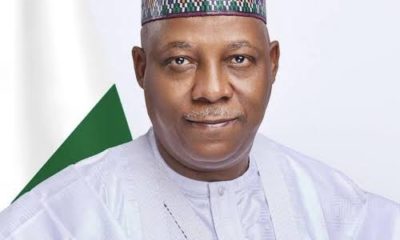
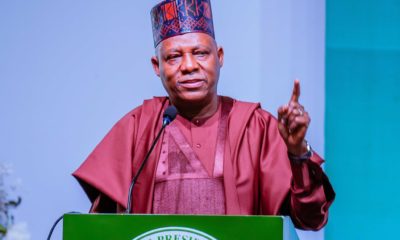
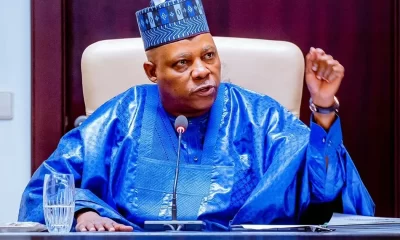
The Nigerian government has sparked outrage after spending a staggering N5.03 billion on renovating the official Lagos residence of Vice President, Kashim Shettima, despite the ongoing economic hardship facing millions of Nigerians.
This expenditure was revealed through data from GovSpend, a civic tech platform dedicated to tracking and analyzing government spending.
READ ALSO: Nigerian Investors Gain N217bn In Positive Trading On NGX
The renovation costs were spread over two payments: on May 31, 2024, N2.83 billion was paid to Denderi Investment Limited for initial refurbishment work.
Another payment of N726.7 million was made on September 5, 2024, followed by a second-phase renovation cost of N1.48 billion, all directed to the same engineering firm.
The expenditure, however, has sparked outrage among many Nigerians, with critics questioning the appropriateness of such spending at a time when the country is facing economic challenges.
Particularly controversial is the fact that the Vice President’s official residence in Lagos, being upgraded, comes on top of another planned N15 billion expenditure for the construction of a new residence for the Vice President in the capital, Abuja.
The Federal Capital Territory (FCT) Administration’s N15 billion allocation for the new residence, disclosed by FCT Minister Nyesom Wike, has raised alarm, especially given the context of Nigeria’s severe economic constraints.
Wike’s statement, made while defending the FCT’s N61.5 billion supplementary budget before the House of Representatives, drew significant backlash.
Socio-Economic Rights and Accountability Project (SERAP), a leading Nigerian advocacy group, expressed strong opposition, calling the spending a violation of the Nigerian Constitution and international anti-corruption obligations.
“It will be a grave violation of public trust for the Senate to approve this expenditure while the government is spending a third of its 2024 budget on servicing national debt,” stated Kolawole Oluwadare, SERAP’s Deputy Director.
Further criticism came from Auwal Rafsanjani, Executive Director of the Civil Society Legislative Advocacy Centre, who noted the administration’s failure to cut down on the cost of governance despite claims to do so.
Rafsanjani emphasized that the budget allocations over the past 16 months contradicted the government’s supposed commitment to fiscal responsibility.
Debo Adeniran, Chairman of the Centre for Anti-Corruption and Open Leadership, added that until the country formulates a new constitution to regulate government spending, Nigeria would continue to grapple with excessive expenditure and wasteful governance.
As the controversy unfolds, many Nigerians are calling for greater transparency and accountability from the government, urging officials to prioritize national development over luxury spending.







The Osun State Executive Council (SEC) has approved a 2027 draft budget as submitted by the various Ministries, Departments and Agencies of government
This follows a presentation by by the Commissioner for Economic Planning, Budget and Development, Prof. Moruf Ademola Adeleke, according to a government house statement on Osogbo on Friday.
It added that it was part of the resolutions reached after the SEC meeting presided over by Osun State Governor, Senator Ademola Adeleke at the Executive Council Chambers, Governor’s Office, Bola Ige House, Osogbo.
The Commissioner said after due consideration of the memo presented by the Commissioner for Economic Planning, Budget and Development, Prof. Moruf Ademola Adeleke for the draft 2027 Recurrent and Capital Budget estimates of the State Government, the Executive Council approved the budget draft estimates with immediate effect.
The Council, has consequently directed the transmission of the approved draft budget to the Osun State House of Assembly (OSHA) for subsequent legislative action.

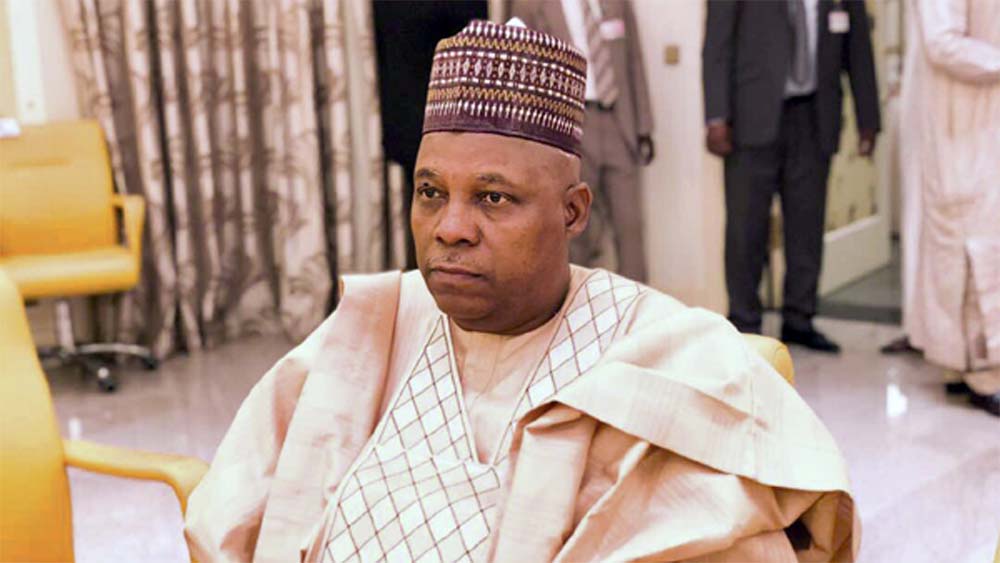
Vice President Kashim Shettima on Friday attended the grand opening of Ashley Furniture Nigeria’s showroom in Lagos.
The development was disclosed by the Vice President’s Senior Special Assistant on Media and Communications, Stanley Nkwocha, in a statement released on Friday.
The opening marks a significant development in Nigeria’s furniture and retail industry, following a strategic partnership between Ashley Furniture Industries, a major American home furnishings manufacturer, and Vento Furniture, a Nigerian furniture company.
SEE ALSO: Shettima, Wife Depart Abuja for Jos as Tinubu–Shettima Campaign Takes Rally to Plateau
The partnership, announced in 2025, is aimed at expanding Nigerians’ access to quality home furnishings while creating opportunities for investment, commercial partnerships and the development of the country’s furniture industry.
At the time of announcing the partnership, Ashley Furniture Industries’ President and Chief Executive Officer, Todd Wanek, described the company’s entry into Nigeria as a major step in its international expansion.
“We are incredibly excited to partner with Vento Furniture. Opening in Nigeria, the largest economy in Africa, is a monumental step for our international growth,” Wanek said.
He added that the company looked forward to opening more stores in Nigeria and supporting Vento Furniture as its anchor partner.
Vento Furniture’s Chief Executive Officer, Cemal Yigit, also expressed optimism about the partnership, describing it as an important development for Nigeria’s home furnishings market.
“We are very excited about this alliance,” Yigit said, expressing confidence in Ashley Furniture’s growth in the Nigerian market.
The partnership aligns with President Bola Ahmed Tinubu’s economic reform agenda, which places private-sector investment, enterprise development and job creation at the centre of efforts to stimulate economic growth.

Nigeria’s daily petrol receipts increased by 21 per cent to 46.9 million litres in October 2026, while diesel receipts nearly doubled, rising by 93 per cent to 16.8 million litres per day, according to the Nigerian Midstream and Downstream Petroleum Regulatory Authority (NMDPRA).
The figures were contained in the authority’s October 2026 State of the Midstream and Downstream Sector Fact Sheet, released on Friday as part of its first anniversary edition.
The report, which covers petroleum operations between October 1 and 31, showed an improvement in fuel receipts compared with September, when Nigeria recorded 38.7 million litres of petrol and 8.7 million litres of diesel daily.
SEE ALSO: NMDPRA Gets Senate Nod for Six Executive Directors
Despite the increase in petrol supply, the country’s petrol stock cover stood at 21.8 days, remaining below the regulator’s 30-day threshold.
The October figure represents a decline from the 23.9 days recorded in September, indicating that the improvement in daily receipts has not yet translated into sufficient petrol stock levels.
The fact sheet also highlighted activity at the Dangote Petroleum Refinery, which recorded an average utilisation rate of 103.73 per cent of its installed capacity of 650,000 barrels per day.
The refinery’s utilisation rate was slightly lower than the 105.98 per cent recorded in September.
On diesel supply, the authority reported a significant improvement, with daily receipts rising to 16.8 million litres from 8.7 million litres in the preceding month.
The NMDPRA described the increase as having “Nearly doubled (+93%),” reflecting a substantial recovery in diesel receipts during the review period.
The October fact sheet forms part of the authority’s first anniversary edition, providing an overview of developments across Nigeria’s midstream and downstream petroleum sectors.
The October figures follow earlier reports on Nigeria’s fuel supply situation and domestic refining activities.
On October 23, Biztellers reported that the NMDPRA had disclosed that domestic refineries received 156.52 million barrels of crude oil between January and September 2026, with 80.4 per cent sourced locally and 19.6 per cent imported.
The report also highlighted September’s petrol receipts of 38.7 million litres daily and petrol stock sufficiency of 23.9 days, below the regulator’s 30-day benchmark.
Earlier reports on the September petroleum market situation also showed that Nigeria’s petrol receipts fell by 23 per cent, while diesel receipts dropped by 40 per cent to 8.7 million litres daily, their lowest level in 13 months.
Other reports highlighted a decline in petrol supply despite increased production at the Dangote refinery, with domestic deliveries and imports recording significant reductions.
Figures from September further showed that Dangote Refinery supplied an average of 28.5 million litres of petrol daily to the domestic market while exporting 15.47 million litres per day.
The refinery’s combined exports of petrol, diesel and aviation fuel also reached 54.63 million litres daily in September, exceeding its combined domestic receipts.
The October figures now point to an improvement in Nigeria’s daily petrol and diesel receipts, although petrol stock sufficiency remains below the regulatory benchmark.





Osun SEC Approves Draft 2027 Budget

Dangote Cement Honours Outstanding Drivers for Safety Excellence, Records 60% Reduction in Road Traffic Accidents

APPO Lauds Nigeria on Energy Bank Initiative
Shettima Attends Grand Opening of Ashley Furniture Showroom in Lagos

NEIS Offers 9,583 Agents to Monitor 2027 Election Results

Nigeria’s Petrol Supply Rises 21% as Diesel Receipts Nearly Double – NMDPRA

Trump’s Family Unveils New Cryptocurrency Platform

Senate Denies Receiving Petitions Against Tinubu’s Ambassadorial Nominees

Dangote Cement Lights Up Benue Host Communities With CSR Initiatives

Reps Recommend 3-year Jail Term For Aviation minister

Tems Sets New Record On Billboard Hot 100 Chart