
Opinion/Feature
If I Were Tinubu – Part 1: Like Solomon to Jeroboam, from Obasanjo to Tinubu

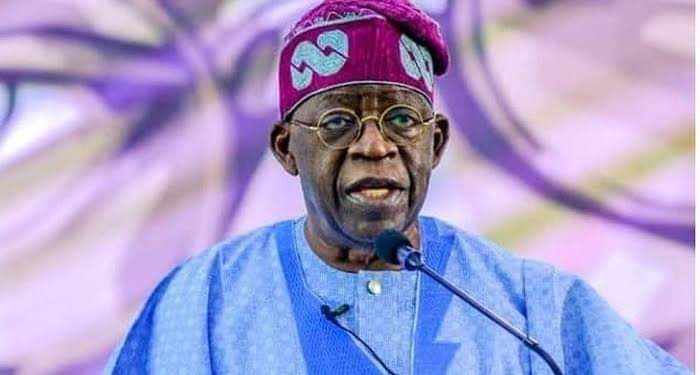
But why Tinubu? Of all the three major presidential candidates, he was the one whose past was more shrouded with controversies. From disputes over his age, educational qualifications, where he was born, and past business deals including that he once settled with the US government and forfeited about $460,000 with court documents showing that he was a bagman for two Chicago heroin dealers in the early 1990s.
But if not Tinubu, who? The other two leading candidates have not been reported to be saints either. Atiku Abubakar of PDP is tainted with an unaccountable wealth for someone that was a civil servant who even admitted that he was into importing and selling cars when he was supposed to be working for government. As for Peter Obi of the Labour Party, he had been accused of investing $30million of Anambra State funds in a company owned by his family when he was the governor, among other allegations.
Going into the 2023 poll, Nigerians were presented with the options of the devil or the blue sea. But the questions are, are there still saints in the land? Or have we ever been ruled by saints, will we ever be ruled by saints and is there anywhere in the world where saints are calling the shot?
Not in any way to justify that bad names over good ones should be given a room in our polity and society, Nigeria has been a dysfunctional entity since its creation to make it extremely difficult or impossible not to be lawless or sinner. When you are pushed to the wall by extreme situations, the natural thing will be to first survive, after all the natural law uphold that if a man steal only to quench his hunger, he should be speared.
It has always been a contest between sin and survival (SS) with only one’s conscience that can be the unbiased judge, for any outside judges will be hypocrites who are judging from their comfort moments, forgetting that their secrets which may not be in the news as corruptions are equally sins.
For instance, a dad with a terribly sick daughter got stranded in a Lagos traffic. He had to drive through one-way to make it to the hospital and save his child. He violated the traffic law for survival; a youth spent five years at home after secondary school, taking JAMB over and over to get admission into a university. When he eventually did, he had to spend 10 years for a course that should be four or five years because of perpetual schools closure due to ASUU strikes.
By the time he left school, he was already 30 years old, and the few job vacancies available were asking for youth below 25 years or lower. He was compelled to cut his age by seven years to give him a change to survive in his country; a man had been pushing a business in a federal ministry to the point of approval in Abuja when he was asked to double the figures as the take home for the officials. It was the only condition for him to get the job.
He played ball and would live to argue with his conscience that what he got was for his job with the added tip for the officials not his problem or sin. But he could have walked away to look for another jobs. Yes, he could have walked away to hunger and hopelessness; a nursing mother obeyed a government directive that the old naira notes from her business were being faced out and should be returned to the bank. She did so only to be denied the new notes which were not even available. She had two options to either approach the POS operators and purchase N5000 new notes with N1000 or remain a good citizen and go home to feed her children with excuse and water.
According to the Federal Inland Revenue Service (FIRS), only 41 million pay taxes in Nigeria out of the over 200 million population. Those that are not paying will have justifications for not doing so; justifications that will make it not to be sin, justification that will make it not to be corruption.
Nigeria is an abnormal society that hardly anyone from other countries can imagine. It perfectly fit the saying that only a mad man will behave normally in an abnormal situation.
Many prophesies had trailed the 2023 presidential election with some from popular pastors going over the bar, but despite that, not a few Nigerians believe that the hand of God was missing from the election of Tinubu. There was a WhatsApp post where someone strongly pushed the God’s factor, saying; Tinubu lost his state, so he won’t brag that he won because of Lagos; he lost Kano so Granduje won’t brag that I made him president; he lost Kaduna so El Rufai won’t think he won because of his radical stand; he lost Katsina so President Buhari won’t think he won because he anointed him; he lost Sokoto the seat of the caliphate so they won’t call him the Northern candidate or the Khalifa; he lost Osun where some say he really came from; he lost Plateau the state of APC campaign DG. Yet he won the overall simple majority votes and made the constitutionally required 25 percent cut in more than 25 states of the federation. What this observer didn’t add is that Tinubu still won despite the extremely oppressive government policies of naira redesign and fuel scarcity during an election period which would have made even the most meekly souls voted against the ruling party.
But in all these, what do we learn from history? Something happened in the old Israel after the reign of King Solomon from about 970 to 931 BCE. Having married 700 princesses and 300 concubines, Solomon at his old age sinned against God as he was led into the worship of foreign gods and became unfaithful to God. And the God verdict came; that he will take the kingdom away from him and give it to one of his servants. This later brought about the enthronement of Jeroboam, a servant of King Solomon, and the son of a widow who became the first king of the divided northern kingdom of Israel.
Now fast-forward to 1999 to 2007 when Chief Olusegun Obasanjo served as Nigeria’s president. To say Obasanjo was specially favoured by God would be an understatement as he had also served as a military head of state from 1976 to 1979. I’ve come across a story that he was specially favoured by God because his father had at his early age donated Obasanjo school fees to complete a local church project. At the time when Obasanjo was the president, Tinubu, the now president-elect was the governor of Lagos.
Obasanjo despite being a democratic president then ruled like a maximum leader with disregard for the rule of law as he would do anything possible to crush the opposition. In 2005, he seized funds belonging to local governments in Lagos State under Tinubu and held on to it despite court rulings against his action. There was also the Lagos armoury explosion on 27 January 2002 which was believed to have killed at least 1,100 people and displaced over 20,000, with many thousands injured or homeless. In the wake of the disaster the then President Obasanjo who visited the scene told agitated crowd that: “I didn’t need to be here to see anything because my being here will not solve anything. Shut up. I took the opportunity of being here to see what could be done.”
What could be more tormenting and painful for Obasanjo to be alive and see the Tinubu who he once trampled upon as the president-elect of his conquered estate? One can understand his agitation, agony and impatience when the election result was yet to be declared, when he said the exercise should be canceled. Quoting him, he said, “Your Excellency, President Buhari Muhammadu, tension is building up and please let all elections that do not pass the credibility and transparency test be cancelled and be brought back with areas where elections were disrupted for next Saturday, March 4, 2023, and BVAS and Server officials be changed. To know which stations or polling units were manipulated, let a Committee of INEC staff and representatives of the four major political parties with the Chairman of Nigerian Bar Association look into what must be done to have hitch-free elections next Saturday.”
Going forward, it’s instructive to note that comparing the story of Solomon to Jeroboam with Obasanjo to Tinubu has thrown up many lesions to be learnt.
Between Solomon and Jeroboam was his son Rehoboam who became king and foolishly threatened to make life more difficult for the people of the land. He first approached the elders who advised that, “If you will be a servant to this people, be considerate of their needs and respond with compassion, work things out with them, they’ll end up doing anything for you.” But he rejected this counsel and took that of the young men he’d grown up with who were now currying his favor. They asked him to tell them that: “My little finger is thicker than my father’s waist. If you think life under my father was hard, you haven’t seen the half of it. My father thrashed you with whips; I will beat you bloody with chains!”
Also between Obasanjo and Tinubu were Umaru Yar Adua, Goodluck Jonathan, Muhammadu Buhari and missed opportunities with nothing to show that any lesion was learnt.
The President -elect seems not yet to be carried away by his new status going by his utterances so far. In his acceptance speech, he said “I want to be your servant and not a leader. Whether you are BATfied, Artikulated, Obidient, or Kwankwasiyya, or any other thing, I want to serve you. The youths, I hear you clearly. We would work together. I will pay attention to your education. You shall be creative. Your four year course will be four years. Your universities will have autonomy.”
But the question is for how long will he remain sane before been negatively influenced and become power intoxicated?
Where will Tinubu seek his counsel and whose advices will he take? Will he seek for wisdom afar and who will he attribute is righteousness to?
“Take away the wicked from the presence of the king and his throne will be established in righteousness.” Is it too early to say that those speaking for Tinubu after his election seem to be saying the opposite of what he had promised and this can only make one to imagine what those who spoke for Rehoboam said before he became power drunk?
The media and communication team of the APC in a combative press conference on March 3, 2023 in a response to Atiku and Obi separate press conferences said, “The combination of the disgruntled youths, the ethnic champions, and commercial clerics were the reason Obi thought he could win a presidential election in Nigeria.”
I don’t think we saw any disgruntled youths that voted during the election, but those that were frustrated and angered that their destinies had been mortgaged by the so called leaders.
The youths had spoken twice now. First with EndSARS and now through the 2023 election. They have the largest population and they are the ones that will elect the president after this dispensation!
If I were Tinubu, I will consult the elders and take to their advice so that history will not repeat itself as seen in the cases of Rehoboam and Obasanjo that lost their relevancies and kingdoms.
*Segun Adeleye is the President/CEO, World Stage Limited; Creator, OELA Music; and Founder/Chairman, Segun Adeleye Foundation for Good Leadership in Africa (SAFFGLIA).

By Audu Liberty Oseni, PhD
Conversations around Nigeria’s electoral reform focus mainly on electoral laws, institutions, technology, and the credibility of elections. While these are central and fundamental, a deeper dimension that must be at the centre of the conversation has emerged in my research.
My study, “Democracy Communication and Citizens’ Perceptions of Political Trust and Democratic Legitimacy in Nigeria,” examined how democracy communication shapes citizens’ perceptions of political trust and democratic legitimacy.
Relying on qualitative data collected through Focus Group Discussions and Key Informant Interviews across 12 Local Government Areas in Abuja and Lagos, the study showed that democracy communication plays a central role in how citizens understand and engage with democracy. Citizens engage with the core principles of democracy, including free, fair and credible elections, rule of law, separation of powers, participatory decision-making, accountability, as well as fair and equitable representation, through communication.
READ ALSO: How Twins Got Jobs at NNPC Ltd in 2026
The study further revealed that citizens who show a stronger preference for participatory democracy communication are those who have experienced dialogue-based engagement.
This is because participation, inclusion, collective decision-making and accountability are not external to communities. They are rooted in people’s socio-cultural systems of indigenous knowledge used for social interaction and collective decision-making.
Citizens showed an understanding of what strengthens and erodes trust in democratic institutions in all 12 Local Government Areas studied. Their dealing with democracy was conditional. They would be more willing to engage and support democracy and democratic institutions when accountability, participation and responsiveness are present, whereas they disengage when distrust rises and dominates.
These findings reveal central and fundamental issues. Citizens actively evaluate, negotiate and respond to how democracy is communicated and practiced; they are not mere passive recipients of democracy. Despite this, a significant mismatch between institutional communication and citizens’ preferences exists. The reliance of government and political institutions on top-down communication is a dominant practice.
A preference for communication that allows citizens to ask questions, deliberate, negotiate, contribute, and influence decisions was strongly expressed. Democratic communication is seen as more credible and legitimate, especially when facilitated through trusted local community structures.
This has profound implications for electoral reforms. Nigeria cannot achieve electoral reforms while communicating with citizens as though they are merely an audience. Electoral reforms are not only about changing laws or introducing technology. The citizens must understand the reforms, participate in the conversations, question them, have opportunities to influence implementation, and must be able to hold institutions accountable.
This is why this study argues that electoral reforms are largely ‘a communication process’. Electoral credibility and service delivery are not the only factors that determine citizens’ support for democracy. Communication processes that create opportunities for dialogue, negotiation, and meaningful participation in governance shape citizens’ support for democracy.
The understanding of democracy should not be based on its assessment as a system of institutions and procedures; it is also an ongoing communicative relationship between the state and her citizens.
Nigeria must reposition democracy communication from a peripheral activity to a central pillar of her democratic practice and electoral reform. Political actors, electoral institutions and policymakers must champion the institutionalization of participatory democracy. These communication processes enable citizens to engage, deliberate, negotiate and co-create solutions to governance challenges.
If we Nigerians want electoral reforms that citizens trust, understand and own, we must embrace communication. A means by which we stop communicating to citizens and start communicating with them. We cannot achieve electoral reforms without effective “Democracy Communication”.
Oseni, Director, Centre for Development Communication (CDC), sent this via email – [email protected]
By Andrew Ekejiuba
The Nigeria Premier Football League (NPFL) possesses all the ingredients required to become one of Africa’s most valuable domestic football competitions.
With a population exceeding 230 million people, an enormous football-loving fan base, fierce regional rivalries, an abundance of talented players, and a rapidly expanding digital audience, Nigeria has a foundation that many leagues across the continent can only aspire to.
Yet, despite these enormous advantages, the commercial value of the country’s elite league remains far below its true potential.
Unlocking this value requires a fundamental shift in how NPFL clubs are managed. Clubs must stop operating merely as football teams and begin functioning as professional sports businesses. Unfortunately, many NPFL clubs continue to run as extensions of government ministries rather than commercially driven organizations. This governance model has significantly hindered both the growth of the clubs and the development of the league itself.
ALSO READ: Asharami Energy Hits 6 Million LTI-Free Man-Hours, Advancing Goal Zero Safety Culture
Every NPFL club should have a Board with competent professionals overseeing strategic decisions and policies. Equally important is the appointment of qualified Chief Executive Officers, Commercial Directors, Marketing Managers, Digital Media Teams, Fan Engagement Officers, and Business Development Executives.
All these are necessary because sustainable football success is built on strong institutions, not merely on performances on the pitch.
It has been revealed that most government-owned NPFL clubs rely almost entirely on state government funding despite the potential to generate incremental revenues annually. This dependency creates numerous challenges, including unstable financing, political interference, weak accountability, and little motivation to generate independent revenue. Such a structure inevitably limits innovation and commercial growth.
To become financially sustainable, clubs must progressively diversify their revenue streams through sponsorships, merchandising, hospitality services, membership programmes, ticket sales, academy transfers, digital subscriptions, media content, and other commercial initiatives. All these can be achieved through verifiable metrics and analytics that are attractive to various local and international partners. Government ownership, where it exists, should target direct intervention in key strategic areas and create a conducive environment that will facilitate the accelerated growth and development of the Clubs.
Another significant opportunity lies in building stronger club brands.
Although many NPFL clubs boast rich histories and passionate supporters, their brand identities remain underdeveloped. Every club should possess a clearly recognizable identity defined by its colours, logo, slogan, traditions, legends, and deep community roots.
Successful football clubs across the world sell identity before they sell football. Supporters do not merely buy tickets—they buy belongings. Consequently, every NPFL club should invest in a consistent visual identity, professionally managed websites, vibrant social media platforms, documentaries, podcasts, player profiles, and well-preserved historical archives. Football fans connect with stories just as much as they celebrate trophies.
Equally important is improving the matchday experience. Many NPFL venues still struggle with poor seating arrangements, inadequate parking facilities, poor sanitation, limited food and beverage options, weak security, and insufficient entertainment before and after matches. A football match should be an event that supporters eagerly anticipate, not simply ninety minutes of action. Creating enjoyable and memorable matchday experiences will strengthen emotional attachment between clubs and their supporters while increasing attendance and spending.
Digital media also presents one of the greatest opportunities for unlocking the league’s commercial value. Today’s football audience increasingly consumes content on mobile phones and digital platforms long before watching matches on television. Consequently, clubs must invest heavily in digital content creation.
Media departments should consistently produce engaging content, including training sessions, behind-the-scenes footage, player interviews, tactical analysis, academy updates, fan competitions, historical features, documentaries, and interactive social media campaigns. Around the world, digital engagement has become a significant source of commercial revenue through advertising, sponsorships, subscriptions, and fan monetization. The NPFL cannot afford to be left behind.
Another area requiring strategic attention is player development and transfers. Evidence from several emerging football leagues shows that player trading can become a major source of sustainable income when properly managed. Nigeria continues to produce exceptional football talent, yet too many players leave for relatively insignificant transfer fees.
NPFL clubs should strengthen their youth academies, offer longer-term contracts to promising players, improve scouting networks, negotiate favourable sell-on clauses, secure development compensation rights, and create attractive welfare packages to retain outstanding talent for longer periods. European clubs such as Red Bull Salzburg and Genk have built highly successful business models around player development and strategic transfers, an approach worthy of emulation.
In addition, club licensing regulations should enforce the requirement for every NPFL club to own and operate a functional youth academy that consistently feeds the first team. Such academies reduce recruitment costs, reinforce club identity, generate future transfer income, and strengthen community engagement. Beyond football, these academies should prioritize education, nutrition, sports science, psychology, and life-skills training to ensure the holistic development of young athletes.
Finally, clubs must begin to view their stadiums as commercial assets capable of generating revenue year-round, not merely on matchdays. Properly managed stadiums can host concerts, conferences, exhibitions, restaurants, museums, gyms, club shops, guided tours, and corporate events while also generating income through naming rights and other commercial partnerships.
In part two of this series, attention will shift to other critical drivers of football economics, including improved officiating standards, broadcasting rights, sponsorship development, data analytics, fan engagement strategies, and governance reforms.
Ultimately, the NPFL’s greatest untapped asset is not merely the quality of football played on the pitch. A vast domestic market, an intensely passionate football culture, a large diaspora community, and an endless pipeline of talented players provide a foundation that very few African leagues can match. If these assets are strategically harnessed, the NPFL can emerge as one of the continent’s most commercially successful and globally respected football leagues.
Ekejiuba of GTI, writes from Lagos Island
By Adeyemi Ilori
I have followed Nigeria’s gas story for the better part of two decades. I have sat through presentations that promised the world and delivered little. I have seen feasibility studies gather dust while flares continued to burn across the Niger Delta.
So, when I say that something feels different this time, I want you to understand the weight of that admission.
For years, the conventional wisdom among energy analysts was that NNPC was a black box – opaque, slow, and better at consuming budgets than delivering pipelines. But the evidence accumulating over the past eighteen months, particularly under the current Ojulari leadership at NNPC, suggests that the corporation is finally translating its gas into tangible infrastructure. The AKK pipeline, the OB3 interconnector, and the relaunched Gas Master Plan 2026 are not just slide-deck fantasies. They are, against considerable odds, becoming physical realities.
Let me be clear: this is not an uncritical endorsement. There are still legitimate questions about cost overruns, contracting transparency, and the long-term commercial viability of some projects. But the direction of travel is unmistakable. Nigeria is moving from a flare-heavy crude economy to a gas-industrialised powerhouse. And NNPC, for all its historical baggage, is the engine of that transition.
Any credible analysis of NNPC’s gas ambitions must start with the Nigeria LNG story. Not because it is new, but because it remains the single most successful energy partnership in sub-Saharan Africa. The experiment began in 1995 with a final investment decision. Four years later, the first cargo left Bonny Island for France. That is a turnaround time that would impress any international project manager.
As the majority shareholder with 49 per cent equity, NNPC’s role, among others, was to secure gas supply through its joint venture partners, most of whom were also shareholders. The structure was complex, but it worked. NLNG has since generated over $114bn in revenue for Nigeria and dramatically reduced gas flaring. Train 7, approved in 2019, will increase capacity by another third.
ALSO READ: Diezani Claims Being Scapegoated over Subsidy at London Court
But here is the critical observation that many inside Nigeria miss: NLNG succeeded partly because it was insulated from day-to-day political interference. It had a dedicated special-purpose vehicle, world-class partners (Shell, Total, Eni), and a clear export mandate. The question has always been whether NNPC could replicate that discipline for domestic gas infrastructure, where profit margins are thinner and political pressures are heavier. That question is now being answered.
Let me give credit where it is due. The Escravos-Lagos Pipeline System, commissioned in the same year as NLNG’s incorporation, does not get the attention it deserves. It moves gas from the Niger Delta to the industrial corridors of Lagos, Ogun and Oyo. Most of the power plants in that zone run on ELPS gas. If you have ever wondered why Lagos State’s economy dwarfs that of other Nigerian states, a reliable gas supply is a significant part of the answer.
But a critical observer would also note that ELPS is now decades old and operating below optimal capacity due to maintenance backlogs and third-party vandalism. The lesson is that building pipelines is only half the battle. Operating and protecting them is the long game. NNPC has made progress on security architecture – surveillance contracts, community engagement – but the threat landscape remains challenging. Rather than cower, NNPC’s scope has grown by leaps and bounds.
The Ajaokuta-Kaduna-Kano pipeline is the most ambitious inland gas project in Africa. Flagged off in 2020 under President Buhari, it spans 614 kilometres and costs roughly $2.8bn. When fully operational, it will transport 2.2 billion scf per day, support three new independent power plants in Abuja, Kaduna and Kano, and serve as the first leg of the Trans-Saharan Gas Pipeline toward Europe.
Now, for the critical part: I have watched enough infrastructure projects in emerging markets to know that ribbon-cutting ceremonies are cheap. What matters is crossing the River Niger, physically and metaphorically. True to type, in July 2025, the Ojulari administration celebrated exactly that engineering feat. The project team managed to lay pipe across one of Africa’s most challenging waterways. That is not a small feat.
Since then, momentum has increased. First gas is expected to reach Abuja in a matter of months. If that happens on schedule, it will be a watershed moment. But I would caution that the AKK has already faced delays and cost escalations. The original completion timeline was optimistic. The current management seems to have learned from that – they are now under-promising and over-delivering, which is refreshing.
The real test will be whether the industrial revival in Kano and Kaduna follows the pipeline. Textile mills and manufacturing hubs will not spring back to life automatically. They need complementary policies – tariff reform, export incentives, and reliable electricity distribution. NNPC can bring gas to the gate. It cannot force factory owners to turn on their machines. Yet, NNPC seems undeterred.
If there is a case study in Nigerian project perseverance, it will be the Obiafu-Obrikom-Oben (OB3) pipeline. Construction began in 2013. It was not meant to take this long to complete. I have written reports predicting its completion every two years since 2016. I was wrong every time, but the horizon is promising now.
The terrain was unforgiving. Swamps, rivers, community disputes, and funding gaps.
But NNPC, under the current leadership, finally deployed specialised micro-tunnelling equipment to breach the last major obstacle. As of February 2026, the OB3 is flowing approximately 300 million scf per day. That is real gas, moving from the stranded Eastern fields to the industrial West.
I want to highlight something that warms an analyst’s heart: the project is being handled by a local contractor, Oilserv. That is a testament to deepening local content. But it also raises a legitimate question about oversight. Local contractors bring lower costs and faster mobilisation, but they also require rigorous quality assurance. So far, Oilserv appears to have delivered. I would like to see independent audits published – transparency breeds confidence. And if the thoughtfulness in aggregating gas supply and delivery is any indication, the omens are very encouraging.
The crown jewel, in my view, is the NNPC Gas Master Plan 2026, relaunched with additional partners under the Ojulari management. That is not another glossy brochure; it is a coherent framework connecting AKK, OB3, ELPS, and future projects into a single national grid. Think of it as the operating system for Nigeria’s gas economy.
Previous master plans failed because they were aspirational but not sequenced. This one prioritises: it focuses on power generation first (the largest demand centre), then industrial feedstock (fertiliser, methanol, petrochemicals), then compressed natural gas for transportation and liquefied petroleum gas for cooking. That is logical.
But here is my main reservation: the master plan relies heavily on continued international partnership and financing. The Trans-Saharan Gas Pipeline to Europe is a multi-billion-dollar project that requires alignment with Algeria and Niger, both of whom have their own priorities. And European gas demand, post-2022, is less predictable than it once was, although the recent Middle East crisis appears to herald a silver lining for Africa-leaning investments. Despite that, Nigeria should not bet the house on exports only. Domestic industrialisation is the safer, more transformative bet.
So where does that leave an analyst like yours truly? I am overwhelmingly supportive of the direction, but I am not naive about the distance still to travel.
The positives: AKK is crossing rivers. OB3 is flowing. The Master Plan is coherent. NLNG’s success proves the model. ELPS shows what is possible. Ojulari’s first year has delivered more on-the-ground progress than recent years. Gas flaring is declining. Local content is deepening.
The critiques: Costs need to be more transparent. Project timelines have historically been fiction. Security of pipelines is an ongoing vulnerability. And gas alone cannot fix Nigeria’s broken electricity distribution network – that requires state-level reforms and private sector participation that lie outside NNPC’s mandate.
Let me end where I began. I have watched Nigeria’s energy sector for a long time. I have seen grand plans evaporate. The current moment feels different. Not because the challenges have disappeared: they haven’t. But because the leadership is finally treating gas infrastructure as a war, not a workshop. Pipelines are being laid. Rivers are being crossed. Molecules are moving.
AKK is coming. And for about the first time in years, I believe it.
Ilori is an energy analyst






₦2.3tn Kaduna Rally Claim: APC Accuses Atiku, ADC of Fake News Plot

Dangote Identifies Power, Financing as Possible Keys to Africa’s Industrial Revolution

Dangote Calls for Stronger Protection of Local Industries, Unveils Pan-African Energy Distribution Network

NMDPRA Issues Updates on Q3 Crude Supplies to Domestic Refineries

FCT Motorists, Commuters Divided over NNPC Petrol Discount

Two Suspected Political Thugs Killed After Attacking NDC Candidate’s Convoy in Ebonyi

Trump’s Family Unveils New Cryptocurrency Platform

Senate Denies Receiving Petitions Against Tinubu’s Ambassadorial Nominees

Dangote Cement Lights Up Benue Host Communities With CSR Initiatives

Reps Recommend 3-year Jail Term For Aviation minister

Tems Sets New Record On Billboard Hot 100 Chart
