
Business
IMF Approves US$12.9 Million Disbursement for the Central African Republic


BANGUI – The Executive Board of the International Monetary Fund (IMF) approved on May 14, 2014 financial assistance under the Rapid Credit Facility (RCF) in the amount equivalent to SDR 8.355 million (about US$12.9 million) for the Central African Republic (C.A.R.) in support of the authorities’s emergency economic recovery program.
The financial assistance from the IMF will help the Transitional Authorities of the C.A.R. to implement a set of economic and structural policies and measures aimed at restoring progressively macroeconomic stability and strengthening the capacity of the C.A.R. government. The Executive Board’s approval of the RCF will also enable the authorities to engage in discussions with development partrners regarding further assistance. The Executive Board’s approval enables the immediate disbursement of the full amount, which is equivalent to 15 percent of C.A.R.’s quota in the IMF.
The Executive Board noted the authorities’ cancellation of the Extended Credit Facility (ECF) arrangement for C.A.R. that was approved on June 25, 2012 (Press Release No. 12/237). The Executive Board can consider renewal of financing under the RCF before the end of the year, provided the C.A.R. meets the policy requirements for repeated use under the RCF, including the establishment of a track record of adequate macroeconomic policies for a period of normally six-months prior to a new request for financial assistance under the RCF. Timely provision of pledged financial and technical assistance is crucial to sustain the momentum for the recovery, strengthen the capacity of the C.A.R. government and exit from the emergency situation.
The RCF provides rapid concessional financial assistance with limited conditionality to low-income countries with an urgent balance of payments need. In this context, the economic policies of a member receiving RCF financing are expected to address the underlying balance of payments difficulties and support policy objectives including macroeconomic stability and poverty reduction. Financing under the RCF carries zero interest, has a grace period of 5 ½ years, and a final maturity of 10 years. The Fund reviews the level of interest rates for all concessional facilities every two years.
Following the Executive Board’s discussion of the C.A.R.’s request for financial assistance under the RCF, Naoyuki Shinohara, Deputy Managing Director and Acting Chair, stated:
“The political and security crisis that followed the seizing of power by a rebel coalition in March 2013 has produced large-scale economic dislocation in the C.A.R. and exacerbated an already fragile situation. The new transition government is strongly committed to restoring security, mobilizing humanitarian assistance, reviving the economy, and rebuilding democratic institutions, but faces daunting challenges.
“With support under the Fund’s Rapid Credit Facility, the transition authorities aim to implement macroeconomic policies and structural reforms to restore macroeconomic stability, rebuild basic state functions, improve domestic revenue mobilization, return to normal budgetary procedures, clear domestic arrears, and ensure regular payments of salaries and pensions to civil servants. Transparent management of public resources including external support, better prioritization of spending, and improving treasury management will be critical for the success of the program. Preserving debt sustainability will also be important.
“The Fund will continue to play a key role in coordinating international efforts in the provision of much needed financial support and technical assistance to rebuild key financial functions of the government.”

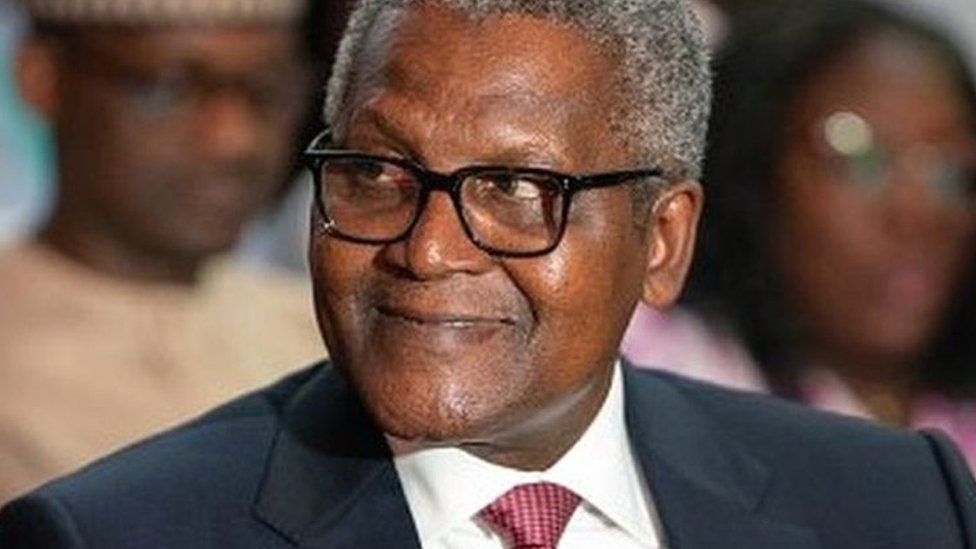
President/Chief Executive, Dangote Industries Limited, Aliko Dangote, has disclosed plans to increase the group’s investment programme in Africa from $50 billion to about $70 billion under its Vision 2030.
Biztellers reports that this strategy would witness a major intervention in electricity generation to support industrial growth, to the tune of 10,000-megawatt.
Addressing creative industry stakeholders from Northern Nigeria, including content creators, journalists, bloggers, entertainers and Kannywood stars, Dangote said expanding production, creating jobs and providing reliable electricity were essential to unlocking Nigeria’s economic potential.
He identified inadequate power supply as a major obstacle to the survival of small and medium-sized enterprises, warning that businesses dependent on petrol and diesel generators would struggle to remain profitable. Dangote said the group was considering a 10,000-megawatt power programme across Africa, potentially including Nigeria, alongside an expansion of the generating capacity dedicated to its own operations.
“We initially planned to invest $50 billion. We are now looking at increasing that to about $70 billion in Africa,” he said.
Explaining the ambition behind Vision 2030, Dangote said African businesses must take greater responsibility for investing in the continent and addressing the infrastructure constraints that discourage other investors.
READ ALSO: Chevron Nigeria Emerges Second-best Exhibitor at NAPE 2026
According to him, inconsistent government policies and unreliable electricity remain significant barriers to investment. He said the group had largely addressed the power challenge within its operations by generating its own electricity.
“Across the group, we currently have almost 1,500 megawatts. By the time we complete Vision 2030, that could rise to between 4,500 and 5,000 megawatts,” he said. “That is captive power—electricity for our own operations. Separately, part of the vision is to intervene in power generation with 10,000 megawatts across Africa, potentially including Nigeria.”
Responding to a question about the economic decision that would most improve the lives of ordinary Nigerians, Dangote placed electricity at the centre of the country’s development needs.
He argued that individual households and companies installing alternative power systems would not, by itself, resolve the wider economic problem.
“Installing solar power for yourself does not mean the wider problem has been solved. Other people may not have that option,” he said. “A vibrant economy is driven by small and medium-sized enterprises. Large companies such as ours help sustain those businesses, but SMEs are essential to economic activity. When you generate electricity using diesel or petrol, it becomes very difficult to make money.”
Dangote expressed confidence in Nigeria’s entrepreneurial strength, saying the country had yet to realise the full benefits of its large and dynamic economy. He said businesses had a responsibility to invest and create opportunities, while the government should concentrate on providing policies and conditions that allow enterprises to grow.
“The government’s principal responsibility is to create an enabling environment through good policies. With the right policies, businesses can invest and create jobs,” he said.
The industrialist identified agriculture and solid minerals as areas with substantial potential, particularly in Northern Nigeria, but stressed that the country must move beyond exporting unprocessed resources. He said investment in infrastructure, including ports, could open markets for other producers and make it easier for businesses to develop and export their products.
“It is not only about us; it is about Nigeria and the African continent,” he said. “We should not simply export raw materials and then buy back the processed products at many times the price. That is the pattern we want to change. Without production, we will continue to face economic difficulties. We must build a productive economy.”
Sharing lessons from his business career, Dangote attributed the group’s expansion to focus, financial discipline and the consistent reinvestment of earnings. He said the transition from trading to manufacturing was built around products the group already understood, supported by established customers, distribution networks and market knowledge.
“The logical next step was backward integration: producing the things we were already importing,” he said.
Dangote also urged entrepreneurs to avoid spending anticipated profits and to recognise when a venture was no longer commercially viable.
“Give it your best effort, but when you do the numbers and they are not adding up, you must be willing to leave,” he said.
Despite the challenges facing businesses, he maintained that the group would continue investing and encouraged smaller enterprises to build opportunities around major industrial projects.
“People like us will continue investing. People like you can build businesses around those investments—as suppliers, producers and service providers,” he said.
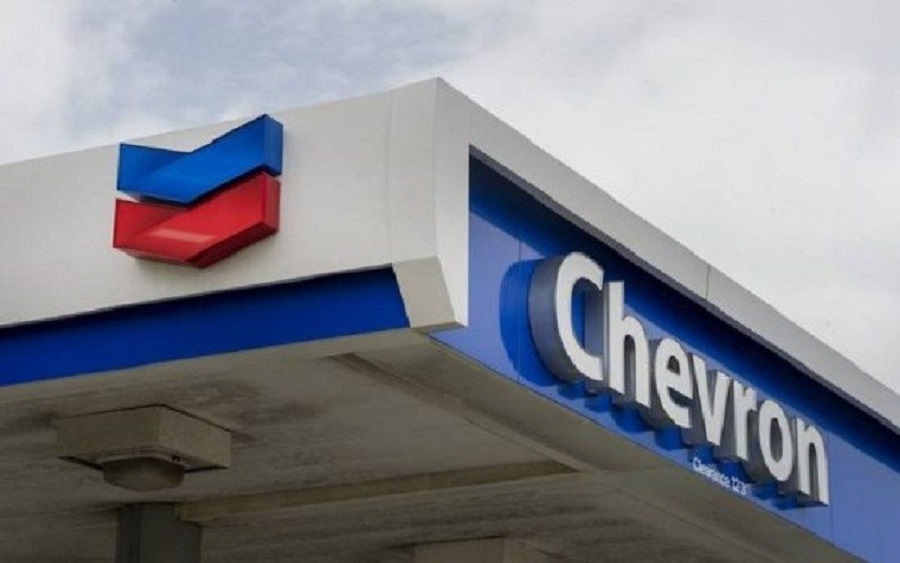
Chevron Nigeria won the second-best exhibitor award at the just-concluded 2026 Nigerian Association of Petroleum Explorationists (NAPE) conference and exhibition at Eko Hotels and Suites, Victoria Island, Lagos.
Biztellers reports that Olajumoke Cecilia Ajayi, FNAPE, NAPE President (2025–2026) and Managing Director/CEO of Ingentia Energies Limited, presented the award to Chevron, during the awards dinner on November 12, 2026.
The award is in recognition of Chevron’s outstanding exhibition, where visitors to its booth, particularly students, took part in Geology/Geophysics presentations and quizzes, word games, and Human Resources/Nigerian Content presentations and quizzes, with gifts for winners and participants.
Commenting on the award, the leader of the Chevron’s exhibition team, Dr. Victor Anyaegbudike, Manager Communications, Chevron companies in Nigeria and the Mid Africa Region, commended NAPE for its commitment to hosting the annual conference and exhibition. He noted that Chevron has operated in Nigeria for over 60 years, contributing to the country’s growth and development and making human investments that yield long-term, transformative returns.
READ ALSO: Tinubu, Shettima Head to Jos for APC Presidential Campaign Rally
“At Chevron Nigeria, we drive innovation and investment to open up opportunities for growth, jobs, productivity and lasting value. Forums like the NAPE conference and exhibition matter because they bring government, academia, students and industry together around shared goals and a better understanding of one another,” he remarked.
Victor noted that Chevron is committed to building productive, collaborative and mutually beneficial relationships, grounded in trust, with governments, partners, customers, communities and employees. “We believe that affordable, reliable and ever-cleaner energy is vital to a more prosperous and sustainable world,” he said.
Attendees at the NAPE conference and exhibition included representatives of the Federal Government of Nigeria, industry regulators, industry leaders, academics, and students from tertiary institutions across the country.

The Nigerian Exchange Limited (NGX) recorded a 1.36 per cent weekly gain as its market capitalisation increased to ₦163.80 trillion at the close of trading on Friday, November 13, 2026.
The NGX All-Share Index (ASI) rose to 252,269.16 points, pushing the market’s year-to-date return to 62.11 per cent.
The performance reflected a positive trading week for the equities market, with 43 listed companies recording price appreciation, compared with 29 in the previous week.
SEE MORE:NGX Market Cap Falls to ₦163.65trn As All-Share Index Drops
According to the Exchange’s weekly market report, investors traded 8.03 billion shares valued at ₦185.36 billion in 160,836 deals during the week.
This represented a significant increase in trading volume from the 2.83 billion shares exchanged in 192,158 deals in the preceding week, although the total value of transactions declined from ₦208.41 billion.
The Financial Services Industry dominated trading activities, accounting for 4.85 billion shares worth ₦95.79 billion. This represented 60.45 per cent of the total equity turnover volume and 51.68 per cent of turnover value.
The Agriculture Industry followed with 2.24 billion shares valued at ₦22.78 billion, while the Consumer Goods Industry recorded 260.99 million shares worth ₦11.89 billion.
Further details of the market performance showed that 39 equities declined during the week, compared with 57 in the previous week, while 64 equities closed unchanged against 60 recorded in the preceding period.
On the gainers’ chart, Champion Breweries Plc emerged as the best-performing stock, appreciating by 27.27 per cent, while LivingTrust Mortgage Bank Plc recorded the biggest loss, declining by 18.53 per cent.
Meanwhile, trading in Exchange-Traded Products (ETPs) stood at 1.21 million units valued at ₦278.97 million in 3,351 deals, compared with 1.46 million units worth ₦381.82 million in 4,085 deals in the previous week.
The fixed-income segment recorded 156,612 units valued at ₦177.88 million in 41 deals, against 21.99 million units worth ₦20.60 billion in 48 deals recorded in the preceding week.
The Exchange also recorded the listing of two commercial paper instruments issued by Thrive Agric Limited.
The instruments comprised ₦3.17 billion Series 1 (Tranche A) and ₦2.09 billion Series 1 (Tranche B) Commercial Papers, with a combined value of approximately ₦5.26 billion.






Dangote Plans 10,000MW Power Intervention, Raises Africa Investment Ambition to $70bn

40% of Breadmakers Shut Down as Atiku Accuses Tinubu of Economic Failure

ADC Fires Back at NBA Over Kalu, Says ‘No Respectful Way to Address Evil’

INEC Debunks Amupitan Resignation Rumour After London Protest, Voter Register Controversy

Chevron Nigeria Emerges Second-best Exhibitor at NAPE 2026
NGX Gains 1.36% as Market Capitalisation Climbs to ₦163.80trn

Trump’s Family Unveils New Cryptocurrency Platform

Senate Denies Receiving Petitions Against Tinubu’s Ambassadorial Nominees

Dangote Cement Lights Up Benue Host Communities With CSR Initiatives

Reps Recommend 3-year Jail Term For Aviation minister

Tems Sets New Record On Billboard Hot 100 Chart
