
Other News
IOM provides urgently needed assistance to people displaced by conflict in Malakal, South Sudan

GENEVA – Heavy fighting in Malakal, the capital of Upper Nile State, caused widespread destruction and displaced thousands of people from their homes over the past month. An estimated 27,000 people have taken shelter on a UN Mission in South Sudan (UNMISS) base in Malakal.
IOM is at the forefront of assisting people displaced by conflict, both in Malakal and across South Sudan. The Organization is delivering shelter materials and non-food items, providing lifesaving health care and water, sanitation and hygiene (WASH) services, coordinating the management of displacement sites and registering people so that they can receive assistance.
As lead provider of WASH assistance for the displaced population in Malakal, IOM staff has been working since the beginning of the crisis to deliver treated water, build latrines and showers, collect refuse and promote good hygiene practices.
Ongoing insecurity in the Malakal area has created challenges for delivering enough treated water by truck to the site. In order to ensure that water needs are met, IOM is currently constructing a new pipeline from the nearby river to the site, and is also providing chlorine treatment at the main entrance of the site for people bringing water back from the river.
Over-congestion is a significant challenge at the site, which was originally intended only to host UN staff and equipment. The estimated site density is currently 2.2 square meters per person, which is significantly below the Sphere humanitarian standard of 45 square meters per person.
“I’ve been living at UNMISS for two weeks now,” a displaced civilian told IOM. “I was studying education at the university in Malakal. Life is so difficult now because of the insecurity. The site here is very congested. In the place where I am living, there are 15 people in one spot.”
As co-lead of the Camp Coordination and Camp Management Cluster, IOM is working with UNMISS and humanitarian partners to identify ways to expand the site’s Protection of Civilians area and ensure that space is available for the further construction of vital infrastructure such as latrines and water points.
During the heavy fighting earlier this month, the UNMISS Level 2 Hospital was destroyed by shelling and emergency health partners that were initially providing support were evacuated, creating a major gap in health care availability. On 26 January IOM reopened a clinic previously operated by a health partner on the base. The clinic consists of three prefabricated buildings serving as consultation rooms and a pharmacy. Tents have also been erected for triage and waiting areas.
“We are seeing between 250 and 300 patients per day at our clinic,” said IOM Migration Health Officer Dr. Mamadou Diao Bah. “These numbers emphasize the urgent need for health care support here. We are mainly seeing cases of diarrhea and malaria, which are treatable but of course can be very serious if not addressed.”
The crowded conditions at the UNMISS base raise a serious risk for the outbreak of disease. To help mitigate this risk, IOM and partners are organizing a mass measles and oral polio vaccination campaign, set to begin as soon as a reliable cold chain can be re-established in Malakal.
On 28 January, UN Undersecretary General for Humanitarian Affairs and Emergency Relief Coordinator Valerie Amos visited Malakal, meeting with patients and medical staff at the IOM clinic and also touring the looted IOM warehouses in the town. Ms. Amos expressed her appreciation toward IOM and humanitarian agencies in Malakal, saying, “I am proud of the work of aid agencies in South Sudan who remained during this tense and difficult period, delivering aid.”
As security conditions allow, IOM will expand its assistance outside of the UNMISS Malakal base. An assessment mission to determine the number and needs of displaced people living in Malakal town is planned for later this week.
At least 646,500 people have been internally displaced across the whole of South Sudan since the onset of the crisis, with 76,000 seeking physical protection within UN bases. IOM is committed to continuing its support for those affected by the conflict.


The Social Democratic Party (SDP) and the Inter-Party Advisory Council (IPAC) have disclosed details of their recent closed-door meeting with President Bola Tinubu, explaining that the engagement focused on strengthening Nigeria’s democratic process ahead of the 2027 general elections.
The clarification came amid speculation surrounding the meeting, which took place at the Presidential Villa in Abuja after leaders of several opposition parties attended an Iftar dinner hosted by the president earlier in the week.
ALSO READ: NNPC Secures Tinubu’s Approval for $20bn FID on Bonga Deepwater Project
Speaking during a gathering hosted in Abuja by the SDP’s former presidential candidate, Adewole Adebayo on Friday, the party’s National Chairman, Prof. Sadiq Gombe, said the meeting with Tinubu followed an official invitation from the Presidency and lasted about an hour.
According to Gombe, the discussion centred on the need to strengthen Nigeria’s electoral laws and restore public confidence in the country’s electoral process ahead of the 2027 polls.
He explained that the meeting provided an opportunity for party leaders to remind the president of the importance of conducting transparent, free, and credible elections.
Gombe noted that democracy can only thrive when governments listen to the concerns of citizens and ensure electoral processes that guarantee fairness and accountability.
The SDP chairman also expressed concern over growing voter apathy, pointing to the low turnout recorded in the recent Area Council election in the Federal Capital Territory.
He said the Abuja Municipal Area Council election witnessed only about seven per cent voter turnout, which he described as a clear sign that many Nigerians are losing confidence in the electoral system.
Gombe urged the government and members of the National Assembly to take urgent steps to review electoral laws and rebuild public trust in Nigeria’s democracy.
Also speaking, the National Chairman of IPAC, Dr. Yusuf Dantalle, said political parties used the meeting to raise concerns about aspects of proposed electoral reforms, particularly issues related to indirect primaries and the mandatory electronic transmission of results.
Dantalle explained that the parties appealed to the president to use his influence to encourage legislative review where necessary, noting that reforms should strengthen, rather than complicate, the democratic process.
He expressed optimism that Tinubu would consider the concerns raised and support necessary amendments that would improve the electoral system.
The IPAC chairman also called on the Independent National Electoral Commission (INEC) to strictly adhere to electoral guidelines as preparations for the next election cycle begin.
Earlier in his remarks, Adebayo cautioned political actors against turning the 2027 general elections into a do-or-die contest, stressing that the primary goal of democracy should be the progress and stability of Nigeria rather than personal political victories.
He urged leaders across political parties to encourage citizens to actively participate in the democratic process and ensure that elections are conducted peacefully and transparently.
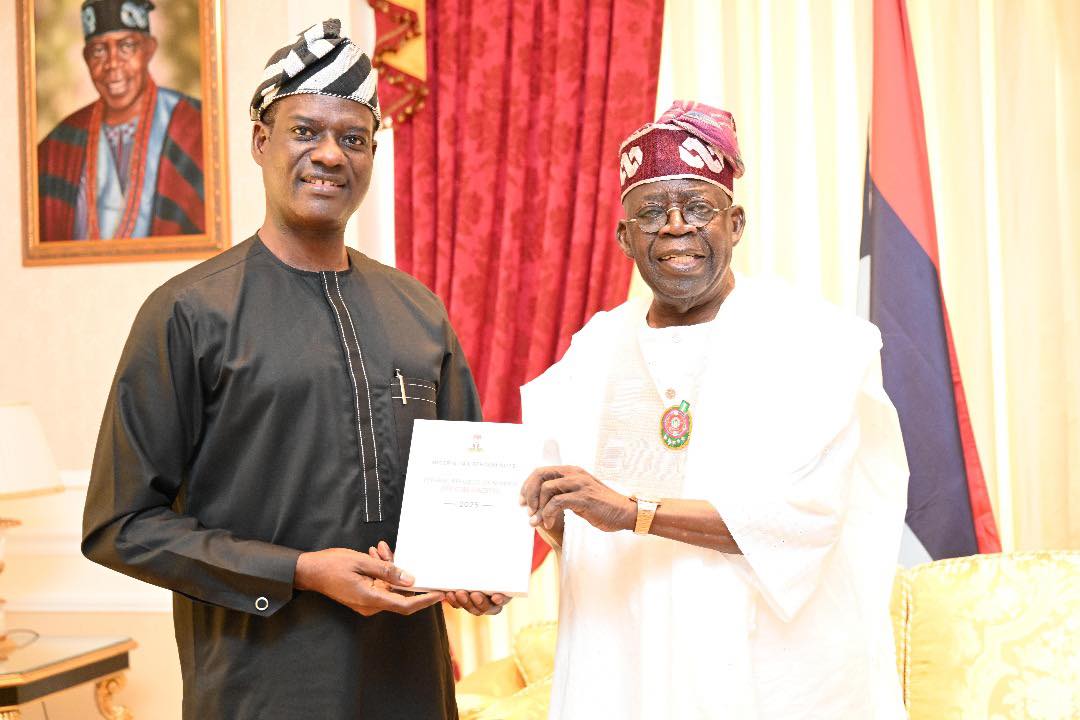
President Bola Tinubu and Mr. Taiwo Oyedele during his nomination on Wednesday.






Airfares Likely to Rise as Aviation Fuel Price Spikes by 80%

Shell Completes Turnaround Maintenance on FPSO, Resumes Production at Bonga

Sahara Group expands fleet with new 40,000 cbm LPG Carrier

NATO Shoots Down Third Iranian Missile in Turkey

Inside Tinubu’s Closed-Door Meeting With Opposition Leaders – SDP, IPAC Reveal Details

Defections Won’t Break PDP in Sokoto, Says Former Senator Gada

Trump’s Family Unveils New Cryptocurrency Platform

Reps Recommend 3-year Jail Term For Aviation minister

Dangote Cement Lights Up Benue Host Communities With CSR Initiatives

Senate Denies Receiving Petitions Against Tinubu’s Ambassadorial Nominees

Things To Know About Threads, Zuckerberg’s Twitter-like App
