
International News
Iran’s President, 8 High-Ranking Officials Dies In Helicopter Crash

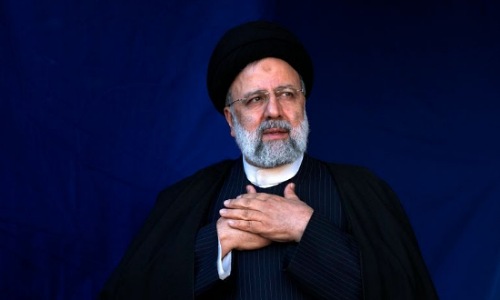
Iran experienced a tragic event as President Ebrahim Raisi, aged 63, lost his life in a helicopter crash.
Search and rescue teams found the wreckage on Monday, revealing that the helicopter was carrying President Raisi, alongside Foreign Minister Hossein Amirabdollahian and seven other high-ranking officials.
The announcement of President Raisi’s passing was made early Monday morning.
The crash occurred in the rugged mountainous terrain of Iran’s northwest region.
This devastating event comes amid heightened tensions following Iran’s retaliatory drone-and-missile strike on Israel, sparked by an earlier attack on its diplomatic compound in Damascus.
BIZTELLERS reports that Iran faced a wave of uncertainty on Sunday as search and rescue teams navigated through fog-covered mountain terrain in the aftermath of President Ebrahim Raisi’s helicopter disappearance, which state media labeled as an “accident.”
However, concern escalated for the 63-year-old ultraconservative leader as communication with the aircraft, transporting him alongside Foreign Minister Hossein Amir-Abdollahian and other officials in East Azerbaijan province, was lost, according to reports.
Ebrahim Raisi, known for his hardline stance, clinched the presidency in a notably uncompetitive 2021 election.
As the former chief justice, he oversaw a crackdown on dissent during a turbulent period of youth-led protests against clerical authority.
Positioned as the second-most powerful figure in Iran’s political landscape, after Supreme Leader Ayatollah Ali Khomeini, Raisi’s authority was substantial.
According to Iran’s Constitution, in the event of the president’s demise, the first vice president assumes office pending approval from the Supreme Leader.
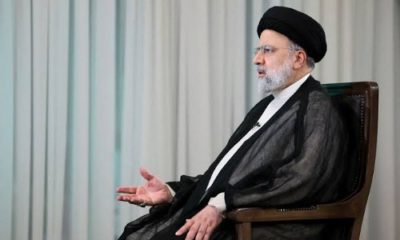


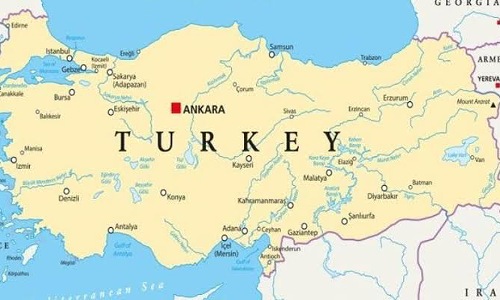
NATO air defence systems have intercepted a third ballistic missile believed to have been launched from Iran after it entered Turkish airspace, Turkey’s Defence Ministry confirmed on Friday, raising fresh concerns about the growing tensions in the Middle East.
In a statement, the ministry said the missile was neutralised by NATO air and missile defence assets deployed in the eastern Mediterranean after it crossed into Turkish territory.
SEE MORE: WHO Releases Alarming Casualty Figures From US‑Israel‑Iran Conflict
The latest interception triggered security alerts across parts of southern Turkey.
Air raid sirens reportedly sounded at the strategic Incirlik Air Base, a key NATO military facility that hosts United States troops and other allied personnel.
Residents in the nearby city of Adana were awakened around 3:25 a.m. by the warning alarms. Some locals reportedly captured footage showing what appeared to be a fast-moving object on fire streaking across the sky.
Similar sirens were also heard in the eastern Turkish city of Batman around 4:00 a.m., with reports indicating the alarm may have been linked to a nearby military drone base located close to the city’s airport.
The incident marks the third time NATO defence systems have intercepted missiles linked to Iran in recent weeks. The first missile was shot down on March 4, while a second was intercepted earlier this week.
Following Monday’s incident, the United States temporarily shut down its consulate in Adana and urged American citizens to leave southeastern Turkey due to security concerns.
Iranian President Masoud Pezeshkian, however, reportedly denied that the missile had been launched from Iran during a telephone conversation with Turkish President Recep Tayyip Erdogan.
The rising tensions come amid the ongoing conflict that erupted on February 28 involving the United States, Israel and Iran. Since the outbreak of hostilities, Tehran has reportedly carried out retaliatory strikes across several locations in the Middle East.
Incirlik Air Base remains one of NATO’s most important strategic military facilities in the region. The base has hosted US troops for decades and also accommodates military personnel from other NATO member states including Spain and Poland.
Another key NATO installation is located in Kurecik, in Turkey’s Malatya province, where US troops operate an early-warning radar system capable of detecting missile launches from Iran. The radar facility forms part of NATO’s broader ballistic missile defence shield.
Although Turkish authorities have consistently denied that radar data from the base has been shared with Israel, its presence has reportedly raised concerns in Tehran.
Earlier this week, Turkey also confirmed the deployment of a Patriot missile defence system in Malatya as NATO strengthens its regional missile defence posture amid the escalating conflict.
The World Health Organization (WHO) has released a disturbing update on the escalating conflict involving the United States, Israel, and Iran, revealing that thousands of people have been killed or injured in just under two weeks.
WHO Director-General Tedros Adhanom Ghebreyesus warned that health systems across the Middle East are under “immense strain” and are at risk of complete collapse if the crisis continues.
SEE MORE: US-Israel-Iran War: Day Four Updates from the Middle East
According to WHO reports, Iran has suffered over 1,300 deaths and around 9,000 injuries, while Lebanon has recorded at least 570 deaths and approximately 1,400 injuries.
In Israel, at least 15 people have died and more than 2,100 have been injured since hostilities escalated.
The conflict began on February 28, following a massive joint strike by US and Israeli forces that targeted top Iranian officials, including the country’s Supreme Leader.
The violence has since spread across the region, with retaliatory attacks targeting Israeli sites and US military bases in neighboring countries.
The humanitarian impact is severe. Over 100,000 Iranians and up to 700,000 Lebanese citizens have been displaced, many living in overcrowded conditions with limited access to clean water, sanitation, and medical care.
The WHO warns that these conditions put women and children at particular risk of disease outbreaks.
The organization also highlighted a growing trend of attacks on healthcare infrastructure, reporting dozens of strikes on hospitals and medical facilities across Iran and Lebanon.
Such attacks have not only resulted in deaths but also deprived entire communities of critical medical care when they need it most.
Tedros emphasized the urgent need for all parties to respect international law and protect civilians, calling for unimpeded humanitarian access and immediate measures to prevent the collapse of fragile health systems.
With the conflict continuing to escalate, the WHO has stressed that immediate action is required to protect lives, ensure medical support reaches affected populations, and prevent the humanitarian crisis from worsening.

Portugal officially inaugurated its new president, Antonio Jose Seguro, on Monday, pledging to bring stability to a nation shaken by political uncertainty and natural disasters.
Seguro, the centre-left candidate, won last month’s presidential run-off against far-right rival Andre Ventura, following weeks of catastrophic storms that killed at least seven people and caused approximately €4 billion ($4.6 billion) in damage.
Speaking at his swearing-in ceremony in Lisbon’s parliament, Seguro emphasized cooperation with the minority right-wing government and vowed to end the country’s “electoral frenzy.”
SEE MORE: Spain, Portugal Plunge Into Darkness Amid Widespread Power Outage
“I will do everything I can to put an end to this electoral frenzy,” he said, pointing to the inability of previous governments to complete their terms.
Amid global crises, including conflicts in the Middle East and a more isolationist US approach under President Donald Trump, Seguro stressed the importance of multilateralism.
“The force of law has been replaced by the power of the strongest,” he remarked.
Seguro succeeds Marcelo Rebelo de Sousa, a conservative who leaves office at 77 after serving two five-year terms.
While the Portuguese presidency is largely ceremonial, Seguro’s leadership signals a commitment to political stability and international engagement.






Nigeria Wants to Export Electricity to Togo While Citizens Face Outages

Leadership Shakeup: ADC Kicks Off Nationwide Elections

‘Why My Retirement Came at the Perfect Time’ — Ex-IGP Kayode Egbetokun

Airfares Likely to Rise as Aviation Fuel Price Spikes by 80%

Shell Completes Turnaround Maintenance on FPSO, Resumes Production at Bonga

Sahara Group expands fleet with new 40,000 cbm LPG Carrier

Trump’s Family Unveils New Cryptocurrency Platform

Reps Recommend 3-year Jail Term For Aviation minister

Dangote Cement Lights Up Benue Host Communities With CSR Initiatives

Senate Denies Receiving Petitions Against Tinubu’s Ambassadorial Nominees

Tems Sets New Record On Billboard Hot 100 Chart
