
International News
Russia Launches Deadliest Attack On Ukraine As Ceasefire Hopes Fade


In the early hours of Thursday, Kyiv was rocked by a devastating Russian missile and drone attack, described by Ukrainian officials as one of the most brutal strikes on the capital since Russia’s full-scale invasion began in 2022.
The Ukrainian air force reported that Russia unleashed 70 missiles and 145 drones overnight, targeting several cities across the country.
The barrage on Kyiv left at least nine people dead and over 60 wounded, including six children.
READ ALSO: Suspected Attack: Explosion Strikes Russian Consulate In France
Air raid sirens blared across the capital around 1:00 a.m., warning residents to seek shelter.
Moments later, loud explosions shattered the night, lighting up the sky and shaking buildings. “Phone calls can be heard from under the rubble — the search will continue until we are confident that we have found everyone,” said Interior Minister Igor Klymenko.
He confirmed that two children remained unaccounted for amid the chaos.
Rescue workers scrambled to pull survivors from under collapsed buildings. Fires broke out across multiple apartment blocks, and damage was reported in at least 13 locations.
In one tragic scene in the Sviatoshinsky district, a woman sat on a foldout chair beside a covered body, gently stroking the arm of a loved one killed in the strike.
Nearby, a bloodied woman clutched her dog as a first responder spoke calmly to her, trying to provide comfort amid the destruction.
Prime Minister Denys Shmygal condemned the assault in stark terms. “Cruise and ballistic missiles, drones, air bombs — Russia is cruelly and cynically firing missiles at Ukrainian cities, killing people while the world is making efforts to establish peace,” he wrote on social media.
The attack came just hours after Ukrainian President Volodymyr Zelensky reiterated his call for a ceasefire. “Stopping the killings is the number one task,” Zelensky stated online following a meeting between his aides and Western officials in London.
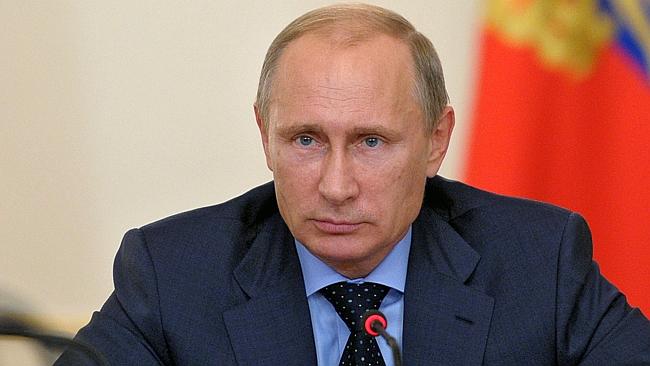
However, any momentum toward peace appeared to falter. Russian President Vladimir Putin has yet to respond to Zelensky’s offer to halt airstrikes on civilian areas and previously dismissed a joint U.S.-Ukrainian proposal for an unconditional ceasefire.
“Putin demonstrates through his actions, not words, that he does not respect any peace efforts and only wants to continue the war,” said Foreign Minister Andriy Sybiga. Echoing that sentiment, presidential aide Andriy Yermak declared, “Putin shows only a desire to kill.”
Former U.S. President Donald Trump, speaking hours before the attack, claimed a peace deal with Russia was close.
He blamed Zelensky for stalling negotiations by refusing to accept Moscow’s annexation of Crimea, stating that Ukraine’s position “will do nothing but prolong the ‘killing field’.”
Meanwhile, Russian forces expanded their offensive to other regions.
In Kharkiv, at least seven missiles struck a densely populated residential district, according to city mayor Igor Terekhov. Russia’s defense ministry also reported downing 87 Ukrainian drones, including 45 over Crimea.
Earlier this month, Russia’s campaign of aerial terror intensified. A missile strike on the city of Sumy killed at least 35 people, while another attack on Zelensky’s hometown, Kryvyi Rih, claimed 19 lives — nine of them children.



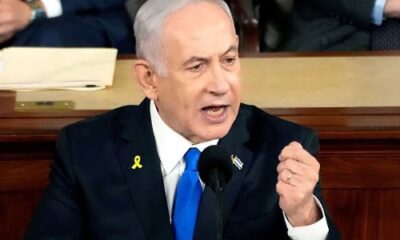






Federal agents raided the Washington, D.C., home of Democratic Congresswoman Ilhan Omar early Monday morning as part of an ongoing federal criminal investigation, the United States Department of Justice (DOJ) has confirmed.
Homeland Security Investigations agents arrived at the Minnesota congresswoman’s residence at about 6:00 a.m. Eastern Time, according to a report by Fox News.
SEE MORE: Trump Sparks Outrage With Shock Proposal to Rename New Mexico
The report said both the Department of Homeland Security (DHS) and the DOJ are involved in the investigation.
A DOJ spokesperson confirmed the operation, stating: “Today in the Washington, D.C. area, Homeland Security Investigations executed a judicially authorized search warrant secured by the Department of Justice.”
The spokesperson added: “This enforcement action is part of an ongoing federal criminal investigation.”
Details later……….
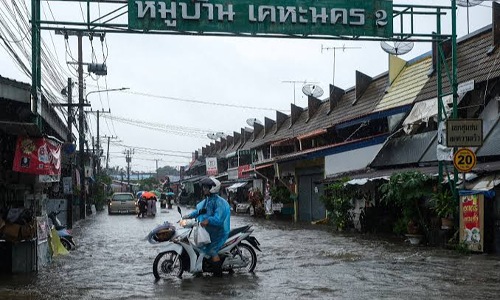
Heavy rains have triggered severe flooding across parts of Bangkok, Thailand, forcing nearly 4,900 residents to evacuate to shelters as floodwaters swept through roads and residential areas.
The flooding has disrupted movement across parts of the Thai capital, with motorists and pedestrians forced to navigate submerged roads and seek alternative routes.
SEE ALSO: NAFDAC Warns Nigerians As Fake Cowbell Milk Floods Market
According to the Bangkok Metropolitan Administration, about 52,000 households have been affected by the flooding, prompting authorities to declare a flood disaster and intensify emergency response efforts.
Emergency teams have been deployed to assist affected communities and move residents from vulnerable areas to safer locations as water levels rise.
Bangkok is accustomed to seasonal heavy rainfall, but intense downpours can overwhelm drainage systems, particularly in low-lying areas, resulting in widespread flooding and disruption.
Authorities are continuing to monitor affected locations while coordinating evacuations and other emergency measures.
For thousands of residents, the immediate priority remains securing safe shelter and protecting homes and livelihoods as authorities work to manage the situation and restore normal activities once the floodwaters recede.
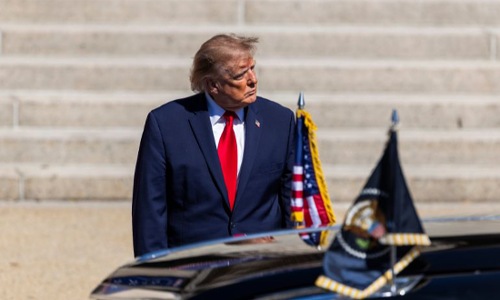
US President Donald Trump has explained his decision to reject Iran’s latest proposal to reopen the Strait of Hormuz, saying Tehran was seeking an agreement because it was losing revenue.
Speaking to reporters at the White House, Trump said Iran wanted to immediately reopen the strategically important waterway but argued that the proposal was not acceptable to his administration.
“They want to make a deal, and I think that’s fine. I like making a deal, too, but that deal would not be acceptable,” Trump said.
SEE ALSO: How the Strait of Hormuz Attack Could Trigger a Fresh Global Oil Shock
According to the US president, Iran’s push to reopen the strait was driven by the economic pressure it was facing.
“What they want to do is immediately open the Hormuz Strait. Do you know why? Because they are dying,” Trump said.
“You know why they’re dying? Because they have no money coming in, because they get their money from the Hormuz Strait.”
Trump also claimed that the US had established an unprecedented naval blockade against Iran, describing it as “a wall of steel.”
“So they outsmarted themselves. We put up the greatest blockade ever in military history. It’s a wall of steel,” he said.
“And guess what? They don’t have any money now because they wanted to close the strait.”
The Strait of Hormuz is a major global energy shipping route, and disruption to traffic through the waterway has significant implications for international oil markets and countries that depend on energy imports.
Trump’s remarks came amid continued tensions between Washington and Tehran over the reopening of the strategic waterway and negotiations involving Iran.






2027 Election: ‘Your Future Is More Valuable’ — IGP Warn Youths Against Political Violence

Tinubu Charges PCC Members to Deliver Wards

Marketers Eye Portion of FG’s Petrol Discount

Tanzania Nears Completion of $42bn Equinor, Shell-Led LNG Project

IEA Puts UAE’s Oil Output at 5.3mbpd for September

Africa’s Energy Security Conversations Pull Industry Executives Together

Trump’s Family Unveils New Cryptocurrency Platform

Senate Denies Receiving Petitions Against Tinubu’s Ambassadorial Nominees

Dangote Cement Lights Up Benue Host Communities With CSR Initiatives

Reps Recommend 3-year Jail Term For Aviation minister

Tems Sets New Record On Billboard Hot 100 Chart

lvpwww
400268 295590Wonderful beat ! I would like to apprentice whilst you amend your web internet site, how can i subscribe for a blog internet site? The account helped me a applicable deal. I had been tiny bit acquainted of this your broadcast provided shiny transparent idea. 989900