
International News
Spain, Portugal Plunge Into Darkness Amid Widespread Power Outage


A sudden and widespread blackout left Spain and Portugal reeling on Monday, disrupting daily life across the Iberian Peninsula.
Cellphone and internet networks collapsed, trains ground to a halt, and people found themselves trapped in elevators as cities were thrown into chaos.
In Spain, the government scrambled for answers. Prime Minister Pedro Sánchez rushed to the headquarters of Red Eléctrica, the national electricity operator, seeking an urgent briefing.
READ MORE: Delta’s Progress Behind Our Defection To APC — Okowa
Meanwhile, Red Eléctrica urged calm, warning citizens “not to speculate as to the cause of the outage” and estimating it could take “six to ten hours” before full power restoration.
Scenes of confusion quickly flooded social media. Metro stations lay in darkness, trains sat motionless, and office workers relied on the glow of their phones to navigate unfamiliar blackened corridors.
With traffic lights dead, the national road authority DGT told drivers to pull over, while police officers fanned out to manually control intersections.
In Madrid and Barcelona, AFP journalists observed crowds gathering outside, phones raised high in a desperate attempt to reconnect to mobile networks.
Spanish media reported widespread incidents of people trapped in lifts, with emergency crews working to free them.
The internet monitoring group Netblocks painted a stark picture, saying the blackout had slashed “much of the country’s digital infrastructure” and sent web connectivity plunging to just “17 percent of normal usage.”
Portugal wasn’t spared. REN, the Portuguese grid operator, confirmed the blackout hit “the entire Iberian Peninsula” just after midday. A brief power cut was also recorded in southwest France, but electricity there was quickly restored.
France’s RTE described the situation as “an electrical incident currently affecting Spain and Portugal, the cause of which remains to be determined.”
Officials across Europe took notice. The European Commission said it was “in contact with Spain and Portugal to understand the underlying cause” of the massive failure.
The ripple effects were immediate and widespread. Spain’s railway company Adif confirmed that trains nationwide were immobilized.
Flights continued, but airports, according to operator Aena, faced delays despite “contingency electricity systems” keeping operations alive.
Hospitals managed to keep critical units running thanks to backup generators, though some departments operated in the dark, according to reports.
Newspaper El País documented the crisis vividly, publishing images of stalled metro trains, traffic officers guiding cars, and journalists working in newsrooms lit only by flashlights.
While Red Eléctrica announced that power was slowly returning in parts of the north and south, they cautioned that “the problem was not yet resolved” and promised they were “continuing to work to bring back power.”
Blackouts on this scale have struck elsewhere in recent years: Tunisia (2023), Sri Lanka (2020), Argentina and Uruguay (2019), and notably India’s colossal outage in 2012.
Europe itself has seen similar crises, including the 2006 event when a German grid failure left 10 million people across France, Germany, Belgium, the Netherlands, Italy, and Spain without electricity for an hour.









Federal agents raided the Washington, D.C., home of Democratic Congresswoman Ilhan Omar early Monday morning as part of an ongoing federal criminal investigation, the United States Department of Justice (DOJ) has confirmed.
Homeland Security Investigations agents arrived at the Minnesota congresswoman’s residence at about 6:00 a.m. Eastern Time, according to a report by Fox News.
SEE MORE: Trump Sparks Outrage With Shock Proposal to Rename New Mexico
The report said both the Department of Homeland Security (DHS) and the DOJ are involved in the investigation.
A DOJ spokesperson confirmed the operation, stating: “Today in the Washington, D.C. area, Homeland Security Investigations executed a judicially authorized search warrant secured by the Department of Justice.”
The spokesperson added: “This enforcement action is part of an ongoing federal criminal investigation.”
Details later……….
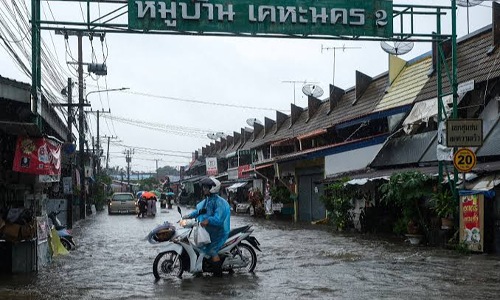
Heavy rains have triggered severe flooding across parts of Bangkok, Thailand, forcing nearly 4,900 residents to evacuate to shelters as floodwaters swept through roads and residential areas.
The flooding has disrupted movement across parts of the Thai capital, with motorists and pedestrians forced to navigate submerged roads and seek alternative routes.
SEE ALSO: NAFDAC Warns Nigerians As Fake Cowbell Milk Floods Market
According to the Bangkok Metropolitan Administration, about 52,000 households have been affected by the flooding, prompting authorities to declare a flood disaster and intensify emergency response efforts.
Emergency teams have been deployed to assist affected communities and move residents from vulnerable areas to safer locations as water levels rise.
Bangkok is accustomed to seasonal heavy rainfall, but intense downpours can overwhelm drainage systems, particularly in low-lying areas, resulting in widespread flooding and disruption.
Authorities are continuing to monitor affected locations while coordinating evacuations and other emergency measures.
For thousands of residents, the immediate priority remains securing safe shelter and protecting homes and livelihoods as authorities work to manage the situation and restore normal activities once the floodwaters recede.

US President Donald Trump has explained his decision to reject Iran’s latest proposal to reopen the Strait of Hormuz, saying Tehran was seeking an agreement because it was losing revenue.
Speaking to reporters at the White House, Trump said Iran wanted to immediately reopen the strategically important waterway but argued that the proposal was not acceptable to his administration.
“They want to make a deal, and I think that’s fine. I like making a deal, too, but that deal would not be acceptable,” Trump said.
SEE ALSO: How the Strait of Hormuz Attack Could Trigger a Fresh Global Oil Shock
According to the US president, Iran’s push to reopen the strait was driven by the economic pressure it was facing.
“What they want to do is immediately open the Hormuz Strait. Do you know why? Because they are dying,” Trump said.
“You know why they’re dying? Because they have no money coming in, because they get their money from the Hormuz Strait.”
Trump also claimed that the US had established an unprecedented naval blockade against Iran, describing it as “a wall of steel.”
“So they outsmarted themselves. We put up the greatest blockade ever in military history. It’s a wall of steel,” he said.
“And guess what? They don’t have any money now because they wanted to close the strait.”
The Strait of Hormuz is a major global energy shipping route, and disruption to traffic through the waterway has significant implications for international oil markets and countries that depend on energy imports.
Trump’s remarks came amid continued tensions between Washington and Tehran over the reopening of the strategic waterway and negotiations involving Iran.






Sahara Champions Global Shipping Collaboration for $20m Mercy Ships Healthcare Impact

30 Nigerians Bag Postgraduate Scholarship from NNPC Ltd, Eni

2027: ‘Algorithms Will Not Decide Election Results’, INEC Chairman Declares

Navy Recovers 98,000 Litres of Suspected Stolen Crude in Rivers

DPRP’s Appeal Against Fuel Import Licence Ruling Earns Stakeholder Backing

State Govs, Wike Endorse One-Party State, Join APC Campaign Council

Trump’s Family Unveils New Cryptocurrency Platform

Senate Denies Receiving Petitions Against Tinubu’s Ambassadorial Nominees

Dangote Cement Lights Up Benue Host Communities With CSR Initiatives

Reps Recommend 3-year Jail Term For Aviation minister

Tems Sets New Record On Billboard Hot 100 Chart

Chaos hits Spain and Portugal as a massive blackout cripples daily life! Phones dead, trains stopped, people trapped in elevators! 🚇🚗 Government scrambles for answers, while digital networks collapse. Full power recovery could take hours. #Blackout #IberianChaos #CrisisInEurope
I prefer this response