
Oil
It’s time for Nigerians to rise up against NNPC – Ribadu


ABUJA – The name Malam Nuhu Ribadu has become synonymous with the Economic and Financial Crimes Commission (EFCC), given the role he played as pioneer chairman of the country’s anti-corruption agency, which he headed from 2003 to be reappointed in 2007. It was, therefore, hardly surprising when President Goodluck Jonathan appointed him in 2012 to head the Petroleum Revenue Special Task Force charged with the responsibility of proffering solutions to the problem of petroleum subsidy regime and oil industry.
In this exclusive interview with Sunday Trust, the 2011 presidential candidate of the defunct Action Congress of Nigeria (ACN) and now a leading chieftain of the opposition All Progressives Congress (APC) blames the federal government for paying lip service to the fight against corruption, especially in the oil sector, saying the time has come for Nigerians to rise up against the backhand dealings in the Nigerian National Petroleum Company (NNPC). Ribadu also spoke on his 2015 presidential ambition, his role in the merger of the opposition parties and the proposed national confab, among other issues. Excerpts:
Your tenure at the EFCC witnessed remarkable strides in the fight against corruption in Nigeria. Are you satisfied with the current war against corruption in the country?
Not at all! Nigerians are being shocked on daily basis with more revelations of corruption coming from the government itself. Corruption has reached a point that leaves one speechless. Like any other Nigerian, I am simply dumbfounded, and as I said, when you hear these revelations coming from the government and the National Assembly, it is simply sickening and it also tells you that it is time for change in the country.
You headed a committee that conducted an investigation into allegations of corruption in the oil sector. How do you feel that the recommendations of your report have not been implemented even as the Central Bank of Nigeria (CBN) is coming out with more allegations of corruption in the sector?
What is coming out from the CBN today is a confirmation of the findings of my committee. Most of the things that Nigerians are hearing today are things we highlighted exhaustively in that report and we recommended measures to address them. We submitted our report over a year ago but the Federal Government of Nigeria has refused to implement it and allowed it to die as if nothing happened.
It is very disappointing. If you go back to the report, they are the same issues we raised about transparency, accountability and about one organization doing everything. The NNPC is the producer, manager, seller of the crude, receiver of the monies, the regulator, the one that receives the money on behalf of the federal government and uses it the way it likes and remits to the government what it likes.
These are the same issues that we discussed in that report and we called for openness, transparency and accountability and made a case for a different regulatory responsibility. We also said there are certain things happening in our oil industry that are shameful and needed to be discouraged.
For instance, we said they should stop the swap business, where crude oil is giving to contractors who bring finished product in return. We said stop appointing contractors or agents to sell our crude oil. We said this whole thing about subsidy business is shrouded with secrecy and corruption. We therefore, called for accountability in the process of crude oil business in Nigeria and all these were contained in the report of the committee that I chaired.
I think what is being revealed now is just a direct continuation of what we said and probably if the federal government had taken action at that time, it would have saved itself from what is going on today. But what matters now is for all of us to stand up and insist on NNPC to be held accountable and that the place be open and transparent.
After your tenure as chairman of the EFCC, you left the country in controversial circumstances and some people even said you went on ‘exile’. When you returned in 2010, you joined active politics and pitched tent with the defunct Action Congress of Nigeria (ACN). Why did you choose to be with the opposition?
I would always attribute whatever happens to me in my lifetime to God almighty. Of course, as a human being I always look at situations and circumstances before taking decisions. By the time I came back to the country, as you rightly observed, many of the political parties were trying to woo me, but out of them I felt the ACN was somehow attractive in terms of the ideology and the performance of the party’s state governments in 2010. Secondly, I had many friends in the party that I felt far more comfortable with and understood clearly that we had to build bridges across the country and find a way of supporting national politics.
We must discourage regional politics and for me coming from the North, I felt that there was need for us to reach out and contribute towards building national unity in politics. These were some of the things that attracted me to the ACN and today I am happy that I have been more or less vindicated by the choice I made to join the party.
The ACN which you joined upon your return to the country is one of the political parties that have merged into the main opposition party, the All Progressive Congress (APC). What role did you play in the merger process?
As a very loyal member of the ACN I participated fully in the merger process; sometimes behind the scene. But I can tell you that from the very beginning I was involved in the merger which started even before the 2011 elections. My contribution started from the very moment I joined the ACN, because I encouraged and supported the coming together of all the opposition parties, especially the major ones.
I continued in that spirit up to the 2011 general elections when I stepped down for the candidate of another opposition party in the presidential election, as a way of encouraging the merger process. At that time, we did it under the alliance arrangement and somehow it did not succeed completely, but it was a very big step forward towards the eventual merger of the opposition parties. I was possibly the person who made the biggest sacrifice in that arrangement, having stepped down as a presidential candidate just to encourage and support that initiative.
Having participated actively in the merger process that has produced the APC, are you now convinced that your party will truly provide the desired alternative government for the country?
I pray daily for the success of the APC to bring relief to Nigerians from the misrule of the PDP that has been going on since 1999. There is no doubt that we have problems in this country and the blame must go to the party that has been in charge. The APC is coming today as a new and fresh party that is open to all and hoping that Nigerians will see a difference in managing the affairs of the country.
I must add that in the APC we have many quality people; individuals who have performed credibly well in their responsibilities in the past. For example we have state governments that have done extremely well and are still doing quite well and we believe that if the party is given a chance at the center we can do even more. The way the party is growing today is a clear indication that Nigerians are looking for change.
Even within the PDP you could see people moving out, meaning that there are people in the PDP who are yearning for change because they have found themselves in a party that is not being fair and just to them. It is therefore, legitimate for them to move and be part of the train of change that may come in our country for the first time.
After your last attempt at the presidential election in 2011, you appeared to have been less visible on the political scene. Can you let us into some of the things you have been doing, especially with the formation of the APC?
I have been very active and I work every day of my life. I am participating fully at the highest level of the party and at the same time doing my bit at the state level. We have worked hard to achieve some understanding in Adamawa, even though I cannot say we are completely free of problems, but to a large extent we have worked hard to reach some form of understanding in the state and I fully participated in that. I just took part in the registration process and we mobilized people to register and you would be amazed at the turnout and the way people have accepted the party. Within the shortest time, the membership cards were exhausted and we had to get more to continue registering members. All these are things we have been involved in actively, but by my nature I tend to do things in a quieter way, devoid of noisemaking.
Talking about the registration reminds one of the allegation by the PDP that it was an exercise that is aimed at rigging the 2015 general elections. What do you make of the allegation?
It is baffling and funny to me! How do you relate party membership registration to rigging? For the very first time in the history of Nigeria, we carried out our registration publicly and people lined up to register as members of a political party. PDP has never, in its history of total deceit and fraud, ever conducted such an exercise openly, transparently and publicly. This is the only party that, for the first time in the history of Nigeria, has availed Nigerians of the opportunity to belong to a political party from the unit level and even requested for volunteers to come and serve as officers of the registration exercise.
This is a party that for the first time is opening its doors not just for members of the merging parties but all Nigerians, including young people who are coming of age. This is not the type of fraudulent registration by the PDP that they do behind closed doors and write whatever they like. You will never ever see PDP membership register. It is behind the closet of those who are lying and deceiving Nigerians. How then do you relate such a transparent membership registration exercise by the APC to rigging? It is only the PDP that can say such a thing, but Nigerians are laughing at them.
But critics say your party has accepted defectors from the ruling party you are criticizing, including five governors… .
The defections have even justified what we are talking about. This is a party of justice, fairness and one that has opened its doors to all Nigerians. Those who are leaving the PDP are doing so because of the party’s impunity. They had to defect because the PDP was not treating them fairly; they were being shortchanged and unjustly treated. And they are, therefore, justified to go to anywhere they can get justice which they have found in the house of the APC. I don’t know how any right-thinking person can remain in the PDP with the kind of revolution that is taking place in the APC today.
How then would you reconcile the defections of some of your chieftains to the PDP, among whom are the former governors of Kano and Sokoto states?
I am extremely disappointed and feel there is something wrong with the way they are thinking. I feel at this moment in the history of Nigeria, if anybody should be thinking of moving to the PDP, then it is not for the love of the country. At a time when all the bad things are coming out of the PDP government – the looting, stealing, bloodletting and insecurity and the way PDP has divided Nigeria along religious and regional lines – if someone will still find comfort in the party, then there must be something wrong with such a person. I feel there is honour and dignity in politics. Human beings must have good character and principles. You cannot move from a new party that has just started and go to a dead carcass, a house of fraud and deceit, and claim that you were not treated fairly. There must be something behind it – rather than the love for your country.
The former governor of Kano State, Malam Ibrahim Shekarau, has alleged that the APC constitution has been doctored. What does the party seek to achieve by tempering with its constitution?
Doctored by whom? The only recognized constitution of the APC is the one with INEC and Nigerians are free to go and demand for it. For you to be registered as a political party you have to submit your constitution to INEC. I am also appealing to media to request for APC’s constitution from INEC to verify.
Posters announcing your presidential ambition have been reportedly sighted in some parts of the country. Is that an indication that you may be testing the waters to take another shot at the presidency in 2015?
I am aware of the posters but I am not the person responsible for them. There are a few people behind it and I have met them and I asked them to desist from doing so because it is too early and that I am personally concentrating on the formation of the APC for now. I am working to see that we register members in order to build brotherhood and sisterhood within. I told them it is not time for any individual, including myself to come out with any ambition for now. Some of them listened to me but others refused and those who are doing it in all the areas are different people.
Some of them I know them while others I don’t even know, but I am not in any way surprised because this is not the first time this type of thing is happening to me. A similar thing happened in 2010, even before I joined politics. But for sure I am more experienced in politics now than I was in 2010 and as much as I am grateful and appreciative to those who have confidence in me. However, when the time comes I will make my decision known on whether to run or not.
Emerging signals suggest that there is going to be a titanic scramble for the presidential ticket of the APC. Does this not portend crisis for the party?
I don’t think so. I believe the more the merrier. It is a sign that this is a big party that has room for aspirants to market themselves to the electorate. If bigwigs are coming in to aspire for the presidential ticket of the party, it is a testimony that this is a platform that has hope for winning elections in Nigeria and I am very excited that Nigerians are looking up to the APC as a better alternative to pursue their ambitions.
Do you think zoning will be a factor in determining elections in the APC as had been the case with the PDP?
No I don’t think it is a healthy thing and it is the major reason why PDP so messed Nigeria up badly by dragging us into politics of region and religion. It is a horrible seed that PDP sowed in the politics of Nigeria. It is a dangerous trend and I think nobody should go that direction. Personally, I believe in Nigeria as one constituency and I am comfortable with Nigerians wherever they come from as my own leaders. What this country wants is quality leadership that has to do with the person and not where he comes from. It is about an individual who will bring about comfort to all.
So I hate regional politics whether you call it power shift or whatever. We must concentrate on individuals that will serve the interest of Nigerians and can build bridges of unity, thereby giving everyone a sense of belonging. We must concentrate on stopping corruption in Nigeria today as well as providing security and this has nothing to do with where you come from. We cannot be talking today about changing the leadership based on where one comes from because we cannot afford to substitute one bad thing for another.
The federal government has just rolled out guidelines for its planned national conference that is aimed at addressing some of the challenges of nationhood. What is your take on the proposed confab?
It is always good to talk if it would bring solutions to our problems, especially in a multi- religious, ethnic and cultural country like Nigeria. It makes sense for you to continue to engage for the purpose of fostering unity for the growth and development of the country. But it is another thing if those who are in charge would want to use it for political gains or advantage. I look at this period as a very wrong one for convoking a national conference – It is the year that we are going to have an election and the sitting president is showing a keen interest in the election and this is even as he had earlier kicked against the idea of a national conference. How come, when you are now faced with difficulties and challenges, you wake up and say it is time to talk? It is the wrong time to talk, because it is a political activity year and that it would be misunderstood and misinterpreted. Above all, it will not achieve the results that we are all yearning for. Rather it would create another opportunity for waste of resources.
But the guidelines released provide for the nomination of delegates even from the political parties. Are you saying that your party will not participate?
I can’t speak on behalf of my party. But as an individual I would not want the conference to take place as scheduled with the political parties participating.
Some interesting political scenarios have taken place in your state lately. We saw the defection of your governor from the PDP, and most recently, that of former Vice President Atiku Abubakar to the APC. How do you see these playing out in the politics of your state, Adamawa?
I am happy that Adamawa State is in the lead of the mass defections we are witnessing to the APC more than any other state in Nigeria. In fact all of us are moving into the APC and I feel honoured and proud to be part of this new drive coming from Adamawa to effect a change in Nigeria. All of us are moving in that direction. The governor who we are all very proud of is the main champion of the rejection of PDP as a party because it is a party of injustice. It is a party that many suffer but a few individuals sit at the top and do whatever they like. Our governor championed the resistance to that injustice and succeeded in leading to a mass movement out of the unjust house that is the PDP. The former vice president has also suffered injustice in the PDP even though he was among its founding fathers and has served as vice president for eight years. But he ended up not being treated fairly and accorded his rightful position as the only former vice president of the political party. It is not only him. The PDP has a bad behaviour of maltreating its founding fathers and treating them with disdain. Whoever is in charge becomes very dictatorial to the exclusion of many others. So those who are moving out are doing so because of the grave injustice meted out to them.
Should you eventually make up your mind to contest the presidential ticket of the APC, would you consider the coming of Atiku into your party as a threat to your ambition?
Why should I? In the first instance you are right that I have not decided and I told you what makes a man is to continue to learn and make better decisions in his journey through life. I will certainly get to a position whereby such a decision will be made, but I can assure you that it has nothing to do with other persons. It is about me and I do not look at any individual as a threat or a hindrance. I am a very optimistic person who looks at the bright side of life. I see Atiku’s coming as a positive development in whatever we are going to do, just like all the others who are with us. Most importantly, I believe that when God wills anything to happen, no individual can stop it.
– DAILY TRUST
Modupe ASUDO
The Nigerian Content Development and Monitoring Board has reiterated its commitment to advancing gender inclusion and sustainable capacity development in Nigeria’s oil and gas industry, spotlighting a $20m Women in Oil and Gas Intervention Fund.
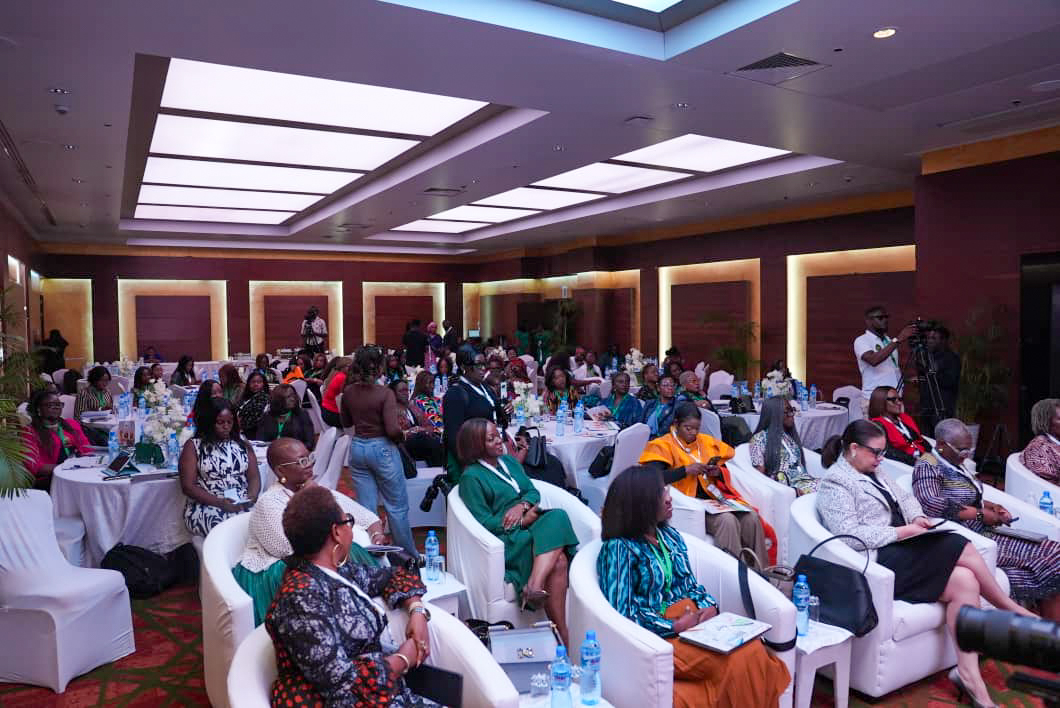
The Board made this known at the 3rd edition of the Diversity Sector Working Group’s Women in Oil and Gas Conference and Mentorship Programme, held on March 3, 2026, at Eko Hotels and Suites, Lagos.
The conference, organised in collaboration with the Nigerian Content Consultative Forum, was themed ‘Breaking Barriers, Shaping the Future’, with a strong focus on building bridges and empowering women for a sustainable energy future.
Delivering his goodwill message, the Executive Secretary of NCDMB, Engr Felix Omatsola Ogbe, described women’s empowerment as a strategic lever for strengthening Nigeria’s energy ecosystem, particularly at a time the global industry was undergoing profound structural change.
He explained that the sector’s navigation of energy transition, rapid technological innovation and rising sustainability expectations increasingly requires broader perspectives, adaptive leadership and inclusive participation to remain competitive and resilient.
Represented by the General Manager Midstream PCAD, Ms. Lekoma Phimia, the Executive Secretary framed inclusion not as social advocacy but as sound economics, stressing that diversity consistently delivers measurable performance outcomes across industries.
“Inclusive organisations are more innovative, more resilient and more profitable. When women thrive, industries thrive. When women lead, economies grow. When women are empowered, communities prosper,” he stated.
To illustrate this point, the Executive Secretary referenced the leadership impact of Ms. Oritsemeyiwa Eyesan, Executive Chairman of the Nigerian Upstream Petroleum Regulatory Commission, describing her tenure as clear evidence of women’s capacity to drive sector-wide transformation at the highest levels.
According to him, such leadership exemplifies how competence and inclusion are helping to steer the industry through a period of accelerated change.
While acknowledging the progress recorded, Ogbe observed that systemic barriers had continued to limit the full participation of women across segments of the oil and gas value chain, stressing that addressing the constraints requires deliberate, structured and sustained interventions.
At the centre of NCDMB’s empowerment showcase, the Executive Secretary highlighted the Women in Oil and Gas Intervention Fund, a landmark $20m initiative established in partnership with the Nigerian Export-Import Bank to provide affordable financing exclusively to women-owned businesses operating within Nigeria’s oil and gas sector.
He explained that the fund offers single-digit interest rate loans with repayment tenors of up to three years, targeted at eligible companies with approved industry contracts. According to him, the initiative is designed to accelerate local capacity and enable women entrepreneurs to transition from peripheral participation to ownership and leadership across the oil and gas value chain.
Ogbe further disclosed that a complementary intervention, implemented in partnership with the Bank of Industry, extends structured business training and additional access to capital to women-owned enterprises. He noted that many beneficiaries have expanded from small service providers into competitive vendors now supporting major oil and gas operators nationwide, particularly in logistics and marine services, safety equipment supply and environmental management — segments where female entrepreneurs have historically faced limited access to financing.
Beyond financing, the Executive Secretary highlighted NCDMB-supported skills development programmes executed in collaboration with institutions such as the Petroleum Training Institute and accredited industrial training centres in Rivers and Bayelsa states. He cited the training of women in welding and fabrication, noting that many graduates are employed in fabrication yards and contribute directly to major oil and gas projects.
“These women are earning dignified livelihoods, breaking stereotypes and inspiring a new generation,” Ogbe said, emphasising that collaboration remains critical to scaling impact, citing partnerships with financial institutions, development partners, training institutions and industry stakeholders.
He commended the NCCF Diversity Sector Working Group for sustaining advocacy and dialogue on inclusion. “We must move beyond inclusion towards leadership — more women in technical leadership roles, executive positions and industry boards,” he added.
In her remarks, the Chairman of NCCF Diversity Sector Working Group, Dr Alero Onosode, described the conference as a celebration of progress, leadership and possibility, noting that NCDMB’s sponsorship reflects its strong institutional commitment to inclusion and shared prosperity. She observed that convening the conference in March — International Women’s Day month — was symbolic, coming at a time of renewed activity and reform across Nigeria’s oil and gas industry.
“Alongside this momentum, we are seeing the rise of women into visible and influential leadership roles — regulators, CEOs, directors, engineers and policymakers shaping strategy and transforming spaces that were once dominated by a single voice,” Onosode said.
She explained that the conference theme challenged stakeholders to move from representation to impact, urging deliberate collaboration across sectors, generations and perspectives.
“Building bridges means women and men working together, turning diversity into strength and collaboration into results,” she stated, calling on industry leaders to prioritise mentorship, sponsorship and intentional partnerships.
The conference concluded with a renewed call for inclusive capacity development, with NCDMB reaffirming its commitment to empowering women, strengthening Nigerian content and ensuring that Nigeria’s energy future is sustainable, inclusive and economically transformative.
Modupe ASUDO
The Nigerian Content Development and Monitoring Board (NCDMB) has said that its 10-year strategic roadmap was designed to strengthen Nigeria’s industrial base by retaining 70 per cent of oil and gas industry spending within the country by 2027, while creating employment opportunities for about 300,000 Nigerians across the oil and gas value chain and its linkage sectors.
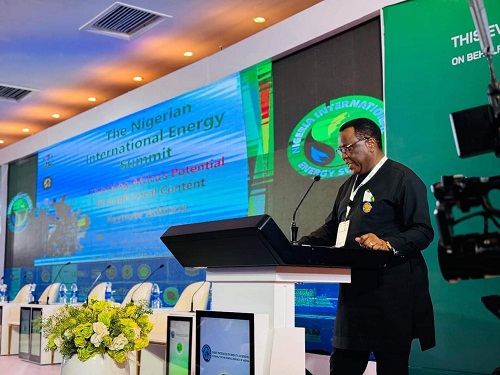
This position was made known during a high-level panel session at the maiden West Africa Industrialisation, Manufacturing and Trade Summit and Exhibition, held in Lagos under the theme “Accelerating West Africa’s Sustainable Industrial Revolution for Economic Prosperity”.
The session focused on maximising human capital as a catalyst for competitive and resilient industries in the region.
Speaking on behalf of the Executive Secretary of the NCDMB, Engr. Felix Omatsola Ogbe, the General Manager, Human Capacity Development, Mr. Esueme Kikile, congratulated the organisers for convening the summit, noting that “the theme strongly aligns with the Board’s long-standing mandate in the oil and gas sector.”
He explained that NCDMB’s core responsibility is to build the capacity of Nigerians and Nigerian companies to participate actively in the oil and gas industry, stressing that industrialisation, manufacturing and trade were critical drivers of sustainable economic growth.
To achieve this, Kikile said the Board launched a 10-year strategic roadmap in 2017 aimed at developing in-country fabrication and integration capacity, while strengthening local manufacturing capabilities.
According to him, the oil and gas industry alone is capital-intensive and limited in direct employment, but its linkage sectors provide vast opportunities to absorb Nigeria’s growing youth population.
“Our plan is to ensure that at least 70 per cent of Nigerian oil and gas spend is domiciled in-country by 2027. That is why fabrication, manufacturing and industrialisation are so critical. Through this approach, we project employment opportunities for about 300,000 Nigerians, not just in oil and gas, but across its supporting industries,” he said.
Moderating the panel, the Head of Operations at Jobberman Nigeria, Ms Samantha Ifezulike, set the tone by raising concerns about whether West Africa has sufficient human capital to sustain rapid industrial scale-up, both at entry and senior levels. She challenged the panelists to examine barriers to talent deployment and the role of collaboration between industry and government.
In response, Kikile described West Africa’s population of over 450 million people, nearly 60 per cent of whom are young, “as a significant demographic advantage that remains largely untapped due to structural constraints.”
He identified policy fragmentation across borders as a major barrier, and noted that limited mobility of skills within the sub-region restricted optimal use of available talent.
He also pointed to the disconnect between academia and industry, observing that many education systems still prepared graduates for civil service roles rather than practical, industry-driven careers.
He called for deeper collaboration between universities and industry to align curricula with real-world needs, including technology-driven and hands-on training.
On technical and vocational education, Kikile stressed the need to revive and modernise training institutions to meet the demands of the Fourth Industrial Revolution, recalling how vocational pipelines once fed directly into industrial and oil and gas hubs.
He further advocated policies that enabled innovation and entrepreneurship, allowing students to translate viable ideas into businesses, supported by streamlined regulatory frameworks.
Highlighting the NCDMB’s role in talent development, Kikile said human capacity development was central to the Board’s mandate, especially in correcting decades of overreliance on expatriate labour in the oil and gas industry. He noted that the steady growth of indigenous companies over the years reflected the impact of Nigeria’s local content policy.
He said the NCDMB was implementing an Oil and Gas Field Readiness Programme designed to train 10,000 young Nigerians in critical skill areas identified through industry studies, addressing significant skill gaps in the sector. The programme combines classroom learning with compulsory six-month on-the-job training to ensure participants are truly industry-ready.
“We rolled out this programme recently and are already working with operating companies. The goal is not just certification, but field-ready talent. Properly trained Nigerians should be able to compete locally and globally as industry leaders,” he said.
Kikile concluded by emphasising three priorities: strengthening regional capacity and absorptive ability, ensuring industry actively co-creates curricula with government, and enforcing compliance with well-designed policies and regulations.
Wrapping up the session, Ifezulike underscored the need for stronger alliances, effective policy development and practical implementation, calling for broader stakeholder participation to translate discussions into measurable outcomes.
The industry leadership panel reinforced the growing recognition that unlocking West Africa’s human capital is essential to achieving sustainable industrialisation, trade expansion and long-term socio-economic transformation across the region.
Modupe ASUDO
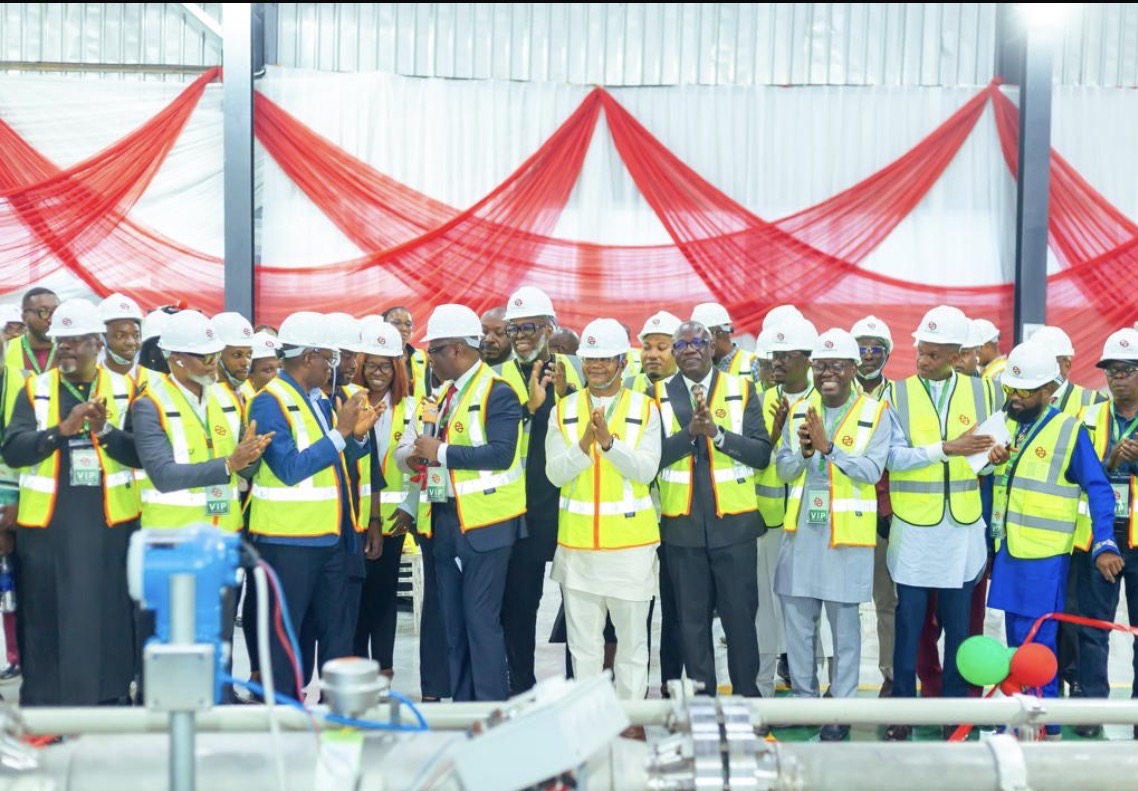
A world-class Gravimetric Flow Metering Calibration Laboratory, the first in Africa, was on Tuesday commissioned at the operational base of Engineering Automation Technology Limited (EATL) at Eket, Akwa Ibom State, with all oil and gas industry regulatory agencies and leading operators in attendance.
The facility, which is engineered to accommodate diverse flow regimes and fluid properties, guarantees accurate and reliable measurement of product transmission through industry pipelines. It incorporates what industry experts describe as “temperature and pressure conditioning, traceable reference standards, and automated data capture,” and would solve problems of flow meter factorisation and recertification.
In a keynote address at the commissioning ceremony, the Executive Secretary of the Nigerian Content Development and Monitoring Board (NCDMB), Engr. Felix Omatsola Ogbe, described the facility as a strategic breakthrough in Nigeria’s oil and gas industry, noting that “For decades, critical calibration and metering services were largely executed outside our shores, resulting in capital flight, increased project timelines, and limited knowledge transfer.”
He said the Gravimetric Multifaceted Flow Metering Laboratory is firmly aligned with the objectives of the Nigerian Oil and Gas Industry Content Development (NOGICD) Act, 2010, on local asset ownership, capacity building, and value retention. Itsstrategic importance, he noted, extends to revenue assurance and regulatory compliance, cost optimisation for industry operators, technology transfer and skills development, and industrialisation of the Niger Delta.
According to Engr. Ogbe, accurate calibration ensures transparency in hydrocarbon accounting and thus strengthens confidence across operators and regulators. Operators, too, would benefit from in-country calibration and metering servicesin terms of reduced logistics costs and turnaround time, while Nigerian engineers, technicians, and metering specialists now have a world-class training ground.
The Executive Secretary said Engineering Automation Technology Limited is among carefully selected corporate entities under NCDMB’s Project 100 Companies Initiative – a strategic programme designed to nurture high-potential indigenous companies into globally competitive champions. The strategy of the Board, he explained, has evolved beyond monitoring to enabling, which involves provision of access to finance, capacity development, infrastructure, co-investments and research and innovation support.
Represented by the Acting Director, Monitoring and Evaluation, Mr. Silas Ajimijaye, the NCDMB boss acknowledged the leadership role of the Nigerian Upstream Petroleum Regulatory Commission (NUPRC) in ensuring that regulatory frameworks continue to support technological advancement while maintaining global standards.
He charged EATL to maintain international quality standards, pursue accreditation and global certifications, invest continuously in research and human capital, and explore regional and continental markets. “Let this facility become a West African hub for flow calibration excellence,” he exhorted.
In her own address, the Commission Chief Executive (CCE) of the Nigerian Upstream Petroleum Regulatory Commission (NUPRC), Mrs. Oritsemeyiwa Eyesan, expressed profound joy at the completion and commissioning of the Calibration and Metering Laboratory, which she declared would be Nigeria’s “national standard.”
“Flow labs in the country’s oil industry will bring their Master Meters here for calibration,” she assured, noting that the NUPRC gave its “very best to support EATL” and would continue to do so.
Represented by the Commission’s Deputy Director, Development, Engr. Manuel Ibifuroko, the CCE said the NUPRC is a business enabler, adding, “We want to be very stringent, but we also have to enable business.” She pointed out that the Commission was determined “to co-create solutions and to ensure costs in the industry are reduced.”
In a welcome address, the Managing Director and Chief Executive Officer of Engineering Automation Technology Limited, Dr. Emmanuel Okon, thanked all the organisations – regulators, industry operators and others who facilitated the transition from “aspiration to operational capability.”
He said EATL was “a vision conceived in 2020 shortly after the inauguration of the second batch of NCDMB’s Project 100 by the then Executive Secretary, a support we are still enjoying from the current Executive Secretary of the NCDMB.”
He pointed out that “NUPRC, NCDMB and NUIMS [National Upstream Investment Management Services, an arm of the NNPCL] form the foundational pillars of this facility,” while inviting the regulatory agencies and all industry stakeholders to engage with the laboratory, “scrutinize its data, and adopt it as a shared benchmark.”
He also acknowledged the exceptional support and invaluable partnership of Renaissance Africa Energy Company Limited throughout the commissioning process, particularly “for providing the Meter Under Test, without which the milestone would not have been achieved.”
The Chief Upstream Investment Officer of the Nigerian National Petroleum Company Limited, represented by the Deputy Manager, Production Sharing Contracts (PSC), Engr. Paul Duke, commended Engineering Automation Technology Limited for its “vision, dedication and technical excellence demonstrated in conceptualizing and delivering a world-class system.”
He noted that with the facility now in place, Nigeria strengthens its capacity for accurate measurement, improved hydrocarbon accounting, and enhanced regulatory compliance, which he described as “critical pillars for transparency and value optimization across the upstream and midstream value chains.”
Engr. Duke expressed appreciation for the collaboration among stakeholders, notably, regulators, operators, service providers, and technical teams, whose collective efforts have brought the initiative to fruition. He said the facility “aligns fully with NNPC Ltd.’s mandate to drive accountability, efficiency, and sustainability in Nigeria’s hydrocarbon operations.”
In related comments, Project Director in the Group Chief Executive Officer’s Office, NNPCL, Mr. Adokiye Charles, said the gathering was not just to activate the facility. According to him, “We are gathered here today to commission accountability; we are gathered here today to commission integrity… and to commission trust.” He expressed great delight at the landmark development.
For his part, the immediate past Executive Commissioner, Development and Production, NUPRC, Engr. Amadasu Enorense, said the commissioning marked a defining milestone in Nigeria’s industrial journey. According to him, “To have the first Flow Metering Calibration Laboratory in Africa is indeed a major milestone.”
In a detailed explanation of the benefits the facility would bring to Nigeria, he pointed out that, “By establishing this in-country calibration laboratory, we are declaring that precision will no longer be outsourced; competence will no longer be imported, and value will no longer be exported unnecessarily.”
He revealed that hitherto, calibration services of such technical complexity required sending equipment – and capital – overseas, resulting in “foreign exchange outflows, project delays, and lost opportunities for our engineers and technicians to develop world-class expertise.” “Today,” he remarked, “We reverse that trend.”
He urged industry operators to support the facility, utilize it, and partner the company to strengthen it. To Nigeria’s young engineers, his message was, “This Laboratory represents opportunity; master the science, uphold integrity and innovate endlessly.” According to him, “The future of our industry will be defined not just by [oil and gas] reserves in the ground but also by knowledge.”
From a major partner in the project, Emerson Automation, were words of assurance of continued support and collaboration. According to the company’s Area Director, West Africa and Angola, Engr. Chukwuma Ossaiga, “If we create value we can impact the next generation.” He urged oil and gas industry players to patronise the facility.
From a representative of Renaissance Africa Energy Company Limited, Mr. Enobong Ekanem, was a firm assurance of full patronage of the facility. The NNPCL and other operators all affirmed their confidence in the facility and assured the Management of their preparedness to continue to do business with the company






2027: ‘Algorithms Will Not Decide Election Results’, INEC Chairman Declares

Navy Recovers 98,000 Litres of Suspected Stolen Crude in Rivers

DPRP’s Appeal Against Fuel Import Licence Ruling Earns Stakeholder Backing

State Govs, Wike Endorse One-Party State, Join APC Campaign Council

2027: ‘Tinubu Has Done Well’ – Wike Tells Opposition to Speak the Truth

‘Celebrate This Poor Man’ – Shettima Defends Tinubu Over Economic Crisis

Trump’s Family Unveils New Cryptocurrency Platform

Senate Denies Receiving Petitions Against Tinubu’s Ambassadorial Nominees

Dangote Cement Lights Up Benue Host Communities With CSR Initiatives

Reps Recommend 3-year Jail Term For Aviation minister

Tems Sets New Record On Billboard Hot 100 Chart
