
NEWS
“It’s Unfair” – Bauchi Senator Decries Withdrawal of Personal Police Officer

Senator Abdul Ningi of Bauchi Central has raised concerns over what he described as “unfair treatment” following the withdrawal of his personal police orderly, a move he says highlights selective enforcement of the Federal Government’s security directive.
Speaking on the Senate floor on Wednesday, Ningi said while he complied with the directive aimed at freeing police personnel for core security duties, other influential Nigerians—including top politicians, business leaders, and entertainers continue to move around with full police protection.
ALSO READS: JUST IN: Emir Of Ningi, Yunusa Muhammadu Passes Away
“It should be applied across the board. From the office of the President to ministers, governors, business figures, and even the children of political office holders. But a senator has his only orderly withdrawn? It is unfair,” Ningi said.
The directive, announced last week by President Bola Tinubu and the Inspector General of Police, seeks to reposition the Nigeria Police Force amid worsening insecurity, overstretched manpower, and decades-long misuse of officers for personal protection. Security experts have long argued that assigning officers to private individuals weakens public safety nationwide.
Deputy Senate President Barau Jibrin, presiding over Wednesday’s plenary, acknowledged Ningi’s concerns and disclosed that the matter had already been discussed at a Senate leadership meeting on Tuesday.
He directed the Senate Committee on Police Affairs to investigate the issue and report back.
“The president’s directive is intended to strengthen internal security, not to deprive lawmakers unfairly. Steps are being taken to restore police orderliness for senators where necessary,” Barau said, reiterating the Senate’s support for the ongoing security reforms.
Ningi’s protest adds to the ongoing national conversation about the equitable enforcement of security policies and the allocation of police protection to private individuals, highlighting public concern over selective privileges in Nigeria’s security architecture.
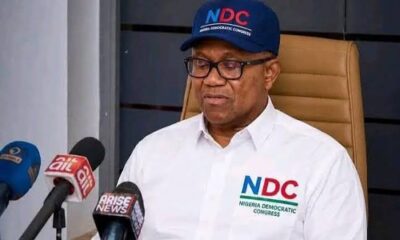





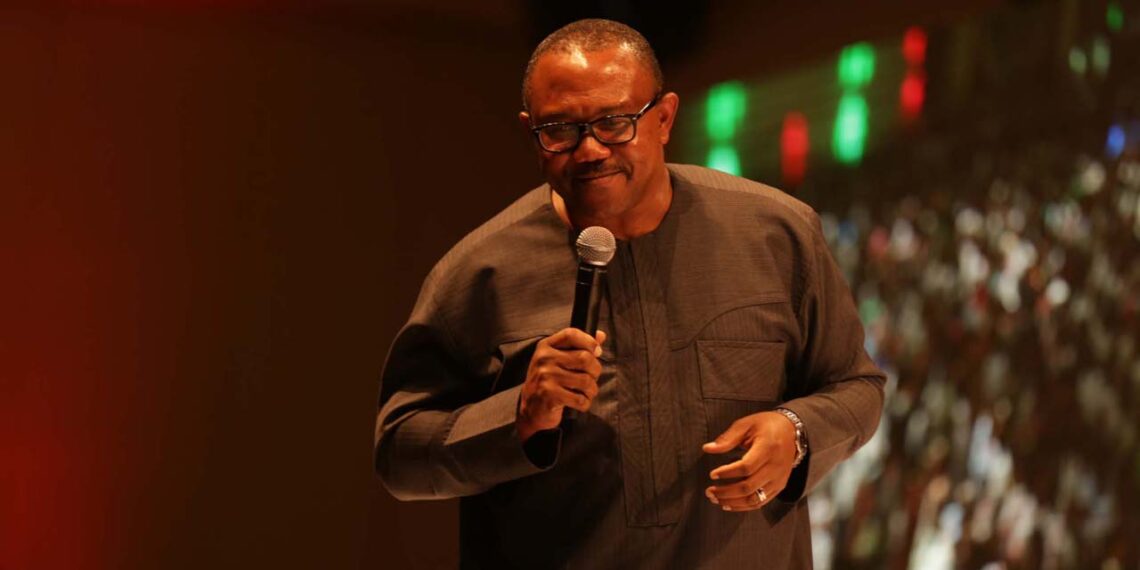
Former Labour Party presidential candidate Peter Obi has criticised President Bola Tinubu’s economic reforms, arguing that improvements in economic growth and government revenue have not translated into better living conditions for Nigerians.
Obi made the remarks in a statement posted on his X account on Monday, October 12, while reacting to the World Bank’s latest report on Nigeria’s economic performance and government spending priorities.
He argued that improvements in some macroeconomic indicators should not be interpreted as evidence that the standard of living of Nigerians is improving.
According to him, the real measures of economic development are poverty reduction, job creation and efforts to address inequality.
“Nigerians and even the World Bank know that the criteria for economic development is whether poverty is declining, whether jobs are created for our youths, and whether we are reducing acute inequality,” Obi stated.
He maintained that economic stability under the Tinubu administration had not resulted in higher living standards, improved employment opportunities or reduced poverty and inequality across the country.
Obi argued that an economy cannot be considered stable merely because government revenue increases, foreign reserves strengthen or gross domestic product grows.
“Stability exists when citizens can afford food, obtain healthcare, provide education for their children, and live with dignity,” he said.
The former Anambra State governor questioned the benefits of increased government revenue to Nigerians struggling to meet their basic needs.
“What comfort does higher revenue offer a mother who cannot provide her children with a nutritious meal? What does higher government revenue mean to a family forced to choose between purchasing food and paying for medicine?” he asked.
He also questioned the impact of the administration’s economic reforms on ordinary Nigerians, arguing that citizens continued to bear the costs and hardship associated with government policies.
Obi further cited a recent United Nations Development Programme report, which he said listed Nigeria among countries where gains made in reducing poverty had been reversed.
He also claimed that about 140 million Nigerians were classified as multidimensionally poor.
The former presidential candidate accused the Tinubu administration of presenting incomplete economic statistics to project progress without adequately addressing the welfare of citizens.
“President Bola Tinubu and his incompetent team must recognize that intentionally presenting and projecting incomplete economic statistics cannot replace the critical measure of how reform impacts on the welfare of the people,” he said.
Obi added that Nigerians should not be expected to celebrate economic statistics while struggling to survive the effects of government policies.
“A government cannot expect citizens to applaud statistics while they struggle to survive the effects of its policies,” he stated.

A Lagos State High Court sitting in Ikeja has dismissed an application by Euracare Multi-Specialist Hospital seeking to stop a coroner’s inquest into the death of Nkanu Esege, the 21-month-old son of renowned Nigerian author Chimamanda Ngozi Adichie and her husband, Ivara Esege.
Justice Aishat Opesanwo dismissed the hospital’s application on Monday, October 12, 2026, striking out its originating motion for writs of Certiorari and Prohibition.
The judge held that the hospital’s application was based on a fundamental misconception of the nature, jurisdiction and operation of a coroner’s court.
SEE MORE: Tragedy Strikes As Chimamanda Adichie Loses One of Her Twin Boys
Justice Opesanwo explained that Section 15(2) of the Lagos State Coroner’s System Law 2007 makes an inquest compulsory for a death in custody occurring within a medical facility.
She rejected the hospital’s argument that the cremation of the child and the absence of his body for post-mortem analysis deprived the coroner of jurisdiction.
According to the judge, the location where the death occurred, rather than the physical presence of a corpse during proceedings, determines the coroner’s authority.
The court further clarified that a coroner’s inquest is a fact-finding exercise aimed at establishing who died, how the death occurred, and when and where it happened, rather than a criminal or civil trial to determine liability or punish anyone.
“A coroner’s inquest is a fact-finding inquiry… It is not a trial. No one is on trial in a coroner’s court. Unlike other courts—whether civil or criminal—there is no claimant, prosecution, or defence,” Justice Opesanwo stated.
The judge also ruled that the coroner has statutory discretion to determine the sequence in which witness statements and evidence are presented.
She added that judicial review cannot be used to truncate a process mandated by state law.
Why Euracare Sought to Stop the Inquest
Euracare Multi-Specialist Hospital had approached the High Court after the Lagos State Government activated a coroner’s inquest to investigate the circumstances surrounding the toddler’s death.
The hospital argued that proceeding without the child’s body for post-mortem analysis could lead to speculative conclusions and waste state resources.
It also contended that directing its medical personnel to present evidence first violated its constitutional right to a fair hearing under Section 36(1) of the 1999 Constitution.
However, the court rejected the hospital’s application, paving the way for the inquest to proceed.
Background to Nkanu Esege’s Death
Nkanu Esege died on January 7, 2026, at Euracare Multi-Specialist Hospital in Lagos.
Following his death, his parents accused the hospital of gross medical negligence, alleging that an excessive dose of sedatives and the denial of oxygen led to cardiac arrest.
The hospital has maintained that the child arrived at its facility critically ill and received care consistent with standard medical protocols.
With the dismissal of the hospital’s application, the coroner’s inquest is expected to proceed to examine the circumstances surrounding the toddler’s death.
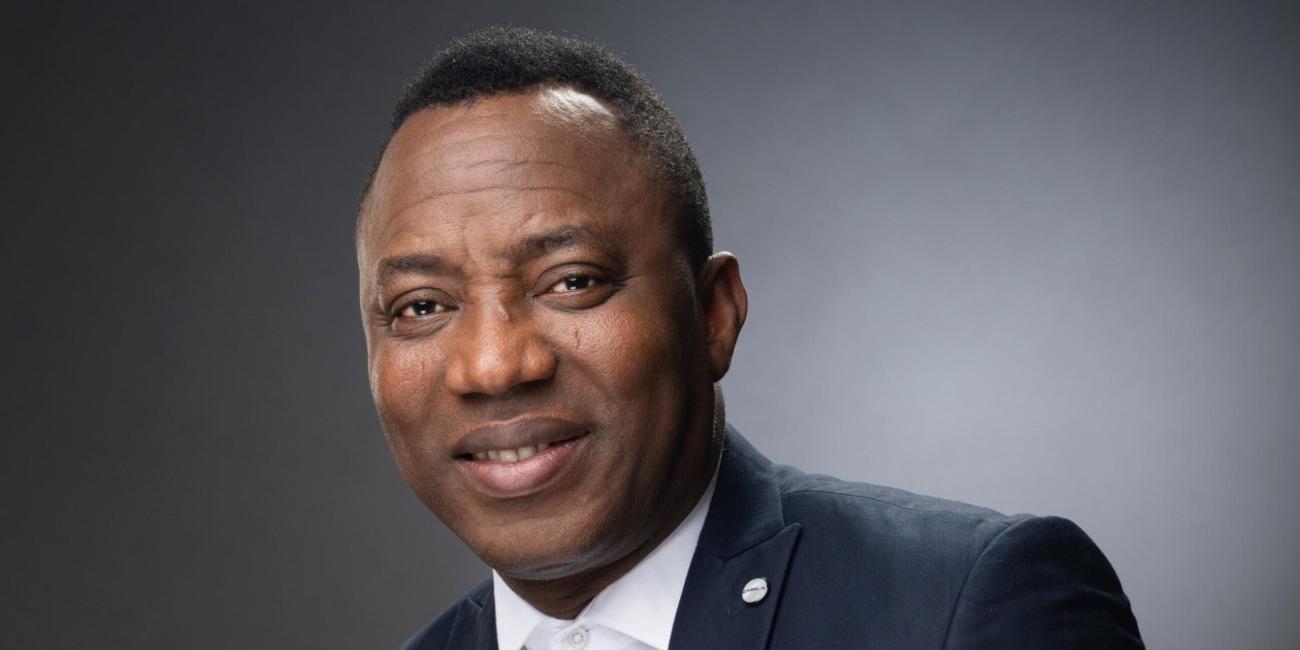
Former presidential aide, Reno Omokri, has celebrated Seyi Tinubu, son of President Bola Ahmed Tinubu, on his 41st birthday, describing him as “the best scion that any father could wish for.”
In his birthday message on Monday, Omokri praised Seyi Tinubu for his relationship with his father, President Bola Tinubu, and his contributions to the City Boy Movement and activities associated with the Renewed Hope agenda.
ALSO READ:I’ve Never Benefited From Seyi Tinubu as A Friend — Lege Miami Opens Up
Omokri described the celebrant as “a bulwark against siege,” while highlighting what he characterised as his role in the movement’s activities and achievements.
“As a liege to your father, His Excellency, Bola Ahmed Tinubu, GCFR, President and Commander-in-Chief of the Armed Forces of the Federal Republic of Nigeria, you have been a bulwark against siege,” he wrote.
He added that Seyi Tinubu was not just a contemporary figure but had also contributed to the success associated with the Renewed Hope agenda.
“You are not just contemporary; you have also been an accessory to the greatness and success of every anniversary in the Renewed Hope supremacy, with more than an honorary mention in the CBM glossary and history,” Omokri stated.
Reflecting on the City Boy Movement, Omokri recalled hoisting its flag on Mount Kilimanjaro, saying the movement had continued to bring what he described as equity, joy and improvement.
“As I said when I hoisted the CBM flag on Mount Kilimanjaro, because of you, the City Boy Movement has brought and continues to bring equity, joy and improvement,” he wrote.
Omokri also included a Yoruba expression in his tribute, stating: “Omo ologo ko le bi omo ti o l’ogo!”
He further reflected on the significance of knowing one’s birth date and purpose in life, saying Seyi Tinubu possessed both forms of knowledge.
“Very few people ever achieve two of the greatest knowledges: knowing when they were born and why they were birthed. To God be the glory, you know both,” he stated.
Referring to the celebrant’s 41st birthday, which he said was coming up the following day, Omokri extended his wishes on behalf of himself and his family.
“Therefore, on the occasion of your forty-first birthday, which comes up tomorrow, my family and I wish you a happy birthday and extend to you our warmest right hand of fellowship,” he wrote.
He concluded the message with prayers for Seyi Tinubu, his parents and his children.
“May God bless the parents who bore you and the children you begat,” Omokri stated.
The birthday message was signed by Reno Omokri.






Peter Obi Slams Tinubu Over ₦7.7tn Debt Interest Against ₦6.2tn Revenue

‘140 Million Nigerians Are Poor Despite Tinubu’s Economic Reforms’ – Peter Obi
Court Clears Way for Inquest Into Death of Chimamanda Adichie’s Son

‘Best Scion Any Father Could Wish For’ — Reno Omokri Hails Seyi Tinubu at 41

CJN Tasks Judges on Reforms as Supreme Court Records Over 2,000 Cases

Oyo Police Arrest Suspected Cultist Who Allegedly Travelled to Avenge Brother’s Death

Trump’s Family Unveils New Cryptocurrency Platform

Senate Denies Receiving Petitions Against Tinubu’s Ambassadorial Nominees

Dangote Cement Lights Up Benue Host Communities With CSR Initiatives

Reps Recommend 3-year Jail Term For Aviation minister

Tems Sets New Record On Billboard Hot 100 Chart

It’s hard to find experienced people for this subject, however, you seem
like you know what you’re talking about! Thanks
I really like what you guys are usually up too. This kind of clever work and
coverage! Keep up the fantastic works guys I’ve included you guys
to my blogroll.
Hello, after reading this awesome article i am also delighted to share my experience here with friends.