
Business
I’ve powers to suspend Sanusi – GEJ


ABUJA — President Goodluck Jonathan, yesterday, affirmed his powers to suspend Mallam Sanusi Lamido Sanusi as governor of the Central Bank, saying the action was totally unconnected with alleged corruption charges raised by Sanusi against the Nigerian National Petroleum Corporation, NNPC.
Speaking during an interactive media chat on television last night, President Jonathan equally pooh-poohed issues about his intentions for the 2015 presidential elections just as he declared that the country would not break under his watch.
The president said that the forthcoming national conference was an opportunity for Nigerians to address long standing issues affecting them in the polity just as he queried the propriety of the Borno State governor’s claim that the Federal Government was not doing enough in fighting the terrorist group, Boko Haram. The president dared the governor that should he pull out the troops from Borno State for one month, the governor would not be able to stay in Government House for one month.
The media chat anchored by AIT’s Imoni Amarere also had Grace Ekpo, Goodluck Nnaji of Base FM, Oraifite in Anambra State, and Bolaji Tunji of New Telegraph on the panel.
The media chat which lasted exactly 75 minutes was mainly taken up by last week’s suspension of Sanusi as governor of the CBN but the president also addressed issues concerning defections by governors and senators from the parties on which they were elected; the resurgence of Boko Haram attacks in the country, his 2015 presidential bid and the controversies surrounding subsidy on kerosene, among others.
On his declaration for 2015
The President said: “In Finland, when you are elected as the president of that country, you no longer belong to any political party. But that is Finland; in Nigeria and with the tradition of the PDP, as soon as you become the president, you become the leader of the party. In the parliamentary system, the Prime Minister is the leader of the party. So, ideally, the president has some challenges. Even today, I am not contesting elections but I must make sure that I lead my party to victory.
“I remember in 2007, when former president Olusegun Obasanjo was leading the campaign for the late Yar’Adua and myself. There was a particular place we visited and Yar’Adua was not with us when I addressed the press and I was asked the question, ‘why should President Obasanjo be the key person campaigning for you’?.
I told them then that what you do not understand is that the President of Nigeria according to the PDP constitution, is the leader of the party and the president should lead his party to victory. As at that time, I was still the governor of Bayelsa State.
“While I am campaigning here, I will also go and lead the campaign in Bayelsa State because I was the leader of the party and as the governor, I had to make sure that the party wins. Even today that I am not contesting elections, any candidate contesting on the PDP platform, I must still lead the party to victory.
The president must lead his party to victory and the political environment is so hot and I do not want to use this platform to campaign and to talk about PDP; it will not be fair. I was there to tell the world that the PDP is still the dominant party in the country. I cannot run away.”
Defections of governors
“I will prefer we do not go to that area to market my party. I want to use this platform to comment on contemporary issues. I believe one thing very clearly- that we are elected by Nigerians and the days when Mr President, Mr governor or Mr Senator imposes his will on Nigerians is over. Nigerians have been made to understand that their votes count.
The issue is that if the governor is doing very well, the people will definitely follow him, but if the people do not believe in him, they will go with their votes.”
Are you contesting and when are you going to declare your interest?
“If I tell you I am not contesting, there will be issues and if I say I am contesting, there will be issues. I know the political environment is hot now but at the appropriate time, you will know.
Centenary celebration funding
“I cannot say the total cost of the centenary but it is mainly sponsored by the private sector. The Heads of states that are coming are my guests. I will accommodate them, feed them and pay for their transportation, that is the role of the president but every other thing is being sponsored by the private sector. Government is not going to spend so much money.”
Kick off of the national conference
“We will not want the disintegration of Nigeria to be a subject matter for that discussion but I am quite happy that when the committee went round, it was discovered that only one person submitted a memo on the disintegration of the country.
“Our thinking is that the national conference will begin on March 3. You will know the chairman, the deputy chairman and the secretary but they will start work for at least a week before we invite others to join. On March 10, I will formally inaugurate the conference. The plan so far is that the conference will start on March 3.”
Nigeria will not disintegrate
“We are not holding the conference so that the country will break. People feel that the present constitution is not the peoples’ constitution, but that the constitution was imposed on them by the military dictators and that Nigerians must have their own constitution. People have different views, all what we are doing, other countries have done, but they call it different names. Just as other countries have done, it shows that we are entering another centenary.
“If there are issues we think we can correct, we must go and correct them but if there are no issues, then fine. But let us go from different backgrounds and redeem our country. If there are one or two grey areas that we think we can make corrections, then, let us make them. The purpose is not to prevent the disintegration of Nigeria. Nigeria will not disintegrate. The idea of the conference is not to create any environment that will affect this administration, but this conference is necessary. At the end of the day, I believe that there will be a lot of changes.
On his powers to suspend the CBN governor, he said:
“The issue of the Central Bank is quite unfortunate but I will respond based on the issues you raised. Forget whether it is Goodluck Jonathan; it is whether the President of the Federal Republic of Nigeria has powers to suspend the governor of CBN. I will tell you, yes, the President has absolute powers to suspend the CBN governor. CBN is not even well defined in the Nigerian constitution. If you look at the Nigerian constitution, section 153, talks about executive bodies like Federal Character Commission, Civil Service Commission, Judicial Service Commission, about 14 of them, the code of conduct, these are clearly defined and it says that the President appoints, but must clear with the National Assembly. For the President to remove anybody, the president must go through Senate. CBN as the number one bank is not even well defined in the Nigerian constitution, but CBN law makes the provision that to appoint the governor, deputy governors, and the non-executive directors, the President appoints and sends to Senate but the President has oversight functions over cbn. But if somebody tells you that the CBN is a different country, it is not true because for the cbn governor to change the colour of the Naira, the President must approve and for the CBN account to be even published, the President must approve.
Sanusi is still the governor of CBN and people must know that and that is why there can never be a substantive governor until the issue is sorted out. Sanusi could come back tomorrow to continue his work because the issues raised are issues that the board of CBN with the Financial Reporting Counicl, the authority that has the power to look into the financial transactions of CBN will deal with.
“The issue of suspension came in because the CBN Act is somewhat anomalous. We have similar situations where the CBN governor is also the chairman of the board. The CBN governor is the chief executive of CBN and at the same time is chairman of the CBN board; so if there are allegations about the CBN governor, it becomes a problem for you to look into it. And there were issues raised based on the 2012 audit report and for you to look into those issues, for you to be sure of what you are doing, the CBN governor should just step aside.
Immediately the board and the Financial Reporting Council sorts out those grey areas, and if it does not affect him, he would come back to do his work. So, you cannot say now that you are going to Senate to ask for powers to suspend, then maybe in one week or so, if the board of the Financial Reporting Council… then you go back to the Senate, this man is coming back, no.
“It is when you want to remove the governor completely. Assuming that the board of CBN and Financial Reporting Council look into those grey areas and feel that the infractions are grave enough for Sanusi to leave completely, then I will have to go to Senate no matter the issues they raise. I cannot say that I am firing him, it is the Senate. So, I can place those issues before the Senate and if the Senate agrees with the report, and says yes, then he can leave.
The issue of suspension and removal are quite different.”
On why it took long for the CBN governor to be suspended, he said:
“People raised all kinds of issues that the suspension will affect the economy. When you are dealing with the treasury of the nation, you have to consult widely and take the necessary steps to ensure that it does not affect the economy. One little thing and if issues bordering on the capital market are not taken carefully, it can bring the economy down especially when the Central Bank is involved. When the financial statement was sent to me, I had to send the report to the FRC to seek their opinion. Even if I am the best accountant in the world, I still have to consult widely. It went back and forth. The first report that came to me, issues were raised. Then based on the issues raised, I raised a query to the CBN governor. Of course, the CBN governor now wrote back and I sent it back again to the FRC telling them the response of the CBN governor. It took them time, but what quickly made me to rush to take that decision? By now, the 2013 audit report ought to be published.
One of the things we had to do to stabilise the economy was to send the name of the next CBN governor to the Senate even though the tenure of Sanusi will expire in June in order to tell the international community that we have a succession plan. At any time, if they are through, Sanusi can even come back as CBN governor. So, we want to assure the international community that the succession plan will not affect the economy. It is quite a sensitive thing and you must handle it with care. I really want to use this opportunity to advise people. President Jonathan is a Nigerian, Sanusi is a Nigerian and having been governor of the CBN, he must have stepped on toes.”
Prosecuting Sanusi
People should know how government functions. Government does not prosecute anybody. Any one can be accused of anything. Even in normal civil service operations, even when you are suspected, let us say fraud, they first thing they do is to place you on suspension or interdiction and that matter is investigated. Why they place one on suspension or interdiction until the end of investigation is to ensure that the person dosen’t stay in office to frustrate the process of investigation.
“Government normally places one on interdiction without salary, but if it is a grievious offence, the person is suspended without salary, but not sack, until when they conclude the investigation. The person might go back if he has no case to answer. If he has a case to answer that is when he will be prosecuted.
“The FRC is not a member of CBN, so there might be some issues they pointed out and probably they might need some explanations.
“I’m not saying what they raised there is incriminating on the CBN or Sanusi. It will depend on when the Board of CBN and the FRC look into the grey areas. If he has no case to answer, we won’t prosecute.
“If he has a case to answer, it will depend on the nature of the case. In the public service there are some cases, which are not criminal in nature, such as an act of negligence, or that he skipped a process that he is supposed to follow, this might not lead to prosecution, he might only be sanctioned, indictment or so.
“Prosecution will only come in if a fraud is established. If a fraud is not established, it is just that somebody failed to follow due process or some other issues that are not clearly fraudulent. Nigerians should wait.”
President Jonathan also addressed issues relating to the autonomy of the apex regulatory bank saying that a bid to amend the act was frustrated last year.
He said:
“They are aspects of the CBN operations that most be absolutely y autonomous, not everything about CBN should be autonomous.
“The issues of monetary policies on which CBN is autonomous. For instance, if the CBN wants to devalue the naira, they don’t need to take permission from the President. They just need to look at international actions and take an action. If they want to strengthen the money or withdraw money from circulation, they don’t need to tell the president, nobody interferes. Anything that needs to do with the monetary policies of the CBN, nobody interferes and they don’t need to take permission from anybody, the law gives them absolute autonomy. They should not be subjected to political actions, so that they can manage the country’s finances effectively.
“There are, however, a number of positions that they need the consent of the Presidency, such as when they want to change the colour of the naira, they must seek the President’s consent. The CBN law may be, I’m not saying will be. However, where it may be amended, we might have to consider international best practices.”
Asked why the deputy governors were retained despite the report indicting them, he said:
“The Governor has to step aside, not because anybody has convicted Sanusi, but because he is the Chairman of the Board. Yes, there is somebody among the Deputy Governors, who is now acting, because we cannot remove everybody, unless the office will collapse. In cases like this, the leader steps aside.
“Those are not convictions, but suspected transactions and so on. There may be explanations. The issue of one having to remove all the deputy governors and directors, is not right. While going into the issue, and it is discovered that one of the deputy governors is involved, the person will be asked to step aside, for that area to be properly examined.
“For now, the report is central, so it sort of affects the head.
Kerosene subsidy
“I don’t need to be briefed about the kerosene subsidy issue, because I was involved. I was the Vice President to the late President Yar’Adua.
About 2008, 2009, international crude oil price dropped significantly, it was $48 or so and we realized that at that time, the pump price of PMS was N70 per litre, while kerosene was N50.
We realized that if we completely deregulate, Nigerians at that time would have gotten PMS at about N60 per litre. We then agreed that we will pull out, completely deregulate the industry, because if we have pulled out then, the pump price would have dropped, and if the pump price dropped, nobody would have protested and that is the best time. So those approvals were given.
Along the line, people, even labour leaders were among the people that said this might be short-lived, let us wait for another six months, then if it is stable, government can pull out. We were afraid that the price can go up again, and if we pull out now and the international price of crude oil goes up again, citizens will suffer.
“We decided to leave it that way, because the petroleum law did not recognize the president, it is the minister. So, what happened is that instead of keeping the pump price at N70, the president now got the pump price to N65. This is the first time the pump price of petroleum products were brought down. It always goes up and up. Nigerians would have been buying at N62, but the presidency brought it to N65 and it was announced.
Those are memos authorizing the minister to act, the president has no power based on the law, but of course we know that before the minister will effect it, the president must give clearance.
The law governing changing the price of petroleum products is very clear. To increase or decrease the price of any petroleum product, the law states that you have to advertise it. You must inform Nigerians in some daily newspapers, you will state the date and the time. If you listen very well, when we want change the price, we might say maybe Sunday 12 midnight, so that by then, every station will change.
Kerosene subsidy still remains, it was not removed and no Nigerian can say that at a particular period it was removed. I was Vice President, and there was no particular period that we announced that we have completely deregulated kerosene.
On Boko Haram
We are worried that people are being killed. There are successes but the negative stories create the impression that the security services are not working. If they are not working, we will not be walking freely in Abuja. We are working with the Cameroonian authorities. The killings are quite worrisome but we will get over it.
On the statement by the Borno governor.
The statement by the governor is unfortunate. I don’t expect that from the Borno governor. If he thinks that the armed forces are not doing well, he should tell me and I will pull them out and see if he will stay in Government House for one month.
– VANGUARD

Sahara Energy Geneva has highlighted the power of business collaboration to deliver lasting impact, with Mercy Ships Cargo Day celebrating more than $20 million raised over the past decade to support healthcare interventions in Africa.
More than 500 guests from over 150 shipping and trading companies gathered in Geneva recently for the 10th anniversary Gala of Mercy Ships Cargo Day, celebrating a decade of industry support for the international charity.
David Walker, Head of Chartering at Sahara Energy Geneva and Chairman of the Cargo Day Geneva Committee, joined industry leaders at the event, where he thanked the global shipping community, sponsors, media partners and Cargo Day committees in Geneva, London, Houston, Dubai and Singapore for supporting the initiative.
Cargo Day brings together charterers, shipowners, shipbrokers, and other shipping professionals who contribute through pledges, cargo commissions, and address commissions to support the work of Mercy Ships.
READ ALSO: 30 Nigerians Bag Postgraduate Scholarship from NNPC Ltd, Eni
Kola Motajo, Director, Sahara Geneva said Sahara’s involvement reflects the company’s belief in the ability of enterprise and partnerships to deliver impact beyond business.
“At Sahara, our focus is always on impact and lives transformed. Cargo Day demonstrates what is possible when businesses and individuals unite around a shared purpose. The $20 million milestone reflects the collective commitment of the global shipping community to improving healthcare in Africa. As Sahara looks Beyond XXX, we remain committed to building connections that create lasting value and possibilities for generations to come,” Motajo said.
Reflecting on Cargo Day’s growth, Walker said: “Ten years ago, we raised $300,000 and there were 70 people at the Gala. Today, we have more than 500 people coming from around the world to support such a great cause.”
Cargo Day 2025 raised more than $2.5 million, with 93 companies participating, including charterers, brokers, shipowners, and other partners.
Mercy Ships operates two hospital ships supporting patients in Africa with free life-changing surgeries, while also providing training and mentoring for local healthcare professionals. Cargo Day funding contributes to expenses associated with operating the hospital ships.
The 2026 Cargo Day campaign begins November 4 and will run through November and December, with companies participating through Mercy Cargoes, address commissions and pledges.

Up to 30 Nigerian graduates have bagged postgraduate scholarships to pursue further studies both locally and in the Diaspora.
According to the Nigerian National Petroleum Company Limited (NNPC Ltd) and Italian energy company, Eni have awarded postgraduate scholarships
The beneficiaries emerged from more than 3,000 applicants following assessments of their academic records and performances in a recently conducted computer-based test (CBT).
The awards are under the 2026/2027 Postgraduate Scholarship Scheme of Nigerian Agip Exploration Limited (NAE), an Eni subsidiary, on behalf of the NNPC-NAE Production Sharing Contract (PSC) partners.
In a statement, NAE’s Vice Chairman and Managing Director, Maurizio Pinna, said the initiative was designed to develop local talent and equip young Nigerians with skills relevant to the oil and gas industry. Pinna congratulated the beneficiaries, noting that the scholarships would enable them to pursue their academic ambitions and achieve their career goals.
According to NAE, the programme reflects its commitment to education, innovation and capacity building in Nigeria.
The company urged the beneficiaries to make good use of the opportunity by acquiring valuable knowledge and skills that would contribute to national development, particularly in the energy sector.
Ten of the awardees will undertake postgraduate studies in universities abroad, including Imperial College London, Robert Gordon University in Aberdeen, Newcastle University, the University of Aberdeen and the University of Hull in the United Kingdom.
READ ALSO: Navy Recovers 98,000 Litres of Suspected Stolen Crude in Rivers
The remaining 20 beneficiaries will study at Nigerian universities in fields including engineering, geosciences, petroleum and environmental technology, energy economics, renewable energy and energy transition.
Established in 2007, the NNPC-NAE PSC postgraduate scholarship scheme is part of the partners’ human capital development programme aimed at promoting specialised knowledge and addressing skills shortages in Nigeria’s deep offshore oil and gas operations.
NAE said 380 Nigerian graduates had benefited from the scheme since its inception, gaining knowledge and skills required by the oil and gas industry.
Beyond education, Eni, through NAE, has implemented sustainability initiatives in Nigeria covering healthcare, access to water, infrastructure and community empowerment.
Eni has operated in Nigeria since 1962 and currently has an equity production of about 55,000 barrels of oil equivalent per day. The company also holds a 10.4 per cent stake in Nigeria LNG.
NAE was incorporated in 1996 to manage Eni’s deep offshore exploration and production assets. It became the first oil and gas company in Nigeria to produce oil from the country’s deep offshore when its Abo floating production, storage and offloading (FPSO) vessel began operations in 2003.
The company has interests in nine offshore blocks in Nigeria, either as operator or co-venturer, including PML 102 and PML 103, where the Zabazaba-Etan fields are being developed.
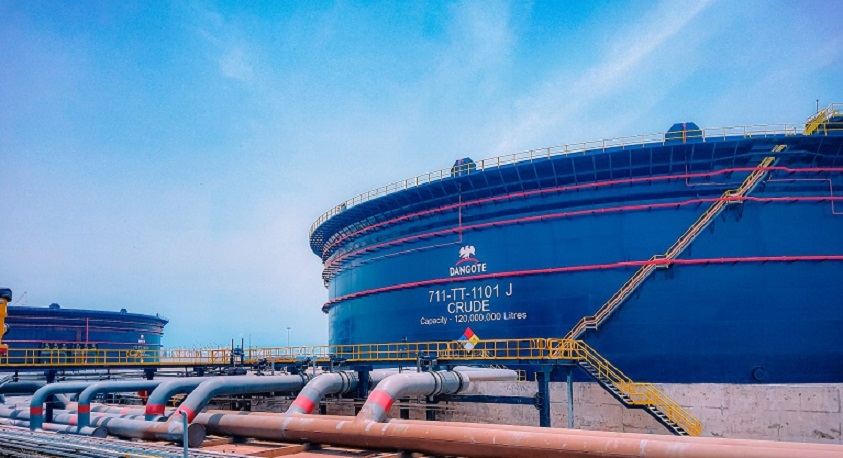
The Dangote Petroleum Refinery and Petrochemicals’ (DPRP) decision to seek leave to appeal a Federal High Court (FHC) judgment directing the Nigerian Midstream and Downstream Petroleum Regulatory Authority (NMDPRA) to continue issuing petroleum product import licences to three major oil marketers is being backed by the Energy Watchdog.
This was detailed in a statement by Martins Tayo, which considers the move as necessary to protect Nigeria’s domestic refining industry and reduce dependence on imported petroleum products.
The judgment, delivered on September 28, 2026, by Justice Inyang E. Ekwo in Suit No. FHC/ABJ/CS/1363/2026, ordered the NMDPRA to continue issuing import licences to Matrix Energy, AA Rano and AYM Shafa.
The Energy Watchdog argued that the ruling undermined the objectives of the Petroleum Industry Act (PIA) and threatened investments in domestic refining capacity.
“We completely reject and condemn in totality the judgment of the lower court. It is a deeply flawed decision that disregards the clear intent of the Petroleum Industry Act and the national interest in building a robust domestic refining industry,” the statement said.
READ ALSO: NNPC Petrol Discount: Oyedele Explains How Lower Margins Could Boost Profits
The group further cited a reported decline in petrol imports in the first quarter of 2026, alongside increased supplies from local refineries, particularly the Dangote facility, as evidence of the country’s growing domestic refining capacity.
It argued that sustaining import licences despite rising local production could undermine efforts to achieve self-sufficiency in refined petroleum products and weaken investor confidence in the sector.
According to the organisation, Dangote Refinery’s decision to seek leave to appeal as an interested party was timely, given the potential implications of the judgment for the future of Nigeria’s downstream petroleum industry.
“The lower court’s decision amounts to a judicial endorsement of continued importation irrespective of local capacity.
“We condemn it without reservation because it threatens to reverse the hard-won gains of the last few years,” Tayo stated
The Energy Watchdog maintained that the Petroleum Industry Act was designed to encourage investment in midstream and downstream infrastructure, warning that allowing the ruling to stand could send a negative signal to investors who have committed substantial resources to domestic refining projects.
The group urged the Court of Appeal to grant the DPRP leave to appeal and ultimately set aside the FHC’s order, describing the case as significant to Nigeria’s energy security and the development of its refining industry.
“Any judgment that forces the continued importation of fuel products when local refineries can supply the market is a setback for Nigeria.
“We condemn the lower court ruling in the strongest terms and fully support the appeal filed by Dangote Refinery,” the statement concluded, “The Court of Appeal must correct this error and reaffirm that the era of automatic import licences is over.”





Sahara Champions Global Shipping Collaboration for $20m Mercy Ships Healthcare Impact

30 Nigerians Bag Postgraduate Scholarship from NNPC Ltd, Eni

2027: ‘Algorithms Will Not Decide Election Results’, INEC Chairman Declares

Navy Recovers 98,000 Litres of Suspected Stolen Crude in Rivers

DPRP’s Appeal Against Fuel Import Licence Ruling Earns Stakeholder Backing

State Govs, Wike Endorse One-Party State, Join APC Campaign Council

Trump’s Family Unveils New Cryptocurrency Platform

Senate Denies Receiving Petitions Against Tinubu’s Ambassadorial Nominees

Dangote Cement Lights Up Benue Host Communities With CSR Initiatives

Reps Recommend 3-year Jail Term For Aviation minister

Tems Sets New Record On Billboard Hot 100 Chart
