
Aviation
Japan baffled by U.S. telling airlines to respect new Chinese air zone


TOKYO – U.S. State Department guidance to domestic airlines that they comply with China’s new air defense zone in the East China Sea has perplexed Japan, which wonders if it still has the full support of its ally in challenging Beijing’s claims to the airspace.
Japan and the United States had consistently taken a firm stand against China’s designation late last month of an Air Defense Identification Zone (ADIZ) that overlaps the disputed Senkaku Islands in the East China Sea. The islets are administered by Japan but claimed by China.
But if the U.S. government places a priority on the safety of civilian aircraft in the airspace, it means that Tokyo and Washington will have trouble coordinating their responses.
While China praised the State Department’s guidance, a senior Japanese Foreign Ministry official expressed concern.
“The U.S. action may represent Washington’s intention to be interpreted either way, giving consideration to both commercial carriers demanding the safety of flights and the Japanese government,” the official said.
To Japan, the United States appeared to be a reliable ally that supported its firm stance on China’s unilateral action in establishing the zone, and was full of praise when Washington sent two U.S. B-52 bombers into the zone on Nov. 26.
However, the State Department on Nov. 29 announced a policy that U.S. commercial airlines should notify Chinese authorities in advance of their flight plans in the zone.
According to the online version of The New York Times, talks between U.S. government officials and airline executives began on Nov. 27. Two days later, the State Department settled on the guidelines for commercial carriers to follow established international air protocols, apparently for safety concerns for passengers flying through the disputed airspace.
“The U.S. government generally expects that U.S. carriers operating internationally will operate consistently with NOTAMs (Notices to Airmen) issued by foreign countries,” the U.S. State Department said in a statement on Nov. 29.
But it also added: “Our expectation of operations by U.S. carriers consistent with NOTAMs does not indicate U.S. government acceptance of China’s requirements for operating in the newly declared ADIZ.”
The guidance to commercial airlines runs counter to the U.S. Defense Department’s approach with its military aircraft and
took the Japanese government by surprise. When a senior official with the Foreign Ministry learned of the news on Nov. 30, the official said, “Since there is no information available yet, we cannot respond.”
The ministry inquired the U.S. side about the guidance, and was told that there was no confirmation that the U.S. government had made such a request to commercial carriers.
Officials with the prime minister’s office and the Foreign Ministry stressed that Washington has never recognized Beijing’s newly declared air defense zone. The transport ministry reaffirmed that it will adhere to its policy of not asking commercial airlines to give China prior notification.
After Beijing declared the creation of the zone on Nov. 23, Japanese carriers notified Chinese aviation authorities with their flight plans to comply with their demand.
But the Japanese government called on the airlines to halt the notifications on the grounds it does not recognize the zone, which it said Beijing unilaterally established.
The Japanese government went further to make clear its position by flying aircraft from the Self-Defense Force and Japan Coast Guard through the airspace unannounced.
China hailed the State Department’s latest move as a gesture of paying respect to its newly created zone.
China Central Television reported on the guidance for American carriers on Nov. 30, quoting U.S. news outlets’ coverage.
“The Obama administration requested U.S. commercial airlines to comply with China’s rules when they enter the Chinese air defense zone,” CCTV said.
A flurry of messages hailing the development appeared on Weibo microblogging service, Chinese version of Twitter, right after the CCTV reports.
“(President) Obama saved China’s honor,” said one posting. “Finally, the international community acknowledged China’s air defense zone.”
The Chinese air force is set to defend its nation’s claims to the zone. In the Nov. 30 edition, the Global Times, affiliated with People’s Daily, the mouthpiece of the Chinese Communist Party, carried “exclusive” reports on China scrambling fighter jets the day earlier to intercept aircraft.
It said that SDF aircraft took off from Misawa Air Base in Aomori Prefecture, and that EP-3 U.S. surveillance planes were the latest model in the line of the reconnaissance aircraft.
These reports were not included in a statement released by a Chinese air force spokesman on Nov. 29.
These reports, experts say, suggest that Beijing intends to show off its air defense and surveillance capabilities to audiences in and outside China by having local media report on intelligence that authorities gathers on SDF and U.S. military aircraft.
DISPUTE UNLIKELY TO INCREASE MILITARY TENSIONS
The Japanese and U.S. governments agree that given the current situation, military tensions are less likely to heighten around the Senkakus dispute.
An official close to the Japanese government cited a lack of protests by Tokyo and Washington over the Chinese reports of scrambling fighter jets in response to the intrusion of SDF and U.S. military aircraft in the ADIZ.
In autumn last year, Beijing announced that the Chinese military had conducted drills in the East China Sea at a site near the Senkakus, which China calls Diaoyu.
After an analysis of footage of the drills, the Japanese government concluded that video images taken during a separate drill at a different site were used in the announcement.
Subsequently, the Japanese government remains cautious about what Chinese authorities say on developments concerning the ADIZ.
Defense Minister Itsunori Onodera showed skepticism of the veracity of the reports on the Chinese fighter jets’ scramble.
An official close to the SDF said announcements about the scramble represents Beijing’s attempt to project an image of a strong China to the domestic and international audience.
“China cannot afford not to take any action when U.S. military jets fly into the zone,” the official said.
According to the Japanese government, there were no signs to point to the Chinese military spiraling out of control concerning the declaration of the air defense zone. Wording of the event employed in statements from the Chinese foreign ministry and ministry of national defense are coordinated after Beijing’s announcement on the zone on Nov. 23.
Both Tokyo and Washington believe that there is little chance that China will back down and cancel the zone, given that Beijing called the establishment of it as national policy.
But when it comes to the air defense capabilities of China, there is no denying that they lag far behind those of the combined forces of Japan and the United States.
U.S. F-15 fighter aircraft are deployed at the U.S. Air Force’s Kadena Air Base in Okinawa Prefecture. In the event of a contingency, F-22 stealth fighters can arrive at the base in about half a day.
In addition, the U.S. Air Force’s comprehensive strength is massive, and its pilots are well trained. The Air Force can bolster its monitoring activities by flying early warning aircraft equipped with advanced radar systems.
“The Chinese military will be no match,” said a defense analyst.
On the Japanese side, F-15 fighters, the mainstay of the Air SDF, are undergoing upgrades to modernize them.
In contrast, the Chinese air force is believed to lack a sophisticated radar system and the ability to expand the range of its aircraft through air-to-air refueling.
In July, Chinese early warning aircraft reached the Pacific for the first time by way of flying over Japan’s southwestern Nansei Islands, which include the Senkakus.
Analysis by SDF officials, however, show that the Chinese military has yet to obtain the capability to dispatch fighter jets to the region.
In recent years, China has built up its armed forces. The nation’s first aircraft carrier, the Liaoning, conducted its first drill on the high seas in November.
If the Chinese military achieves the capability to have the vessel freely navigate through the East China Sea, military tensions between Japan and China will significantly intensify, according to a senior SDF official.
– ASASHI SHIMBUN


Shell Nigeria Exploration and Production Company Limited (SNEPCo) has welcomed efforts to promote safe helicopter services across Africa in a proposed Regional Action Plan (RAP).
The plan, according to a company statement, is the highlight of a workshop organised in Lagos within the week by the Aviation subcommittee of the International Association of Oil and Gas Producers (IOGP) in partnership with London-based safety advocacy group, HeliOffshore.
Biztellers reports that the two-day Offshore Helicopter Industry Safety Workshop (OHISW) with the theme “Developing a Regional Action Plan,” followed on from a similar session last year which SNEPCo sponsored.
READ ALSO: Ikire Killings: Adeleke Establishes Commission for Coroner Inquiry by Executive Order
It also provided administrative and logistical support for this year’s conference which was sponsored by ExxonMobil. SNEPCo, which pioneered Nigeria’s deepwater production at Bonga in 2005, relies on helicopter shuttles for operations and supports the workshop as part of its contributions towards safe services in Nigeria.
In an address at the opening session delivered by General Manager Contracting and Supply Chain, Charles Oranyeli, Managing Director SNEPCo, Ronald Adams said: “By developing a regional action plan, we can move beyond dialogue to alignment, ensuring that the safety leadership, industry standards, and collaborative approaches championed last year are embedded in a common roadmap for collective improvement. The most effective solutions will come not from isolated efforts, but from partnership, standardization, and coordinated action across the region.”
The workshop was attended by more than 80 representatives from oil and gas companies, the Nigerian Content Development and Monitoring Board (NCDMB), the Nigeria Civil Aviation Authority (NCAA), the Nigerian Safety Investigation Bureau (NSIB), helicopter operators and original equipment manufacturers.
The event concluded with participants deciding action items for the proposed Regional Action Plan including Search and Rescue (SAR) initiatives, implementation of IOGP Report 690 standards and establishment of formal industry leadership forums.
The IOGP has been active for over 50 years, supporting its more than 90 members around the world to promote “excellence in safe, efficient and sustainable energy.”
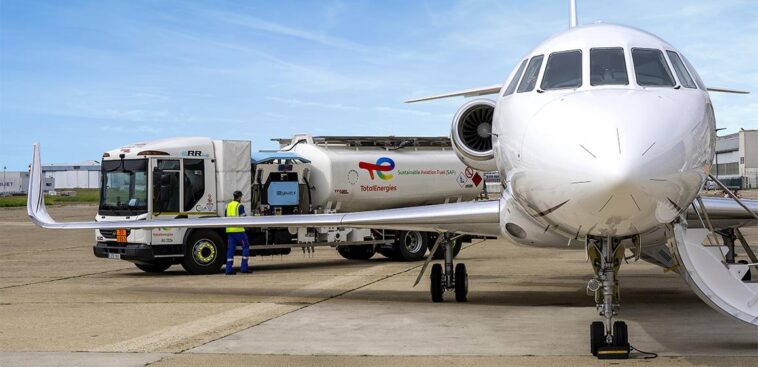
The Airline Operators of Nigeria (AON) has declared that airlines operating in Nigeria have come under financial pressure following a sharp increase in the price of Jet-A1, also known as aviation fuel.
According to the group, the price of aviation fuel, has surged to about N1,800 per litre in many parts of the country, from about N1,000 per litre two weeks ago. This amounts to almost an 80 per cent increase within a short period.
Aviation fuel remains the largest cost component in airline operations, accounting for about 30 to 35 per cent of total operating expenses.
Industry stakeholders have linked the latest spike to the ongoing conflict in the Middle East, which has pushed up global energy prices.
ALSO READ: Shell Completes Turnaround Maintenance on FPSO, Resumes Production at Bonga
Speaking on Channels Television on Friday, the spokesperson for the Airline Operators of Nigeria, Prof Obiora Okonkwo, said the surge had placed airlines under severe financial strain.
According to him, most carriers have so far refrained from immediately transferring the additional cost burden to passengers, despite the pressure on their operations.
“Two weeks ago, we were getting Jet-A1 at about N1,000 per litre, which today is about N1,800, and even more in some stations. We have experienced an increase of about 80 per cent. That’s quite a spike,” Okonkwo said.
He explained that airlines were currently absorbing the losses in order to avoid worsening the economic burden on the travellers.
“We are not in a business where you can easily adjust your ticket price. Right now what we are doing is that we are bleeding. We are taking the blow. We are selling tickets at very non-profitable prices. We are losing a lot of money,” he said.
Okonkwo warned that the situation might not be sustainable if fuel prices continue to rise without government intervention.
“Obviously, adjustments will be expected anytime soon. But again, we are very sensitive to the economic situation of Nigerians and our travellers,” he added.
He noted that developments in the global oil market, particularly the recent release of reserve crude oil, could influence fuel prices in the coming weeks.
Okonkwo also urged the Federal Government to explore engagement with the Dangote Refinery as part of efforts to stabilise aviation fuel supply locally.
“We were more hopeless in a situation where there was no refinery in Nigeria in the last two years. Now that we have a refinery, we are hopeful that we can find a solution around it,” he said.
According to him, if the spike persists, some airlines may struggle to continue absorbing the losses associated with the rising cost of aviation fuel.
Meanwhile, the AON spokesperson also reacted to the decision by the Federal Competition and Consumer Protection Commission to sanction about five airlines over alleged price fixing.
Okonkwo said while the commission has regulatory powers, the aviation sector remains deregulated, making coordinated price fixing unlikely.
“There is no meeting of airlines where they agree to fix prices. Fixing prices would mean operating as a cartel, and that is not the case,” he said.
He explained that airline ticket pricing varies widely because different aircraft types attract different operating costs.
“Each airline determines its fares based on its own operational costs,” he said.
Okonkwo added that airlines must also demonstrate financial viability to regulators as part of the conditions for maintaining their operating licences.
“At every point in time, you must prove to the regulators that you are financially viable and capable of sustaining operations,” he said.
He urged regulators to take into account the fragile nature of the aviation industry when making policy decisions affecting airlines.

An Air Peace flight from Lagos to Port Harcourt has suffered a disruption, after the aircraft was affected by a bird strike on arrival at the Port Harcourt International Airport.
The airline made the disclosure on Thursday in a statement signed by its spokesperson, Osifo-Whiskey Efe.
He added that the incident necessitated safety checks on the affected aircraft and the deployment of another aircraft to convey passengers on subsequent flights.
ALSO READ: Rivers’ CJ Declines Setting Up Panel for Fubara’s Impeachment
“We deeply empathise with passengers affected by this unforeseen incident and are working diligently to minimise disruptions,” Efe said.
The latest incident adds to the growing challenge of bird strikes faced by local airlines.
In December 2025, Air Peace disclosed that it recorded 49 bird strikes across Nigeria between January and September, stressing that even a single strike could ground an aircraft for weeks.
Chairman and Chief Executive Officer of the airline, Allen Onyema, had said on Arise TV that bird strikes constituted a major operational challenge, often leading to costly repairs and serious disruptions to flight schedules.
“One bird strike could cripple your aircraft for the next month. At that moment, there is no two ways about it. These bird strikes often lead to costly delays and serious disruptions in flight schedules,” he said.
He added that losses from such incidents compound other challenges facing Nigerian airlines, including heavy taxation and operational constraints.






Panic as Fire Razes 12 Shops in Kwara Shopping Complex

VDM Reacts as Regina Daniels Reportedly Returns to Ned Nwoko (Video)

‘It’s a Lie’ — Wike’s Aide Debunks Peter Obi’s ‘No Shishi’ Claim

‘Sambisa Forest Is as Big as Belgium’ — Defence Minister Reveals Why Kidnap Victims Are Hard to Rescue

Uber Exit: FAAN Reveals Shocking Complaints Against E-Hailing Drivers

Dangote Reveals Date for Much-Awaited Refinery IPO

Trump’s Family Unveils New Cryptocurrency Platform

Senate Denies Receiving Petitions Against Tinubu’s Ambassadorial Nominees

Dangote Cement Lights Up Benue Host Communities With CSR Initiatives

Reps Recommend 3-year Jail Term For Aviation minister

Tems Sets New Record On Billboard Hot 100 Chart
