
NEWS
JUST IN: Incessant Violence, Poverty Birth State Police


. . . Spend The Money, Don’t Spend The People – Tinubu To Govs
The increasing wave of violence and poverty ravaging Nigeria has seen the political leaders agree to the option of state police, put more money in the hands of people and increased food production.
These are the major outcomes of the emergency meeting between President Bola Ahmed Tinubu, Vice President, Kashim Shettima, the 36 state governors and the Minister of the Federal Capital Territory (FCT), Nyesom Wike at the state house, Aso Rock on Thursday.
Special Adviser to the President on Information & Strategy, Bayo Onanuga, shared the details in a post on his verified X handle on Thursday.
He wrote under the subject, “Key Highlights of President Bola Tinubu’s Meeting with State Governors Today at the State House”.
Showing concern about the unrelenting hunger and insecurity crisis confronting Nigerians, President Tinubu ordered the governors, “Spend the money, don’t spend the people”.
On the understanding that the wave of banditry, kidnapping, other forms of social vices and violence appear to be overwhelming the current security architecture, the meeting resolved to put machinery in motion to replace the existing vigilantes in the various states and subnational entities with state police.
Formal steps would be taken to achieve this in due course, including discussion with the National Economic Council (NEC), the National Assembly and other relevant bodies.
Onanuga wrote, “President Bola Tinubu in company of Vice President Kashim Shettima today at the State House met with the 36 States Governors and the FCT Minister.
“The meeting agreed on common ground to addressing some of the challenges currently facing the country especially the rising cost of food and insecurity.
“After extensive deliberations the President and Governors agreed to work together to solve the problems and tackle the economic pressure being faced by the citizens.
“Below are the key takeaways from what the President told the Governors to do:
“1. On addressing insecurity which is also affecting farming and food production, President Tinubu made 3 key pronouncements
“A. More police personnel to be recruited to strengthen the force.
“B. President Tinubu informed the Governors that the Federal Government will work with them and the National Assembly towards putting in place a mechanism that will engender state police instead of the vigilantes that are being used in some states.
“C. The President charged the Governors to strengthen their Forest Rangers and arm them to keep all the forest safe from criminals.
“D. Modalities for State Police and addressing security issues to be discussed further at National Economic Council.
“2. On rising cost of food: The President directed that the State Governments and Federal government should collaborate to increase local food production.
“The President advised against the idea of food importation and price control when local food producers should be encouraged to produce more food.
“3. President advised Governors to follow the example of Kano State in dealing with hoarding of food for profiteering by commodities merchants. He directed the Inspector-General of Police, National Security Adviser, Department of State Services to monitor warehouses hoarding food items across the country and stop profiteering by merchants.
“4. President charged Governors to pay attention to livestock development in their states and increase production most especially poultry and fishing products.
“5. President pleaded with Governors to ensure all salary arrears to workers, gratuities to retired workers and pensioners are cleared as a way to put money into the hands of the people since states are now getting more monthly FAAC revenue. Spend the money, don’t spend the people, he urged the governors
“6. President Tinubu implored Governors to create more economic opportunities for the youths in their states to keep them more productively engaged.”

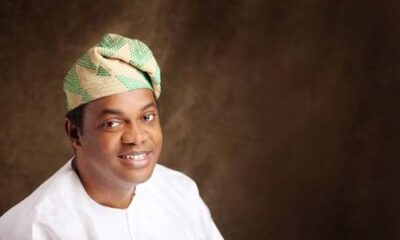





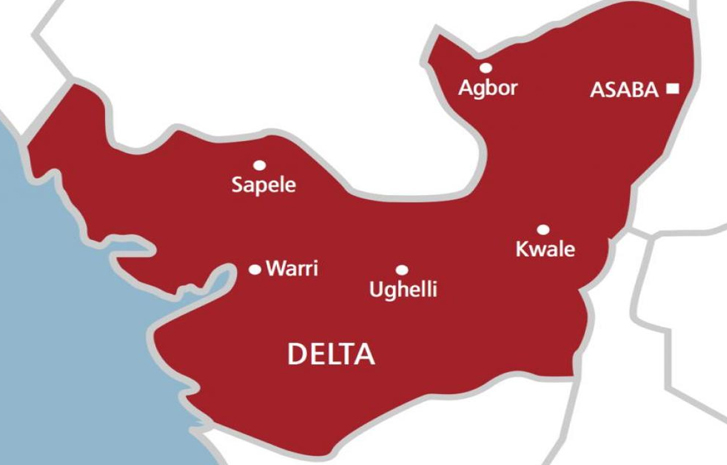
Former Delta State Governor, Dr Emmanuel Uduaghan, has reportedly died, according to sources said to be close to his family.
The sources confirmed the development on Monday, October 19, 2026, although details surrounding the circumstances of his death remained unclear as of the time of filing this report.
“Uduaghan is no more; he is dead,” one of the sources reportedly said.
SEE ALSO: Document reveals Akpoti-Uduaghan demanded N10b damages from husband before marriage, firm reacts
The reported death comes months after claims that the former governor had died circulated on social media before being dismissed by his media aide, Henry Unini.
In June, reports of Uduaghan’s alleged death spread across Facebook and WhatsApp, prompting Unini to publicly debunk the claims and assure the public that the former governor was alive.
“I can tell you for a fact that Dr. Emmanuel Uduaghan is alive,” Unini said at the time.
“Frankly, I don’t know where the writer got his information from. The death of someone is not something you take and write about casually,” he added.
Unini acknowledged at the time that Uduaghan had been experiencing health challenges but maintained that he was receiving medical attention.
“It is now common knowledge that Dr. Emmanuel Uduaghan has been sick, but he is receiving proper medical care,” the media aide said.
He also stated that the former governor was recuperating, assuring the public that there was no immediate cause for concern.
“There is no cause for alarm whatsoever,” Unini said.
The media aide thanked friends, well-wishers and residents of Delta State who contacted the family to verify the former governor’s condition. He also urged the public to avoid spreading unverified information.
“The rumour was uncalled for,” he said while addressing the earlier reports.
As of the time of filing this report, further details about the circumstances surrounding Uduaghan’s reported death had yet to emerge.
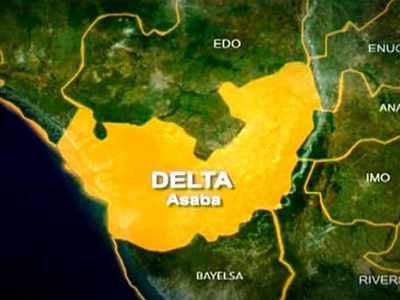
The Delta State Government has commenced a ₦5 billion grassroots empowerment programme targeting 100,000 small-scale business owners and other beneficiaries across the state’s 500 wards.
The initiative, announced on Monday, will see each beneficiary receive ₦50,000 to support small businesses, strengthen household finances and stimulate economic activities across the state.
SEE ALSO: Two Arrested as Delta Police Uncover Cache of Illegal Weapons
The Executive Assistant to the Governor on Public Enlightenment (Projects and Policies), Mr Olisa Ifeajika, disclosed this while speaking with journalists in Asaba.
Ifeajika explained that the programme was designed to complement the state government’s investments in critical infrastructure with direct financial assistance to residents.
According to him, Governor Sheriff Oborevwori directed local government councillors to facilitate the distribution of the funds, with each of the 500 wards expected to reach at least 200 beneficiaries.
He added that the initiative reflects the administration’s commitment to improving livelihoods and expanding economic opportunities for Deltans, in line with the people-centred objectives of the MORE Agenda.
The Minister of Education, Dr Maruf Tunji Alausa, has commended Alhaji Aliko Dangote and the Aliko Dangote Foundation for plans to acquire Initial Public Offering (IPO) shares of Dangote Refinery on behalf of eligible Nigerian tertiary institution students.
Alausa described the initiative as an innovative approach to promoting financial literacy, youth empowerment and wealth creation among young Nigerians.
According to a press release issued by the Federal Ministry of Education on Monday, October 19, 2026, the initiative is expected to benefit up to four million students aged 18 and above, with each eligible student expected to receive 10 IPO shares without requiring prior investment or share purchase.
The minister said the programme would expose students to capital markets, responsible investing and long-term financial planning, preparing them for greater economic participation and financial independence.
He noted that the initiative aligns with the Nigeria Education Sector Renewal Initiative (NESRI) and President Bola Ahmed Tinubu’s Renewed Hope Agenda by connecting education with enterprise, human capital development and inclusive economic growth.
According to Alausa, the initiative reflects the importance of partnerships between the education sector and private organisations in equipping young Nigerians with the knowledge and skills needed to participate in the economy.
He said the Federal Ministry of Education remained committed to strengthening private-sector partnerships to improve educational quality, relevance, equity and efficiency while preparing learners for a changing economy.
While appreciating the foundation’s contribution to youth development, the minister clarified that the ministry’s commendation was based on the initiative’s educational and developmental value.
He stressed that the ministry’s position “does not constitute an endorsement of any particular investment decision.”
Alausa also encouraged other corporate organisations to support similar initiatives that promote financial awareness, economic productivity and entrepreneurship among young Nigerians.
He urged businesses to support NESRI and the Renewed Hope Agenda in building a financially informed and economically productive generation.






NIPCO Gas Licences, NNPC Ltd Management Face Reps Probe

UNDC Assures on Readiness to Protect Oil, Gas Pipelines

JUST IN: Ex-Delta Governor Emmanuel Uduaghan Is Dead

Delta Begins ₦5bn Empowerment Scheme for 100,000 Beneficiaries
Alausa Hails Dangote Foundation’s Plan to Give Four Million Students IPO Shares
APC Campaign Council Sets Inaugural Meeting for Tuesday Ahead of Kaduna Flag-Off

Trump’s Family Unveils New Cryptocurrency Platform

Senate Denies Receiving Petitions Against Tinubu’s Ambassadorial Nominees

Dangote Cement Lights Up Benue Host Communities With CSR Initiatives

Reps Recommend 3-year Jail Term For Aviation minister

Tems Sets New Record On Billboard Hot 100 Chart

233885 257938Im impressed, I ought to say. Genuinely rarely do you encounter a weblog thats both educative and entertaining, and let me tell you, you might have hit the nail about the head. Your concept is outstanding; ab muscles something that too few men and women are speaking intelligently about. Im delighted i located this in my hunt for something about it. 344226
4968 586939Oh my goodness! a great post dude. Several thanks Even so We are experiencing issue with ur rss . Dont know why Can not sign up to it. Could there be anybody discovering identical rss difficulty? Anyone who knows kindly respond. Thnkx 228270