
NEWS
JUST IN: Mmesoma Ejikeme Confess To Faking Result


Controversial Anambra Jamb Candidate Mmesoma Ejikeme has confessed to fabricated her Unified Tertiary Matriculation Examination score, reporting that she received 249 instead of 362.
This was revealed by the Anambra State Government-appointed panel of investigation set up by the state governor, Prof. Chukwuma Soludo, on Wednesday to investigate the ongoing controversy.
Mmesoma should seek psychological counseling and therapy, according to the panel’s eight-page report, which also recommended that she immediately tender an unequivocal written apology to the Joint Admission and Matriculation Board, the school (Anglican Girls’ Secondary School, Uruagu Nnewi), and the state government.
Mmesoma, a student of Anglican Girls Secondary School, Nnewi, had sat for the UTME in May and came under scrutiny for parading the “highest score” of 362, which JAMB later revealed was manipulated.
The panel report, also circulating online, was addressed to the Anambra State Governor, Prof. Chukwuma Soludo, and made available by the Commissioner for Information, Sir Paul Nwosu on Friday.
The panel said it conducted interviews with relevant parties, including Mmesoma, JAMB officials and other individual(s) involved in the process as well as the principal of Anglican Girls Secondary School.
According to the panel, Mmesoma had sent a request to JAMB with a different registration number showing a UTME result of an aggregate score of 362, with Eng: 98, Phy: 89, Bio: 94, and Che: 81 which differed substantially from the standard JAMB format where she got an appropriate rebuttal stating her real score of 249.
The panel indicated in its findings that “the results released by the JAMB with respect to the UTME score of Ejikeme Joy Mmesoma is 249.
“The result paraded by Ejikeme Joy Mmesoma with an aggregate score of 362 is fake as buttressed by the very significant and instructive variations in the registration number, date of birth, centre name and other infractions.
“Ejikeme Joy Mmesoma admitted that she manipulated the fake results herself, using her phone.
“The Principal, Anglican Girls’ Secondary School — Mrs Edu Uche and the Education Secretary, Diocese of Nnewi (Anglican Communion) expressed dismay at the conduct of Ejikeme Joy Mmesoma.”
The report, titled, “Report of the committee on Ejikeme Joy Mmesoma’s JAMB score controversy” also indicated that the candidate was well informed of her correct score of 249.
It read in part, “Recall Mr Governor that with the recent release of scores of candidates who applied for admission by the JAMB and subsequent announcement of Nkechiyere Umeh as the candidate with the highest score of 360, Ejikeme Joy Mmesoma, a 19-year-old student of Anglican Girls’ Secondary School, Uruagu Nnewi, from Enugu State, protested to the state government that she scored 362 and ought to have been so recognised.
“This has elicited interest and generated serious controversy and misgivings among the general public that the state government in its wisdom decided to constitute a committee of inquiry to look into the under-listed terms of reference; review Ejikeme Joy Mmesoma’s JAMB results and associated documents.
“Conduct interviews with relevant parties, including Mmesoma, JAMB officials and any other individual(s) involved in the process. Provide recommendations based on the findings of the investigation.
“The committee invited Mmesoma, the Principal of Anglican Girls’ Secondary School, and officials of JAMB for an interactive session with the Committee.
“JAMB officials led by Dr Fabian Benjamin, the Head of Public Affairs presented the detailed processes and procedures involved in JAMB admissions, the policy changes that have occurred in the release of UTME scores since 2021 and what specifically transpired between the candidate Ejikeme Joy Mmesoma with registration number: 20230639047FF in her quest to obtain her JAMB score.
“JAMB revealed the different times that Ejikeme Joy Mmesoma made several requests to the JAMB portal asking for her results at different hours, and each of these times (four in number), she received in her phone, same results from JAMB indicating candidate’s UTME Results to Wit: Eng: 64, Phy:54, Bio: 74, Che: 57 with a total aggregate score of 249.
“JAMB disclosed that the candidate was well informed of her correct score. Mmesoma had sent a request to JAMB with a different registration number showing a UTME result of an aggregate score of 362, with Eng: 98, Phy: 89, Bio: 94, and Che: 81. The results she sent differed substantially from the standard JAMB format where she got an appropriate rebuttal stating her real score of 249.”
The panel also disclosed that a number of red flags were also highlighted by JAMB officials showing a different date of birth, different Registration Number, and Notification of results template that has been discarded since 2021, amongst others.
“It was also evident that even the centre name ‘Nkemefuna Foundation (Thomas Chidoka Centre for Human Development as it was known before now) used for the examination was also manipulated where the candidate used the old name of the centre (Thomas Chidoka Centre for Human Development) in her own manipulated result sheet.
“In Ejikeme Joy Mmesoma’s submission, she owned up in the presence of her principal, and the Education Secretary that the narration by the JAMB officials was a true and correct description of what transpired.
“She also admitted to having given a manipulated result by herself unaided, using the same phone Airtel Number.
“According to her, she proceeded to the cybercafé (Prisca Global Computers, Uruagu, Nnewi) where she printed the results she had manipulated.
“The Committee tried to find out the motive behind her action, but Ejikeme Joy Mmesoma said nothing.
“In their own submissions, the Principal Anglican Girls’ Secondary School, Uruagu, Nnewi, and the Education Secretary — Diocese of Nnewi (Anglican Communion) expressed shock at what transpired where in their presence, Mmesoma admitted to have manipulated her UTME results, deceiving the school, her immediate family and the state government.”
The panel commended JAMB for their diligent handling of the matter and the information supplied about the interface with the candidate.
“We hope that this unearthing of the truth as we have discovered will go a long way in correcting the sentiments, misconceptions and deceptions that have been in the public domain.
“Finally, we thank Mr. Governor for setting up this Committee, and, for the confidence reposed in the committee,” it added.











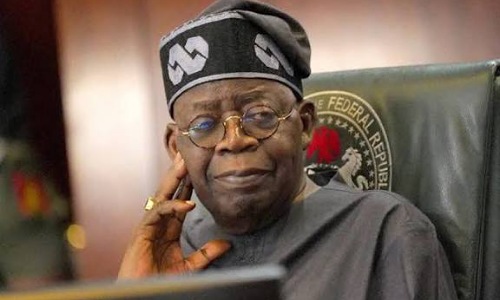
The Federal Government on Thursday announced that the Nigerian National Petroleum Company Limited will forgo its retail profit margin on petrol and sell to Nigerians at cost, as part of measures to cushion households from global crude oil price shocks.
This was as the Presidency said the arrangement, backed by President Bola Tinubu, does not signal the return of the petrol subsidy, which ended on May 29, 2023.
The petrol price slash was among a raft of measures announced by the Minister of Finance and Coordinating Minister of the Economy, Taiwo Oyedele, on Thursday.
In a statement signed Thursday by the Special Adviser to the President on Information and Strategy, Bayo Onanuga, the Presidency said NNPC Retail, which already sells petrol at the lowest price in the market, will roll out the new deal within 30 days.
READ ALSO: NUPRC Shares Priorities for Next Phase of Growth
The statement is titled ‘NNPC retail forgoes petrol profit margin to offer some support to Nigerian households amid global petrol crisis; FG announces additional measures.’
“This means if NNPC’s landing cost is N1300, it will sell fuel to Nigerians, especially commercial vehicles, at the same price,” the statement read.
Briefing journalists on Thursday, Oyedele said the Federal Government hoped other marketers would follow NNPCL’s example, as the sharp rise in crude and petrol prices was not expected to last long.
The Presidency said the Federal Government was also negotiating a ceiling of N1,350 per litre on the ex-gantry or landing cost of petrol to keep pump prices stable.
It said where costs rise above the ceiling, refiners and importers will bear the shortfall and recover it later, when crude prices or the exchange rate allow, without breaching the ceiling.
“This is neither a subsidy nor a price control: it is designed to smooth prices over time rather than suppressing them,” Oyedele was quoted as saying, adding, “The reasoning is simple. 1,400 naira a litre today and 1,400 tomorrow is better than 1,500 today and 1,300 tomorrow, because volatility itself adds to uncertainty and cost. And when fares rise sharply, they rarely fall as fast. The ceiling will be reviewed monthly, reset as costs require, and the figures published for transparency.”
The FG, he said, will also sell crude forward to domestic refineries. According to the statement, this is expected to shield pump prices from global volatility as production rises and previously committed crude is freed up.
The statement noted that under the 2025 tax reform laws, the Federal Government, working with the states and security agencies, was reining in the collection of road taxes and levies that inflate fares and logistics costs. It is also increasing funding for cash transfers to the most vulnerable households and for subsidised credit to small businesses and consumers.
The other measures listed include the CNG rollout, where the FG is scaling up compressed natural gas deployment with the states, and expects transporters to pass on the savings to passengers through lower fares. CNG is 60 to 70 per cent cheaper than petrol, the statement said.
It said excess profit tax will be considered for operators who take undue advantage of consumers anywhere along the energy value chain.
Proceeds will be used only to cushion fuel prices through transport support or vouchers for urban minimum-wage earners. The government will also work with the National Assembly on enhanced tax relief for low-income earners under the 2027 Finance Bill.
The FG, according to Onanuga, is cutting regulatory costs that feed into the cost of doing business and, indirectly, into the prices of goods and services. The FG, he added, is investing in a reserve from which it will release refined products into the market, under published rules, whenever a global disruption or hoarding threatens supply and price stability.
The Presidency said this was “not a subsidy” and did not fix prices, but secured supply and would deter artificial scarcity and market manipulation.
It argued that traffic management agencies will improve traffic flow in major urban centres to cut fuel consumption, while NIPOST’s newly launched address codes will make logistics more efficient and cheaper.
The Presidency explained that none of the measures restored a blanket subsidy, adding that doing so “would create longer-term harm for a short-term cure.”
It said, “Removing the fuel subsidy came at a price. But the alternative has been tried. Nigeria has already lived through that cycle: scarcity, smuggling, a collapsing currency and a fiscal crisis. We cannot afford to live through it again, least of all in response to a temporary disruption, and at the very moment the results of reform are gathering pace.
“Government is not out to reverse a necessary reform designed to set our country on the path towards sustained prosperity. It is to ensure its gains reach more Nigerians, faster and in more tangible ways. That is our work, and we are committed to doing it.”
The Presidency added that the FG was working on a comprehensive package of fiscal measures to bring inflation down to single digits sustainably in the near term.

The Nigerian Upstream Petroleum Regulatory Commission (NUPRC), has set its priorities for the next phase of the industry to bring back more than 788,000 barrels per day of shut-in production, move offshore projects worth up to $50 billion to final investment decision, and push domestic gas delivery to full compliance.
The chief executive of the NUPRC, Oritsemeyiwa Eyesan, said this at the Commission’s fifth anniversary ceremony in Abuja.
“Our licensing will be regular and predictable. Our focus will be on what moves the numbers: restoring the more than 788,000 barrels per day of shut-in production identified across 63 operators; taking offshore projects valued at an estimated $30 billion to $50 billion to final investment decision; and raising domestic gas delivery from about two-thirds of the domestic obligation to full delivery,” she said.
READ ALSO: Nigeria Resorting to Gas for Speedy Industrialisation — Ekpo
Eyesan used the occasion to launch the Nigeria 2026 Licensing Round, which offers 40 blocks across land, shallow water and deep water terrains. She said the blocks are open to investors with the technical competence, the financial capacity and the commitment to develop Nigeria’s petroleum resources.
She said the guidelines, drawn up in line with the counsel of the Nigeria Extractive Industries Transparency Initiative (NEITI), will set out the evaluation methodology in full, provide for fuller publication of results, and require disclosure of the beneficial owners of every bidder.
In the coming days, the Commission will publish full details of the blocks, the qualification requirements and the participation procedures on its website and a dedicated licensing round portal.
“So, I invite qualified Nigerian and international investors to come and compete. Bring your best ideas, your best partners and your best bids. May the best bids win,” Eyesan said.
The event was themed “From Uncertainty to Stability: Unlocking the Next Phase of Investment.” Eyesan said the Petroleum Industry Act and President Bola Tinubu’s executive orders had brought transparency and predictability to the upstream sector over the past five years.
The launch was made with the approval of President Tinubu, who is also Minister of Petroleum Resources.
At the event, the NUPRC honoured past directors of the defunct Department of Petroleum Resources, its pioneer leadership, and former National Assembly leaders who helped pass the PIA, including former Senate President Ahmad Lawan and former Speaker Femi Gbajabiamila.
The Commission also unveiled a special edition of its magazine, The Upstream Gaze, and a documentary on its first five years.
President Tinubu was represented by Vice President Kashim Shettima. The OPEC Governor for Nigeria, Ademola Adeyemi Bero, delivered the lecture.
Others present were the chairman, Senate Committee on Gas, Senator Agom Jarigbe; the minister of State for Petroleum Resources (Oil), Senator Heineken Lokpobiri; the chairman of the NUPRC Board, Senator Magnus Abe; and the group chief executive officer of NNPC Ltd, Engr. Bayo Bashir Ojulari.

Nigeria’s hope of meeting her targeted production level of three million barrels a day (bpd) has been anchored on sustained drilling activities.
The Nigerian National Petroleum Company Limited (NNPC Ltd), has said that security web across exploration infrastructure has improved production in recent times, while the level of oil theft has also been reduced.
READ ALSO: Ndindi Nyoro Gives Ruto 14 Days to Disclose Dangote Refinery Deal
According to the NNPC Ltd, crude oil production has risen to 1.8 million barrels per day in the last month.
The Group Chief Executive Officer, Bayo Ojulari, gave the information on Thursday at the 2026 Association of Energy Correspondents of Nigeria (NAEC) Conference in Lagos.
Ojulari, who was represented by the Chief Communications Officer of the Company, Andy Odeh, noted that Nigeria’s crude oil production rose to 1.821 million barrels per day (bpd), including condensates, reflecting improved regulations and upstream activities.
According to Ojulari, the approach has helped to improve the operating environment and accelerate activities across the upstream sector.
“Today, we are doing 1.821 million barrels per day,” he said. “The country has recorded more than 80 per cent success in its efforts to improve production.”
The event was themed: ‘Access To Assets: Empowering Players & Driving Growth’.
Nigeria produced 1, 677,777 barrels of crude oil and condensate per day in the month of August 2026, representing an increase of 0.4 percent when compared to the month of July.






Presidency Explains Petrol Discount Offering

NUPRC Shares Priorities for Next Phase of Growth

Nigeria Resorting to Gas for Speedy Industrialisation — Ekpo
Adeshina Hinges Nigeria’s Energy Growth on Technical Expertise, Quality Investment

NNPC Ltd Anchors Meeting Crude Production Target on Sustained Drilling
World Bank Report: ‘Nigeria Needs 10% Growth for 20 Years to Reduce Poverty’ — Ekpo

Trump’s Family Unveils New Cryptocurrency Platform

Senate Denies Receiving Petitions Against Tinubu’s Ambassadorial Nominees

Dangote Cement Lights Up Benue Host Communities With CSR Initiatives

Reps Recommend 3-year Jail Term For Aviation minister

Tems Sets New Record On Billboard Hot 100 Chart
