
NEWS
JUST IN: NELFUND Receives ₦50bn Recovered Proceeds Of Crime


The Management of the Nigerian Education Loan Fund (NELFUND), has received an additional N50 billion from the Economic and Financial Crimes Commission (EFCC).
This was disclosed in a statement in Abuja, on Friday by the Director, Corporate Communications, NELFUND, Oseyemi Oluwatuyi.
ALSO READ: Applicants Rush NELFUND With Highest Single-Day Student Loan Application
According to Oluwatuyi, the release follows the directive of President Bola Tinubu in his speech on 4th August, 2024, directing the EFCC to transfer the funds to NELFUND to further boost the student loan program.
This significant injection of funds represents a major milestone in the Administration’s commitment to bolstering access to education by providing financial support to students across Nigeria.
The fund extends its deepest appreciation to President Bola Ahmed Tinubu for his unwavering dedication to the education sector and his continued efforts to support the most vulnerable segments of the population.
By deciding to allocate these funds to the student loan scheme, President Tinubu has once again demonstrated his visionary leadership and commitment to fostering a brighter future for Nigerian students and to the socioeconomic advancement of Nigeria.
She added that the NELFUND wishes to acknowledge and thank the EFCC under the leadership of its Executive Chairman, Ola Olukayode for their swift action ensuring the release of the funds.
Their diligent work has ensured that these resources has been promptly made available to benefit the education of our nation’s youth.
She noted that President Tinubu’s decision to direct these funds into NELFUND’s student loan scheme underscores the administration’s broader social intervention policy aimed at uplifting the most populous, yet disadvantaged segment of Nigerian society, the youth.
This infusion of funds will significantly boost the NELFUND’s ability to provide much-needed financial support to students, enabling them to pursue their academic aspirations without financial hindrance.
The NELFUND remains committed to utilizing these funds equitably, responsibly and efficiently, ensuring that they directly benefit those who need them the most and have already sought a partnership with EFCC to oversee the disbursement process.
With the support of the government and the EFCC, NELFUND will continue to drive forward the mission of expanding access to tertiary education for all aspiring Nigerian youth and increasing the employability of well educated graduates in both the academic and vocational sectors, Oluwatuyi stated.







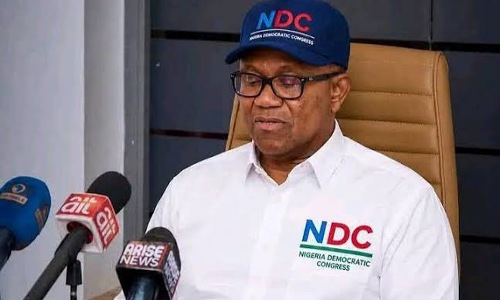
Former Anambra State Governor Peter Obi has called on the World Bank and Nigerian banks to verify records relating to the debt claims made against his administration, insisting that the figures being presented by the state government should be subjected to documentary scrutiny.
Obi made the call during an interview on Arise TV’s Prime Time programme on Thursday, September 24, 2026, while responding to the Anambra State Government’s claims over loans allegedly incurred during his eight-year tenure.
ALSO READ: 2027: Peter Obi Disowns OK Movement Campaign Council, Says ‘It Is Wrong’
The former governor specifically urged the World Bank to provide records showing the actual drawdowns from the facilities linked to Anambra, rather than relying on the total amount originally approved or contracted.
“Please publish these documents. I’m urging you, please. The World Bank is in Abuja; they can give you the history of the drawdowns,” Obi said.
He also challenged the relevant Nigerian banks to verify the financial records he said were contained in his 2014 handover documents.
“The banks mentioned here are Nigerian banks; you have access to their headquarters. Ask them whether this money was there,” he added.
Obi’s comments came amid a dispute over the Anambra Government’s earlier claim that eight external loan facilities associated with his administration had an outstanding balance of about N127.4bn as of June 30, 2026.
The state had linked the loans to projects in areas including education, healthcare, erosion control and malaria prevention.
The former governor disputed the presentation, arguing that approved loan facilities should not automatically be treated as money borrowed or spent if the funds were not actually drawn down.
He maintained that some of the funding arrangements involved Federal Government-backed concessionary financing and said the World Bank records could establish when the money was accessed.
The controversy has since shifted towards the actual amount drawn from some of the facilities.
Anambra State Commissioner for Information and Value Reorientation, Law Mefor, reportedly acknowledged during an Arise TV appearance that the government had not properly verified the amount actually drawn from a $123m facility before citing the larger figure. He said the government would seek clarification from the relevant authorities.
The development has added another layer to the disagreement between Obi and the Anambra Government over the state’s financial position at the end of his administration.
Obi has consistently maintained that he left office in March 2014 without outstanding salaries, pensions, gratuities or certified contractor obligations, while the state government has continued to dispute aspects of his account of the state’s inherited liabilities.
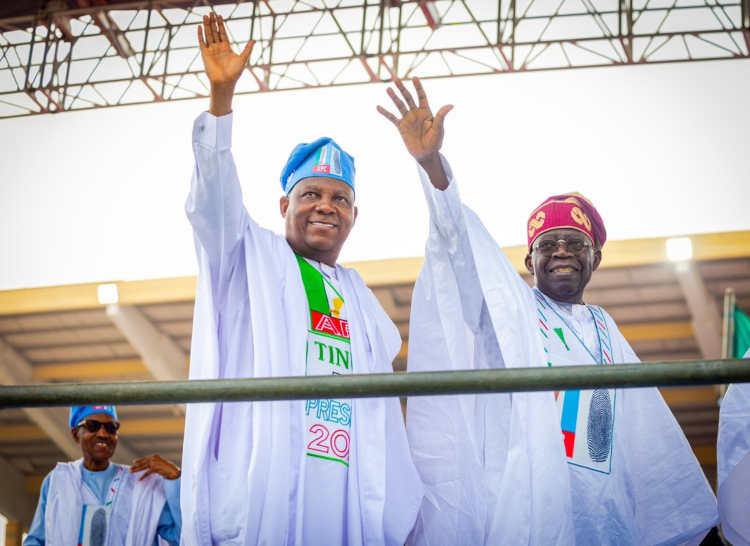
Presidential candidate of the Nigeria Democratic Congress (NDC), Peter Obi, has questioned President Bola Tinubu’s prolonged absence from Nigeria, saying Nigerians deserve to know the President’s whereabouts amid the country’s security challenges.
Obi made the remarks on Arise TV on Thursday while discussing the President’s absence from the country and the situation surrounding other senior government officials.
According to Obi, the issue was not simply that Tinubu was outside Nigeria, but that he had remained abroad beyond the period initially announced for his trip.
ALSO READ: ‘Borrowed Funds Not Spent Cannot Be Counted as Debt Left Behind’ -Peter Obi
“It’s not just that he’s out of the country. He’s out of the country beyond the days he was supposed to be. Beyond the days they even said he was going for,” Obi said.
He also noted that Vice-President Kashim Shettima was outside the country, while Senate President Godswill Akpabio was also reportedly abroad and the Senate was not in session.
“The Vice President is not in the country. And I understand the Senate President is out of the country, the Senate is not in session,” he said.
Obi expressed concern about the situation against the backdrop of insecurity and recent incidents involving the deaths of suspected illegal miners in Niger State.
“We don’t need this level of rascality at this moment in time, when Nigerians are being kidnapped, being killed, things are… we need a country where we have somebody, where we have competence, capacity, and compassion,” he said.
Referring to the deaths recorded in Niger State, Obi said the presence of the country’s chief executive was particularly important during a crisis.
“Look at Niger State now, where 10 people… where some young people have died for nothing,” he said.
The former Anambra State governor argued that while there is a chain of command within government, delegation should not replace the physical presence of the country’s leader during critical situations.
“It is… the CEO being present is critical at a time of crisis. Not delegation. Yes, you have a chain of command,” Obi said.
He subsequently asked where the President was and insisted that Nigerians should be informed.
“Where is the President? Nigerians ought to know,” he said.
Obi also said that, if elected president in 2027, he would make his whereabouts publicly known whenever he travelled.
“If I travel today, I tell people where I am. When I become President, Charles, people will know where I am 24 hours,” he said
“That is public space, public office,” Obi added.
The comments come amid continuing public debate over the absence of the President and Vice-President from Nigeria.
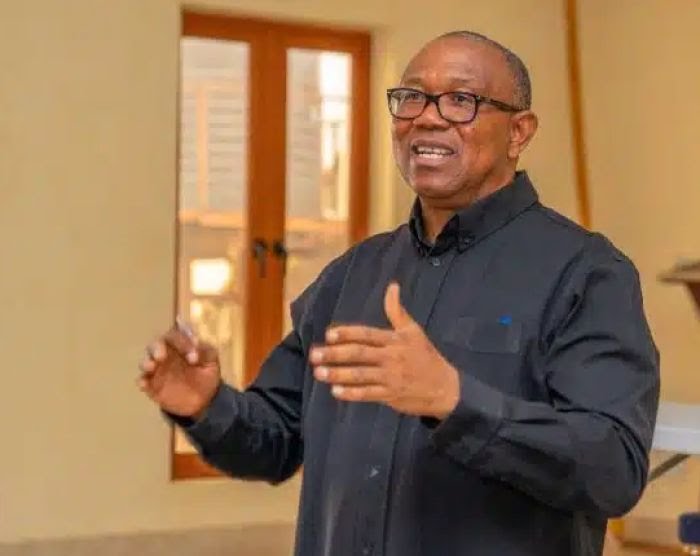
The presidential candidate of the Nigeria Democratic Congress (NDC) for the 2027 election, Peter Obi, has challenged the way government borrowing is accounted for, arguing that funds borrowed but not actually drawn down should not be treated as debt left behind by an administration.
Obi made the remarks during an interview on Arise TV on Thursday while explaining his position on borrowing during his tenure as governor of Anambra State.
“That is a wrong public accounting. Even if I had gone to bank and borrowed money, but I did not spend the money, you cannot call it debt I left,” Obi said.
RELATED NEWS: 2027: Obi Wants to Transform Nigeria After 8 Years of Failure in Anambra — Onanuga
He illustrated his argument with a hypothetical ₦10 billion loan facility, saying that where only ₦500 million was actually drawn, it would be inaccurate to describe the entire ₦10 billion as money owed.
“They gave me a loan of 10 billion Naira, and Charles, I only drew down 500 million. You cannot say I’m owing 10 billion, because you know the amount,” he said.
The NDC candidate said such a practice would amount to improper public-sector accounting.
“That’s why I said it is not proper public sector accounting,” Obi said.
He also cited the former Director-General of the Debt Management Office, Abraham Nwankwo, whom he said served for 10 years, in support of his claim about his borrowing record as Anambra governor.
Obi recalled that Nwankwo invited him to his send-off ceremony and publicly explained why he had selected Obi as chairman of the event.
“He announced it to everybody in that party that the reason why he made me chairman is because I was the only governor in Nigeria who never came to his office for approval to borrow money,” Obi said.
Anambra Debt Controversy
Obi’s comments come against the backdrop of continuing debate over the debt profile he left behind after serving as Anambra State governor from 2006 to 2013.
The former governor has consistently defended his administration’s financial record, while figures and claims about Anambra’s debt during and after his tenure have generated public debate.






I Won’t Seek Governorship Again, Even If Constitution Is Amended – Peter Obi

Obi Asks World Bank, Banks to Verify Anambra Debt Claims

2027: Peter Obi Disowns OK Movement Campaign Council, Says ‘It Is Wrong’

‘Where Is the President?’ — Peter Obi Questions Tinubu’s Prolonged Absence

‘Borrowed Funds Not Spent Cannot Be Counted as Debt Left Behind’ – Peter Obi
NCDMB Woos Chinese Manufacturers

Trump’s Family Unveils New Cryptocurrency Platform

Senate Denies Receiving Petitions Against Tinubu’s Ambassadorial Nominees

Dangote Cement Lights Up Benue Host Communities With CSR Initiatives

Reps Recommend 3-year Jail Term For Aviation minister

Tems Sets New Record On Billboard Hot 100 Chart
