
Politics
Organised Labour Supports Workers’ Demand for N500 PMS Price, N500,000 Minimum Wage

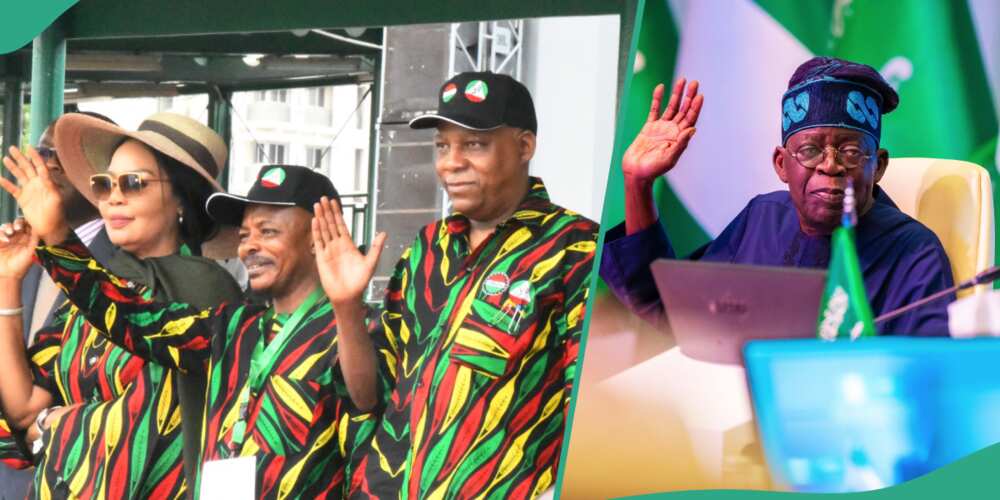
The organised labour in Nigeria has joined forces with civil servants demanding for a new minimum wage of N500,000 and reduction of petrol price to N500 per litre to address the worsening economic hardship facing workers and their dependents.
Acting under the Joint National Public Service Negotiating Council (JNPSNC), made up of the Nigeria Labour Congress (NLC), and civil servants, as one Trade Union Side (TUS), made a formal request to the Federal Government.
In a letter to President Bola Tinubu, the National Secretary of JNPSNC (Trade Union Side), Olowoyo Gbenga, disclosed that workers were also demanding the immediate constitution of a committee to negotiate a new national minimum wage, ahead of January 2027.
READ ALSO: Tanker Drivers Suspend Strike after FG Intervention
The NLC insists that their position is realistic and legitimate.
According to the workers, the recent increase in fuel prices to N1,430 per litre and above in some locations had further worsened the cost-of-living crisis. They gave government till Wednesday, September 30, 2026, to take action on their demands, warning that the prevailing hardship is creating palpable tension among workers and Nigerians.
The JNPSNC, which includes Nigerian Civil Service Union (NCSU); Medical and Health Workers Union (MHWU); Association of Senior Civil Servants of Nigeria (ASCSN); National Association of Nigerian Nurses and Midwives (NANNW); among others, said the removal of fuel subsidy three years ago had triggered an astronomical increase in fuel prices which triggered multiplier effects on the prices of essential commodities in the economy.
Other unions in the council are Amalgamated Union of Public Corporations (AUPC); Civil Service Technical and Recreational Employees, AUPCTRE; Nigeria Union of Public Service, Reportorial, Secretarial, Data Processors and Allied Workers, NUPSRAW; National Union of Printing, Publishing and Paper Products Workers, NUPPPPROW; and National Union of Agriculture and Allied Employees, NUAEE.
The council said the situation has made life increasingly unbearable for workers, adding that the provision of food palliatives is not a sustainable solution to the economic crisis.
It said: “It has dawned on Nigerian workers that the provision of palliatives, such as bags of rice, Indomie, vegetable oil, garri, among other edible foods, is as good as weaponising Nigerians with poverty because it is a pyrrhic intervention which is unsustainable, inaccessible to the majority of Nigeria’s population and also limited to political cronies.”
The workers argued that a more sustainable intervention would be to reduce the cost of fuel to N500 per litre, saying the measure will have a multiplier effect on the economy.
“Consequent upon the above, it is preferable that the Federal Government provides an intervention that will trickle down to all Nigerians by making fuel available at an affordable amount, as low as N500 (five hundred Naira),” they said.
The council identified the restoration of workers’ purchasing power, improved productivity and service delivery, promotion of integrity and accountability, and the reinforcement of trust and industrial peace as major reasons for its demand for improved remuneration.
‘Govt must look inward on fuel price’
On fuel prices, the workers said government should “look inward and stabilise the prices of fuel to an affordable minimum,” arguing that fuel remains an essential commodity with significant implications for the Nigerian economy.
“As a matter of reality, the current hardship being faced by the hapless Nigerian workers is caused by the astronomical increase in the price of Premium Motor Spirit to as much as N1,430.00, or more per one litre (this is a killing amount),” the council stated.
It further called for an intervention fund for stakeholders in the oil sector to stabilise fuel prices and eventually bring the pump price down to N500 per litre.
The council also said government could adopt another description for the intervention if the term “fuel subsidy” was considered unacceptable.
“The fuel intervention fund will give the opportunity to every Nigerian to benefit from the intervention fund because it will have multiplier effect in the life of every Nigerian and will naturally trickle down to the downtrodden and all the remotest parts of the country,” it said.
The council also endorsed a position attributed to the NLC President, Joe Ajaero, on measures to address the fuel crisis.
Ajaero was quoted as saying that “Nigeria, as an oil-producing country, has sufficient local refining capacity, even as this substantially resides with the private sector.”
He also said: “As a nation, and as a people endowed with enormous fossil resources, we are deserving of a certain level of protection or buffer against the gales from the Gulf, and indeed, other gales.”
According to the NLC position cited by the council, “As part of the process of creating this buffer government should sell sufficient crude in Naira to our local refineries; expand our national storage capacity in pursuance of meeting energy emergencies and security. These measures will create jobs, economic value as well as deal with mutating security challenges.”
The statement further said: “There is nothing wrong with government subsidizing the needs of citizens, especially in emergency situations like this. At the moment, there is no oil-producing country we know of that has not intervened or come up with sustainable palliatives in one way or the other in these perilous times.”
The NLC position also stated: “Government is making extra money in the international spot market (of between USD35 and 40 per barrel above the budgeted figure). This translates to trillions of Naira a month.
“On a long term basis, we are equally concerned that local refineries are importing crude. This is unreasonable and unacceptable and defeats the logic and purpose of local capacity.”
On wages, the council demanded immediate introduction of a wage award covering federal, state and local government workers.
“Wage award as an urgent intervention and upward review of salaries and allowances of all serving public servants in the Nigerian public service should be provided with immediate effect to cut across all federal, state and local government workers,” it said.
The JNPSNC proposed that the minimum salary payable to an officer on Grade Level 01, Step 1, should be N500,000 per month under the 2027 salary template.
The council also called for harmonised wages across ministries, departments and agencies, MDAs, while urging that the review be encouraged at the state and local government levels.
The JNPSNC urged the president to direct the National Salaries, Incomes and Wages Commission, NSIWC, to commence discussions with the Nigeria Labour Congress, NLC; Trade Union Congress of Nigeria TUC; JNPSNC; and other relevant stakeholders on the wage award and upward review of salaries and allowances.





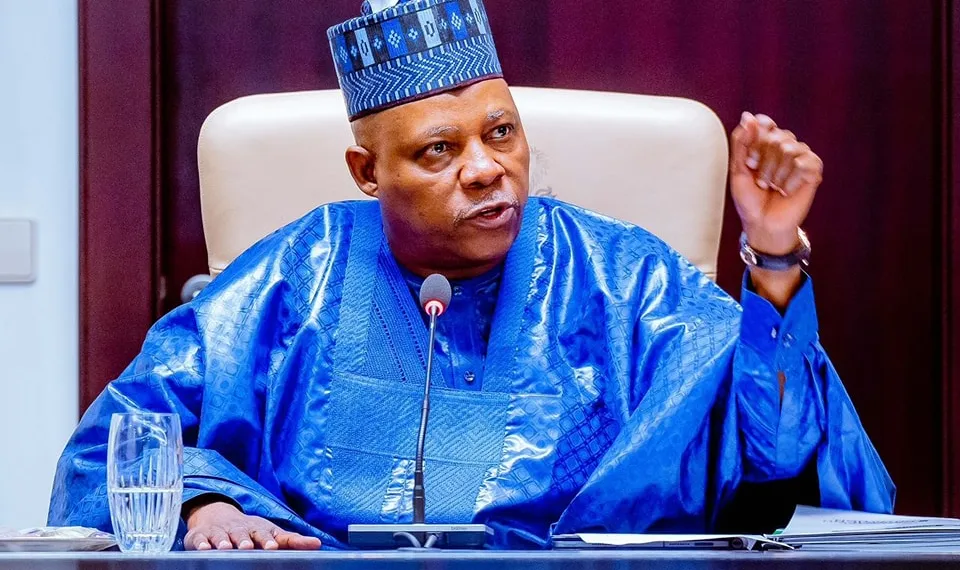
Vice President Kashim Shettima has arrived in Calabar, the Cross River State capital, ahead of the All Progressives Congress (APC) presidential campaign rally scheduled for Monday.
Shettima’s arrival was disclosed by his Senior Special Assistant on Media and Communications, Stanley Nkwocha.
The Vice President departed Abuja earlier on Monday for the rally, where he is expected to engage APC leaders, stakeholders and supporters on President Bola Tinubu’s Renewed Hope Agenda.
SEE ALSO: Shettima Arrives Maiduguri to Commission Hospital, Schools, 104 Housing Units
He is also expected to highlight the administration’s economic reforms, infrastructure development initiatives and commitment to expanding opportunities for Nigerians.
Cross River State occupies a strategic position in the Tinubu administration’s infrastructure development agenda, particularly through the ongoing Lagos-Calabar Coastal Highway project.
The highway is designed to improve regional connectivity, stimulate trade, boost tourism and unlock economic opportunities across Nigeria’s coastal states.
The state also has significant potential in tourism, agriculture, maritime commerce and regional trade, making it an important part of the administration’s economic development plans.

President Bola Ahmed Tinubu’s decades-long political alliances with northern leaders have come under focus following the October 24 APC presidential campaign rally in Kaduna, with his Special Adviser on Media and Public Communications, Sunday Dare, highlighting the relationships as a key part of the president’s political history.
Dare made the observation in a commentary published on his X account on Sunday, November 1, 2026, while reflecting on the political significance of the All Progressives Congress (APC) presidential campaign rally held in Kaduna on October 24.
SEE ALSO: ‘Calling Tinubu Bola, Giving Him Orders Is Insolence’ — Sunday Dare Blasts Atiku
In the article titled “Kaduna: A Redoubtable President Tinubu and the Northwest Political Narrative,” Dare argued that Tinubu’s political strength rests on decades of relationship-building, political organisation, support for candidates and alliances across competing constituencies.
He said the Kaduna rally had ended, but its political significance extended beyond the dismantling of the campaign stage, describing the city as an important setting for renewing political relationships and presenting Tinubu’s case to voters in the Northwest.
According to Dare, Tinubu’s political influence goes beyond the authority of the presidency, noting that before entering Aso Rock, he had spent decades cultivating relationships, organising political structures, supporting candidates and building alliances across different constituencies.
“His durability reflects that patient investment in people and organization, as well as his willingness to remain engaged through difficult contests,” Dare wrote.
He described Kaduna as a particularly significant location for the campaign because of its historical position as the former capital of the Northern Region.
Dare noted that Kaduna’s institutions helped shape the personnel, priorities and political traditions of a region whose participation remains important in the formation of national governments.
He argued that campaigning in Kaduna meant entering a political conversation that spans generations, involving public administration, regional aspirations, political organisation and Nigeria’s continuing efforts to govern its diversity.
The presidential aide also invoked the historical legacies of Sir Ahmadu Bello, Sir Kashim Ibrahim, Alhaji Balarabe Musa and Dr Yusufu Bala Usman in discussing the political significance of Kaduna.
He said Bello and Kashim Ibrahim represented traditions of regional government, institution-building and public service, while Balarabe Musa’s legacy evoked populist reform, accountability and concern for ordinary citizens.
Dare described Bala Usman as representing an uncompromising demand that political power be critically examined and judged by its consequences for the people.
According to him, their historical contributions should provide a standard for assessing contemporary leadership, particularly in areas such as functioning schools, effective administration, productive communities and broader opportunities.
“Their memory gives a contemporary rally its proper standard. It asks what leadership builds, whom it prepares for opportunity, how it accepts accountability, and what it leaves behind,” he stated.
Dare further explained that Kaduna’s historical importance also accounts for its relevance to presidential electioneering, noting that electoral victories require relationships across regions, religions, communities and competing interests.
He said the city connects regional political history with national ambitions, providing an opportunity for candidates to address both immediate electoral demands and broader questions about national unity and governance.
The presidential aide also highlighted remarks by Vice President Kashim Shettima at the Kaduna rally, where he recalled Tinubu’s support for northern presidential candidates across successive election cycles.
According to Dare, Shettima cited Tinubu’s support for Atiku Abubakar in 2007, Nuhu Ribadu in 2011, and Muhammadu Buhari in the 2015 and 2019 presidential elections.
Dare said the recollection formed part of the campaign’s central argument that Tinubu’s relationships with northern political figures reflected years of familiarity, partnership and reciprocity.
Dare also praised Kaduna State Governor, Senator Uba Sani, for his address at the campaign rally, particularly his presentation of the Tinubu administration’s achievements.
He said the governor delivered a powerful account of the administration’s record in less than four years, adding that his presentation, which included anecdotes, attracted applause from the audience.
Dare further noted that Uba Sani drew on his experience as an advocate during his days of political struggle to declare that the North had decided to support Tinubu.
“The opponents will not even try to outmatch Uba Sani,” he wrote.
Yari Rallies Northern Support for Tinubu
The presidential aide also commended the Director-General of the Presidential Campaign, Senator Abdulaziz Yari, for his presentation at the Kaduna rally.
Dare described Yari as having become an encyclopedia of the Tinubu administration’s achievements, saying he was unstoppable in presenting the government’s record and rallying northern support for the president.
He added that Yari’s decision to switch to the Hausa language generated an enthusiastic response from the crowd.
“By the time he switched to Hausa language the crowd roared in unison,” Dare stated.
Politics
Atiku Raises Alarm Over Attacks on Sowore, ADC Governorship Candidate, Accuses APC of Intimidation

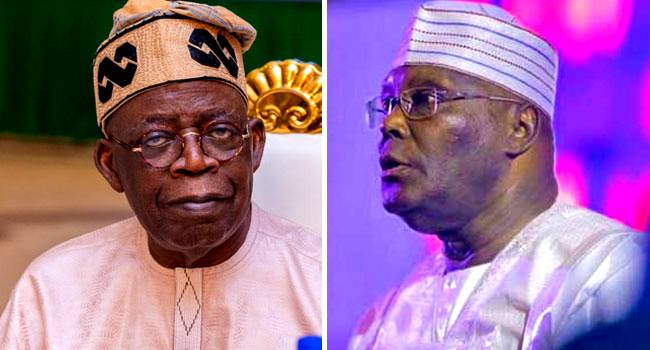
Former Vice-President Atiku Abubakar has condemned the reported simultaneous attacks on African Action Congress (AAC) presidential candidate, Omoyele Sowore, and the African Democratic Congress (ADC) governorship candidate in Sokoto State, Manir Muhammad Dan’iya, describing the incidents as “deeply troubling and unacceptable.”
Atiku accused the ruling All Progressives Congress (APC) administration of using intimidation and violence against opposition leaders and their supporters, alleging that the incidents exposed the government’s determination to suppress political opposition.
ALSO READ: ₦2.3tn Kaduna Rally Claim: APC Accuses Atiku, ADC of Fake News Plot
In a statement, the former Vice-President expressed concern that the attacks reportedly occurred while President Bola Tinubu was away on a spiritual pilgrimage.
He alleged that “political enforcers and thugs loyal to his party are unleashing terror on his political opponents at home.”
“These two realities cannot coexist in a democracy,” Atiku declared, referring to the President’s absence and the reported attacks on opposition figures.
He further warned that the continued attacks on opposition members and the alleged disappearance of critical social media influencers were signs of a dangerous political development.
“The continued attacks on opposition figures and the unexplained disappearance of critical social media influencers are clear red flags of a dangerous slide toward a censored state where the opposition is crushed by the brute force of the current government,” he said.
Atiku described the incidents as unbecoming of a democratic government, adding that they “starkly reveal the desperation of the Tinubu administration.”
He called for immediate and transparent investigations into both attacks, insisting that the government must refrain from any attempt to silence opposition voices.
The former Vice-President also demanded that the Tinubu administration guarantee a free, fair and competitive electoral process ahead of the forthcoming general elections.
Raising additional concerns about the situation in Sokoto State, Atiku alleged that a local security outfit had been harassing ADC supporters and physically assaulting citizens simply for wearing the party’s merchandise.
He said the reported harassment further highlighted the challenges facing opposition parties and their supporters.
“We shall resist every ongoing attempt to cancel political opposition in Nigeria,” Atiku declared.
He also accused the ruling APC of failing in its mandate, insisting that Nigerians must be allowed to freely participate in an electoral contest that would determine the country’s political future.
“Nigerians must be allowed to freely participate in an electoral contest that will determine the fate of this administration,” he added.






Shettima Charges New CAF Secretary to Protect Nigeria’s Interests
Tragedy Hits Spanish Football As Tenerife Striker Jesus De Miguel Dies At 30

NUPRC Dangles 40 Oil Blocks Before Global Investors at ADIPEC
OPEC+ Retains Output at 30.9mbpd
Gas Infrastructure Fund Sets Terms for Indigenous Access to Funding
UN Engages NCDMB to Deepen Female Access to $40m Oil, Gas Fund

Trump’s Family Unveils New Cryptocurrency Platform

Senate Denies Receiving Petitions Against Tinubu’s Ambassadorial Nominees

Dangote Cement Lights Up Benue Host Communities With CSR Initiatives

Reps Recommend 3-year Jail Term For Aviation minister

Tems Sets New Record On Billboard Hot 100 Chart
