
NEWS
JUST IN: Tinubu Signs Record N54.99trn 2025 Budget Into Law

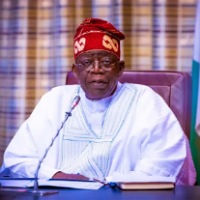
President Bola Tinubu has signed the 2025 Appropriation Bill into law, approving a record N54.99 trillion budget, nearly double the N27.5 trillion allocated in 2024.
The budget, passed by the National Assembly on February 13 after adjustments to Tinubu’s initial N49.7 trillion proposal, is the largest in Nigeria’s history.
Key allocations include: Total budget: N54.99 trillion, Statutory transfers: N3.65 trillion, Recurrent (non-debt) expenditure: N13.64 trillion, Capital expenditure: N23.96 trillion, Debt servicing: N14.32 trillion, Deficit-to-GDP ratio: 1.52%.
READ ALSO: BREAKING: Reps Approves N54.99trn 2025 Budget
With nearly N24 trillion allocated for capital projects, the government aims to drive infrastructure development and economic growth.
However, the N14.32 trillion earmarked for debt servicing raises concerns over Nigeria’s growing debt burden.
More to follow………..








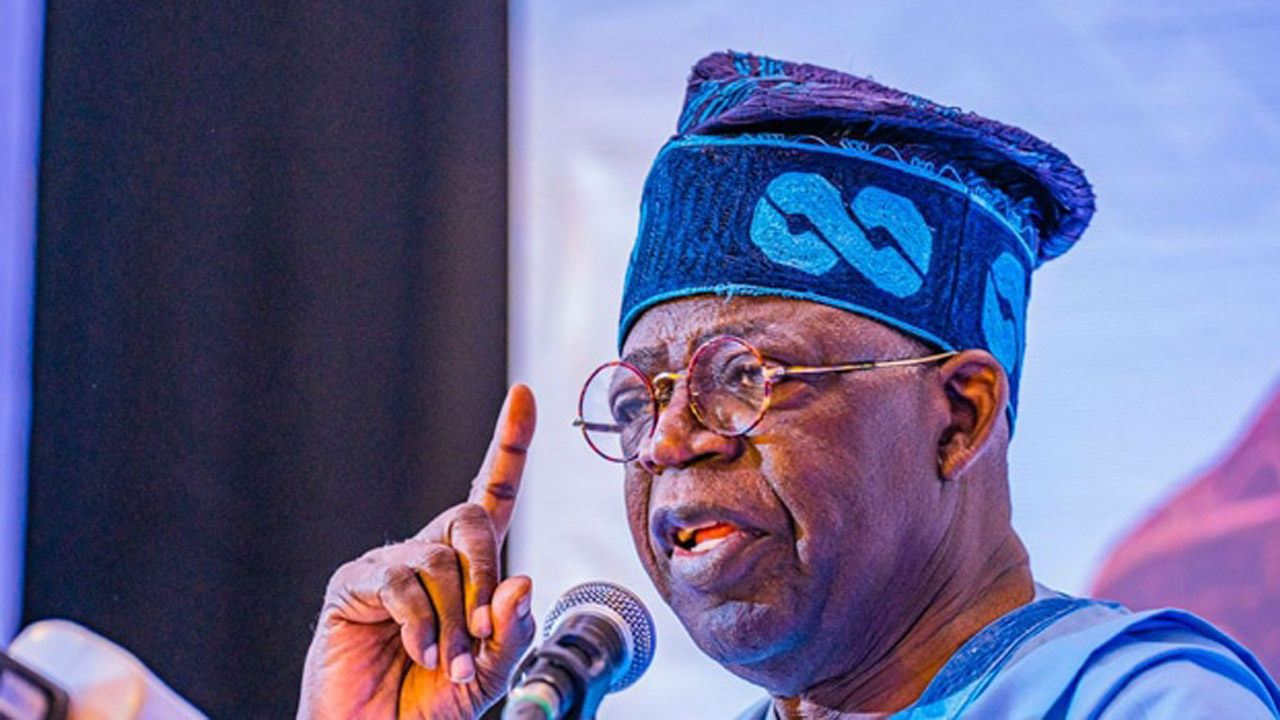
Nigeria’s average daily gas production has risen from about seven billion cubic feet to eight billion cubic feet.
The Special Adviser to the President on Energy (Oil and Gas), Olu Arowolo Verheijen, made the disclosure on Wednesday at the Africa Interviews Sustainability Forum 2026 in Lagos, themed “Energy Security and Africa’s Energy Transition: Defining the Role of Gas”.
She added that Nigeria has recorded four final investment decisions (FIDs) on gas projects in less than two years, which she attributed the development to reforms under President Bola Ahmed Tinubu’s administration aimed at removing investment barriers and unlocking the country’s gas resources for industrialisation, electricity generation and economic growth.
READ ALSO: Dangote Preaches Ambition, Africa First to Nigerian Creatives
Nigeria holds more than 200 trillion cubic feet (Tcf) of proven gas reserves, but Verheijen said sustained investment was needed to convert the resource into industrial growth, jobs and higher incomes.
“A country can sit on enormous natural wealth and fail to turn it into energy to power industry, industries that create jobs and jobs that help us grow incomes,” she said.
She disclosed that the four FIDs were recorded within less than two years, including the Ima project in September 2026, while indigenous producers were playing an increasingly significant role in domestic gas supply.
Verheijen said President Tinubu had mandated his administration to identify and address the factors preventing investment from matching Nigeria’s economic potential.
“When President Bola Ahmed Tinubu assumed office in 2023, he gave us a very clear mandate. Understand why investment has not moved at the pace of Nigeria’s potential and fix it,” she said.
She described gas as central to the administration’s reform agenda because of its importance to power generation, manufacturing, fertiliser production, transportation and cleaner household cooking.
Verheijen also disclosed that the Federal Government had settled more than N100 billion in longstanding gas debts since January 2026 under the Presidential Power Sector Financial Reforms Programme.
She said the government had also introduced import duty waivers and zero-rated value-added tax measures for liquefied petroleum gas (LPG) and gas cylinders to encourage cleaner cooking and reduce dependence on firewood.
“A gas-rich nation cannot be comfortable while families remain stuck in the age of firewood,” she said.
On Africa’s energy transition, Verheijen urged countries to prioritise energy security, industrialisation and job creation while pursuing environmental sustainability.
“For Africa, the energy transition must mean transformation, molecules converted into megawatts, fertilizer, petrochemicals, cleaner mobility, manufacturing, jobs and exports,” she said.
She maintained that African countries should determine the pace of their energy transitions in line with their development priorities and economic circumstances, rather than have those decisions imposed by external interests.
Verheijen also called for measures to monitor and reduce methane emissions and ensure that communities hosting gas projects benefit meaningfully from resource development.
She urged stakeholders to sustain investment and reform efforts, stressing that Nigeria’s gas resources must translate into lasting economic and social benefits.
“History will not ask what we possessed, it will ask what we did with it and whether we turned it into lasting prosperity for our people,” she said.

President and Chief Executive of Dangote Industries Limited, Aliko Dangote, has challenged Nigerian entrepreneurs and creative industry practitioners to think beyond conventional limits, build globally competitive enterprises and create enduring legacies, declaring that Africa must take responsibility for its own economic transformation rather than depend on foreign investors for prosperity.
Dangote gave the charge while hosting leading figures from Nigeria’s creative industry at the Dangote Petroleum Refinery and Petrochemicals complex in Lekki, Lagos, where he also disclosed that the Group was considering raising its US$100 billion Vision 2030 target in response to its expanding industrial investments and growth ambitions. The delegation, comprising Nollywood stars, content creators, comedians and other entertainment and lifestyle personalities, toured the industrial complex before engaging Dangote in a conversation on entrepreneurship, innovation, ambition, and legacy.
Addressing the creatives, Dangote urged Nigerians to match their creativity and entrepreneurial drive with discipline, perseverance and the courage to pursue ambitious projects, stressing that lasting success should be measured not merely by personal wealth but by the businesses built, opportunities created and contributions made to society.
“It is not just about money; it is about legacy. We have often been taken for granted, and in many ways, we have contributed to that by waiting for foreigners to come and make our continent prosperous. That will never happen. We must take responsibility for building Africa’s prosperity ourselves,” he declared.
READ ALSO: Renaissance, Sterling Bank Back Indigenous Oil and Gas Contractors Financially
Speaking on the Group’s long-term ambitions, Dangote revealed that its US$100 billion Vision 2030 target was being reconsidered, with a more ambitious target expected to be unveiled in January.
“We realised that our Vision 2030 target was too modest. We are working towards unveiling a new vision in January, with a revised target that reflects our ambition to achieve far more than US$100 billion,” he said.
He explained that the Group’s continued industrial expansion was driven by a determination to build enduring institutions, strengthen Africa’s productive capacity and demonstrate that the continent could develop enterprises capable of competing globally. Drawing lessons from Singapore’s economic transformation, Dangote said nations could overcome difficult beginnings through deliberate investment, enterprise and a commitment to developing their own capabilities. He challenged Nigerian entrepreneurs to reject limiting assumptions about what could be achieved, noting that transformative accomplishments often required the courage to pursue ideas others considered impossible.
Reflecting on his entrepreneurial journey and the development of the refinery, Dangote identified perseverance, disciplined execution and sound judgement as essential ingredients of business success. He cautioned, however, that ambition must be tempered by the ability to recognise when an investment was no longer commercially viable.
“Before embarking on any venture, you must carefully consider all the issues involved. We have made mistakes too, and I share these experiences so others can learn from them,” he said. “One important lesson is never to keep putting good money into a bad investment. Some situations are simply too difficult to turn around, no matter how much you invest.”
Turning to the creative industry, Dangote commended Nigerian entertainers for building a formidable international presence despite operating in a challenging business environment and receiving limited government support. He described Nollywood’s growing global influence as evidence of Nigeria’s creative potential, urging practitioners to build on their achievements through stronger business structures, innovation and collaboration. According to him, the industry’s next phase of growth should go beyond international recognition to building sustainable enterprises, creating employment and strengthening Nigeria’s position in the global creative economy.
Veteran Nollywood actor Richard Mofe-Damijo (RMD), who moderated the interactive session, praised Dangote’s accomplishments, describing his industrial investments as an enduring contribution to Nigeria’s development.
“Your legacy has already been built, and its continuation is assured. You deserve all the praise and recognition you have received for what you have accomplished,” RMD said.
Nollywood actor Abdullateef Adedimeji described the visit as an inspiration, saying the scale of the refinery had challenged him to raise his ambitions and pursue greater accomplishments in the creative industry.
“Coming here today is a source of motivation for us. As someone in the film industry, this experience inspires me to push beyond my limits, broaden my imagination and strive for greater achievements, including making a more meaningful impact in my community,” he said.
Adedimeji also called for greater collaboration among Nollywood practitioners, drawing lessons from the coordination and partnerships underpinning Dangote’s industrial operations.
“That is what we need in Nollywood. The more we collaborate, the stronger and more successful we become,” he said.

No fewer than 10 people are feared dead after a protest against a vessel belonging to an indigenous oil company turned tragic at Kula community in Rivers State, following an alleged collision involving a community boat and a Nigerian Army gunboat.
The incident reportedly occurred on Tuesday morning when members of the community took to the water in a boat to protest against the oil company’s vessel.
A community leader, Chief Anabs Sara-Igbe, disclosed this in a telephone interview with journalists in Port Harcourt.
Sara-Igbe, a former spokesman of the Pan Niger Delta Forum (PANDEF), alleged that a gunboat belonging to the Nigerian Army hit the protesters’ boat, causing some of its occupants to drown.
READ ALSO: Renaissance, Sterling Bank Back Indigenous Oil and Gas Contractors Financially
He said efforts were ongoing to recover the remains of those who drowned during the incident.
The circumstances that led to the protest, the identities of the victims and the precise sequence of events surrounding the alleged collision were not immediately clear.
The Nigerian Army’s response to the allegation was also not immediately available as of the time of filing this report.






FG Puts Daily Gas Output at 8bcf

With Crude at $111, IEA Sees Prolonged Crisis
NCDMB Joins Hand with Manufacturers to Boost Local Oil, Gas Components Production

Dangote Preaches Ambition, Africa First to Nigerian Creatives

Protest Against Oil Company’s Vessel in Rivers Takes 10 Lives

FRSC Warns Drivers After Brake Failure Kills Two in Kano Crash

Trump’s Family Unveils New Cryptocurrency Platform

Senate Denies Receiving Petitions Against Tinubu’s Ambassadorial Nominees

Dangote Cement Lights Up Benue Host Communities With CSR Initiatives

Reps Recommend 3-year Jail Term For Aviation minister

Tems Sets New Record On Billboard Hot 100 Chart
