
NEWS
Lagos Extends Work-From-Home Policy Amid Economic Pressures


The Lagos State Government has extended its work-from-home policy for civil servants for an additional three months to ease the financial burden caused by the removal of the petrol subsidy.
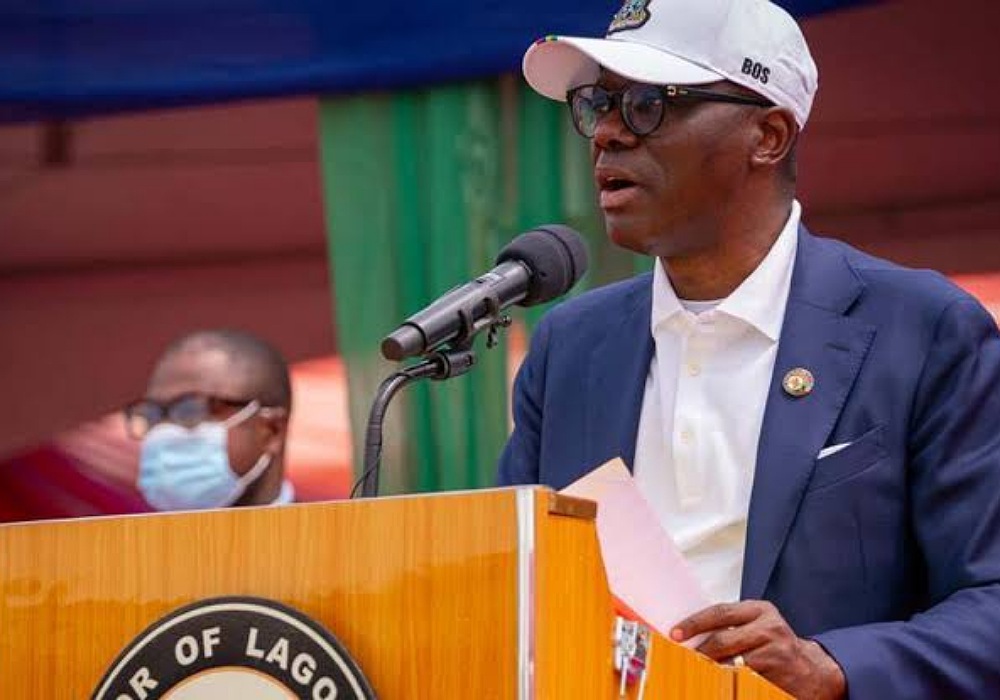
In an official statement issued on Wednesday, the Head of Service, Bode Agoro, announced that Governor Babajide Sanwo-Olu approved the extension of the “flexible work initiative” from September 4th to December 3rd, 2024.
Read Also: How Fuel Price Hike Is Driving Kano Residents To Extreme Measures
This move aims to mitigate the impact of increased living costs on public employees.
The statement reads, “Babajide Olusola Sanwo-Olu has magnanimously approved the extension of the flexible work-from-home initiative for an additional three (3) months with effect from September 4th to 3rd of December 2024,” the statement reads.
“Accordingly, all accounting officers are enjoined to note the content of this circular for compliance and give it the deserved service-wide publicity.” it added
Recall that the work-from-home policy was first introduced in February, allowing civil servants on grade levels 01 to 14 to work remotely for two days each week, while those on grade levels 15 to 17 were permitted to work from home for one day per week.
The extension is expected to provide continued relief for civil servants adjusting to the current economic challenges.








There is no plan to shift Nigeria’s 2027 general elections.
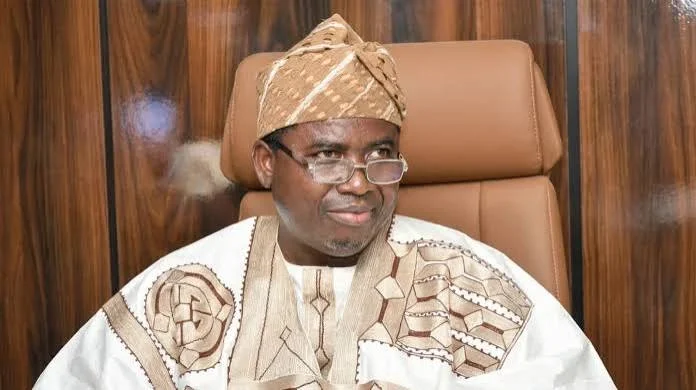
The Chairman of the Independent National Electoral Commission (INEC), Prof Joash Amupitan, made the declaration at an interactive meeting with staff members in the six states of the South-South geopolitical zone and an assessment of their readiness for the 2027 general elections, held in Port Harcourt, Rivers State, on Saturday.
Amupitan maintained that the poll had been fixed with preparations in top gear, hence the commission would not alter the timetable. He insisted that the elections must be held as scheduled.
This comes amid claims by some political parties that INEC plans to shift forward the general elections.
But addressing the commission’s staff, including Resident Electoral Commissioners in the six states of the zone, Amupitan noted that the commission’s statutory timeline for the elections had been fixed and would not be changed for any reason.
READ ALSO: Tinubu Hails EFCC as FBI Commends Nigeria Over International Child Sextortion Crackdown
According to him, the INEC was committed to delivering credible elections in line with the provisions of the law.
“Our statutory timeline is fixed. We will not change anything. The election must hold as scheduled,” the INEC boss declared.
Amupitan disclosed that the commission would pay special attention to Rivers State in the forthcoming elections due to its strategic position in the zone and because it has the highest number of registered voters in the South-South region.
He outlined that Rivers had 3,736,434 registered voters, followed by Delta State with 3,525,988; Edo, 2,865,263; Akwa Ibom, 2,566,198; Cross River, 1,928,978; and Bayelsa, 1,200,691.
Amupitan said the six states in the zone had a total of 15,823,550 registered voters, but that the electoral umpire would pay closer attention to Rivers because of its electoral significance in the region.
He stated, “With the 3,736,434 registered voters for Rivers State, the state leads the South-South. By this, the commission will put more attention to what happens in Rivers State. It is your duty to ensure that no voter is disenfranchised because of operational failures.”
Amupitan further said INEC had published the voters’ register online and at designated locations, adding that it had received over 5,000 claims relating to corrections, including names and dates of birth, and more than 600 objections, which were being addressed to ensure a credible voter register ahead of the elections.
The INEC boss announced that the final voters’ register would be released on December 15, even as he reiterated the commission’s determination to resolve all outstanding issues before the deadline.
While noting that the commission had initially considered revalidating the voters’ register upon assuming office, he said the idea was dropped following concerns that the exercise would be too close to the general elections.
He also expressed confidence in the commission’s capacity to conduct peaceful, transparent and credible elections, citing lessons learnt from recent off-cycle governorship elections, particularly the Osun State election.
Amupitan noted that the Osun election recorded the highest voter turnout in the history of off-cycle elections in the country and was adjudged locally and internationally as credible despite earlier security concerns.
“Osun State elections gave us the confidence that we can achieve this despite the noise. It is good that we had a series of those elections before the general elections because we learn lessons from every election,” the INEC Chairman stated.
The INEC, he stated, would use the experience garnered from the off-cycle elections to improve its preparations for the 2027 general elections and expressed optimism that they would be better than the off-cycle polls.
He further said the commission was determined to conduct elections that would advance the country rather than create further challenges.
Amupitan said, “We will conduct elections that will move the nation forward and not an election that will bring it down.”
On the issue of security during the elections, he said the commission was working with security agencies, including the police and the Department of State Services, to guarantee the safety of voters, electoral personnel, ad hoc staff and election materials.
Amupitan further said that the INEC would not encourage Nigerians to collect their Permanent Voter Cards and subsequently fail to guarantee their safety when they turn out to vote.
“We want every part of Nigeria to be calm during the elections so that people can come out to vote. We will not tell them to take their PVCs and then will not guarantee their safety,” he said.
Amupitan dismissed fears that Artificial Intelligence (AI) and algorithms could determine the outcome of the 2027 elections, insisting Nigerians would determine the outcome and not AI.
According to him, “It is the people of Nigeria that will decide the outcome of the elections and not AI or any algorithms.”
He, however, warned about the growing cybersecurity threats associated with AI, noting that the commission would explore ways to deploy technology to protect its systems against possible attacks.
Amupitan said the INEC was also working to strengthen the security of its digital infrastructure, adding that the commission would not allow anyone to undermine its operations.
He urged staff of the commission across the South-South to remain committed to their responsibilities, stressing that the success and credibility of the elections would be determined by their conduct at the polling units and other field locations.
He also warned that any staff of the commission and its ad hoc staff, including members of the National Youth Service Corps, who tried to compromise the elections in their areas of assignment would be punished according to the law.

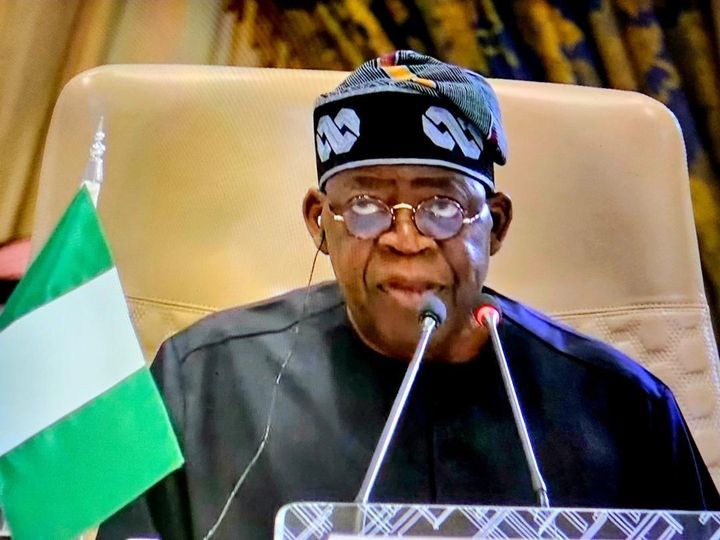
President Bola Ahmed Tinubu has commended the Economic and Financial Crimes Commission (EFCC) following recognition by the United States Federal Bureau of Investigation (FBI) of Nigeria’s role in an international operation targeting sextortion networks exploiting minors.
The commendation followed a letter from FBI Director Kash Patel to EFCC Chairman Ola Olukoyede, acknowledging the Commission’s contribution to Operation Artemis, a joint investigation targeting criminal networks involved in the sexual exploitation and extortion of children.
Bayo Onanuga, Special Adviser to the President on Information and Strategy, disclosed this in a statement released on Saturday.
ALSO READ: ADC Accuses Tinubu of Using N50,000 Cash Relief to Woo Voters Ahead of 2027
The operation resulted in the arrest and extradition of two Nigerian suspects, Adebola Festus Adekunle and Mudasiru Afeez Olawale, in August 2026. Both suspects are facing federal charges in the United States.
In his letter, Patel credited the EFCC’s cooperation for the successful outcome of the investigation.
“The successful outcome of these cases would not have been possible without your assistance and dedication to international law enforcement collaboration,” the FBI Director wrote.
Reacting to the recognition, President Tinubu described the commendation as evidence of Nigeria’s progress in tackling financial crimes and strengthening international law enforcement cooperation.
The President praised the EFCC Chairman and his team for their professionalism and commitment, stressing that Nigeria must not become a safe haven for individuals involved in criminal activities.
“This is the kind of institutional performance we are determined to build across our country. I commend the EFCC Chairman and his team for their professionalism and dedication,” Tinubu said.
He added: “Nigeria must never become a haven for criminals who exploit innocent people, whether at home or abroad. Our law enforcement and anti-corruption institutions have my full support to pursue offenders and bring them to justice in accordance with the law.”
The President’s commendation comes amid growing international recognition of Nigeria’s efforts to strengthen its financial crime prevention framework.
Nigeria was removed from the Financial Action Task Force (FATF) grey list in October 2025 and the European Union’s list of high-risk financial jurisdictions in January 2026.
Tinubu said the developments demonstrate his administration’s commitment to improving financial integrity, restoring international confidence and creating a secure environment for legitimate businesses and investments.
“Our fight against corruption is not measured by publicity but by results. Stronger institutions, effective law enforcement and international cooperation are essential to building a Nigeria where honest enterprise can thrive, and criminals are held accountable,” the President stated.
He also urged the EFCC and other law enforcement agencies to sustain their efforts, assuring them of his administration’s continued support in protecting Nigerians, combating financial crimes and strengthening the country’s relationship with international partners.
The Federal Road Safety Corps (FRSC) is set to begin a five-day nationwide enforcement operation targeting motorists using fake, covered, defaced and obsolete vehicle number plates.
The operation, code-named Operation Guduma Phase Two, will run from Monday, November 2, to Friday, November 6, 2026, as part of efforts to strengthen road safety enforcement and address security concerns linked to fraudulent vehicle registration plates.
The announcement was contained in a statement issued on October 31, 2026, by the Corps Public Education Officer, Osondu Ohaeri, at the FRSC National Headquarters in Abuja.
SEE ALSO: FRSC Warns Drivers After Brake Failure Kills Two in Kano Crash
The exercise, approved by the Corps Marshal, Shehu Mohammed, will be conducted across selected states, with designated senior officers assigned to coordinate and supervise the operation.
The renewed crackdown follows the first phase of Operation Guduma conducted in May 2026, during which the FRSC recorded 1,691 arrests across 11 states.
According to the Corps, 1,003 motorists were arrested for various number plate-related offences, while 683 were apprehended for overloading and mixed-loading. Five others were arrested for using fake diplomatic number plates.
The FRSC said the second phase was prompted by growing concerns raised by the Office of the National Security Adviser (ONSA) over the increasing use of fake, covered, defaced, obsolete and counterfeit diplomatic number plates.
It warned that vehicles operating with fraudulent or unidentifiable registration plates could allow criminal elements to evade identification, undermine security surveillance and frustrate investigations.
Beyond the enforcement of vehicle registration regulations, the operation will also focus on maintaining free-flowing traffic along designated corridors, emergency rescue interventions and the prompt clearance of road obstructions.
Speaking ahead of the exercise, Corps Marshal Shehu Mohammed warned that the use of fake, concealed, defaced or obsolete number plates would no longer be treated as a minor traffic offence because of its implications for public safety and national security.
He urged motorists to ensure their vehicle registration plates are genuine, valid, clearly visible and properly displayed, while calling on members of the public to cooperate with FRSC personnel during the operation.
Mohammed also directed officers participating in the exercise to discharge their duties professionally, maintain discipline and respect the rights of citizens.
He particularly emphasised that engagements involving diplomatic number plates must be handled with appropriate courtesy and in accordance with applicable diplomatic protocols.






Nigeria Gets More 1,000 5G Sites, Courtesy Airtel

INEC Chairman Assures on 2027 Elections

Tinubu Hails EFCC as FBI Commends Nigeria Over International Child Sextortion Crackdown

Atiku Raises Alarm Over Attacks on Sowore, ADC Governorship Candidate, Accuses APC of Intimidation

ADC Accuses Tinubu of Using N50,000 Cash Relief to Woo Voters Ahead of 2027
FRSC Begins Five-Day Nationwide Crackdown on Fake, Obsolete Number Plates

Trump’s Family Unveils New Cryptocurrency Platform

Senate Denies Receiving Petitions Against Tinubu’s Ambassadorial Nominees

Dangote Cement Lights Up Benue Host Communities With CSR Initiatives

Reps Recommend 3-year Jail Term For Aviation minister

Tems Sets New Record On Billboard Hot 100 Chart
