
NEWS
Lawyers, Civil Society Demand Release Of Emefiele


Several legal professionals and civil society organizations have expressed their disapproval of the Department of State Services (DSS) for maintaining the detention of Mr. Godwin Emefiele, the suspended governor of the Central Bank of Nigeria.
They have also criticized the DSS for filing illegal firearms charges against him.
The DSS initiated these charges shortly after a Federal High Court in Abuja ruled that Emefiele’s arrest and detention violated his fundamental rights, and ordered for his release within two days.
Prominent senior lawyers, interviewed by Vanguard, have condemned Emefiele’s ongoing detention, emphasizing that it disregards the court’s orders. They have demanded his immediate release.
One law professor, Sam Erugo, SAN, stated that the firearms charges brought against Emefiele appear to be an attempt to retroactively justify the DSS’s initial arrest.
This implies that the DSS lacked a legitimate reason for arresting Mr. Emefiele in the first place, and subsequently resorted to searching for charges to legitimize the arrest.
Erugo said “With all the noise since last year about Emefiele’s crimes affecting national security, it is surprising that DSS will detain him for one month without any charge, and had to wait for court orders before coming up with a spurious charge.
“The action of the DSS is condemnable as a clear affront to the rule of law, and in breach of Emefiele’s fundamental human rightsguaranteed under the 1999 Constitution, particularly, his right to personal liberty, fair hearing and freedom of movement.
“Our adversarial system of criminal justice does not permit arrest without credible evidence of a crime committed by the suspect; mere suspicion is not enough, and of course, it is wrong to arrest and start looking to see what crime could be found or charged.
“This is the impression we get of Emefiele’s arrest and detention, and the story about illegal possession of firearm.
“At any rate, whatever the crime, the rule of law requires DSS to arraign an accused before a court of competent jurisdiction within hours of arrest; they do not have to, and do not have the right to detain a suspect for days just to file any charge to justify the arrest and detention.
“The question we keep asking is, must DSS or other security agencies in Nigeria detain a suspect for long before charging him/ her to the appropriate court where his/her guilt or otherwise will be determined?
Former Nigerian Bar Association (NBA) National Publicity Secretary, Mr. Kunle Edun, shared his perspective on the matter, stating, “I think we should commend the DSS for obeying the order of the Federal High Court, Abuja in charging Emefiele to court.
“I see this move as tactical, probably just to buy more time for them to conclude their investigation, which is taking embarrassingly too long for an agency that made serious allegations about eight months ago that Emefiele was involved in the sponsorship of terrorism and other financial crimes.
“I expected the DSS to do better than this. Filing a charge of unlawful possession of firearms against Emefiele is disrespect to the intelligence community.
Unlawful possession of firearms should not be the kind of case the DSS should be wasting tax payers’ money on.
‘I don’t know how the crime of unlawful possession of firearms allegedly committed by Emefiele would constitute a threat to the security of Nigeria that would warrant the DSS to charter a plane to arrest Emefiele in Lagos and fly him to Abuja.
“Do they give other Nigerians same executive treatment? It’s high time we started calling on security agencies to account for how they utilize public funds, so they don’t abuse their office.
‘’Unlawful possession of firearms is a matter within the competence of the Police or even the Nigerian Security and Civil Defence Corp, NSCDC.








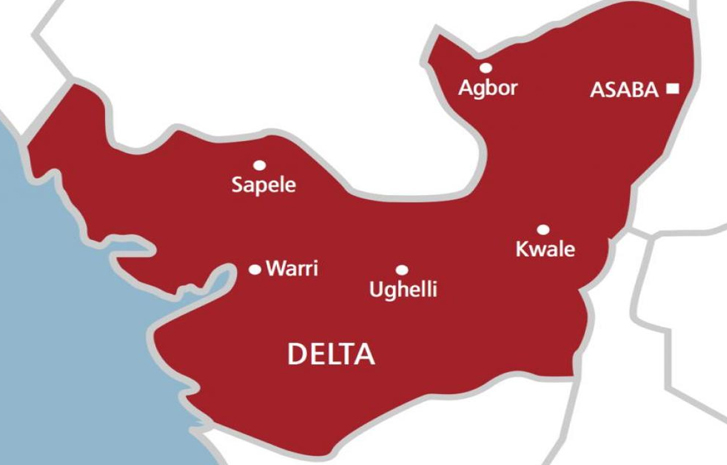
Former Delta State Governor, Dr Emmanuel Uduaghan, has reportedly died, according to sources said to be close to his family.
The sources confirmed the development on Monday, October 19, 2026, although details surrounding the circumstances of his death remained unclear as of the time of filing this report.
“Uduaghan is no more; he is dead,” one of the sources reportedly said.
SEE ALSO: Document reveals Akpoti-Uduaghan demanded N10b damages from husband before marriage, firm reacts
The reported death comes months after claims that the former governor had died circulated on social media before being dismissed by his media aide, Henry Unini.
In June, reports of Uduaghan’s alleged death spread across Facebook and WhatsApp, prompting Unini to publicly debunk the claims and assure the public that the former governor was alive.
“I can tell you for a fact that Dr. Emmanuel Uduaghan is alive,” Unini said at the time.
“Frankly, I don’t know where the writer got his information from. The death of someone is not something you take and write about casually,” he added.
Unini acknowledged at the time that Uduaghan had been experiencing health challenges but maintained that he was receiving medical attention.
“It is now common knowledge that Dr. Emmanuel Uduaghan has been sick, but he is receiving proper medical care,” the media aide said.
He also stated that the former governor was recuperating, assuring the public that there was no immediate cause for concern.
“There is no cause for alarm whatsoever,” Unini said.
The media aide thanked friends, well-wishers and residents of Delta State who contacted the family to verify the former governor’s condition. He also urged the public to avoid spreading unverified information.
“The rumour was uncalled for,” he said while addressing the earlier reports.
As of the time of filing this report, further details about the circumstances surrounding Uduaghan’s reported death had yet to emerge.
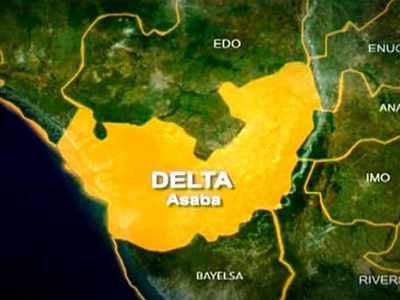
The Delta State Government has commenced a ₦5 billion grassroots empowerment programme targeting 100,000 small-scale business owners and other beneficiaries across the state’s 500 wards.
The initiative, announced on Monday, will see each beneficiary receive ₦50,000 to support small businesses, strengthen household finances and stimulate economic activities across the state.
SEE ALSO: Two Arrested as Delta Police Uncover Cache of Illegal Weapons
The Executive Assistant to the Governor on Public Enlightenment (Projects and Policies), Mr Olisa Ifeajika, disclosed this while speaking with journalists in Asaba.
Ifeajika explained that the programme was designed to complement the state government’s investments in critical infrastructure with direct financial assistance to residents.
According to him, Governor Sheriff Oborevwori directed local government councillors to facilitate the distribution of the funds, with each of the 500 wards expected to reach at least 200 beneficiaries.
He added that the initiative reflects the administration’s commitment to improving livelihoods and expanding economic opportunities for Deltans, in line with the people-centred objectives of the MORE Agenda.
The Minister of Education, Dr Maruf Tunji Alausa, has commended Alhaji Aliko Dangote and the Aliko Dangote Foundation for plans to acquire Initial Public Offering (IPO) shares of Dangote Refinery on behalf of eligible Nigerian tertiary institution students.
Alausa described the initiative as an innovative approach to promoting financial literacy, youth empowerment and wealth creation among young Nigerians.
According to a press release issued by the Federal Ministry of Education on Monday, October 19, 2026, the initiative is expected to benefit up to four million students aged 18 and above, with each eligible student expected to receive 10 IPO shares without requiring prior investment or share purchase.
The minister said the programme would expose students to capital markets, responsible investing and long-term financial planning, preparing them for greater economic participation and financial independence.
He noted that the initiative aligns with the Nigeria Education Sector Renewal Initiative (NESRI) and President Bola Ahmed Tinubu’s Renewed Hope Agenda by connecting education with enterprise, human capital development and inclusive economic growth.
According to Alausa, the initiative reflects the importance of partnerships between the education sector and private organisations in equipping young Nigerians with the knowledge and skills needed to participate in the economy.
He said the Federal Ministry of Education remained committed to strengthening private-sector partnerships to improve educational quality, relevance, equity and efficiency while preparing learners for a changing economy.
While appreciating the foundation’s contribution to youth development, the minister clarified that the ministry’s commendation was based on the initiative’s educational and developmental value.
He stressed that the ministry’s position “does not constitute an endorsement of any particular investment decision.”
Alausa also encouraged other corporate organisations to support similar initiatives that promote financial awareness, economic productivity and entrepreneurship among young Nigerians.
He urged businesses to support NESRI and the Renewed Hope Agenda in building a financially informed and economically productive generation.






Petrol Price Hike Looms as Oil Hits $110/barrel

NIPCO Gas Licences, NNPC Ltd Management Face Reps Probe

UNDC Assures on Readiness to Protect Oil, Gas Pipelines

JUST IN: Ex-Delta Governor Emmanuel Uduaghan Is Dead

Delta Begins ₦5bn Empowerment Scheme for 100,000 Beneficiaries
Alausa Hails Dangote Foundation’s Plan to Give Four Million Students IPO Shares

Trump’s Family Unveils New Cryptocurrency Platform

Senate Denies Receiving Petitions Against Tinubu’s Ambassadorial Nominees

Dangote Cement Lights Up Benue Host Communities With CSR Initiatives

Reps Recommend 3-year Jail Term For Aviation minister

Tems Sets New Record On Billboard Hot 100 Chart
