
Energy
Local Manufacturers Oppose FG’s World Bank Loan For Meter Imports

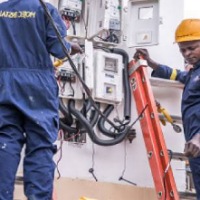
The plan of the Federal Government to utilize a $155 million World Bank loan for importing electricity meters into Nigeria has faced opposition from the Association of Meter Manufacturers and Assemblers Nigeria (AMMON).
AMMON’s Secretary, Engr Durosola Omogbenigun, expressed this concern during a press conference in Abuja on Thursday. Omogbenigun emphasized the need for the government to immediately halt the Transmission Company of Nigeria (TCN) from inviting tenders for the project.
According to reports, TCN had published tender requirements for interested bidders to apply for the $155 million project under the Nigeria distribution sector recovery program (DISREP). The primary objective of this initiative is to address the metering gap in Nigeria.
However, Omogbenigun claimed that the evaluation criteria for the project were deliberately designed to exclude Nigerian meter manufacturers. Consequently, local manufacturers have argued that implementing this policy would result in job losses for Nigerians and deprive the economy of the intended benefits of the loan.
Omogbenigun further advocated that the funds should instead be allocated to local meter manufacturers who possess the capability to produce meters within the country.
He emphasized that granting foreign companies the privilege to import fully assembled meters without any import duty would severely impact the sector, potentially causing significant harm.
He said “We found out that the evaluation criteria by way of turnover, cash flow, and experience for the bid seem to be designed to eliminate the local manufacturers.
“Our interest today is to quickly state that this World Bank project is inimical to the growth of the manufacturing sector, the progress that has been made in the local content policy as stated in Executive Order 003 of 2017, and also negates the gains that have achieved in backward integration, technology transfer and employment within the industry,” he added.
In response, Ifeanyi Okeke, the Treasurer of AMMON and the Chief Executive of Holley Metering Limited, reiterated that local meter manufacturers have the necessary capacity to fulfill the target of 1.2 million meters set by the World Bank loan.
It is worth noting that in 2021, the World Bank sanctioned a $500 million loan intended to revitalize Nigeria’s power sector, particularly focusing on the distribution value chain.













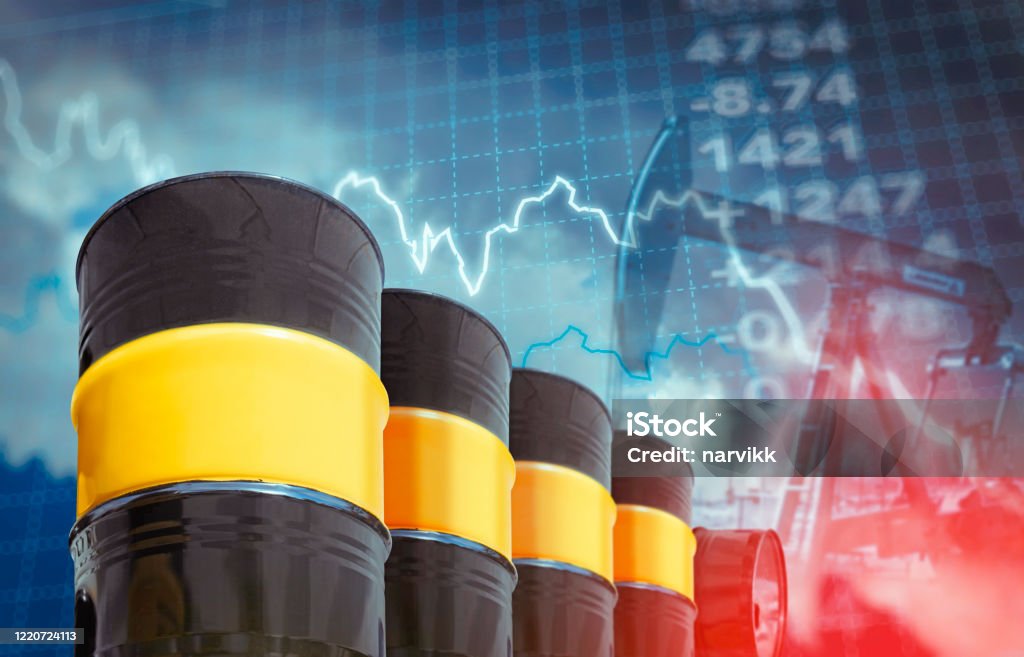
Escalating tensions in the Middle East might push global oil prices to as high as $200 per barrel.
Biztellers reports that this is hinged on Iran’s declaration of intent not to allow a single litre of oil to pass through the Strait of Hormuz for the benefit of the United States, Israel, or their allies, as long as the hostilities between the trio persist.
On Wednesday, Ebrahim Zolfaqari, spokesperson for Iran’s Khatam al-Anbiya military command headquarters, issued the warning amid rising hostilities between Tehran and Washington.
ALSO READ: Dangote Refinery Cuts Petrol, Diesel Prices
“And let us firmly reiterate that we will never allow even a single litre of oil to pass through the Strait of Hormuz for the benefit of the US, the Zionists, and their partners,” he said, according to a report by Iran International.
“Any vessel or oil shipment intended for America, the Zionist regime, or their hostile allies will be a legitimate target for us.
“Your strategy of hiding behind Iran’s neighbouring countries and the Muslims of the West Asia region, and even the world, has expired,” Zolfaqari added.
He also warned that the United States and Israel would be unable to artificially suppress global oil and energy prices if the conflict widens.
“With the expansion of war in the region, we have announced that you should prepare for $200 per barrel because the price of oil depends on security in the region, and you are the source of insecurity,” he said.
The threat comes a day after the US president, Donald Trump, warned that “death, fire, and fury will reign upon them (Iran)” if Tehran attempted to disrupt the flow of oil through the strategic waterway.
For more than a week, the international crude oil market has been experiencing what traders describe as a “brutal wave of volatility” triggered by the escalating Middle East conflict.
Crude oil prices surged past $100 per barrel on Monday, the highest level since July 2022, before easing to about $87 on Tuesday.
On March 2, major container shipping lines suspended sailings through the Strait of Hormuz and the Suez Canal due to growing security risks linked to the crisis.
The Strait of Hormuz is a narrow maritime corridor linking the Persian Gulf with the Gulf of Oman and the Arabian Sea.
It serves as the only sea route connecting the Gulf’s oil and gas producers to global markets, making it one of the world’s most strategically important energy transit chokepoints.

The Nigerian National Petroleum Company Limited NNPC (NNPC Ltd) has announced that it had secured presidential approval for a targeted fiscal incentive package aimed at unlocking the long-delayed Final Investment Decision (FID) on the Bonga Southwest Aparo (BSWA) deepwater project.
This was detailed in a statement in Abuja by NNPC Ltd’s spokesman, Andy Odeh, who stressed that the development is expected to attract about $20 billion in Foreign Direct Investment (FDI) and revive large-scale offshore oil investments in the country.
ALSO READ: Dangote Refinery Cuts Petrol, Diesel Prices
The approval, granted by President Bola Tinubu, it said, is designed to resolve long-standing fiscal and commercial bottlenecks that stalled the project for nearly two decades and pave the way for a major expansion of Nigeria’s deepwater oil production.
The Bonga Southwest Aparo development, operated by Shell through its Nigerian deepwater subsidiary, is expected to deliver about 150,000 barrels of crude oil per day and 140 million standard cubic feet (Scf) of gas daily once fully operational.
According to the statement, the presidential approval followed months of technical and commercial engagements involving the national oil company, the Nigeria Revenue Service (NRS), the Special Adviser to the President on Energy, Olu Verheijen, and the global leadership of Shell.
“His Excellency, President Bola Ahmed Tinubu, has approved a targeted fiscal incentive designed to unlock the long awaited Final Investment Decision (FID) on the Bonga Southwest Aparo (BSWA) deepwater project, marking a milestone in Nigeria’s ongoing drive to attract strategic investments and accelerate sustainable economic growth. The project is estimated to attract about $20 billion in Foreign Direct Investment and position Nigeria for a new era of deepwater production.
“The approval followed months of intensive technical and commercial negotiations involving NNPC Limited as the concessionaire, the Nigeria Revenue Service (NRS), the Special Adviser to the President on Energy, Olu Verheijen, and the Shell CEO Mr. Wael Sawan,” it stated.
According to the statement, it represents the culmination of the President’s directive, issued during a courtesy visit by Shell CEO, Sawan, to fast-track the enablers required to move this strategic national asset to FID. Besides, the national oil company said it signals renewed confidence in Nigeria’s policy direction and its resolve to translate reform momentum into tangible investment outcomes.
The NNPC said the approval represented a significant milestone in Nigeria’s effort to reposition itself as a competitive destination for global energy investment, particularly in the capital-intensive deepwater segment.
Group Chief Executive Officer of NNPC, Bayo Ojulari, described the development as a major breakthrough for the country’s oil and gas sector.
He noted that the project had remained stalled for almost two decades due to fiscal and commercial uncertainties but said the latest approval reflected the government’s commitment to unlocking strategic investments.
Ojulari added that the milestone underscored the company’s commitment to leveraging partnerships with international oil companies to unlock Nigeria’s vast hydrocarbon potential.
“This approval is a testament to the President’s leadership, NNPC’s disciplined execution and our ability to structure complex, bankable transactions that deliver value for Nigeria. For nearly two decades, the Bonga Southwest project remained stalled. Today, under President Tinubu’s reform-driven leadership and through NNPC’s sustained advocacy, we have broken that logjam. This is what partnership, persistence, and policy clarity can achieve.
“This milestone further affirms NNPC’s commitment, under the President’s leadership, to unlocking Nigeria’s vast energy potential through partnerships, disciplined innovation and execution excellence,” the NNPC GCEO stressed.
The Bonga Southwest Aparo project will become the first deepwater final investment decision on a Production Sharing Contract (PSC) asset in Nigeria since 2008, signalling renewed confidence among international investors in the country’s policy environment.
Central to the breakthrough is the fiscal package approved by the President, which includes an enhanced Production Tax Credit as well as the resolution of issues arising from the 2021 dispute settlement agreement between the government and contractors.
The NNPC said the revised fiscal framework was designed to strike a balance between protecting Nigeria’s long-term revenue interests and ensuring the project remains commercially viable for investors.
As concessionaire, the national oil company said it worked closely with Shell Nigeria Exploration and Production Company (SNEPCo) and other contractor parties to design alternative fiscal structures capable of addressing structural challenges that had hindered progress on the project.
The proposal subsequently underwent evaluation by the NRS before recommendations were forwarded to the presidency for final approval. NNPC noted that the breakthrough aligns with its broader strategy of pursuing partnership-driven growth, particularly in high-capital offshore developments that require collaboration between the national oil company and global energy majors.
The company added that aligning policy reforms with investor expectations is essential to unlocking large-scale investments capable of generating jobs, boosting government revenues and strengthening Nigeria’s long-term energy security.
Once the final investment decision is taken by the project partners, the multi-billion-dollar development is expected to transform Nigeria’s deepwater production profile while creating significant economic benefits.
The NNPC estimates that the project will generate over 5,000 direct and indirect jobs during construction and operations. It could also signal the beginning of a new cycle of offshore investments in Nigeria, especially as global oil companies increasingly seek stable fiscal environments before committing capital to large deepwater projects.
With presidential approval now secured, NNPC and its partners are expected to move toward the formal FID, which would trigger the full-scale capital deployment required to develop the offshore field.
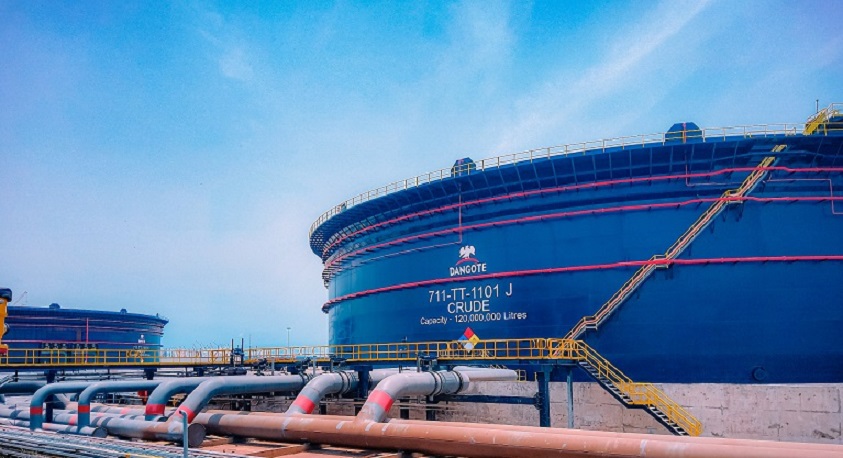
The global impact of the hostilities involving Iran, the United States of America and Israel continues to impact Nigeria’s domestic energy sector as the Dangote Petroleum Refinery and Petrochemicals on Tuesday announced reductions in its petrol and diesel gantry and coastal prices.
This follows Monday’s oil price slump to $90 per barrel from previous $115.
According to a new pricing template released by the refinery on Tuesday, the gantry price of petrol has been reduced by N100, dropping from N1,175 to N1,075 per litre.
ALSO READ: CNG: Tinubu Orders Deployment of 100,000 Kits in Three Weeks
The Dangote Refinery also stressed that the price of petrol for coastal supply would now be N1,050 per litre, saying the difference in price reflects additional costs linked to maritime distribution.
Similarly, the price of Automotive Gas Oil (diesel) has been reduced to N1,430 per litre at the gantry, down from the previous N1,620 per litre. This represents a decrease of N190 per litre.
The refinery noted that these gantry prices do not include regulatory charges from the Nigerian Midstream and Downstream Petroleum Regulatory Authority (NMDPRA).
The Dangote Refinery had raised its gantry PMS price to N1,175 per litre — the third upward adjustment in seven days.
The refinery communicated the new ex-depot price to marketers and depot operators, up N180 from the N995 per litre announced last week Friday, an 18.1 per cent increase in three days.






PDP’s Festering Crisis Chases Tambuwal to ADC

$200/barrel Price Likely as Iran Threatens Oil Ships

2026 Poll: Osun Ndigbo Backs Adeleke’s Second-Term Bid

NGX Group, IFC, CSCS and WIMBIZ Convene Leaders to Advance Gender Equality at 2026 Ring the Bell Ceremony

Adeleke on Why he Deserves Second Term

NNPC Secures Tinubu’s Approval for $20bn FID on Bonga Deepwater Project

Trump’s Family Unveils New Cryptocurrency Platform

Reps Recommend 3-year Jail Term For Aviation minister

Dangote Cement Lights Up Benue Host Communities With CSR Initiatives

Senate Denies Receiving Petitions Against Tinubu’s Ambassadorial Nominees

Things To Know About Threads, Zuckerberg’s Twitter-like App
