
Business
Marketers Test Legality Of Banning Importation Of Refined Petroleum Products

Nigeria would soon have her own definition of free market, albeit by judicial interpretation, so long as the petroleum sector is concerned.
This follows the legal tussle on the legality of importation of refined products into Nigeria, on the heels of the deregulation of that sector.
Biztellers reports that three oil marketers, AYM Shafa Limited, A. A. Rano Limited, and Matrix Petroleum Services Limited, have approached the Federal High Court in Abuja, praying for a dismissal of a suit filed by the Dangote Petroleum Refinery and Petrochemicals (DPRP) to stop them from importing refined petroleum products.
The marketers, in response to an originating summon filed by the DPRP, filed a joint counter affidavit marked: FHC/ABJ/CS/1324/2024, and dated November 5, 2024.
They maintained that granting the application of the DPRP would spell doom for Nigeria’s oil sector.
ALSO READ: Deregulation, Not License For Off-spec Products Blending – Dangote Refinery
Their legal and economic argument assert that any form of monopoly for Nigeria’s oil sector is a recipe for disaster.
Recall that the DPRP in its originating summon dated September 6, 2024, had sued the Nigeria Midstream and Downstream Petroleum Regulatory Authority (NMDPRA) and the Nigeria National Petroleum Corporation Limited (NNPC Ltd), AYM Shafa Limited, A. A. Rano Limited, T. Time Petroleum Limited, 2015 Petroleum Limited, and Matrix Petroleum Services Limited as 1st to 7th defendants respectively.
Specifically, the DPRP prayed the court to declare that the NMDPRA was in violation of Sections 317(8) and (9) of the Petroleum Industry Act (PIA) by issuing licenses for the importation of petroleum products.
It asserted that such licenses should only be issued in circumstances where there is a petroleum product shortfall.
Consequently, the DPRP urged the court to declare that the NMDPRA was in violation of its statutory responsibilities under the PIA for not encouraging local refineries, the DPRP inclusive.
As a result, Shafa, A. A. Rano, and Matrix Petroleum, countered that the DPRP does not produce adequate petroleum products for the daily consumption of Nigerians.
According to their affidavit, the plaintiff had not placed anything before the court to prove the contrary.
They argued that they are well qualified and entitled to be issued an import licence by the NMDPRA to import petroleum products in Nigeria within the meaning of Section 317(9) of the PIA.
They also noted that they are fully qualified for the issuance of the import licences issued to them by the 1st defendant, as they duly met all the legal requirements for the issuance of such import licences, before the same were issued to them.
They categorically stated that, “The import licences lawfully and validly issued to the defendants did not in any way whatsoever, cripple the plaintiff’s business or its refinery.
“The import licenses issued to the defendants by the 1st defendant are in line with the provisions of the Petroleum Industry Act, 2021, the Federal Competition and Consumer Protection Act, 2018, and other relevant laws.”
They insisted that giving the DPRP the power of monopoly in Nigeria’s petroleum industry as it sought in the instant suit, would kill competitive pricing of petroleum products in the country.
They cautioned that such an act would further deteriorate the country’s critically ailing economy.
They also added that it would “unleash untold hardship on Nigerians, all of which constitute a recipe for disaster in the polity”.
The marketers explained that if Nigeria puts all her energy eggs in one basket by stopping the importation of petroleum products and allowing the plaintiff to be the sole producer and supplier of petroleum products in Nigeria, with liberty to determine the prices at which it supplies the products, the prices of petroleum products will continue to rise and energy security will elude Nigeria.
In addition, they pointed out that should the DPRP break down being a monopolized sector, Nigeria would be plunged into a-difficult-to-manage energy crisis.
“That in the event of any breakdown in or obstruction to the production chain of the plaintiff which stops it from producing, Nigeria will be thrown into energy crises because it does not have the reserves that would last it for at least 30 days that it would need to order, pay for, freight and import refined products into tanks in Nigeria.
“That amidst the glaring absence of any credible and demonstrable proof that the plaintiff refines and supplies adequate petroleum products for the daily use/consumption of Nigerians, is a recipe for disaster in Nigeria’s energy sector,” they wrote.
They further told the court that granting the reliefs sought by the plaintiff was a design to leave Nigeria and Nigerians at the mercy of the plaintiff with respect to the availability and cost of purchasing petroleum products in the country.
The presiding judge, Justice Inyang Ekwo fixed January 20, 2025, for a report of settlement or service.





In a move perceived as an important milestone in the company’s journey to accelerate its Beyond XXX vision and drive the next phase of growth, innovation, and impact, Sahara has announced the appointment of Chidilim Menakaya as Managing Director.
Menakaya is a seasoned transformation and strategy executive, bringing more than two decades of leadership experience spanning Africa, Asia, Europe, and the Middle East.
Prior to her appointment, Menakaya served as Director of the Sahara Foundation, where she led the company’s sustainability and social impact agenda.
READ ALSO: Olaniwun Ajayi Weighs In on Dangote Refinery IPO
Under her leadership, the Foundation expanded the reach of Sahara’s EXTRApreneurship model, strengthened strategic partnerships, and deepened socio-economic impact across communities in the company’s locations.
Widely respected for her collaborative leadership style, strategic insight, and ability to build high-performing teams, she has consistently demonstrated a commitment to developing people, driving innovation, and delivering measurable outcomes.
Commenting on the appointment, Executive Director, Sahara, Ade Odunsi, said the decision reflects Sahara’s confidence in purposeful leadership and its commitment to building the future from within.
“For over three decades now we have remained committed to our vision of bringing energy to life responsibly. Beyond XXX represents our commitment to shaping the future through bold thinking, innovation, sustainability, and shared value creation. Chidilim’s appointment reflects these aspirations. We are confident that under her leadership, Sahara will continue to expand the frontiers of impact and create sustainable value for stakeholders across our markets.”
Odunsi noted that the appointment signals Sahara’s determination to build a resilient, future-focused enterprise capable of thriving in an increasingly dynamic global environment.
As Managing Director, Menakaya will provide strategic leadership for steering Sahara’s Beyond XXX agenda, enhancing stakeholder value, and positioning Sahara for continued growth and global relevance.
Menakaya holds executive and professional qualifications from leading global institutions, including London Business School, INSEAD, and Manchester Business School. She is also a certified Human Resources Business Partner, Transformation and Reputation Manager, and Prosci-certified Change Management Practitioner.
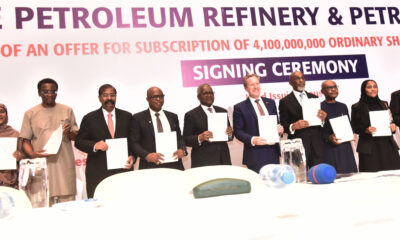
The Dangote Petroleum Refinery and Petrochemicals FZE (DPRP) Initial Public Offering (IPO), has been described as an important precedent in the Nigerian capital market.
Sharing the view in a statement on Monday, Olaniwun Ajayi LP also expressed its pleasure at having advised on the IPO while acting as Joint Solicitor to the transaction.
According to a Forbes report on Monday, Africa’s richest man, Aliko Dangote, saw his fortune rise to $51.3 billion following the launch of the refinery’s highly anticipated IPO on the Nigerian Exchange (NGX), amid strong investor demand on the opening day.
READ ALSO: DPRP IPO: Dangote Rings Opening Bell at NGX
The transaction was brought to the market by a consortium of professional advisers, including Olaniwun Ajayi LP, which acted as the Joint Solicitors to the issue.
In that capacity, the firm advised Dangote Refinery on the legal aspects of the offer, from transaction structuring and regulatory engagement through to launch
According to the law firm, the transaction is expected to be the largest IPO in both Nigeria and Africa, marking the first public offer of shares by a Nigerian Free Zone Enterprise (NFZE) in Nigeria.
The law firm stated that the transaction matters beyond the deal as it “establishes an important precedent for capital raising by Free Zone Enterprises”, while contributing to the continued development of the Nigerian capital market.
It added that the proceeds are intended to support DPRP’s long-term growth strategy, including the expansion of its refining and petrochemicals capacity.
The law firm stressed that the offer broadens public participation in one of Africa’s most significant industrial assets.

President and Chief Executive of Dangote Industries Limited, Aliko Dangote, has assured investors that the Initial Public Offering (IPO) of Dangote Petroleum Refinery & Petrochemicals FZE presents a compelling opportunity for strong returns and sustainable wealth creation, positioning the offer as a chance for Nigerians and Africans to participate in one of the continent’s most significant industrial achievements.
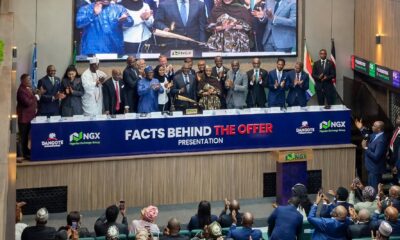
Speaking during the “Facts Behind the Offer” presentation at the Nigerian Exchange (NGX) in Lagos, Dangote described the $1.6 billion offer as the largest IPO ever undertaken in Africa, underscoring the company’s commitment to broadening ownership and enabling millions of individuals to benefit from the value generated by a world-class industrial enterprise.
According to him, the refinery IPO is more than a capital raising exercise; it is an opportunity for investors to become part owners of a strategic asset that is already delivering strong operational and financial results.
“The Dangote Refinery IPO is more than an investment opportunity; it is an opportunity for millions of Nigerians and Africans to build lasting wealth through ownership of a world-class industrial asset. We have built a refinery that is already delivering strong revenues, solid profitability and significant value to the economy. By investing today, shareholders are not only positioning themselves to enjoy attractive returns and dividend prospects, but they are also laying the foundation for generational wealth that can benefit their children and grandchildren. This offer is designed to allow ordinary people to participate in an extraordinary success story and share in the long-term value that Dangote Refinery will continue to create for decades to come.”
READ ALSO: Saudi Pipeline Disruption Pushes Nigeria’s Crude Beyond $115/barrel
He emphasised that the offer reflects the Group’s long-standing philosophy of creating prosperity through broad ownership, enabling ordinary citizens to share in the success of transformational businesses
Dangote noted that the refinery has already fulfilled its core vision of transforming Nigeria from a major importer of refined petroleum products into a significant refining and export hub, supplying domestic demand while serving markets across Africa and beyond.
“We are not merely offering shares; we are offering Nigerians an opportunity to participate in a transformational chapter of our economic history. This is a strategic investment in an asset that is creating jobs, conserving foreign exchange, enhancing energy security and strengthening Africa’s industrial capacity,” he stated
The IPO has been structured to encourage broad participation, with 4.1 billion ordinary shares offered at N525 per share and a minimum subscription of just 10 shares valued at N5,250. The offer is expected to attract a diverse range of investors, including civil servants, teachers, artisans, students, institutional investors, pension funds and members of the Nigerian diaspora.
Highlighting the refinery’s financial strength, Dangote disclosed that the company generated approximately N19.47 trillion in revenue during the first half of 2026, while profit after tax reached N2.55 trillion, demonstrating its capacity to create sustainable value for shareholders.
At the offer price, Dangote Petroleum Refinery is expected to achieve an implied market capitalisation of approximately N65.22 trillion. Together with the market capitalisations of Dangote Cement Plc and Dangote Sugar Refinery Plc, the listing is projected to create an equity cluster valued at about N83.5 trillion, making the Dangote Group the largest equity cluster on the Nigerian Exchange.
Commenting on the significance of the transaction, NGX Group Chairman, Umaru Kwairanga, described the offer as a defining milestone for Africa’s capital markets and a demonstration of the capacity of African capital to finance large-scale projects capable of accelerating economic growth and development across the continent.
Similarly, Lagos State Governor, Babajide Sanwo-Olu, hailed the IPO as a watershed moment for Africa’s financial markets, noting that it reinforces confidence in the continent’s ability to mobilize capital and invest in its own future.
“This transaction is changing perceptions about what is possible in Africa. It is creating opportunities for a broad spectrum of investors, from small business owners and market traders to institutional investors and technology entrepreneurs,” he said.
Also speaking, Chief Executive Officer of the Botswana Stock Exchange, Kesegofetse Molatlhegi, commended Dangote for demonstrating that African ambition can deliver globally significant industrial projects, while encouraging greater continental participation in the refinery’s growth story.
For his part, Chief Executive Officer of Dangote Petroleum Refinery, Davide Bird, highlighted the refinery’s operational achievements, noting that it has become the largest single supplier of refined petroleum products into Europe and continues to maintain safe, reliable and efficient operations. He added that the company remains focused on delivering its Vision 2030 objective of becoming the world’s largest integrated refinery and petrochemical complex.
Reaffirming the significance of the offer, Dangote said the IPO represents an opportunity for investors to move from consumers to owners and participate in the long-term growth of one of Africa’s most strategic industrial enterprises.
“This is a defining investment opportunity. We want millions of Nigerians and Africans to become owners of a business that has been built to create value for generations. Those who invest today are positioning themselves to benefit from the growth, resilience and enduring legacy of a truly transformational enterprise,” he said.
Photo Caption: L-R: Ooni of Ife, Adeyeye Enitan Ogunwusi; Managing Director, Coronation Asset Management Limited, Aigbovbioise Aig-Imoukhuede; Group Chairman, NGX Group, Dr Umaru Kwairanga; President/CE, Dangote Industries Limited, Aliko Dangote; Group Managing Director/Chief Executive Officer, NGX Group, Temi Popoola; Lagos Governor, Babajide Sawo-Olu; Group Executive Director, Commercial Operations, Oil & Gas, Fertiliser and WAEP, Fatima Aliko-Dangote, at the Dangote Petroleum Refinery & Petrochemicals Initial Public Offering (IPO) Facts Behind the Figure presentation at the Nigerian Exchange (NGX), Lagos on Monday, September 14, 2026.






DPRP to Favour Small Investors in Event of IPO Oversubscription

Sahara Appoints Menakaya as Managing Director

Olaniwun Ajayi Weighs In on Dangote Refinery IPO

Isa Chairs World Energy Council Nigeria

Dangote Refinery IPO: Why Nigerians Are Being Urged to Own a Stake in Oil Business — Madaki Ameh

2027: ‘Let Tinubu Finish the Good Work’ — Oba of Benin Backs President

Trump’s Family Unveils New Cryptocurrency Platform

Senate Denies Receiving Petitions Against Tinubu’s Ambassadorial Nominees

Dangote Cement Lights Up Benue Host Communities With CSR Initiatives

Reps Recommend 3-year Jail Term For Aviation minister

Tems Sets New Record On Billboard Hot 100 Chart
