
International News
Mexican Mayor Marries Female Reptile

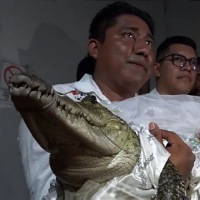
In a unique and traditional ceremony, Victor Hugo Sosa, the mayor of San Pedro Huamelula, a small town in southern Mexico inhabited by the Indigenous Chontal community, recently celebrated a special union.
Embracing his community’s ancestral practices, Mayor Sosa entered into a sacred matrimony with Alicia Adriana, a female reptile, as part of a ritual believed to bring prosperity and well-being to his people.
The reptile, Alicia Adriana is a caiman, a species resembling an alligator that thrives in the marshlands of Mexico and Central America.
In the ceremony deeply rooted in local lore, Sosa pledged his loyalty and devotion to “the princess girl,”
Sosa said during the ritual “I accept responsibility because we love each other. That is what is important. You can’t have a marriage without love… I yield to marriage with the princess girl.”
Prior to the wedding ceremony, a unique tradition takes place where the reptile, adorned in vibrant attire, is taken from house to house.
Residents of the town have the opportunity to hold the alligator in their arms and engage in joyful dances together.
The alligator’s ensemble includes a green skirt, a beautifully hand-embroidered tunic bursting with colors, and an eye-catching headdress embellished with ribbons and sequins.
The creature’s snout is bound shut to avoid any pre-marital mishaps. Later, she is put in a white bride’s costume and taken to town hall for the blessed event.
As part of the ritual, Joel Vasquez, a local fisherman, tosses his net and intones the town’s hopes that the marriage may bring “good fishing, so that there is prosperity, equilibrium and ways to live in peace.”
After the wedding, the mayor dances with his bride to the sounds of traditional music.
Sosa told AFP “We are happy because we celebrate the union of two cultures. People are content,”
For the past 230 years, a unique and time-honored tradition has been observed in this region—a marriage between a man and a female caiman.
This distinctive ceremony serves as a commemoration of the day when two Indigenous groups reached a momentous peace agreement, signified by a union through marriage.
In accordance with a rich tradition that dates back many years, the reconciliation of two Indigenous groups is commemorated through a symbolic marriage ceremony.
Representing the Chontal community, the mayor assumes the role of a Chontal king, while the female alligator represents the princess girl from the Huave Indigenous group.
The Huave people reside in the coastal regions of Oaxaca, not far from the inland town where this ceremony takes place.
The wedding allows the sides to “link with what is the emblem of Mother Earth, asking the all-powerful for rain, the germination of the seed, all those things that are peace and harmony for the Chontal man,” explains Jaime Zarate, chronicler of San Pedro Huamelula.



Federal agents raided the Washington, D.C., home of Democratic Congresswoman Ilhan Omar early Monday morning as part of an ongoing federal criminal investigation, the United States Department of Justice (DOJ) has confirmed.
Homeland Security Investigations agents arrived at the Minnesota congresswoman’s residence at about 6:00 a.m. Eastern Time, according to a report by Fox News.
SEE MORE: Trump Sparks Outrage With Shock Proposal to Rename New Mexico
The report said both the Department of Homeland Security (DHS) and the DOJ are involved in the investigation.
A DOJ spokesperson confirmed the operation, stating: “Today in the Washington, D.C. area, Homeland Security Investigations executed a judicially authorized search warrant secured by the Department of Justice.”
The spokesperson added: “This enforcement action is part of an ongoing federal criminal investigation.”
Details later……….
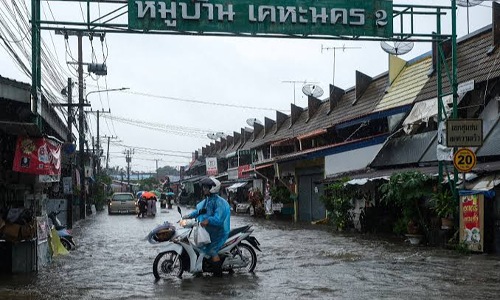
Heavy rains have triggered severe flooding across parts of Bangkok, Thailand, forcing nearly 4,900 residents to evacuate to shelters as floodwaters swept through roads and residential areas.
The flooding has disrupted movement across parts of the Thai capital, with motorists and pedestrians forced to navigate submerged roads and seek alternative routes.
SEE ALSO: NAFDAC Warns Nigerians As Fake Cowbell Milk Floods Market
According to the Bangkok Metropolitan Administration, about 52,000 households have been affected by the flooding, prompting authorities to declare a flood disaster and intensify emergency response efforts.
Emergency teams have been deployed to assist affected communities and move residents from vulnerable areas to safer locations as water levels rise.
Bangkok is accustomed to seasonal heavy rainfall, but intense downpours can overwhelm drainage systems, particularly in low-lying areas, resulting in widespread flooding and disruption.
Authorities are continuing to monitor affected locations while coordinating evacuations and other emergency measures.
For thousands of residents, the immediate priority remains securing safe shelter and protecting homes and livelihoods as authorities work to manage the situation and restore normal activities once the floodwaters recede.
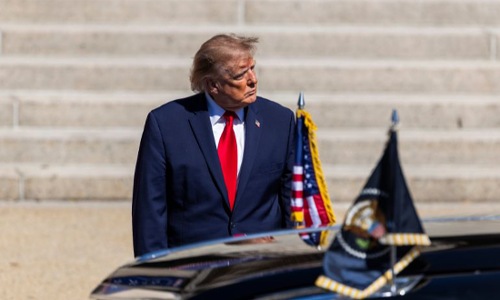
US President Donald Trump has explained his decision to reject Iran’s latest proposal to reopen the Strait of Hormuz, saying Tehran was seeking an agreement because it was losing revenue.
Speaking to reporters at the White House, Trump said Iran wanted to immediately reopen the strategically important waterway but argued that the proposal was not acceptable to his administration.
“They want to make a deal, and I think that’s fine. I like making a deal, too, but that deal would not be acceptable,” Trump said.
SEE ALSO: How the Strait of Hormuz Attack Could Trigger a Fresh Global Oil Shock
According to the US president, Iran’s push to reopen the strait was driven by the economic pressure it was facing.
“What they want to do is immediately open the Hormuz Strait. Do you know why? Because they are dying,” Trump said.
“You know why they’re dying? Because they have no money coming in, because they get their money from the Hormuz Strait.”
Trump also claimed that the US had established an unprecedented naval blockade against Iran, describing it as “a wall of steel.”
“So they outsmarted themselves. We put up the greatest blockade ever in military history. It’s a wall of steel,” he said.
“And guess what? They don’t have any money now because they wanted to close the strait.”
The Strait of Hormuz is a major global energy shipping route, and disruption to traffic through the waterway has significant implications for international oil markets and countries that depend on energy imports.
Trump’s remarks came amid continued tensions between Washington and Tehran over the reopening of the strategic waterway and negotiations involving Iran.






Renaissance, Sterling Bank Back Indigenous Oil and Gas Contractors Financially
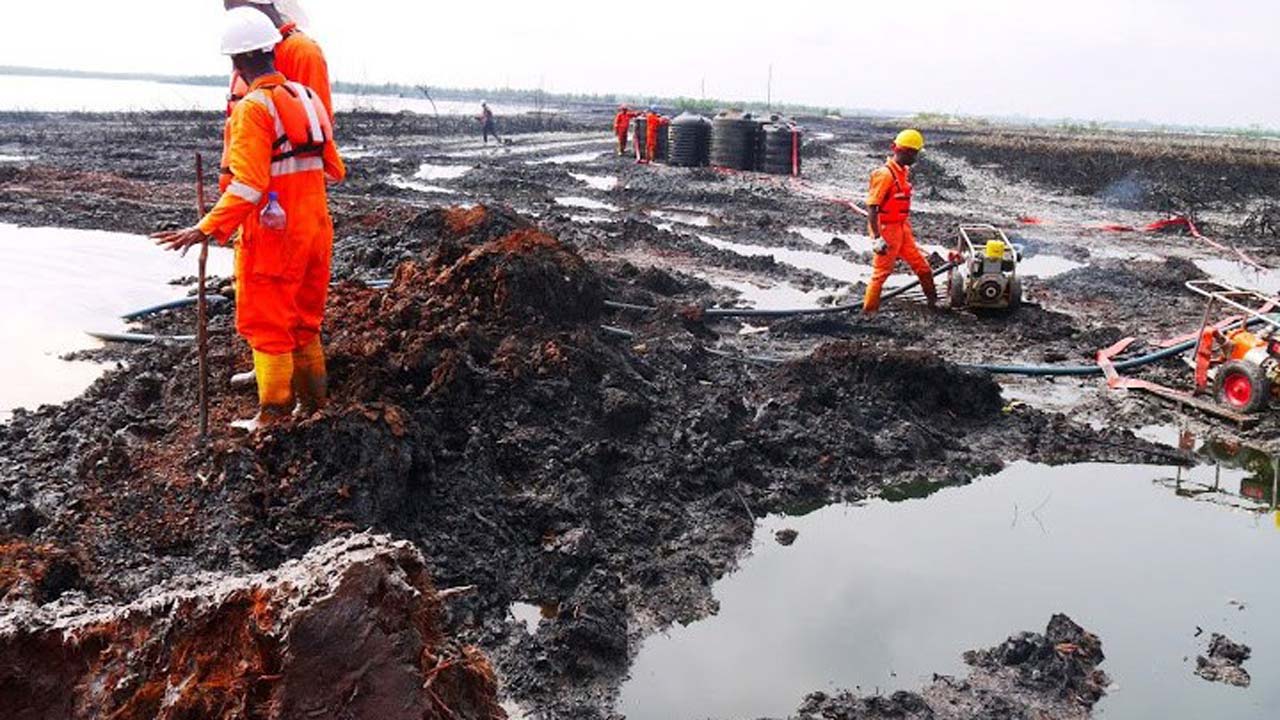
Group Demands Fair Share of NNPC Jobs for Ogoni Oil Exploration

NNPC Ltd Exploration Spending Down 87%

200 Imo Teachers Benefit from NCDMB’s Effective Curriculum Training

FG to Launch National Lead Poisoning Prevention Plan Wednesday

EndSARS Memorial: ‘Nigerians Still Deserve Answers’ – Atiku

Trump’s Family Unveils New Cryptocurrency Platform

Senate Denies Receiving Petitions Against Tinubu’s Ambassadorial Nominees

Dangote Cement Lights Up Benue Host Communities With CSR Initiatives

Reps Recommend 3-year Jail Term For Aviation minister

Tems Sets New Record On Billboard Hot 100 Chart
