
International News
Missing Children Found Alive In Colombian Amazon After 40 Days

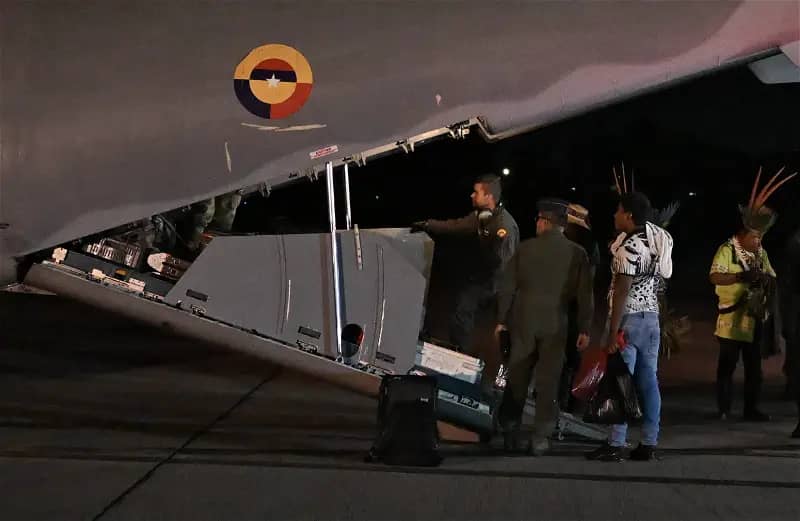
President Gustavo Petro announced on Friday that four Indigenous children, who had been missing for over a month following a small plane crash in the Colombian Amazon rainforest, have been discovered alive.
Sharing the news with the media in the capital city of Bogota, Petro described the day as “magical” after revealing the successful rescue of the children.
He said “They are weak. Let’s let the doctors make their assessment.”
Earlier, President Gustavo Petro took to Twitter and shared a photograph depicting several adults, some wearing military fatigues, attending to the children who were seated on tarps in the midst of the jungle. In the image, a rescuer could be seen holding a bottle to the mouth of the youngest child, cradling them in their arms.
“A joy for the whole country! The 4 children who were lost 40 days ago in the Colombian jungle were found alive,” he wrote on Twitter.
Late on Friday, the Defense Ministry shared a video capturing the moment the children were lifted into a hovering helicopter, surrounded by the towering trees in nearly pitch-black darkness.
Belonging to the Huitoto Indigenous group, the children, aged 13, nine, four, and one, had been traversing the jungle alone since May 1, when the Cessna 206 aircraft they were traveling in crashed.
The pilot had alerted authorities about engine issues shortly after departure from the Araracuara region, located around 350 kilometers (217 miles) away from the town of San Jose del Guaviare.
Tragically, the remains of the pilot, the children’s mother, and a local Indigenous leader were discovered at the crash site, where the plane was lodged almost vertically amidst the trees.
Authorities later revealed that the group had been escaping from threats posed by members of an armed group, shedding light on the circumstances surrounding their ill-fated journey.
Since the children went missing, an extensive search operation involving 160 soldiers and 70 Indigenous individuals with deep knowledge of the jungle had been underway, attracting global attention.
The region where the children were lost is inhabited by jaguars, snakes, and other predatory animals, as well as armed drug smuggling groups.
However, ongoing clues such as footprints, a diaper, and partially consumed fruit gave authorities hope that they were on the right path.
Concerned that the children might continue to wander, making it increasingly challenging to locate them, the air force dropped 10,000 flyers into the forest. The flyers contained instructions in both Spanish and the children’s own Indigenous language, urging them to stay in one place.
In addition to instructions, the leaflets provided crucial survival tips, and the military delivered food parcels and bottled water to aid the children in their survival.
Rescuers also took the initiative to broadcast a recorded message from the children’s grandmother, imploring them to remain stationary and await help.
After an arduous search effort, the military reported that the children were discovered approximately five kilometers (three miles) to the west of the crash site, bringing immense relief to all involved.
The Huitoto children, being part of the Huitoto Indigenous group, possess extensive knowledge of hunting, fishing, and gathering in the jungle. The children’s grandfather, Fidencio Valencia, shared with AFP that they are well-versed in navigating and surviving in the wilderness.
The news of the successful rescue coincided with President Gustavo Petro’s return from Cuba. During his visit, he had signed a six-month truce with the ELN, Colombia’s last active guerrilla group. The rescue brought a sense of joy and relief amidst the backdrop of this significant development in the country’s peace efforts.

Federal agents raided the Washington, D.C., home of Democratic Congresswoman Ilhan Omar early Monday morning as part of an ongoing federal criminal investigation, the United States Department of Justice (DOJ) has confirmed.
Homeland Security Investigations agents arrived at the Minnesota congresswoman’s residence at about 6:00 a.m. Eastern Time, according to a report by Fox News.
SEE MORE: Trump Sparks Outrage With Shock Proposal to Rename New Mexico
The report said both the Department of Homeland Security (DHS) and the DOJ are involved in the investigation.
A DOJ spokesperson confirmed the operation, stating: “Today in the Washington, D.C. area, Homeland Security Investigations executed a judicially authorized search warrant secured by the Department of Justice.”
The spokesperson added: “This enforcement action is part of an ongoing federal criminal investigation.”
Details later……….
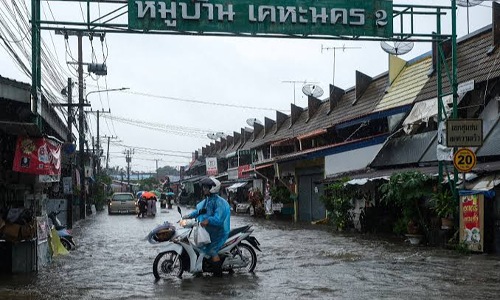
Heavy rains have triggered severe flooding across parts of Bangkok, Thailand, forcing nearly 4,900 residents to evacuate to shelters as floodwaters swept through roads and residential areas.
The flooding has disrupted movement across parts of the Thai capital, with motorists and pedestrians forced to navigate submerged roads and seek alternative routes.
SEE ALSO: NAFDAC Warns Nigerians As Fake Cowbell Milk Floods Market
According to the Bangkok Metropolitan Administration, about 52,000 households have been affected by the flooding, prompting authorities to declare a flood disaster and intensify emergency response efforts.
Emergency teams have been deployed to assist affected communities and move residents from vulnerable areas to safer locations as water levels rise.
Bangkok is accustomed to seasonal heavy rainfall, but intense downpours can overwhelm drainage systems, particularly in low-lying areas, resulting in widespread flooding and disruption.
Authorities are continuing to monitor affected locations while coordinating evacuations and other emergency measures.
For thousands of residents, the immediate priority remains securing safe shelter and protecting homes and livelihoods as authorities work to manage the situation and restore normal activities once the floodwaters recede.
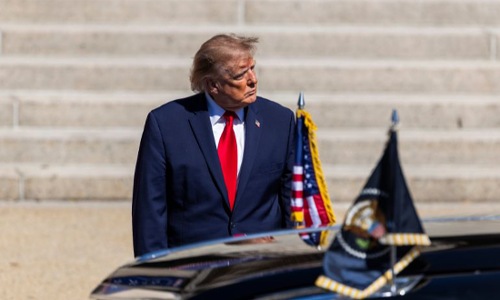
US President Donald Trump has explained his decision to reject Iran’s latest proposal to reopen the Strait of Hormuz, saying Tehran was seeking an agreement because it was losing revenue.
Speaking to reporters at the White House, Trump said Iran wanted to immediately reopen the strategically important waterway but argued that the proposal was not acceptable to his administration.
“They want to make a deal, and I think that’s fine. I like making a deal, too, but that deal would not be acceptable,” Trump said.
SEE ALSO: How the Strait of Hormuz Attack Could Trigger a Fresh Global Oil Shock
According to the US president, Iran’s push to reopen the strait was driven by the economic pressure it was facing.
“What they want to do is immediately open the Hormuz Strait. Do you know why? Because they are dying,” Trump said.
“You know why they’re dying? Because they have no money coming in, because they get their money from the Hormuz Strait.”
Trump also claimed that the US had established an unprecedented naval blockade against Iran, describing it as “a wall of steel.”
“So they outsmarted themselves. We put up the greatest blockade ever in military history. It’s a wall of steel,” he said.
“And guess what? They don’t have any money now because they wanted to close the strait.”
The Strait of Hormuz is a major global energy shipping route, and disruption to traffic through the waterway has significant implications for international oil markets and countries that depend on energy imports.
Trump’s remarks came amid continued tensions between Washington and Tehran over the reopening of the strategic waterway and negotiations involving Iran.






APC Campaign Council Sets Inaugural Meeting for Tuesday Ahead of Kaduna Flag-Off

Renaissance Capital Sees Significant Upside in Dangote Refinery, Lifts Valuation by 33.4%

Dangote Refinery IPO Elicits Participation in 90 Countries Globally

Makinde Fires Back at Presidency, Insists on ₦9tn NLNG Dividend Shortfall

‘NELFUND Is Not an Excuse for School Fees Hikes’ – NANS Warns Universities

NANS Threatens to Shut Down AE-FUNAI Over School Fees Hike

Trump’s Family Unveils New Cryptocurrency Platform

Senate Denies Receiving Petitions Against Tinubu’s Ambassadorial Nominees

Dangote Cement Lights Up Benue Host Communities With CSR Initiatives

Reps Recommend 3-year Jail Term For Aviation minister

Tems Sets New Record On Billboard Hot 100 Chart
