
NEWS
Morocco Increases Optimism For African World Cup Victory In Qatar – Buhari


President Muhammadu Buhari has congratulated the national football team of Morocco and said it is capable of winning the competition after it advanced to the semifinals of the ongoing FIFA World Cup Qatar 2022.
The President also praised the nation’s leadership, particularly King Mohammed the VI, for playing an exemplary role that has now given all of Africa hope that any country on the continent can win the coveted FIFA trophy, according to a statement by his Senior Special Assistant on Media and Publicity, Mallam Garba Shehu.
The statement reads in part: “President Muhammadu Buhari congratulates the Moroccan World Cup team, the Atlas Lions, and the ruler of the country, King Mohammed the VI, on making history by becoming the fourth team from an African country to ever qualify for the World Cup quarterfinals, and the first to win a place in a semi-final at the FIFA World Cup Qatar 2022.
“President Buhari says Morocco has made the entire continent proud with their grit and dexterity, giving hope that an African team can indeed win, and should win the ongoing global championship in Qatar.”









Nigerian women allegedly being held at a deportation facility in India have cried out over their treatment, with a video circulating online showing some of them displaying injuries and alleging that security personnel flogged detainees.
The video began circulating online on Wednesday and shows a group of Nigerian women inside and around what they described as a deportation camp.
Several of the women pointed to marks, bruises and apparent injuries on their legs, feet and bodies while alleging that they were beaten with sticks or canes.
SEE ALSO: Rufai Oseni Row: NiDCOM Breaks Silence on Nigerians Detained in India, Addresses Ekene’s Case
“See my video, see my leg,” one of the women could be heard saying in the footage.
Another woman said, “Mona see wetin dem dey do for deportation camp.”
“Deportation camp, na dem flog person, see,” another woman said while showing what appeared to be an injury.
The women further alleged that female detainees were beaten with sticks.
“Dem dey use stick dey flog women, mona dey see am,” one of them said.
Another woman, while pointing at an injured detainee, said, “Dem carry cane flog o… see her body, dem flog am.”
The women also alleged that police officers carried sticks inside the facility.
“Police carry stick like say dem dey cut firewood,” one of the women said.
The footage shows the women appearing distressed as they moved through the facility and gathered in an outdoor area.
They repeatedly appealed to Nigerians to share the video and draw attention to their situation.
“Make una see… make this video trend/go,” one woman said.
“Make una share am,” another added.
One of the women also expressed frustration over their alleged experience at the facility, saying, “We don suffer, every time, every time.”
The footage comes amid ongoing concerns over Nigerians detained at the Lampur detention centre, also known as Sewa Sadan, in New Delhi.
Recall that in September, reports emerged that more than 200 Nigerians were being held at the facility, with some detainees alleging poor food, inadequate medical care and prolonged detention.
The Nigerians in Diaspora Commission (NiDCOM) subsequently defended its handling of the situation and said the Nigerian High Commission in India was seeking another amnesty period to facilitate the departure of Nigerians without proper immigration documentation.
No official response from the Indian authorities or the Nigerian government specifically addressing the allegations in the latest video had been made available at the time of publication.
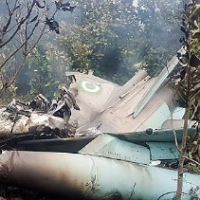
Rights activist, public affairs analyst and Chief Executive Officer of The Dialogue, Shehu Muhammad, has questioned the continued occurrence of military aircraft crashes despite the huge budgetary allocations to the country’s defence and security sector.
Muhammad spoke while reacting to the recent Nigerian Navy aircraft crash in Irele Local Government Area of Ondo State during an interview on Channels Television’s The Morning Brief.
Describing the incident as “one incident too many,” he recalled that Nigeria had recorded several military aircraft crashes involving the Nigerian Air Force and Nigerian Army over the years.
RELATED NEWS: Military Gear Found at Ondo Crash Site as Helicopter Burns to Rubble
He said the recurring incidents had raised concerns among members of the public about the condition of military aircraft and the process through which military hardware is procured.
“People have begun to cast aspersions as to the honesty, sincerity, and openness in the purchase of military hardware, including airplanes,” Muhammad said.
According to him, the concerns are heightened by the substantial funds allocated to the military and other security agencies over the years.
“There are insinuations by the public that, after all, the military receive the highest amount of money from the budget year in, year out,” he said.
Muhammad also questioned the transparency of defence procurement, particularly the process of selecting contractors for the supply of military equipment.
He argued that the repeated crashes should prompt authorities to examine military aviation operations, aircraft procurement and the management of defence resources.
The latest crash occurred in Irele, Ondo State, with recovery efforts reportedly complicated by the difficult terrain around the crash site.
Muhammad said the latest incident should not be treated in isolation, but should lead to broader questions about military aviation safety and the management of resources allocated to the defence sector.
He called for greater transparency and accountability in the procurement and management of military hardware to restore public confidence.

Rights activist and public affairs analyst, Shehu Mohammed, has called for the scrapping of the National Youth Service Corps (NYSC), saying the scheme has outlived its usefulness amid growing security concerns across the country.
Shehu made the call on Wednesday during an interview on Channels Television’s The Morning Brief, while reacting to the kidnapping of prospective corps members travelling to orientation camps in Akwa Ibom and Anambra states.
He described the incident as “one incident too many,” noting that kidnapping, maiming and the detention of victims in kidnappers’ camps had become frequent in several parts of the country.
SEE ALSO: 2027: North Should Back South-West To Complete 8 Years In Power — Shehu Sani
“I think it is just a case of one incident too many. There are more unreported cases of kidnapping and maiming and detention in kidnappers’ den, almost all over the country, especially in the northern part of the country: the Middle North West, North East, and North Central. It’s a daily, daily happening,” Sani said.
He said the security situation had made him question the continued relevance of the NYSC scheme, which was established to promote national unity.
“When Bukola was saying that she objects to the scrapping of NYSC, I tend to take a different view. My view is that the entire NYSC was meant to unite Nigeria, but if in uniting Nigeria you lose your daughter, you lose your son, you lose your uncle, you lose your sister, you lose your neighbour, then it’s not worth the trouble,” he said.
Shehu argued that corps members should instead be allowed to serve in their respective states, eliminating the need for young Nigerians to travel long distances to orientation camps.
“This NYSC issue should be scrapped, removed from the constitution, allow each and every corps member to serve in his own state, traveling with all the dangers, with all the costs,” he said.
He also highlighted the financial burden placed on families when corps members are posted far from their home states.
“If a child is going from Katsina to Anambra State to report to the camp, minimum that you give him is three hundred thousand naira for transfer cost, three hundred. How many parents have three hundred thousand naira to give their wards?” Sani asked.
He said the financial burden was only one aspect of the problem, with corps members also facing security risks and possible trauma during interstate travel.
“Minus all the dangers, the consequences, the uncertainties, the traumas involved. If your child has to go through a trauma, through uncertainty, through pain, through kidnapping, through raping, eventually through killing, why do you have to go for NYSC?” he said.
“As far as I’m concerned, the NYSC project has outlived its usefulness. It should be scrapped.”
Shehu also warned that kidnapping in Nigeria was taking a new dimension, with criminal groups increasingly targeting vulnerable groups.
“Corps members are vulnerable groups. Travelers for commercial purposes all over the country are vulnerable groups. Therefore they are now going for soft targets,” he said.
According to him, kidnappers also use abductions to blackmail victims’ families and government authorities into paying ransom.
“The next one is blackmailing either the parents or blackmailing government to collect money,” he said.
Sani alleged that ransom payments were subsequently used to finance criminal activities.
“So they can finance their arm purchase. They can finance their purchase of hard drugs to enable them operate without pity and compassion, and to send permanent fear into the community,” he said.
He added that the kidnappers were using their activities to create fear within communities, despite being relatively few in number.






IPO: ADF Opens Wealth Creation Pathway for 2m Vulnerable Nigerian Women

2027: Tinubu Will Beat Atiku, Obi by Wide Margin, Says Bwala

‘Dem Dey Use Stick Dey Flog Women’ — Nigerians in India Camp Cry Out

2027: I’ll Bring Petrol Price Down to ₦300, Says Donald Duke
2027: INEC Must Prove Nigerians Wrong on Election Credibility — Donald Duke

‘Military Gets Huge Budgets, Yet Air Crashes Persist’ — Shehu Muhammad

Trump’s Family Unveils New Cryptocurrency Platform

Senate Denies Receiving Petitions Against Tinubu’s Ambassadorial Nominees

Dangote Cement Lights Up Benue Host Communities With CSR Initiatives

Reps Recommend 3-year Jail Term For Aviation minister

Tems Sets New Record On Billboard Hot 100 Chart
