
NEWS
Muslim-Muslim Ticket: I won’t vote for Tinubu – Onaiyekan

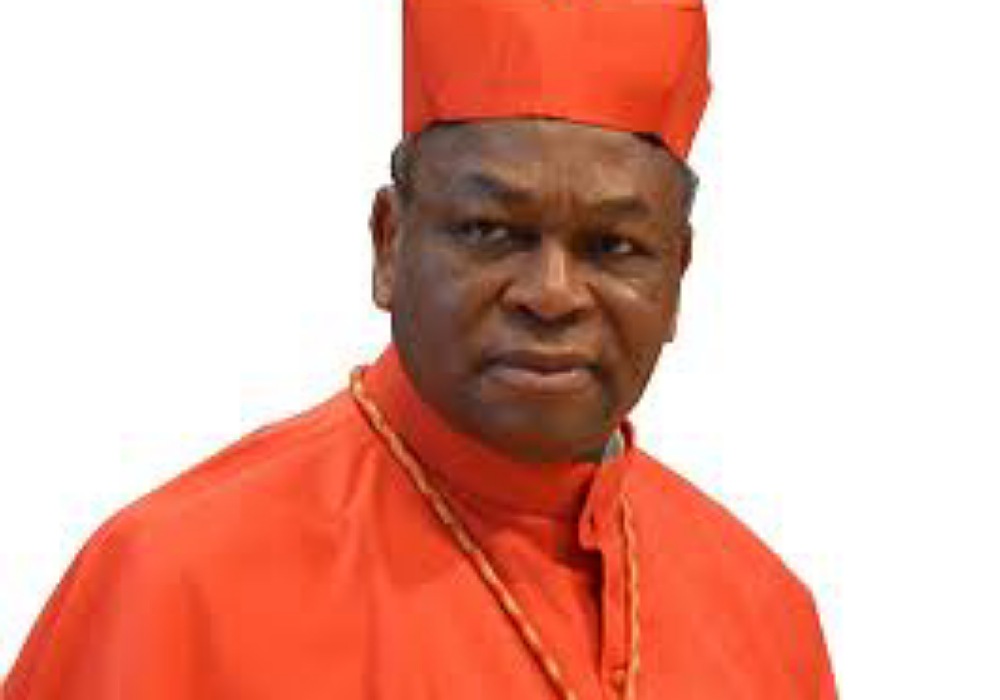
By Funmilayo Olusanya
The Archbishop Emeritus of Abuja, His Eminence, John Cardinal Onaiyekan, has declared that he would not support the All Progressives Congress, APC, presidential candidate, Asiwaju Bola Tinubu, due to the party’s choice to run a Muslim-Muslim ticket in 2023 general elections.
Onaiyekan disclosed this on Wednesday at the ongoing First Synod of the Catholic Diocese of Osogbo at St. Kizito Pastoral Centre, Ede, Osun State.
The synod themed “The Church as an Agent of Dialogue and Reconciliation In Our Community In Quest For a Just and Peaceful Social Order,” was graced by Sheik, Bishops and Traditionalist of Osun.
Read also>>>LP Accuses APC Of Unprovoked Gun Attacks On Supporters In Ebonyi
He said that his decision to abstain from voting for the APC was a personal one and emphasized that every Nigerian, including Christians, would have to make their own choice on which political party to support, that the Catholic Church would not order members to vote for a particular political party.
He added that the APC’s decision to run a Muslim-Muslim ticket was the best way for it to win elections and that Nigerians also had a choice as to whether or not to support the party.
In his words: “The reason is that Muslim/Muslim ticket is a political decision taken by APC as a party on the calculation that is their best way to win the election or assure their victory in 2023 General Election.
“There is no point telling them not to take such decision, all you can say is that, they will have to accept responsibility for the decision they have taken. I only have one voter’s card and by God’s grace I will use it. I will definitely not vote for Muslim/Muslim ticket, that is my decision.
“But since is a political decision of a political party, what the church can do officially is bring out this fact and tell people that they should take their political decision accordingly. When the APC election leadership appointed Governor of Plateau state, Solomon Lalong as the Director of Campaign of APC who is a Catholic, he took the decision politically.
“The only time when we called him to order was when he dragged the name of Pope into the appointment and political discussion, he tendered his apologised which was accepted by use because he is a member of Papa knight.
“APC is still considered as a legitimate party in Nigeria. Many Catholic are in APC not only as members but hold vital positions. According to our church we not involved in partisan politics.”
Meanwhile, the grand Imam of Osogbo, Alhaji Sheik Musa Animashahun represented by Sheik Abdulsalam Akinwumi stressed the need to create a friendly atmosphere between Muslims and Christians so as to bring peace to the country.
In his words: “God sent religion to bring peace. Islam means peace and Jesus Christ is an apostle of peace, which means what our Lord requested from us is absolute peace. As I congratulate you, I hereby, enjoin everyone here today and other memners of the faithful as am enjoining my fellow Muslims in the state to trail the path of peace and be our brothers’ keepers at all times.
“True practice of Godly religion doesn’t bring negative sentiments of hatred, victimization of others. Unconditional love is central in Abrahamic religions. “Love your neighbor as you love yourself” is a central command the Scriptures of both Christianity and Islam.




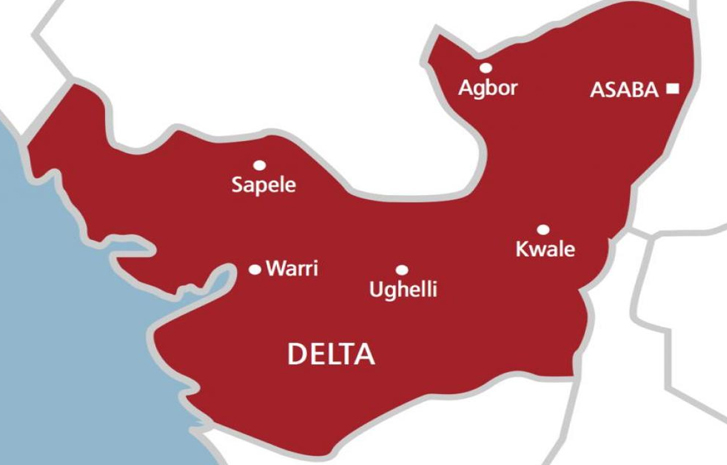
Former Delta State Governor, Dr Emmanuel Uduaghan, has reportedly died, according to sources said to be close to his family.
The sources confirmed the development on Monday, October 19, 2026, although details surrounding the circumstances of his death remained unclear as of the time of filing this report.
“Uduaghan is no more; he is dead,” one of the sources reportedly said.
SEE ALSO: Document reveals Akpoti-Uduaghan demanded N10b damages from husband before marriage, firm reacts
The reported death comes months after claims that the former governor had died circulated on social media before being dismissed by his media aide, Henry Unini.
In June, reports of Uduaghan’s alleged death spread across Facebook and WhatsApp, prompting Unini to publicly debunk the claims and assure the public that the former governor was alive.
“I can tell you for a fact that Dr. Emmanuel Uduaghan is alive,” Unini said at the time.
“Frankly, I don’t know where the writer got his information from. The death of someone is not something you take and write about casually,” he added.
Unini acknowledged at the time that Uduaghan had been experiencing health challenges but maintained that he was receiving medical attention.
“It is now common knowledge that Dr. Emmanuel Uduaghan has been sick, but he is receiving proper medical care,” the media aide said.
He also stated that the former governor was recuperating, assuring the public that there was no immediate cause for concern.
“There is no cause for alarm whatsoever,” Unini said.
The media aide thanked friends, well-wishers and residents of Delta State who contacted the family to verify the former governor’s condition. He also urged the public to avoid spreading unverified information.
“The rumour was uncalled for,” he said while addressing the earlier reports.
As of the time of filing this report, further details about the circumstances surrounding Uduaghan’s reported death had yet to emerge.
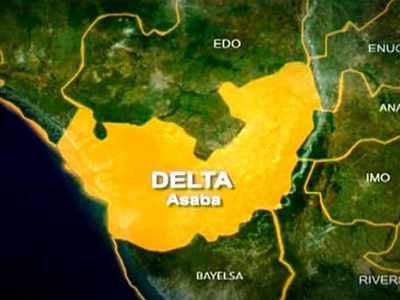
The Delta State Government has commenced a ₦5 billion grassroots empowerment programme targeting 100,000 small-scale business owners and other beneficiaries across the state’s 500 wards.
The initiative, announced on Monday, will see each beneficiary receive ₦50,000 to support small businesses, strengthen household finances and stimulate economic activities across the state.
SEE ALSO: Two Arrested as Delta Police Uncover Cache of Illegal Weapons
The Executive Assistant to the Governor on Public Enlightenment (Projects and Policies), Mr Olisa Ifeajika, disclosed this while speaking with journalists in Asaba.
Ifeajika explained that the programme was designed to complement the state government’s investments in critical infrastructure with direct financial assistance to residents.
According to him, Governor Sheriff Oborevwori directed local government councillors to facilitate the distribution of the funds, with each of the 500 wards expected to reach at least 200 beneficiaries.
He added that the initiative reflects the administration’s commitment to improving livelihoods and expanding economic opportunities for Deltans, in line with the people-centred objectives of the MORE Agenda.
The Minister of Education, Dr Maruf Tunji Alausa, has commended Alhaji Aliko Dangote and the Aliko Dangote Foundation for plans to acquire Initial Public Offering (IPO) shares of Dangote Refinery on behalf of eligible Nigerian tertiary institution students.
Alausa described the initiative as an innovative approach to promoting financial literacy, youth empowerment and wealth creation among young Nigerians.
According to a press release issued by the Federal Ministry of Education on Monday, October 19, 2026, the initiative is expected to benefit up to four million students aged 18 and above, with each eligible student expected to receive 10 IPO shares without requiring prior investment or share purchase.
The minister said the programme would expose students to capital markets, responsible investing and long-term financial planning, preparing them for greater economic participation and financial independence.
He noted that the initiative aligns with the Nigeria Education Sector Renewal Initiative (NESRI) and President Bola Ahmed Tinubu’s Renewed Hope Agenda by connecting education with enterprise, human capital development and inclusive economic growth.
According to Alausa, the initiative reflects the importance of partnerships between the education sector and private organisations in equipping young Nigerians with the knowledge and skills needed to participate in the economy.
He said the Federal Ministry of Education remained committed to strengthening private-sector partnerships to improve educational quality, relevance, equity and efficiency while preparing learners for a changing economy.
While appreciating the foundation’s contribution to youth development, the minister clarified that the ministry’s commendation was based on the initiative’s educational and developmental value.
He stressed that the ministry’s position “does not constitute an endorsement of any particular investment decision.”
Alausa also encouraged other corporate organisations to support similar initiatives that promote financial awareness, economic productivity and entrepreneurship among young Nigerians.
He urged businesses to support NESRI and the Renewed Hope Agenda in building a financially informed and economically productive generation.






JUST IN: Ex-Delta Governor Emmanuel Uduaghan Is Dead

Delta Begins ₦5bn Empowerment Scheme for 100,000 Beneficiaries
Alausa Hails Dangote Foundation’s Plan to Give Four Million Students IPO Shares
APC Campaign Council Sets Inaugural Meeting for Tuesday Ahead of Kaduna Flag-Off

Renaissance Capital Sees Significant Upside in Dangote Refinery, Lifts Valuation by 33.4%

Dangote Refinery IPO Elicits Participation in 90 Countries Globally

Trump’s Family Unveils New Cryptocurrency Platform

Senate Denies Receiving Petitions Against Tinubu’s Ambassadorial Nominees

Dangote Cement Lights Up Benue Host Communities With CSR Initiatives

Reps Recommend 3-year Jail Term For Aviation minister

Tems Sets New Record On Billboard Hot 100 Chart
