
Energy
National Honours: Wabote Lauds Sylva for Transforming Oil & Gas industry

By Paul Eso
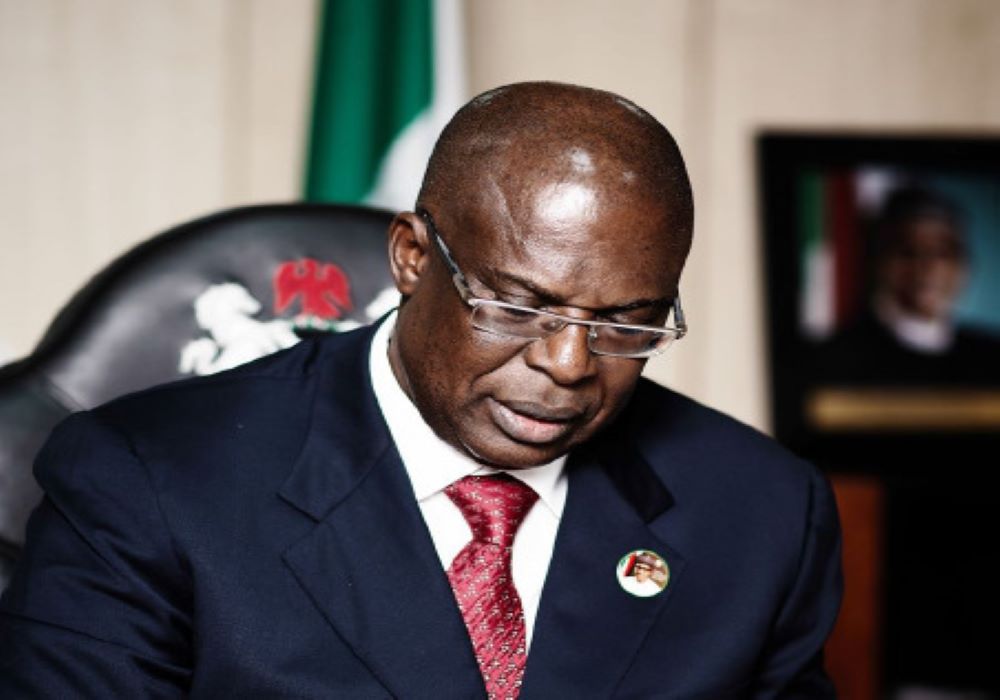
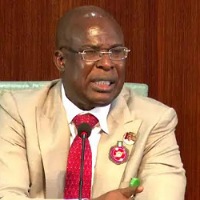
The Executive Secretary of the Nigerian Content Development and Monitoring Board (NCDMB), has lauded the Minister of State for Petroleum Resources, Chief Timipre Sylva, on the national honour of the Commander of the Order of the Niger (CON) conferred on him by President Muhammadu Buhari on Tuesday.
In a statement he personally signed, the Executive Secretary noted that Sylva who was appointed in 2019 was fully deserving of the honour having worked tirelessly to change the Nigerian oil and gas landscape and recorded several accomplishments, which had improved the economy of the nation.
He listed some of the notable achievements of the Minister to include working with the National Assembly for the passage of the Petroleum Industry Bill (PIB), which was signed into law by President Muhammadu Buhari on August 16, 2021, to become the Petroleum Industry Act (2021); the initiation and launching of the Decade of Gas Initiative in 2020 and the National Gas Expansion Program (NGEP), which is aimed at improving domestic LPG consumption and deepening the use of alternative fuels such as CNG for vehicular use.
Read also>>>FG approves N27bn for construction of Kishi-Kaima Road
He added that the NGEP promotes the use of cleaner and cheaper fuels and ensures that the impact of subsidy removal from Premium Motor Spirit (PMS) is minimal.
Other achievements of the minister included improving the harmonized data reporting to Organization of the Petroleum Exporting Countries (OPEC) and provision of comprehensive technical support for Nigeria’s representation at OPEC and ensuring that the Federal Government took the Final Investment Decision (FID) that led to the development of the $7bn NLNG Train 7 project and championing Africa’s position for a multi-dimensional approach to energy transition using gas as a transition fuel.
The Minister also championed the removal of fuel subsidy so that the proceeds could be channeled towards national development, championing the rehabilitation of the three refineries in Nigeria: Port Harcourt, Warri and Kaduna to guarantee in-country refining and petroleum products sufficiency in the country and leading the drive for the distribution of Covid-19 palliatives by the oil and gas sector to states and institutions during the Covid lockdown in the country.
Wabote listed other accomplishments of the Minister to include pushing for the resuscitation of the Brass LNG project abandoned over 17 years ago by sourcing for new investors, launching the Nigerian Gas Transportation Network Code (NGTNC) program. The code ensures fair and non-discriminatory open access to the gas transmission network systems in order to promote competitiveness and drive economic growth.
He added that the Minister conceived the Nigerian Gas Flare Commercialization Program (NGFCP) to support Nigeria’s effort to achieve zero routine flaring by taking gas at flare and auctioning same to third parties for commercialization in order to eliminate environmental pollution and worked for the progressive increase in national gas reserve position to the current 206.53 trillion cubic feet (TCF) to support government’s gas revolution and expansion programs and worked to ensure the completion of the NCDMB 17- storey headquarters building in Yenagoa, Bayelsa State.
He also credited the Minister with actively working with NCDMB to ensure the establishment of modular refineries in the Niger Delta, actively working with NCDMB for the establishment of Oil and Gas Industrial parks in some oil producing states in the country, working with NCDMB to establish LPG Distribution centers in 10 Northern States of the country, as part of the Nigeria Gas Expansion program and serving as chairman of the African Petroleum Producers Orgaisation (APPO) and ensuring the revitalization of the organization to better position African oil producing countries.









The appetite for improving access to capital for indigenous oil and gas contractors, strengthening the capacity of Nigerian businesses to execute critical energy projects and contribute to the country’s production ambitions, has seen the Renaissance Africa Energy Company Limited (‘Renaissance’) go into a strategic financing partnership with Sterling Bank Limited.
The partnership, formalised through a Memorandum of Understanding (MoU), brings Sterling Bank into the renewed Renaissance Vendor Financing Scheme (RVFS), a structured financing programme designed to address one of the longstanding challenges confronting indigenous service providers in Nigeria’s oil and gas industry: access to timely and affordable funding for contract execution.
READ ALSO: Group Demands Fair Share of NNPC Jobs for Ogoni Oil Exploration
The expanded programme brings together 13 financial institutions with combined financing commitments of $4.1 billion and ₦435 billion, creating a substantial pool of capital to support eligible contractors delivering projects for Renaissance, operator of the former Shell Petroleum Development Company (SPDC) joint venture assets.
Speaking on its participation, Dele Faseemo, Group Executive, Corporate and Investment Banking at Sterling Bank, described the partnership as an important opportunity to connect financial capacity with productive enterprise in one of Nigeria’s most strategically important sectors.
“At Sterling Bank, we believe financing should enable capable businesses to deliver, grow and compete. Our participation in the Renaissance Vendor Financing Scheme reflects that conviction. By providing structured funding to qualified contractors, we are supporting the businesses that keep the energy value chain moving, strengthening Nigerian content participation and contributing to the broader objective of increasing the country’s productive capacity,” Faseemo said.
For many indigenous contractors, securing a major contract represents only the first step towards business growth. The ability to mobilise equipment, procure materials, retain skilled personnel and meet demanding project timelines often depends on access to adequate working capital. Financing constraints can therefore limit the capacity of otherwise qualified businesses to execute contracts, scale their operations and participate more meaningfully in the energy value chain.
Through the RVFS, participating financial institutions will provide structured financing to eligible contractors against confirmed contracts awarded by Renaissance, subject to applicable credit assessment and approval processes. The arrangement is intended to ease funding pressures, improve project execution and strengthen the financial capacity of indigenous service providers.
Tony Attah, Managing Director and Chief Executive Officer of Renaissance Africa Energy Company Limited, highlighted the importance of the financing arrangement to the company’s growth ambitions.
“What we’ve been able to achieve as Renaissance is to go into that partnership with these incredible 13 banks who have come up to support this vendor scheme at over $4 billion and over ₦435 billion funds available for the vendors to be able to support us in our growth agenda,” Attah said.
He further emphasised the financial advantage the scheme offers participating contractors, noting that, “The interest rate that the banks are offering to the contractors is very competitive, and it is certainly better than the vendors going out to the respective banks on their own.”
The Renaissance Vendor Financing Scheme builds on a contractor financing programme established in 2010, which has evolved over the years to support local service providers executing projects across the oil and gas value chain. Its latest expansion comes as Renaissance pursues an ambitious growth strategy, including its aspiration to achieve production of one million barrels of oil equivalent per day by 2030.
Delivering on this ambition will require sustained investment not only in upstream production assets but also in the network of engineering firms, equipment suppliers, logistics providers, technical specialists and other indigenous businesses whose services are essential to operational performance.
With an established presence in corporate banking and energy sector financing, Sterling Bank continues to support businesses operating across critical segments of the Nigerian economy through tailored financial solutions, strategic partnerships and sector-specific expertise.
The collaboration reinforces the Bank’s commitment to supporting indigenous enterprise development, strengthening local capacity and financing productive economic activity, while contributing to efforts to improve Nigeria’s energy security and long-term industrial competitiveness.
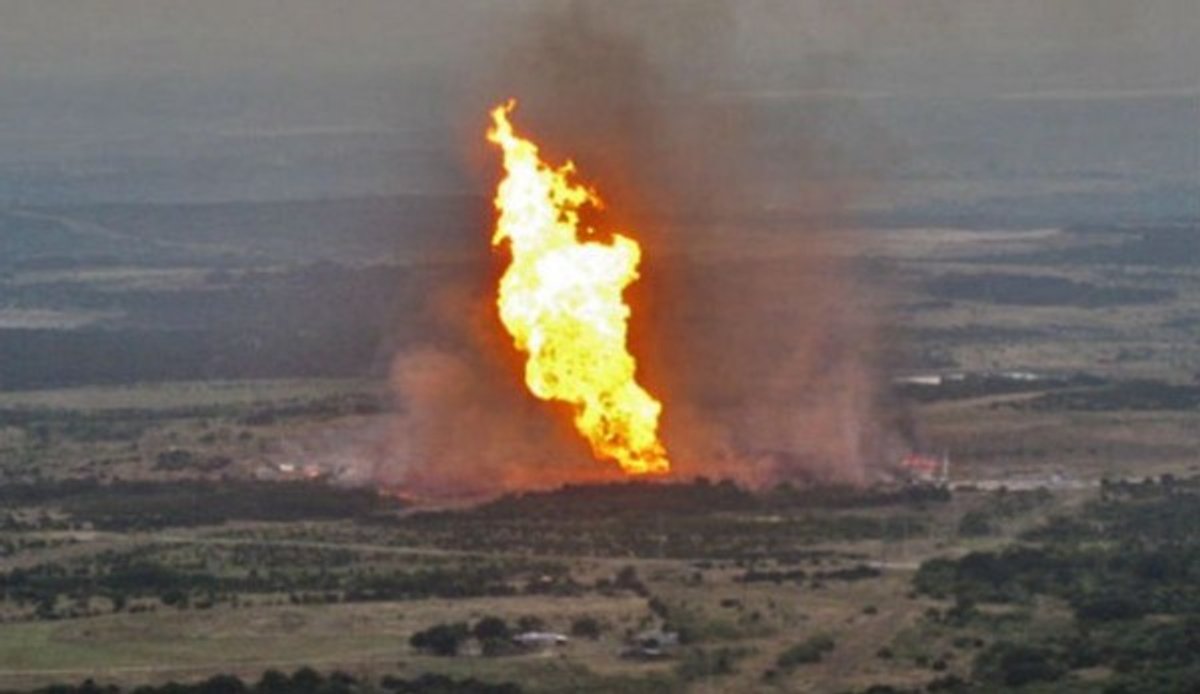
The Niger Delta Youths are primed to assume national responsibilities in critical areas of the economy by protecting vital oil and gas assets in the region.
The United Niger Delta Congress (UNDC) gave the assurance at a media briefing in Abuja, over the weekend, adding that the youths of Niger Delta were ready to work with the federal government in this regard.
The group maintained that youths in the region have shown that such responsibilities, including the security of pipelines, can be entrusted to them.
Speaking at the news conference, Niger Delta Youth activist, Mallam Julius Obi, said the Niger Delta is safer while the nation’s crude is flowing based on the fact that youths in the region are doing the job.
He said that being a youth should not be a disqualification from strategic national assignments but when matched with preparation and character, a national asset.
“We are calling on the federal government to note that Nigeria is full of young men and women who are prepared, disciplined and ready to carry out national responsibilities.
“We urge the federal government to keep opening the doors of strategic national service to young Nigerians who have earned trust the only way it can be earned, by delivery,” Obi said.
READ ALSO: JUST IN: Ex-Delta Governor Emmanuel Uduaghan Is Dead
The group commended President Bola Tinubu for sustaining the security reforms in the oil and gas industry and the the National Security Adviser (NSA), Mallam Nuhu Ribadu, for coordinating the protection of the nation’s pipelines, and the management of NNPCL for providing the enabling environment.

Joseph Ambakederimo, convener of the South-South Reawakening Group, has questioned the accountability of Nigeria’s crude oil forward sales, demanding clarification on the volume of crude lifted, outstanding balances and the use of upfront payments.
Speaking during an interview on Arise TV on Sunday, Ambakederimo expressed concern over the monitoring of crude oil transactions, questioning who was responsible for tracking deliveries and providing feedback on the arrangements.
“We don’t even know who is monitoring and giving us the feedback of the barrels of crude that have been lifted on forward sales basis,” he said.
SEE MORE: South-South Group Opposes Coastal Road Alignment With East-West Road
He challenged the Nigerian National Petroleum Company Limited (NNPC) to provide details of the transactions, including the quantity of crude already lifted, the outstanding balance and whether the agreed deliveries had been completed.
“Today, can we get this from NNPC? How much have they lifted? What is the balance remaining? Have they been completed?” he asked.
Ambakederimo also questioned how the money collected upfront under the arrangements had been spent, demanding an explanation of its use.
“That money that was collected upfront, what was the use of the money? Can you justify it?” he asked.
He argued that Nigeria should make better use of its natural resources to accelerate infrastructure development and improve living conditions.
Citing land reclamation projects in the United Arab Emirates, Ambakederimo said Nigeria could explore similar opportunities to create additional land for residential and other developments.
He recalled seeing a signpost while travelling from Dubai to Abu Dhabi describing a project to reclaim land from the sea, using the example to highlight the development possibilities he believes Nigeria could explore.
The South-South Reawakening Group convener also argued that Nigeria could reclaim land in suitable areas, provided environmental concerns were properly managed.
He called for the country to translate its natural resource wealth into infrastructure and improved living conditions, stressing the need for greater accountability in crude oil transactions.






Dangote Preaches Ambition, Africa First to Nigerian Creatives

Protest Against Oil Company’s Vessel in Rivers Takes 10 Lives

FRSC Warns Drivers After Brake Failure Kills Two in Kano Crash

AAC Seeks Tinubu’s Approval, Logistical Support for 5,000 at Campaign Event

Renaissance, Sterling Bank Back Indigenous Oil and Gas Contractors Financially
Group Demands Fair Share of NNPC Jobs for Ogoni Oil Exploration

Trump’s Family Unveils New Cryptocurrency Platform

Senate Denies Receiving Petitions Against Tinubu’s Ambassadorial Nominees

Dangote Cement Lights Up Benue Host Communities With CSR Initiatives

Reps Recommend 3-year Jail Term For Aviation minister

Tems Sets New Record On Billboard Hot 100 Chart
