
Business
NCDMB Boss Elucidate Role Of NCCF

Modupe Asudo
Indigenous operators and service companies in the oil and gas industry have been advised to identify with appropriate Sectoral Working Groups under the Nigerian Content Consultative Forum (NCCF) to be able to receive adequate attention on operational difficulties of whatever nature.
The Forum, established to “identify issues and responsibilities, and propose interventions that can address issues and harness opportunities,” has helped many indigenous companies to find their footing in the industry.
These were part of the explanations provided by the Executive Secretary of the Board, Engr. Simbi Kesiye Wabote, on Day 3 of the ongoing Practical Nigerian Content Conference, holding in Uyo, Akwa Ibom State while responding to a question by a participant on how challenges confronting a member could be resolved.
The NCDMB boss advised any such business owners not to hesitate to approach the NCCF.
It was a day that energy sector chief executives subjected the oil and gas industry regulatory framework and the enabling statute, Nigerian Oil and Gas Industry Content Development (NOGIC) Act, 2010, to critical evaluation, commending the implementing agency, the NCDMB, for phenomenal success in actualising objectives.
The energy chiefs were specifically interested in how what is known in industry as ‘The 7 Ministerial Regulations’ has impacted on oil and gas operations and, generally, how implementation of the Act has advanced objectives such as enhanced Nigerian content and value addition through sectoral and regional linkages.
All were in agreement with the explanation of a legal expert, Barrister Ilu Ozekhome, that “The regulations are a framework within which provisions of the Act could be enforced.” Preparatory work on the regulations had gone through several processes in which stakeholders had been fully engaged.
The Chairman, Petroleum Technology Association of Nigeria (PETAN), Nigerian Content Consultative Forum (NCCF), and member, Oil and Gas Trainers Association of Nigeria (OGTAN), Mr. Akin W. Osuntoki, noted that “The regulations have helped in building capacity” in the oil and gas industry.
He pointed out that with effectiveness and efficiency in enforcement of the regulations, indigenous companies found all the space and material support to grow their capacities and capabilities.
According to him, “The role of the NCDMB has been very strategic,” and that the Board has been “a referee and gate-keeper.”
Continuing, he added, “Not only is NCDMB able to chart in-country demand, it is able to chart regional demands, and this enables investors to plan and to expand.”
“Today,” he revealed, “PETAN is shaking hands across Africa,” a reference to Nigeria’s service companies now operating as international oil companies (IOCs) through creation of regional linkages.
Another industry chief, Dr. Timi Austen-Peters, Chairman, Fabrication, Nigerian Content Consultative Forum (NCCF) declared: “We are beneficiaries of the [NOGICD] Act,” explaining the many ways effect implementation of the statute has fostered growth among his and other oil and gas companies.
He said cost-savings arising from NCDMB’s approach in ease of doing business enabled to take advantage of business opportunities.
The Managing Director, Tenaris, Mrs. Rosario Osobase, said, “NCDMKB is doing so much in mentoring other African countries” in local content practice. DR. Pius Okigbo, Jnr, Chairman, ICT, NCCF, echoed the views of the other industry chiefs on the successes of the Board.
Other speakers commended the Management of the NCDMB for its Nigerian Oil and Gas Parks Scheme (NOGAPS), which is aimed at creating industrial parks for companies engaged in the manufacture of equipment components, spare parts and tools required in oil and gas industry operations.
The yearly Conference comes to an end on Thursday, 8 December, with site visit to Standard Institute of Technology, a subsidiary of Standard Testing and Inspection Services Limited, Uyo.








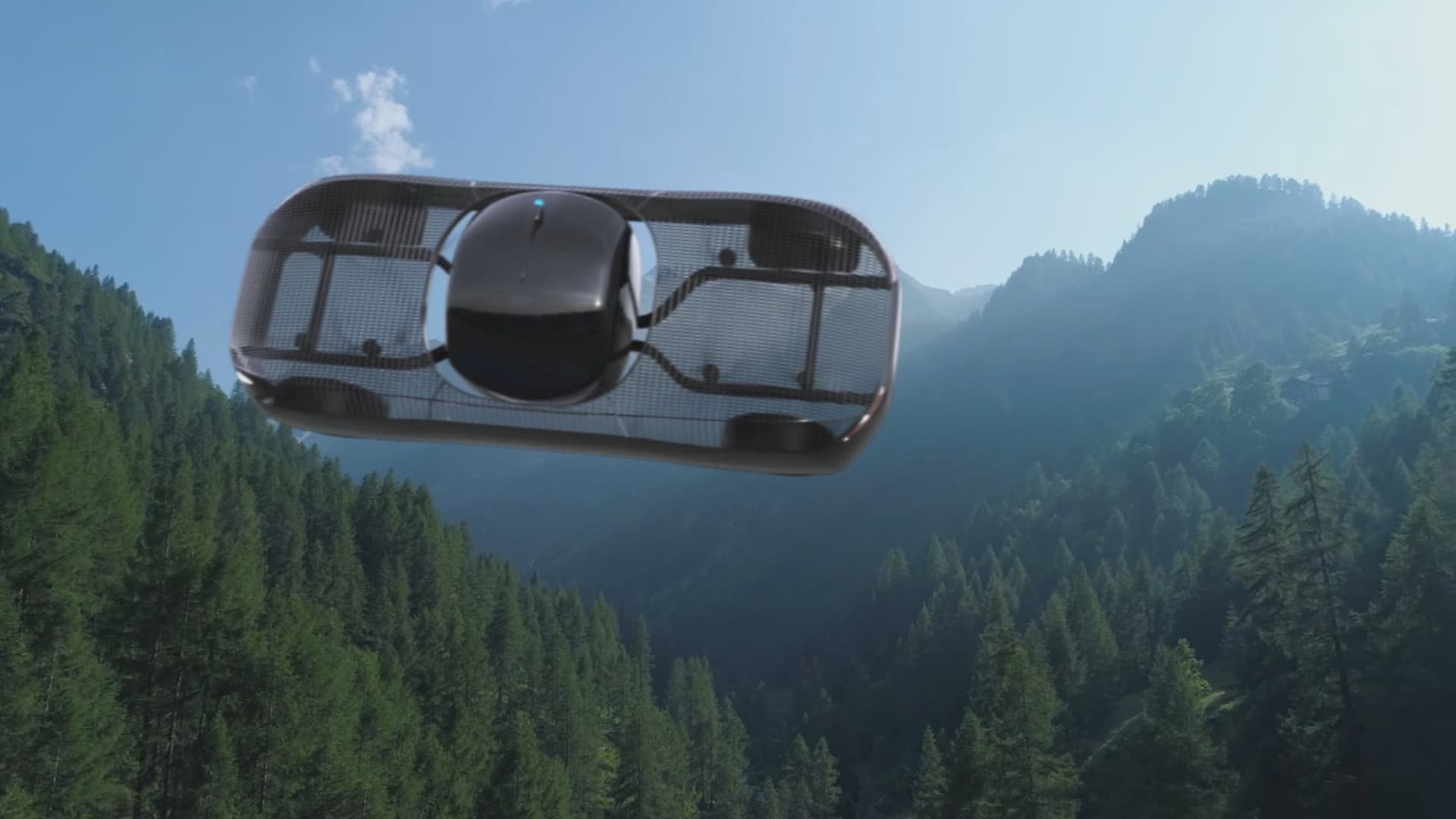
Tesla has set a 2028 commercial production date for its new Roadster sports car that can briefly rise into the air using rocket technology.
According to CNN, the date was revealed when the manufacturers demonstrated its functionality on Thursday at a SpaceX testing facility in Texas, United States, where the two-seater vehicle performed a series of manoeuvres, including driving upside down before making a short airborne movement.
The prototype was operated without a driver during the test, with Musk saying the decision was taken “to make sure we don’t kill anyone.”
“Success is not guaranteed. I mean that. It’ll probably work, but if it doesn’t work, we’re at a safe distance,” he said.
READ ALSO: 2027 Election: ‘Your Future Is More Valuable’ — IGP Warn Youths Against Political Violence
CNN reported that the vehicle uses 10 nozzles and high-pressure air tanks to generate thrust, with Musk claiming it could accelerate from zero to 60 miles per hour in less than a second.
The Tesla boss attributed the development to cooperation between the electric vehicle manufacturer and SpaceX, the rocket company he also leads.
He described the project as “the results of what happens when you have a collaboration with the world’s best car company and the world’s best rocket company.”
Musk also sought to assure spectators that the demonstration was genuine, saying, “We need an audience to prove that it’s not AI or SI. So you guys can tell people you saw it with your eyes, because what you see with your eyes, you will not believe.”
Despite the display, questions remain about whether the vehicle can achieve sustained flight and how practical it would be for everyday transportation.
Roger Conner, curator for vertical flight at the Smithsonian’s National Air and Space Museum, told CNN that combining the requirements of road vehicles and aircraft presented significant engineering challenges.
“Aircraft are extremely sensitive to weight, whereas with ground vehicles you want them to have bumpers and crumple zones and all that,” he said.
“Inevitably, something that is a hybrid between the two is going to be a poor performing aircraft and a poor performing vehicle, and also quite expensive,” he added.
Conner questioned whether the demonstration amounted to flying in the conventional sense.
“We’re not talking about sustained flight. We are literally talking about hopping,” he said.
However, Jim Dukhovny, chief executive of flying car startup Alef, said the technology was achievable, while pointing to the difficulties involved in making such vehicles transition safely from vertical take-off to forward flight.
“It absolutely is 100% feasible,” he told CNN.
“That being said, the hardest part on all eVTOLs, and for us, it’s a transition from (rising) vertical to (moving) forward. It needs to be extremely careful, making sure you do not lose lift, and making sure it’s very stable,” he added.
CNN also reported that Alef’s prototype weighs about 254 pounds, uses eight propellers and is designed to carry one person.
Musk said Tesla intended to begin production of the new Roadster in 2028.
CNN reported that the latest display adds to Musk’s ambitions to push Tesla’s vehicle technology beyond conventional electric cars, although the prototype’s ability to operate as a practical flying vehicle has yet to be established.
The Petroleum Products Retail Outlets Owners Association of Nigeria (PETROAN) has urged the Federal Government to add its member-stations to the petrol discount programme.
It cautioned that the current arrangement could limit the reach and deny vast consumers in underserved communities the benefits of the 30-day discount window.
The PETROAN also urged the FG to allocate at least 30 percent of the discounted petrol volume to outlets operated by its members.
READ ALSO: Tanzania Nears Completion of $42bn Equinor, Shell-Led LNG Project
The calls followed last week’s announcement by the Minister of Finance and Coordinating Minister of the Economy, Taiwo Oyedele, of a petrol discount at Nigerian National Petroleum Company Limited (NNPC Ltd) retail outlets, with priority given to public transport operators nationwide.
According to the National Publicity Secretary, Independent Petroleum Marketers Association of Nigeria (IPMAN), Chinedu Ukadike, the exclusion of independent marketers could undermine the programme’s effectiveness, particularly in communities where NNPC retail outlets have limited presence.
He argued that independent marketers, with their extensive nationwide distribution networks, were better positioned to extend the benefits of the intervention to consumers in remote and underserved areas.
“Independent oil marketers have over 90 percent coverage and presence in the nooks and crannies of this country. You are giving NNPC that is situated only in the town. So how do the poor masses, whom you intend to ensure that this petroleum product will alleviate their sufferings, how would they now get it?” Ukadike asked.
He said the association was not opposed to the government’s policy but insisted that independent marketers should be included to ensure wider access to the discounted product.
“But it’s government policies; we are not against government policies, but let it be all-inclusive; let independent marketers be part of it,” he said.
Ukadike also urged the government to extend the discount period to 60 days, citing logistical challenges that could delay the movement of petrol from coastal depots to other parts of the country.
“And the 30 days should be extended to 60 days. Because of the circulation of petroleum products, most times it takes two weeks for a truck to leave Apapa and get to Gombe, Maiduguri, because of the bad road and all the rest of them and loading process,” he added.
Similarly, PETROAN National President, Billy Gillis-Harry, urged the Federal Government to allocate 30 per cent of the discounted petrol volume to the association’s retail outlets to facilitate broader national distribution.
In the bid to transform Tanzania into the East African regional energy hub, the country is on the verge of concluding an agreement with a consortium of energy companies, including a $42 billion LNG project.
It was gathered that the project is designed to tap the 47.13 tcf of gas discovered in Tanzania’s deep offshore fields, part of the country’s estimated 57.54 tcf in total discovered reserves, the sixth-largest in Africa, behind Nigeria, Algeria, Senegal, Mozambique and Egypt.
READ ALSO: Shell Identifies Keys to Nigeria’s Energy Future
Equinor and Shell would be the lead operators, alongside involvement from ExxonMobil Pavilion Energy and Medco Energi, while state oil major, the Tanzania Petroleum Development Corporation (TPDC), would also hold an equity stake in the project.
“It’s almost there,” Khamis Mussa Omar, Tanzania’s finance minister, told Reuters.






Showunmi Urges South-East to Judge Tinubu by Projects, Not Propaganda

2027: ‘North Has No Reason to Break Agreement’ — Gov Yusuf Backs Tinubu

Aircraft Averts Crash, After Losing Door Mid-Air in Abuja

Bandits Kill 70-Year-Old Man in Katsina, 27 Victims Rescued

‘Nigeria Is Doomed Under Tinubu’ — Kenneth Okonkwo Backs Atiku for 2027

Lagos: LASTMA Announces Traffic Restrictions Along Route to Toll Gate

Trump’s Family Unveils New Cryptocurrency Platform

Senate Denies Receiving Petitions Against Tinubu’s Ambassadorial Nominees

Dangote Cement Lights Up Benue Host Communities With CSR Initiatives

Reps Recommend 3-year Jail Term For Aviation minister

Tems Sets New Record On Billboard Hot 100 Chart
