
Energy
NCDMB Partners ACAN on Zero-tolerance for Corruption in Workplace

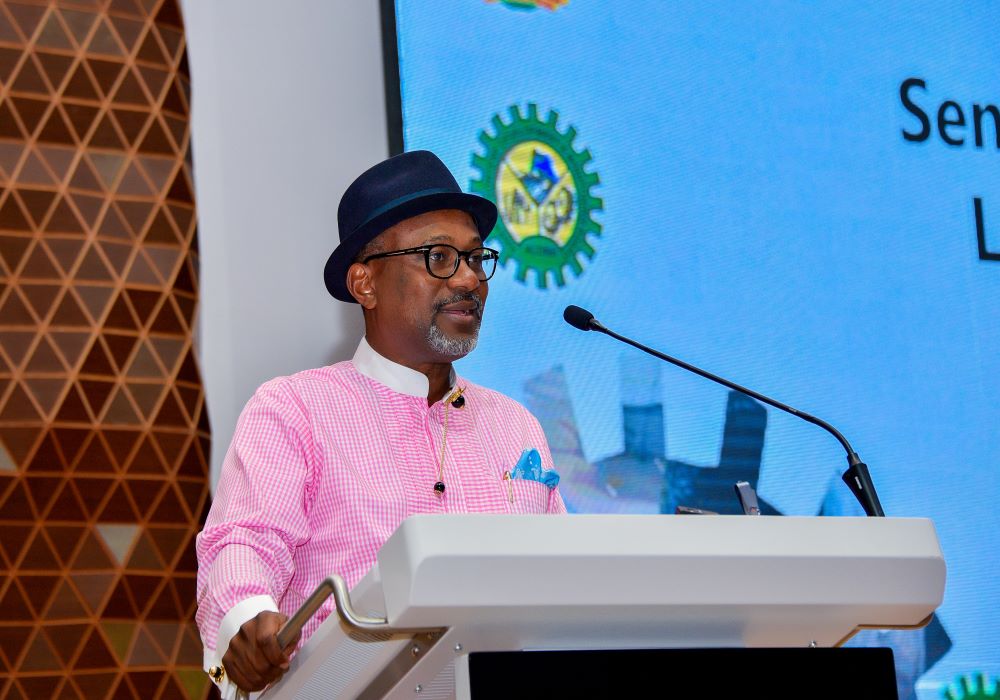
The Nigerian Content Development and Monitoring Board (NCDMB) and the Anti-Corruption Agency of Nigeria (ACAN) recently concluded a three-day sensitisation workshop on “Achieving Zero-tolerance for Corruption in the Workplace,” with staff educated on the types and potential consequences of corruption as well as appropriate safeguards.
Declaring the workshop open on Day 1, the Executive Secretary of the NCDMB, Engr. Simbi Kesiye Wabote, commended ACAN and its parent body, the Independent Corrupt Practices and Related Offences Commission (ICPC) for extending the anti-corruption campaign to ministries, departments and agencies (MDAs).
He said the initiative was very welcome at the NCDMB, which has signified its approval and support of the campaign by launching its own outfit known as NCDMB-Anti-Corruption and Transparency Unit (ACTU), which is a distinct unit and now functional.
The Executive Secretary, who was represented by the NCDMB Director of Monitoring and Evaluation, Mr. Akintunde Adelana, pledged the continued support of the Board for the anti-corruption drive, while urging all staff to make the best of the workshop. Mr. Adelana doubles as Chairman of NCDMB-ACTU.
The ICPC Chairman, Professor Bolaji Owasanoye, expressed appreciation for the principled stance of the NCDMB Management on zero-tolerance for corruption in the workplace and for support for the anti-corruption drive of the Commission. He recalled that earlier in the year, NCDMB-ACTU was fully involved in a similar one-week sensitisation workshop organised by the Commission in Abuja.
Represented by the Provost of ACAN, Professor Olatunde Babawale, the ICPC boss lamented that “Corruption is at the heart of the underdevelopment of the country” and would have to be combated effectively to give a new lease of life to the society.
He noted “The critical role that NCDMB plays in the oil and gas industry,” pointing out the necessity “to sanitise procedures” in that sector. According to him, “when corruption is taken out of the processes the industry is healthier and that would be to the good of the country.”
Sub-themes of the sensitisation workshop were “Tackling Workplace Corruption – The Role of NCDMB-ACTU,” “Eradicating Corruption in the Workplace: A Behavioural Change Approach,” “Overview of National Integrity Laws and the Implications for Organisational Integrity, ”Strategies for Achieving Zero-Tolerance for Corruption in the Workplace.” Resource persons were Professor Olatunde Babawale, Mr. G.N. Bako, and Mr. Richard A. Bello.
In his presentation on “Eradicating Corruption in the Workplace: A Behavioural Change Approach,” Professor Babawale noted that the country is in a dilemma because corruption has persisted despite the multiplicity of laws designed to curb it. According to him a new, complementary approach is required that targets social norms – “unspoken principles and collectively held beliefs.”
He said rather than adore individuals whose sources of wealth are questionable, society should emphasise “norms that care about morals and integrity” and be unequivocal in condemning irresponsible acquisitive behaviour.
On little-known forms of corruption, he referred to gifts from subordinates to superiors, noting that it must not be encouraged. Besides, gifts from persons who have been rendered service should also be rejected by public servants because the giver is “only wetting the ground” for the next job or contract in that office.
Professor Babawale enjoined public officials to avoid “favour reciprocation,” noting that it behoves everyone who stands for integrity “to create a cultural context in which corruption is not acceptable.”
All members of Management and staff, except those on leave or assignments outside, participated in the workshop.



The Nigerian National Petroleum Company Limited NNPC (NNPC Ltd) has announced that it had secured presidential approval for a targeted fiscal incentive package aimed at unlocking the long-delayed Final Investment Decision (FID) on the Bonga Southwest Aparo (BSWA) deepwater project.
This was detailed in a statement in Abuja by NNPC Ltd’s spokesman, Andy Odeh, who stressed that the development is expected to attract about $20 billion in Foreign Direct Investment (FDI) and revive large-scale offshore oil investments in the country.
ALSO READ: Dangote Refinery Cuts Petrol, Diesel Prices
The approval, granted by President Bola Tinubu, it said, is designed to resolve long-standing fiscal and commercial bottlenecks that stalled the project for nearly two decades and pave the way for a major expansion of Nigeria’s deepwater oil production.
The Bonga Southwest Aparo development, operated by Shell through its Nigerian deepwater subsidiary, is expected to deliver about 150,000 barrels of crude oil per day and 140 million standard cubic feet (Scf) of gas daily once fully operational.
According to the statement, the presidential approval followed months of technical and commercial engagements involving the national oil company, the Nigeria Revenue Service (NRS), the Special Adviser to the President on Energy, Olu Verheijen, and the global leadership of Shell.
“His Excellency, President Bola Ahmed Tinubu, has approved a targeted fiscal incentive designed to unlock the long awaited Final Investment Decision (FID) on the Bonga Southwest Aparo (BSWA) deepwater project, marking a milestone in Nigeria’s ongoing drive to attract strategic investments and accelerate sustainable economic growth. The project is estimated to attract about $20 billion in Foreign Direct Investment and position Nigeria for a new era of deepwater production.
“The approval followed months of intensive technical and commercial negotiations involving NNPC Limited as the concessionaire, the Nigeria Revenue Service (NRS), the Special Adviser to the President on Energy, Olu Verheijen, and the Shell CEO Mr. Wael Sawan,” it stated.
According to the statement, it represents the culmination of the President’s directive, issued during a courtesy visit by Shell CEO, Sawan, to fast-track the enablers required to move this strategic national asset to FID. Besides, the national oil company said it signals renewed confidence in Nigeria’s policy direction and its resolve to translate reform momentum into tangible investment outcomes.
The NNPC said the approval represented a significant milestone in Nigeria’s effort to reposition itself as a competitive destination for global energy investment, particularly in the capital-intensive deepwater segment.
Group Chief Executive Officer of NNPC, Bayo Ojulari, described the development as a major breakthrough for the country’s oil and gas sector.
He noted that the project had remained stalled for almost two decades due to fiscal and commercial uncertainties but said the latest approval reflected the government’s commitment to unlocking strategic investments.
Ojulari added that the milestone underscored the company’s commitment to leveraging partnerships with international oil companies to unlock Nigeria’s vast hydrocarbon potential.
“This approval is a testament to the President’s leadership, NNPC’s disciplined execution and our ability to structure complex, bankable transactions that deliver value for Nigeria. For nearly two decades, the Bonga Southwest project remained stalled. Today, under President Tinubu’s reform-driven leadership and through NNPC’s sustained advocacy, we have broken that logjam. This is what partnership, persistence, and policy clarity can achieve.
“This milestone further affirms NNPC’s commitment, under the President’s leadership, to unlocking Nigeria’s vast energy potential through partnerships, disciplined innovation and execution excellence,” the NNPC GCEO stressed.
The Bonga Southwest Aparo project will become the first deepwater final investment decision on a Production Sharing Contract (PSC) asset in Nigeria since 2008, signalling renewed confidence among international investors in the country’s policy environment.
Central to the breakthrough is the fiscal package approved by the President, which includes an enhanced Production Tax Credit as well as the resolution of issues arising from the 2021 dispute settlement agreement between the government and contractors.
The NNPC said the revised fiscal framework was designed to strike a balance between protecting Nigeria’s long-term revenue interests and ensuring the project remains commercially viable for investors.
As concessionaire, the national oil company said it worked closely with Shell Nigeria Exploration and Production Company (SNEPCo) and other contractor parties to design alternative fiscal structures capable of addressing structural challenges that had hindered progress on the project.
The proposal subsequently underwent evaluation by the NRS before recommendations were forwarded to the presidency for final approval. NNPC noted that the breakthrough aligns with its broader strategy of pursuing partnership-driven growth, particularly in high-capital offshore developments that require collaboration between the national oil company and global energy majors.
The company added that aligning policy reforms with investor expectations is essential to unlocking large-scale investments capable of generating jobs, boosting government revenues and strengthening Nigeria’s long-term energy security.
Once the final investment decision is taken by the project partners, the multi-billion-dollar development is expected to transform Nigeria’s deepwater production profile while creating significant economic benefits.
The NNPC estimates that the project will generate over 5,000 direct and indirect jobs during construction and operations. It could also signal the beginning of a new cycle of offshore investments in Nigeria, especially as global oil companies increasingly seek stable fiscal environments before committing capital to large deepwater projects.
With presidential approval now secured, NNPC and its partners are expected to move toward the formal FID, which would trigger the full-scale capital deployment required to develop the offshore field.
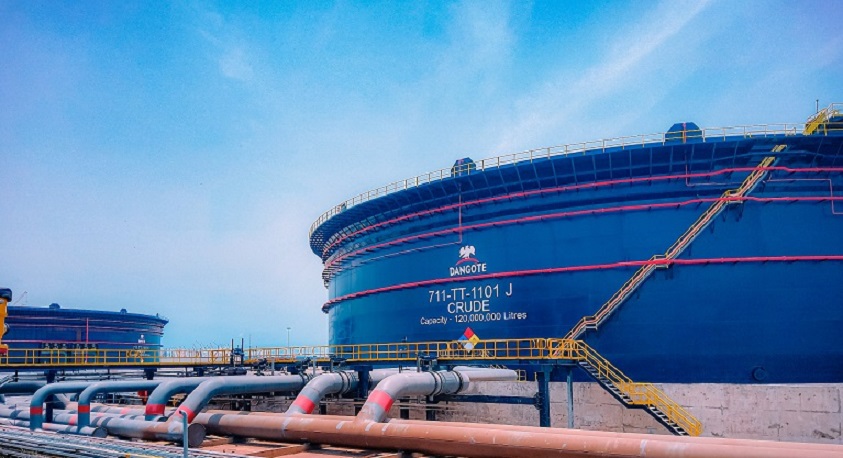
The global impact of the hostilities involving Iran, the United States of America and Israel continues to impact Nigeria’s domestic energy sector as the Dangote Petroleum Refinery and Petrochemicals on Tuesday announced reductions in its petrol and diesel gantry and coastal prices.
This follows Monday’s oil price slump to $90 per barrel from previous $115.
According to a new pricing template released by the refinery on Tuesday, the gantry price of petrol has been reduced by N100, dropping from N1,175 to N1,075 per litre.
ALSO READ: CNG: Tinubu Orders Deployment of 100,000 Kits in Three Weeks
The Dangote Refinery also stressed that the price of petrol for coastal supply would now be N1,050 per litre, saying the difference in price reflects additional costs linked to maritime distribution.
Similarly, the price of Automotive Gas Oil (diesel) has been reduced to N1,430 per litre at the gantry, down from the previous N1,620 per litre. This represents a decrease of N190 per litre.
The refinery noted that these gantry prices do not include regulatory charges from the Nigerian Midstream and Downstream Petroleum Regulatory Authority (NMDPRA).
The Dangote Refinery had raised its gantry PMS price to N1,175 per litre — the third upward adjustment in seven days.
The refinery communicated the new ex-depot price to marketers and depot operators, up N180 from the N995 per litre announced last week Friday, an 18.1 per cent increase in three days.
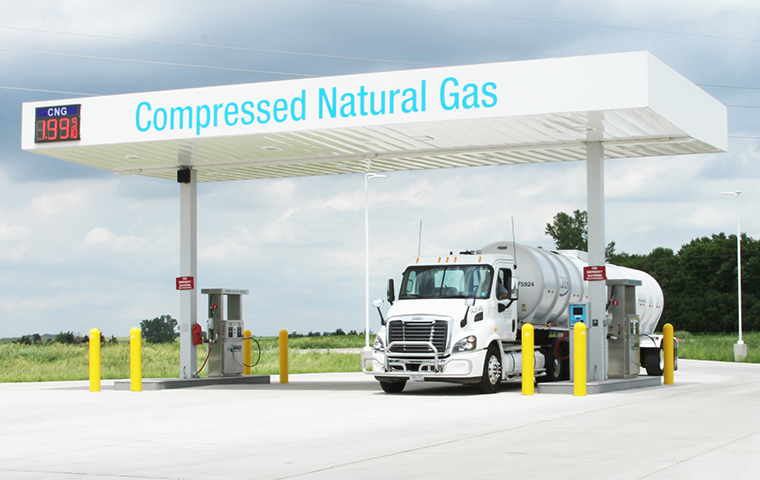
In the bid to cushion the impact of rising petrol and diesel costs, Nigeria’s president, Bola Ahmed Tinubu has directed the immediate deployment of 100,000 Compressed Natural Gas (CNG) conversion kits within a maximum of three weeks.
The Executive Chairman of the Presidential Initiative on CNG, Ismaeel Ahmed, made the disclosure on Tuesday after meeting with the President at the State House, Abuja.
Ahmed said the directive was informed by the ongoing war in the Middle East and its impact on global petroleum prices, which have increased transportation costs for Nigerians.
“The President, as usual, is always trying to get information on what is going on, and especially with the war in the Middle East and the rising cost of petrol and diesel.
“The President wanted to know what we are doing at the Pi-CNG and EV to scale up the availability of gas and CNG everywhere in the country so that people would have less cost of transportation,” Ahmed stated.
He revealed that Tinubu gave a direct mandate for the mass deployment of conversion kits to make natural gas more accessible as an alternative to petrol and diesel.
“So the President has given a direct mandate that we should immediately deploy about 100,000 kits.
“We are working with so many other stakeholders that would incentivise and get it into the market immediately and be able to convert a lot of vehicles and tricycles for people to be able to access gas,” the Pi-CNG boss said.
Ahmed emphasised that the deployment would commence within two to three weeks, with conversion centres expected to be “bustling with a lot of conversion activities.”
He disclosed that the initiative includes plans to deploy vehicles and tricycles equipped with bi-fuel CNG and electric mobility capabilities.
The President also directed the Pi-CNG to fast-track infrastructure development for gas refilling stations and electric vehicle charging points across the country, with particular focus on the Northern corridor.
“He also gave a directive that we must be able to fast-track the infrastructure in bringing gas and CNG, and electric mobility charging infrastructures to every part of the country, especially within the Northern Corridor, so that a lot of people will be able to access this,” Ahmed said.
The Pi-CNG chairman revealed that 77 refilling stations are currently at different stages of development nationwide, with significant progress recorded in Kano State.
“In Kano right now, we have about two LCNG stations and about five, six daughter stations that are coming up as well,” he stated.
Ahmed disclosed that the Northern corridor, stretching from Lokoja through Abuja, Kaduna, Zaria, Kano, and all the way to Maiduguri, will be equipped with multiple refuelling units to ensure seamless access to CNG for motorists.
“Along the corridors, from Lokoja all the way to Abuja, Kaduna, Zaria, Kano, all the way to Maiduguri, these are all places that we are going to litter with a lot of refuelling units. So it’s something that we’re looking forward to,” he said.
The Pi-CNG boss emphasised that the President wants results delivered quickly to ensure Nigerians can access CNG and electric mobility options.
“The President wants results delivered very quickly so that Nigerians will be able to access the CNG and electric mobility,” Ahmed stated.
On local manufacturing, Ahmed disclosed that the initiative is partnering with domestic manufacturers and attracting international manufacturers interested in setting up assembly lines in Nigeria.
“Absolutely, that’s where we’re dealing with partnering with a lot of local manufacturers, and even international manufacturers want to set up assembly lines in Nigeria.
“That is the goal, because it’s about job creation, it’s about availability,” he said.
He revealed that the Pi-CNG is collaborating with the Rural Electrification Agency to deploy solar-powered charging stations across the country.
“We’re partnering with REA, that’s the Rural Electrification Agency, to be able to supply solar where we can set up charging stations across,” Ahmed stated.
ALSO READ: How Dangote’s Full Refinery Capacity Could Push Naira Below ₦1,000 — Otedola
He noted that Nigerians are already importing electric vehicles independently, and the government’s responsibility is to provide adequate infrastructure to support their use.
“Nigerians are already bringing in their electric vehicles regardless.
“What you have to do for them now is to be able to make sure that there is enough infrastructure for them to work with this, especially off-grid,” Ahmed said.






2026 Poll: Osun Ndigbo Backs Adeleke’s Second-Term Bid

NGX Group, IFC, CSCS and WIMBIZ Convene Leaders to Advance Gender Equality at 2026 Ring the Bell Ceremony

Adeleke on Why he Deserves Second Term

NNPC Secures Tinubu’s Approval for $20bn FID on Bonga Deepwater Project

Dangote Refinery Cuts Petrol, Diesel Prices
CNG: Tinubu Orders Deployment of 100,000 Kits in Three Weeks

Trump’s Family Unveils New Cryptocurrency Platform

Reps Recommend 3-year Jail Term For Aviation minister

Dangote Cement Lights Up Benue Host Communities With CSR Initiatives

Senate Denies Receiving Petitions Against Tinubu’s Ambassadorial Nominees

Things To Know About Threads, Zuckerberg’s Twitter-like App
