
Business
Nigeria drops to 170th place on global ease of paying taxes


ABUJA – PricewaterhouseCoopers (PwC) has ranked Nigeria 170th out of 189th countries on its 2014 global ease of paying taxes report.
With the ranking, Nigeria just did better than 19 countries globally in terms of measuring all the mandatory taxes and contributions that a medium-sized company must pay in a given year.
Regrettably, Nigeria has been going down the ranking in the past few years and in the previous year’s report which covered 185 countries, it took 155th place.
The paying taxes index is one of the eleven indicators that the World Bank uses in determining its ease of doing business globally.
 The report looks at tax systems from the business perspective and considers all of the taxes and contributions that a case study company (a small to medium sized domestic company) pays and generates, the authors said on Tuesday.
It also uses three indicators, total tax rate, making payments and compliance time to provide data on tax systems in 189 economies around the world.
Highlighting the report findings on Tuesday, Taiwo Oyedele, head of tax and corporate advisory services, PwC Nigeria, noted that Nigeria, using the case study company had a total tax rate of 33.8 percent.
In terms of the total tax rate index, Nigeria performed better than the rest of the world which had an average of 43.1 percent as well as Africa at 52.9 percent.
It, however, performed poorly on the second index -the number of tax payments, where the country makes 47 different payments.
The world average total tax payments is 26.7 percent while for Africa, it is 36.1. This places Nigeria far more than world average and also higher than the Africa average.
This performance, according to Oyedele, reflects the issues of multiple taxation, where presently, entities are made to pay too many taxes at both local, state and federal levels, all trying to raise revenue without due consideration to the impact of all these on the tax payer.
But the worst performance for Nigeria came from the compliance time, where, again using the company as a yardstick, the time it takes in Nigeria to comply with tax payment is 956 hours in a year.
The average world wide is 268 hours while the average for Africa is 230 hours. This places Nigeria in a position where it is in fact four times the average for Africa.
For the authors of the report, compliance time means the time it takes to prepare tax returns, gather the needed information, fill out the tax reform forms, submit, make payments as well as even getting the tax clearance which is presently quite difficult in the country.
“Overall, the ranking of Nigeria is 170 out of 189 countries worldwide. So Nigeria is not doing well. That is clearly not where we should be, especially as we aim to be one of the top twenty countries in the world by year 2020.”
– BUSINESS DAY
Modupe Asudo
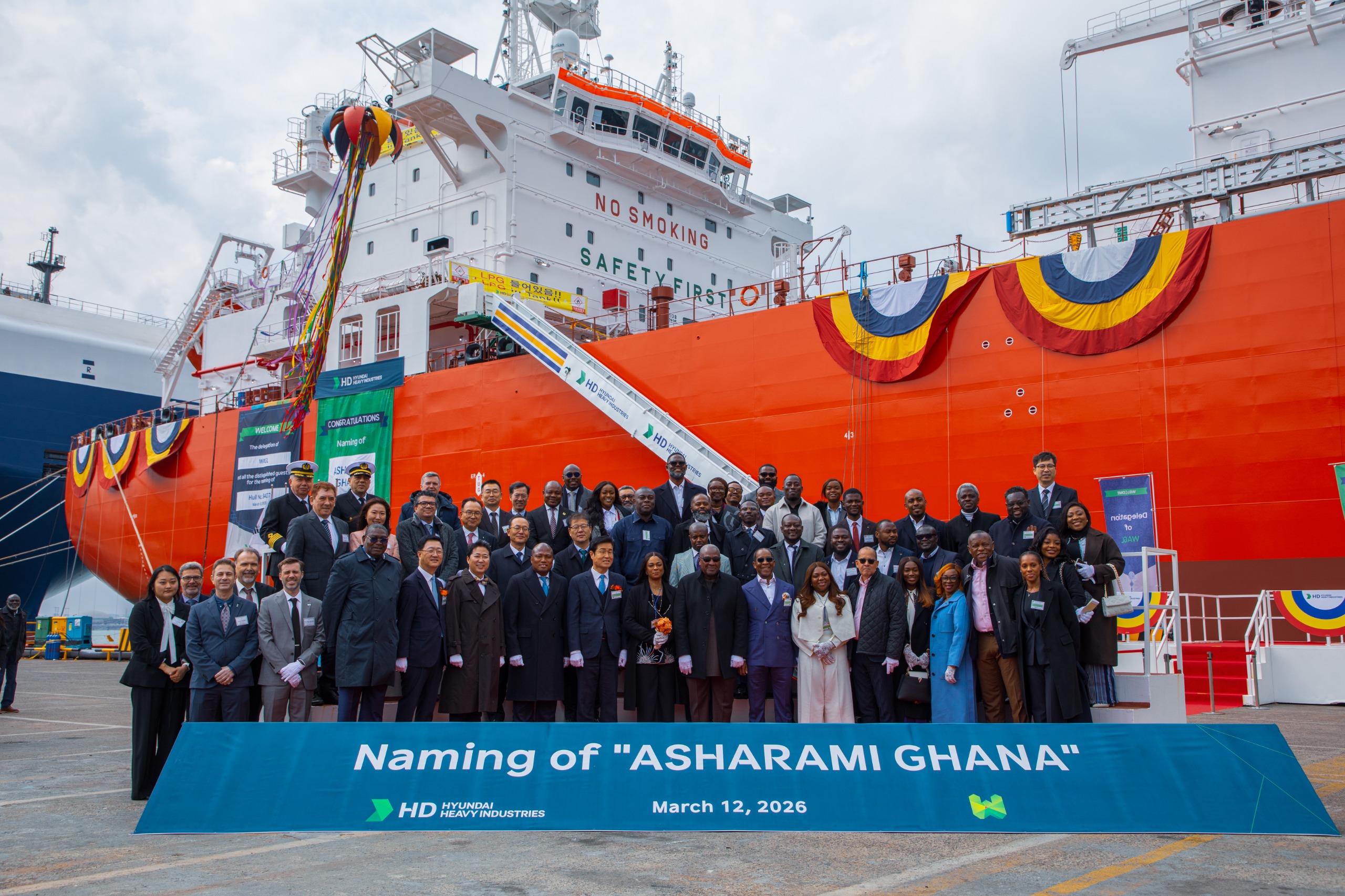
Sahara Group, a leading global energy and infrastructure conglomerate, has commissioned MT Asharami Ghana, a 40,000‑cubic‑metre Liquefied Petroleum Gas (LPG) carrier, expanding its fleet capacity, while strengthening Ghana’s clean energy supply chain and LPG distribution network.
The dual‑fuel vessel improves operational efficiency, enhances supply reliability, and supports lower‑emission LPG logistics as consumption grows across Ghana and the wider sub‑region.
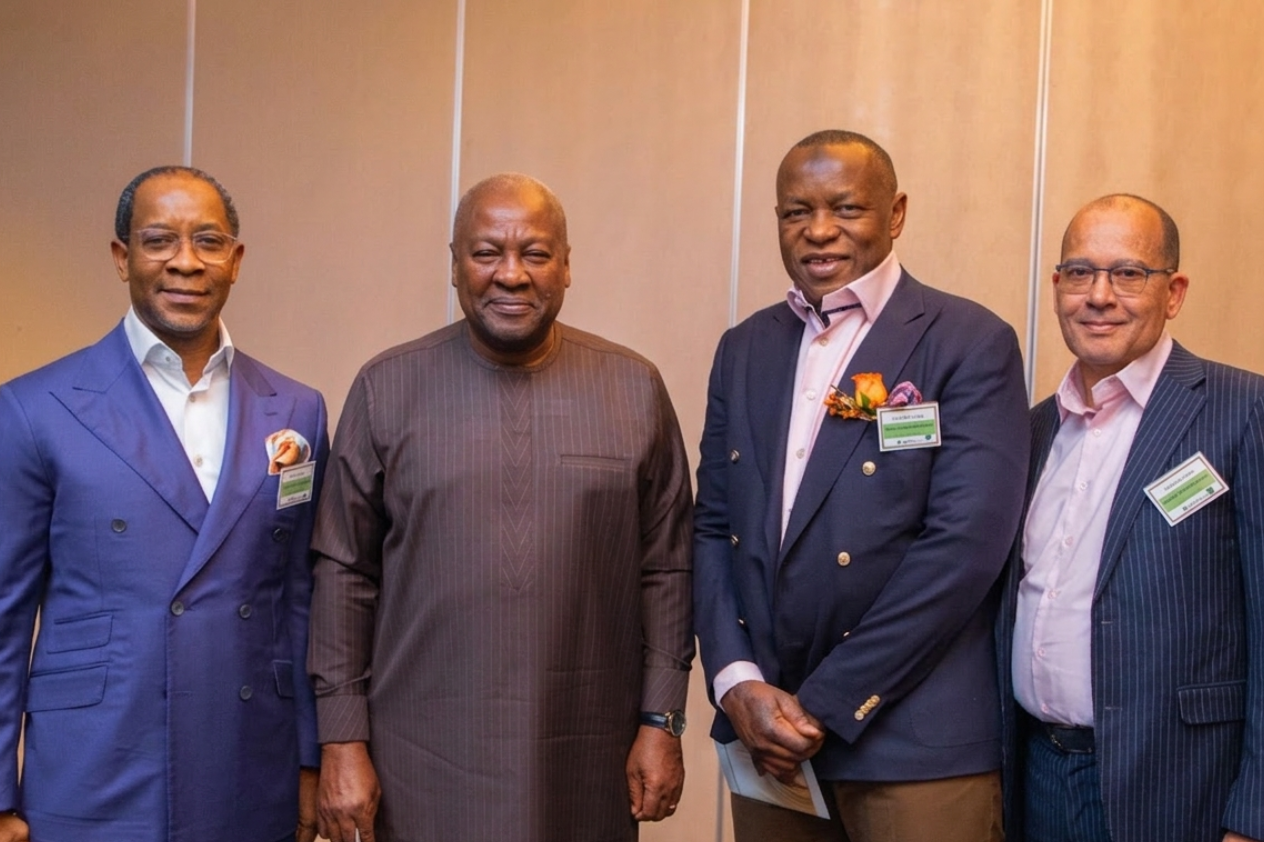
Ghanaian President Mahama and Sahara Executive Directors
Speaking at the commissioning in Ulsan, South Korea, President John Dramani Mahama described the vessel as “a significant milestone in strengthening the infrastructure that underpins the global LPG supply chain,” noting that expanded shipping capacity is critical to improving supply security, reliability and efficiency for countries that rely partly on LPG imports.
He commended Sahara Group, WAGL Energy and all partners involved for their “leadership, technical expertise and strategic foresight,” adding that the project reflects “the power of partnership” in advancing safe, efficient, and responsible energy distribution.
President Mahama wished the MT Asharami Ghana safe sails, expressing confidence that the vessel would inspire further investment and collaboration across Africa’s energy value chain.
According to Wale Ajibade, Executive Director, Sahara Group, the vessel supports Ghana’s clean energy ambitions through integrated infrastructure.
“MT Asharami Ghana is more than a vessel; it is part of a deliberate strategy to strengthen LPG supply security and support Ghana’s clean energy ambitions. It secures an additional 25,000-Metric-tonne stock security for the Ghana economy, alongside the soon to be commissioned 6000-metric-tonee of 12.000-metric-tonne land storage in Tema,” he said.
With the addition of Asharami Ghana, Sahara Group’s LPG carrier fleet now comprises six delivered vessels with a combined capacity of 202,000 cubic metres. Supported by partnerships with WAGL Energy, NNPC Limited and other stakeholders, an additional 270,000 cubic metres of capacity is under construction and due for delivery by September 2028.
Temitope Shonubi, Executive Director, Sahara Group, said Asharami Ghana is part of Sahara’s integrated LPG infrastructure strategy spanning shipping, storage, and downstream distribution globally, including the development of a 12,000‑metric‑tonne land‑based LPG storage terminal in Tema, with a 6,000‑metric‑tonne first phase scheduled for completion in May 2026.
He thanked Yaa Serwaa Alifo, MD of Asharami Ghana, for her resilience and insistence to dedicate a ship of “this magnitude solely to the Ghana Market and its landlocked neighbours.”
Ghana is targeting LPG adoption of 50 per cent of households by 2030, up from about 30 per cent today. Sahara’s investments will support clean energy access for more than 35 million people, while strengthening Ghana’s role in regional LPG trade to neighbouring and landlocked West African markets.
The commissioning comes in Sahara Group’s 30th anniversary year, guided by the Sahara Beyond XXX milestone, underscoring Sahara’s focus on building an enduring enterprise that delivers responsible growth, shared prosperity and long‑term impact across its markets.
Business
NGX Group, IFC, CSCS and WIMBIZ Convene Leaders to Advance Gender Equality at 2026 Ring the Bell Ceremony

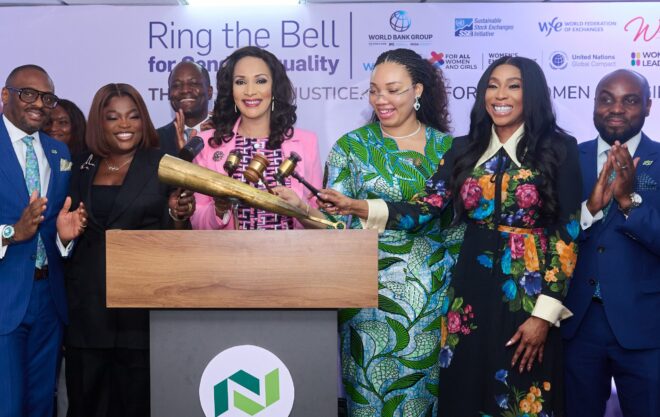
The Nigerian Exchange Group Plc (NGX Group), in collaboration with Central Securities Clearing System Plc (CSCS) and Women in Management, Business and Public Service (WIMBIZ), convened leaders from across the public and private sectors to commemorate International Women’s Day 2026 through the global Ring the Bell for Gender Equality initiative.
Aligned with the UN Women theme “Rights, Justice, Action – For All Women and Girls,” the event, held during the Nigerian Exchange Closing Gong Ceremony, served as a call for sustained action to advance gender equality and expand women’s participation in economic leadership.
ALSO READ: Dangote Refinery Cuts Petrol, Diesel Prices
Delivering the welcome address, Temi Popoola, Group Managing Director/Chief Executive Officer of NGX Group, emphasized the critical role capital markets must play in shaping inclusive economic growth. “Capital markets are powerful engines for economic transformation. When women participate fully as leaders, entrepreneurs, and investors, markets become stronger, deeper, and more resilient. At NGX Group, we remain committed to advancing policies, partnerships, and platforms that expand opportunities for women and accelerate inclusive prosperity,” he said.
Delivering special remarks, Honourable Bianca Odumegwu-Ojukwu, Minister of State for Foreign Affairs, commended NGX Group and its partners for advancing gender inclusion through the initiative. “I congratulate NGX Group and its partners for sustaining this important global movement and for championing gender equality within our financial ecosystem. Together, let us continue to open the doors of opportunity so the next generation of women can lead with confidence and help transform our world,” she said.
Chioma Uzodimma, First Lady of Imo State, called for collective action to expand opportunities for women and girls. “As we sound the NGX Gong today, let it symbolize our shared pledge to protect every girl child, expand opportunities for every woman, and build an inclusive economy where every woman and girl can flourish,” she said.
Jude Chiemeka, Chief Executive Officer of Nigerian Exchange, emphasized the importance of broadening women’s participation in the capital market ecosystem. “When more women participate in the market as investors and professionals, we deepen the market and strengthen the foundation for sustainable growth,” he said.
Speaking on the role of development finance institutions in advancing gender inclusion, Claude Owona, Regional Industry Manager for Financial Institutions at the International Finance Corporation (IFC) for Central Africa and Anglophone West Africa, emphasized the economic benefits of gender equality. “When women and men participate equally in the economy, our societies function better and our economies become more prosperous,” she said.
Media entrepreneur and founder of EbonyLife Media, Mo Abudu, encouraged women to pursue their ambitions with clarity and confidence. “For me, it comes down to four things, purpose, passion, progress, and power. Find your purpose, let passion fuel your journey, stay consistent even when challenges arise, and most importantly, stand firmly in your power. Do not shrink,” she said.
Award-winning actor and filmmaker Funke Akindele urged women to pursue their ambitions with discipline and courage. “To every woman out there, you can do it. But beyond the words, we must put in the hard work, build structure into our businesses, and do things the right way. It takes courage to take the first step even when you’re not ready, courage to stay consistent when no one is clapping, and courage to hold firmly to your vision,” she said.
The Ring the Bell for Gender Equality ceremony celebrated the contributions of women to Nigeria’s capital markets and the broader economy while reinforcing the need for sustained action to close gender gaps in leadership, finance, and opportunity.
The 2026 edition was organized in collaboration with global partners including the International Finance Corporation (IFC), UN Women, the World Federation of Exchanges (WFE), the United Nations Global Compact, and the Sustainable Stock Exchanges Initiative (SSEI).
The event also featured the participation of female board members of NGX Group of companies, Ojinika Olaghere, Fatima Wali-Abdulrahman, Lilian Olubi, Ummahani Ahmad Amin, Amina Mohammed, and Fiona Ahime, alongside key ecosystem leaders including Onome Komolafe, Divisional Head, Business Services and Client Experience, CSCS Plc; Jumoke Olaniyan, Group Chief Strategy Officer, NGX Group; Uto Ukpanah, Chairperson, UN Global Compact Network Nigeria; and Mrs. Omowumi Akingbohungbe, Executive Director, WIMBIZ.
As the closing gong sounded, stakeholders echoed a common message: advancing gender equality requires more than dialogue. It requires sustained collaboration, deliberate action, and a collective commitment across governments, institutions, and markets to expand opportunities for women and girls.
Through initiatives such as Ring the Bell for Gender Equality, NGX Group and its partners continue to champion inclusive markets, recognizing that empowering women is essential to building stronger capital markets and a more resilient economy.
Modupe ASUDO
The Nigerian Content Development and Monitoring Board has reiterated its commitment to advancing gender inclusion and sustainable capacity development in Nigeria’s oil and gas industry, spotlighting a $20m Women in Oil and Gas Intervention Fund.
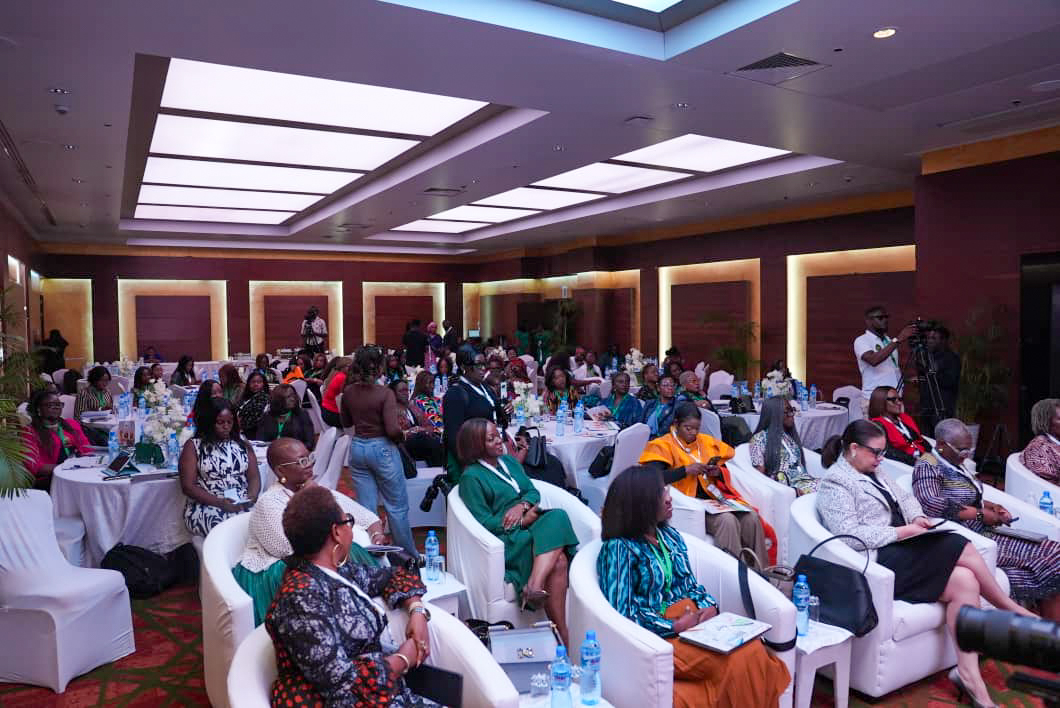
The Board made this known at the 3rd edition of the Diversity Sector Working Group’s Women in Oil and Gas Conference and Mentorship Programme, held on March 3, 2026, at Eko Hotels and Suites, Lagos.
The conference, organised in collaboration with the Nigerian Content Consultative Forum, was themed ‘Breaking Barriers, Shaping the Future’, with a strong focus on building bridges and empowering women for a sustainable energy future.
Delivering his goodwill message, the Executive Secretary of NCDMB, Engr Felix Omatsola Ogbe, described women’s empowerment as a strategic lever for strengthening Nigeria’s energy ecosystem, particularly at a time the global industry was undergoing profound structural change.
He explained that the sector’s navigation of energy transition, rapid technological innovation and rising sustainability expectations increasingly requires broader perspectives, adaptive leadership and inclusive participation to remain competitive and resilient.
Represented by the General Manager Midstream PCAD, Ms. Lekoma Phimia, the Executive Secretary framed inclusion not as social advocacy but as sound economics, stressing that diversity consistently delivers measurable performance outcomes across industries.
“Inclusive organisations are more innovative, more resilient and more profitable. When women thrive, industries thrive. When women lead, economies grow. When women are empowered, communities prosper,” he stated.
To illustrate this point, the Executive Secretary referenced the leadership impact of Ms. Oritsemeyiwa Eyesan, Executive Chairman of the Nigerian Upstream Petroleum Regulatory Commission, describing her tenure as clear evidence of women’s capacity to drive sector-wide transformation at the highest levels.
According to him, such leadership exemplifies how competence and inclusion are helping to steer the industry through a period of accelerated change.
While acknowledging the progress recorded, Ogbe observed that systemic barriers had continued to limit the full participation of women across segments of the oil and gas value chain, stressing that addressing the constraints requires deliberate, structured and sustained interventions.
At the centre of NCDMB’s empowerment showcase, the Executive Secretary highlighted the Women in Oil and Gas Intervention Fund, a landmark $20m initiative established in partnership with the Nigerian Export-Import Bank to provide affordable financing exclusively to women-owned businesses operating within Nigeria’s oil and gas sector.
He explained that the fund offers single-digit interest rate loans with repayment tenors of up to three years, targeted at eligible companies with approved industry contracts. According to him, the initiative is designed to accelerate local capacity and enable women entrepreneurs to transition from peripheral participation to ownership and leadership across the oil and gas value chain.
Ogbe further disclosed that a complementary intervention, implemented in partnership with the Bank of Industry, extends structured business training and additional access to capital to women-owned enterprises. He noted that many beneficiaries have expanded from small service providers into competitive vendors now supporting major oil and gas operators nationwide, particularly in logistics and marine services, safety equipment supply and environmental management — segments where female entrepreneurs have historically faced limited access to financing.
Beyond financing, the Executive Secretary highlighted NCDMB-supported skills development programmes executed in collaboration with institutions such as the Petroleum Training Institute and accredited industrial training centres in Rivers and Bayelsa states. He cited the training of women in welding and fabrication, noting that many graduates are employed in fabrication yards and contribute directly to major oil and gas projects.
“These women are earning dignified livelihoods, breaking stereotypes and inspiring a new generation,” Ogbe said, emphasising that collaboration remains critical to scaling impact, citing partnerships with financial institutions, development partners, training institutions and industry stakeholders.
He commended the NCCF Diversity Sector Working Group for sustaining advocacy and dialogue on inclusion. “We must move beyond inclusion towards leadership — more women in technical leadership roles, executive positions and industry boards,” he added.
In her remarks, the Chairman of NCCF Diversity Sector Working Group, Dr Alero Onosode, described the conference as a celebration of progress, leadership and possibility, noting that NCDMB’s sponsorship reflects its strong institutional commitment to inclusion and shared prosperity. She observed that convening the conference in March — International Women’s Day month — was symbolic, coming at a time of renewed activity and reform across Nigeria’s oil and gas industry.
“Alongside this momentum, we are seeing the rise of women into visible and influential leadership roles — regulators, CEOs, directors, engineers and policymakers shaping strategy and transforming spaces that were once dominated by a single voice,” Onosode said.
She explained that the conference theme challenged stakeholders to move from representation to impact, urging deliberate collaboration across sectors, generations and perspectives.
“Building bridges means women and men working together, turning diversity into strength and collaboration into results,” she stated, calling on industry leaders to prioritise mentorship, sponsorship and intentional partnerships.
The conference concluded with a renewed call for inclusive capacity development, with NCDMB reaffirming its commitment to empowering women, strengthening Nigerian content and ensuring that Nigeria’s energy future is sustainable, inclusive and economically transformative.






Airfares Likely to Rise as Aviation Fuel Price Spikes by 80%

Shell Completes Turnaround Maintenance on FPSO, Resumes Production at Bonga

Sahara Group expands fleet with new 40,000 cbm LPG Carrier

NATO Shoots Down Third Iranian Missile in Turkey

Inside Tinubu’s Closed-Door Meeting With Opposition Leaders – SDP, IPAC Reveal Details

Defections Won’t Break PDP in Sokoto, Says Former Senator Gada

Trump’s Family Unveils New Cryptocurrency Platform

Reps Recommend 3-year Jail Term For Aviation minister

Dangote Cement Lights Up Benue Host Communities With CSR Initiatives

Senate Denies Receiving Petitions Against Tinubu’s Ambassadorial Nominees

Things To Know About Threads, Zuckerberg’s Twitter-like App
