
Business
Nigeria suspends anti-graft central bank governor


LAGOS – Nigerian President Goodluck Jonathan suspended Central Bank Governor Lamido Sanusi on Thursday, removing an increasingly outspoken critic of the government’s record on tackling rampant corruption in Africa’s leading energy producer.
Currency, bond and money markets stopped trading because of the uncertainty created by the suspension. Trading in the naira currency resumed after the central bank intervened with dollar sales, by which time debt markets were closed.
The intervention enabled the naira to rebound from a record low of 169 to the dollar to 165, dealers said, its biggest one day swing since a December 2009 devaluation.
Sanusi, who was due to end his term in June, had been presenting evidence to parliament that he said showed the state oil company Nigeria National Petroleum Corporation (NNPC) failed to remit $20 billion that it owed to federal government coffers. NNPC has repeatedly denied Sanusi’s allegations.
Deputy Governor Sarah Alade was appointed acting governor, presidential spokesman Reuben Abati said on Thursday.
“Lamido Sanusi’s tenure has been characterized by various acts of financial recklessness … inconsistent with the administration’s vision of a Central Bank propelled by the core values of focused economic management,” Abati said, without providing details of the acts.
Jonathan nominated the managing director of Zenith Bank Godwin Emefiele to be the next central bank governor. If Emefiele wins the Senate’s approval, he will start in June, when Sanusi’s term would have expired, the head of its finance committee Senator Ahmed Makarfi told Reuters.
Sanusi told broadcaster CNBCA that he was proud of what he had done, and he hoped the economy would not be hurt by his suspension.
Asked whether it was politically motivated, he said: “It’s not for me to comment. I think the answer to that is obvious.”
INVESTOR BACKLASH
Analysts predicted that foreign investors would now be active sellers of assets in Africa’s second biggest economy, just when it had been attracting more interest than ever for the huge potential of its 170 million population and a backlog of work needed to update its inadequate infrastructure.
“The suspension will come as a significant shock to foreign portfolio investors, whose willingness to invest in Nigeria was very much influenced by the transparency and anti-inflation credibility associated with Sanusi’s policies,” said Razia Khan, head of Africa research at Standard Chartered.
Makarfi said a full removal of Sanusi would need Senate approval, but that the presidency had made no such request.
“The president has the prerogative under our laws to suspend him,” without the Senate’s consent, he said.
The governor himself questioned the legality of the move.
“It’s important to establish the point legally … because if not established, then the very next governor of the central bank can be suspended for any reason, and the independence of the central bank is totally undermined,” he said.
Sanusi, a career banker, earned a reputation as monetary policy hawk while governor from June 2009 – raising interest rates, tightening liquidity and aggressively defending the naira with frequent foreign exchange auctions.
“Sanusi has been the face of naira stability,” Nwabueze Okonne, a Nigerian currency trader, told Reuters.
The stock market was down 1.47 percent by 0929 ET.
The governor’s suspicion of massive fraud at the heart of one of the world’s most opaque national oil companies has brought him into conflict with the administration of President Jonathan a year before elections. Jonathan was already under pressure from several corruption scandals and a failure to quell an increasingly violent Islamist insurgency in the north.
Oil provides 90 percent of foreign exchange in Nigeria and around 80 percent of government revenues.
“MORALLY FLAWED”
In a letter leaked in December, Sanusi said almost $50 billion in revenues from oil exports from January 2012 to July 2013 had not been remitted to the federation account. He later lowered the estimate to $20 billion.
It was not the first time that high-profile figures have put the spotlight on corruption during Jonathan’s presidency.
Jonathan’s one-time mentor and former president Olusegun Obasanjo said in a letter leaked in December that it would be “morally flawed” for Jonathan to seek a second term in 2015, saying corruption under his tenure was worse than that of General Sani Abacha, the military dictator who looted billions from the treasury and stashed it in Swiss bank accounts.
Jonathan rejected that criticism, and he frequently retorts that corruption in Nigeria is being exaggerated by his enemies.
The governor made a name for himself two months into the job when he rescued nine Nigerian banks in the wake of a financial crisis that nearly caused a wave of bankruptcies. He bailed them out and forced out eight of their chief executives.
In doing so he made a rare example of some of Nigeria’s most powerful people. Critics said he was getting too big for his boots when last year he began using bi-monthly policy meetings to lampoon the government for reckless spending.
Yet his aristocratic lineage – he is heir apparent to the throne of Kano, traditionally one of West Africa’s most powerful Islamic caliphates, with a history going back to mediaeval times – had made him seem untouchable.
However, his exposure of what he said was severe malpractice at the state oil company spooked debt investors worried about government squandering of oil revenues during election cycles. Sanusi says graft is slashing foreign currency reserves.
The biggest gap in accounting is for $8.5 billion the NNPC says it retained from revenues during the 19-month period to cover subsidies it was owed on importing gasoline and kerosene.
Sanusi also says some of the $6 billion that the NNPC’s producing arm, NPDC, earned during the period should have been submitted to government accounts. Instead, he says, it has been funneled into private hands through special deals given to oil companies. NPDC denies this.
– REUTERS


Up to 30 Nigerian graduates have bagged postgraduate scholarships to pursue further studies both locally and in the Diaspora.
According to the Nigerian National Petroleum Company Limited (NNPC Ltd) and Italian energy company, Eni have awarded postgraduate scholarships
The beneficiaries emerged from more than 3,000 applicants following assessments of their academic records and performances in a recently conducted computer-based test (CBT).
The awards are under the 2026/2027 Postgraduate Scholarship Scheme of Nigerian Agip Exploration Limited (NAE), an Eni subsidiary, on behalf of the NNPC-NAE Production Sharing Contract (PSC) partners.
In a statement, NAE’s Vice Chairman and Managing Director, Maurizio Pinna, said the initiative was designed to develop local talent and equip young Nigerians with skills relevant to the oil and gas industry. Pinna congratulated the beneficiaries, noting that the scholarships would enable them to pursue their academic ambitions and achieve their career goals.
According to NAE, the programme reflects its commitment to education, innovation and capacity building in Nigeria.
The company urged the beneficiaries to make good use of the opportunity by acquiring valuable knowledge and skills that would contribute to national development, particularly in the energy sector.
Ten of the awardees will undertake postgraduate studies in universities abroad, including Imperial College London, Robert Gordon University in Aberdeen, Newcastle University, the University of Aberdeen and the University of Hull in the United Kingdom.
READ ALSO: Navy Recovers 98,000 Litres of Suspected Stolen Crude in Rivers
The remaining 20 beneficiaries will study at Nigerian universities in fields including engineering, geosciences, petroleum and environmental technology, energy economics, renewable energy and energy transition.
Established in 2007, the NNPC-NAE PSC postgraduate scholarship scheme is part of the partners’ human capital development programme aimed at promoting specialised knowledge and addressing skills shortages in Nigeria’s deep offshore oil and gas operations.
NAE said 380 Nigerian graduates had benefited from the scheme since its inception, gaining knowledge and skills required by the oil and gas industry.
Beyond education, Eni, through NAE, has implemented sustainability initiatives in Nigeria covering healthcare, access to water, infrastructure and community empowerment.
Eni has operated in Nigeria since 1962 and currently has an equity production of about 55,000 barrels of oil equivalent per day. The company also holds a 10.4 per cent stake in Nigeria LNG.
NAE was incorporated in 1996 to manage Eni’s deep offshore exploration and production assets. It became the first oil and gas company in Nigeria to produce oil from the country’s deep offshore when its Abo floating production, storage and offloading (FPSO) vessel began operations in 2003.
The company has interests in nine offshore blocks in Nigeria, either as operator or co-venturer, including PML 102 and PML 103, where the Zabazaba-Etan fields are being developed.
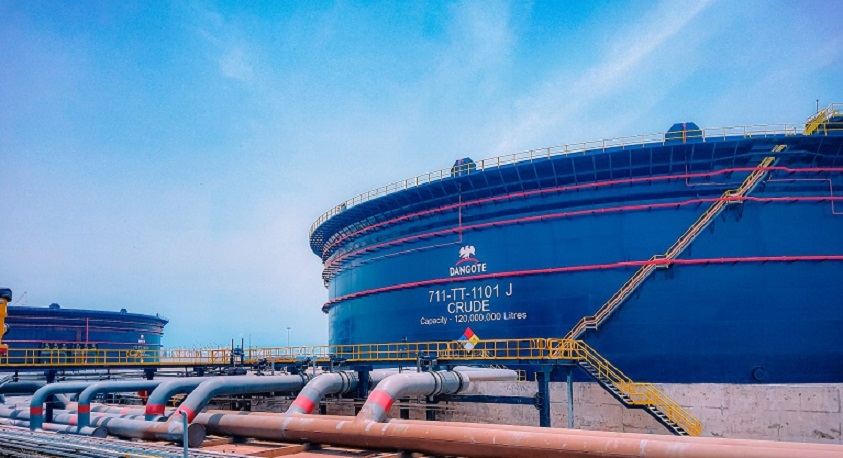
The Dangote Petroleum Refinery and Petrochemicals’ (DPRP) decision to seek leave to appeal a Federal High Court (FHC) judgment directing the Nigerian Midstream and Downstream Petroleum Regulatory Authority (NMDPRA) to continue issuing petroleum product import licences to three major oil marketers is being backed by the Energy Watchdog.
This was detailed in a statement by Martins Tayo, which considers the move as necessary to protect Nigeria’s domestic refining industry and reduce dependence on imported petroleum products.
The judgment, delivered on September 28, 2026, by Justice Inyang E. Ekwo in Suit No. FHC/ABJ/CS/1363/2026, ordered the NMDPRA to continue issuing import licences to Matrix Energy, AA Rano and AYM Shafa.
The Energy Watchdog argued that the ruling undermined the objectives of the Petroleum Industry Act (PIA) and threatened investments in domestic refining capacity.
“We completely reject and condemn in totality the judgment of the lower court. It is a deeply flawed decision that disregards the clear intent of the Petroleum Industry Act and the national interest in building a robust domestic refining industry,” the statement said.
READ ALSO: NNPC Petrol Discount: Oyedele Explains How Lower Margins Could Boost Profits
The group further cited a reported decline in petrol imports in the first quarter of 2026, alongside increased supplies from local refineries, particularly the Dangote facility, as evidence of the country’s growing domestic refining capacity.
It argued that sustaining import licences despite rising local production could undermine efforts to achieve self-sufficiency in refined petroleum products and weaken investor confidence in the sector.
According to the organisation, Dangote Refinery’s decision to seek leave to appeal as an interested party was timely, given the potential implications of the judgment for the future of Nigeria’s downstream petroleum industry.
“The lower court’s decision amounts to a judicial endorsement of continued importation irrespective of local capacity.
“We condemn it without reservation because it threatens to reverse the hard-won gains of the last few years,” Tayo stated
The Energy Watchdog maintained that the Petroleum Industry Act was designed to encourage investment in midstream and downstream infrastructure, warning that allowing the ruling to stand could send a negative signal to investors who have committed substantial resources to domestic refining projects.
The group urged the Court of Appeal to grant the DPRP leave to appeal and ultimately set aside the FHC’s order, describing the case as significant to Nigeria’s energy security and the development of its refining industry.
“Any judgment that forces the continued importation of fuel products when local refineries can supply the market is a setback for Nigeria.
“We condemn the lower court ruling in the strongest terms and fully support the appeal filed by Dangote Refinery,” the statement concluded, “The Court of Appeal must correct this error and reaffirm that the era of automatic import licences is over.”


Nigeria recorded the largest increase in the number of people experiencing multidimensional poverty among five countries that registered increases over their latest measurement periods, according to the United Nations Development Programme (UNDP).
The finding was contained in the 2026 Global Multidimensional Poverty Index report, released on Monday by the UNDP and the Oxford Poverty and Human Development Initiative (OPHI).
According to the report, Nigeria’s multidimensional poverty rate rose from 33 per cent in 2021 to 38.7 per cent in 2024, representing an increase of 5.7 percentage points.
SEE MORE: NNPC’s 30-Day Petrol Discount Is Not a Policy – Sowunmi
The number of Nigerians living in multidimensional poverty increased from 72.2 million in 2021 to 90.1 million in 2024, leaving an additional 17.9 million people affected.
The report noted that the latest increase reversed the progress Nigeria recorded between 2018 and 2021, when the proportion of people living in multidimensional poverty declined.
Nigeria’s Multidimensional Poverty Index value also increased from 0.175 in 2021 to 0.208 in 2024, reflecting a rise in both the incidence and intensity of deprivation.
The intensity of deprivation among multidimensionally poor Nigerians increased from 52.9 per cent to 53.6 per cent over the same period.
Unlike income-based poverty measures, which assess poverty based on how much people earn or spend, the Multidimensional Poverty Index examines overlapping disadvantages experienced in daily life.
The index measures deprivation across three dimensions: health, education and standard of living.
Its 10 indicators include nutrition, child mortality, years of schooling, school attendance, cooking fuel, sanitation, drinking water, electricity, housing and household assets.
A person is classified as multidimensionally poor when their household experiences deprivation in at least one-third of the weighted indicators.
The report showed that Nigeria had made progress in reducing multidimensional poverty before the latest increase.
The country’s index value declined from 0.230 in 2013 to 0.202 in 2018 and 0.175 in 2021 before rising to 0.208 in 2024.
Similarly, the proportion of Nigerians living in multidimensional poverty fell from 42.3 per cent in 2013 to 37.2 per cent in 2018 and 33 per cent in 2021 before increasing to 38.7 per cent in 2024.
The number of affected Nigerians also declined from 76.3 million in 2018 to 72.2 million in 2021 before climbing to 90.1 million in 2024.
The report further highlighted significant differences in multidimensional poverty across Nigeria’s subnational regions, with incidence ranging from 3.7 per cent to 88.3 per cent across the regions covered by the analysis.
It compared Yobe and Sokoto, two of Nigeria’s poorest subnational regions with similar Multidimensional Poverty Index values, to illustrate how the forms of deprivation experienced by communities can differ despite comparable overall poverty levels.
Globally, the report estimated that 1.2 billion people across 108 countries lived in acute multidimensional poverty.
Sub-Saharan Africa accounted for 616 million people living in multidimensional poverty, while South Asia followed with 393 million.
The report also found that 83.3 per cent of the world’s multidimensionally poor population, equivalent to approximately 998 million people, lived in rural areas, compared with 200 million in urban areas.
Children below the age of 18 accounted for 617 million, or 51.5 per cent, of the world’s multidimensionally poor population.
In sub-Saharan Africa, 355 million children lived in multidimensional poverty, accounting for 57.7 per cent of the region’s poor population.






30 Nigerians Bag Postgraduate Scholarship from NNPC Ltd, Eni

2027: ‘Algorithms Will Not Decide Election Results’, INEC Chairman Declares

Navy Recovers 98,000 Litres of Suspected Stolen Crude in Rivers

DPRP’s Appeal Against Fuel Import Licence Ruling Earns Stakeholder Backing

State Govs, Wike Endorse One-Party State, Join APC Campaign Council

2027: ‘Tinubu Has Done Well’ – Wike Tells Opposition to Speak the Truth

Trump’s Family Unveils New Cryptocurrency Platform

Senate Denies Receiving Petitions Against Tinubu’s Ambassadorial Nominees

Dangote Cement Lights Up Benue Host Communities With CSR Initiatives

Reps Recommend 3-year Jail Term For Aviation minister

Tems Sets New Record On Billboard Hot 100 Chart
