
Business
Nigeria vows naira intervention as stocks decline


ABUJA – Nigeria’s central bank said it has adequate reserves to keep defending the naira as the slumping currency prompted a selloff of the country’s stocks, with the all-share gauge posting the world’s worst performance today.
“There is a great need to defend the currency because we don’t want volatility,” Central Bank of Nigeria Deputy Governor Sarah Alade said by phone from Lagos today. “Whenever there is need to intervene, we will do so.”
The naira strengthened 2 percent to 162.13 per dollar as of 4:05 p.m. in Lagos, snapping three days of losses. The currency weakened 0.4 percent yesterday to 165.36 per dollar, the lowest level since Bloomberg started compiling data in 1999. The Nigerian Stock Exchange All-Share Index (NGSEINDX) fell 1.6 percent by the close in Lagos, bringing its weekly decline to 4.9 percent, the most since June.
Stocks, bonds and currencies from developing nations have been sold since the start of stimulus reduction by the Federal Reserve last month. Equities in Nigeria, Africa’s biggest oil producer, fell 6.2 percent this year, compared with a 4.7 percent decline in the MSCI Emerging Markets Index. The naira has retreated 1.1 percent this year while foreign reserves that Africa’s biggest oil producer uses to bolster the local currency dropped to $42 billion this week, the lowest since October 2012.
“All of these things are causing panic,” Pabina Yinkere, head of research at Lagos-based Vetiva Capital Management Ltd., said by phone. “For an international investor, if the currency is going to devalue, it will affect his own returns.”
Dollar Auctions
Guaranty Trust Bank Plc (GUARANTY), the country’s biggest lender by market value, dropped 5 percent to 24.73 naira, the lowest since Sept. 18. Nigerian Breweries Plc (NB) retreated 2.4 percent to 142 naira, a ninth day of declines in the longest stretch of losses since October 2008.
The naira has also been falling since the central bank last month removed the weekly limit of $250,000 that may be sold to a bureau de change. The central bank sells foreign currency at twice-weekly auctions to shore up the naira. It also sells dollars directly to lenders at irregular intervals.
The “central bank intervened heavily yesterday, which is impacting on the naira today,” Kunle Ezun, an analyst at Ecobank Transnational Inc. in Lagos, said by phone. “The central bank tried to cover gaps created by the short dollar supply at its last auction.”
The Abuja-based regulator sold $196.7 million at an auction Feb. 12, the lowest since Oct. 2, according to data compiled by Bloomberg. The bank will probably increase supplies at next week’s offers, Ezun said.
Record High
The central bank may increase cash reserve requirements for lenders to hold government deposits for the second time this year to 100 percent from 75 percent, Governor Lamido Sanusi said at a conference on Feb. 12 in Lagos. It will probably raise the requirement on private funds to 15 percent from 12 percent, Sanusi said. The regulator raised the deposit level to tighten liquidity while keeping its benchmark lending rate at a record high of 12 percent.
“To protect the naira over the next six months, we believe that the CBN will continue to use the CRR as its first policy option, rather than raising interest rates,” Kato Mukuru and Ronak Gadhia, Africa equity analysts at London-based Exotix Partners LLP, said in an e-mailed note today. “Reserves of $42 billion, and import cover of some 10 months, give plenty of ammunition to support the naira in the near term.”
– BLOOMBERG


Up to 30 Nigerian graduates have bagged postgraduate scholarships to pursue further studies both locally and in the Diaspora.
According to the Nigerian National Petroleum Company Limited (NNPC Ltd) and Italian energy company, Eni have awarded postgraduate scholarships
The beneficiaries emerged from more than 3,000 applicants following assessments of their academic records and performances in a recently conducted computer-based test (CBT).
The awards are under the 2026/2027 Postgraduate Scholarship Scheme of Nigerian Agip Exploration Limited (NAE), an Eni subsidiary, on behalf of the NNPC-NAE Production Sharing Contract (PSC) partners.
In a statement, NAE’s Vice Chairman and Managing Director, Maurizio Pinna, said the initiative was designed to develop local talent and equip young Nigerians with skills relevant to the oil and gas industry. Pinna congratulated the beneficiaries, noting that the scholarships would enable them to pursue their academic ambitions and achieve their career goals.
According to NAE, the programme reflects its commitment to education, innovation and capacity building in Nigeria.
The company urged the beneficiaries to make good use of the opportunity by acquiring valuable knowledge and skills that would contribute to national development, particularly in the energy sector.
Ten of the awardees will undertake postgraduate studies in universities abroad, including Imperial College London, Robert Gordon University in Aberdeen, Newcastle University, the University of Aberdeen and the University of Hull in the United Kingdom.
READ ALSO: Navy Recovers 98,000 Litres of Suspected Stolen Crude in Rivers
The remaining 20 beneficiaries will study at Nigerian universities in fields including engineering, geosciences, petroleum and environmental technology, energy economics, renewable energy and energy transition.
Established in 2007, the NNPC-NAE PSC postgraduate scholarship scheme is part of the partners’ human capital development programme aimed at promoting specialised knowledge and addressing skills shortages in Nigeria’s deep offshore oil and gas operations.
NAE said 380 Nigerian graduates had benefited from the scheme since its inception, gaining knowledge and skills required by the oil and gas industry.
Beyond education, Eni, through NAE, has implemented sustainability initiatives in Nigeria covering healthcare, access to water, infrastructure and community empowerment.
Eni has operated in Nigeria since 1962 and currently has an equity production of about 55,000 barrels of oil equivalent per day. The company also holds a 10.4 per cent stake in Nigeria LNG.
NAE was incorporated in 1996 to manage Eni’s deep offshore exploration and production assets. It became the first oil and gas company in Nigeria to produce oil from the country’s deep offshore when its Abo floating production, storage and offloading (FPSO) vessel began operations in 2003.
The company has interests in nine offshore blocks in Nigeria, either as operator or co-venturer, including PML 102 and PML 103, where the Zabazaba-Etan fields are being developed.
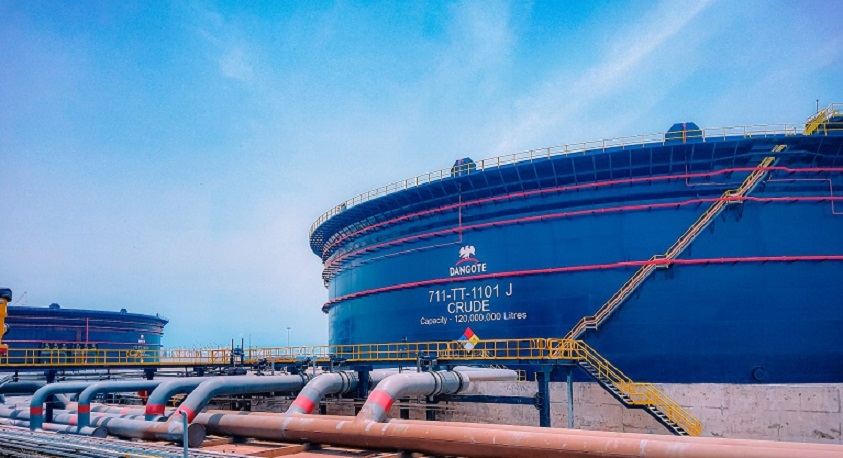
The Dangote Petroleum Refinery and Petrochemicals’ (DPRP) decision to seek leave to appeal a Federal High Court (FHC) judgment directing the Nigerian Midstream and Downstream Petroleum Regulatory Authority (NMDPRA) to continue issuing petroleum product import licences to three major oil marketers is being backed by the Energy Watchdog.
This was detailed in a statement by Martins Tayo, which considers the move as necessary to protect Nigeria’s domestic refining industry and reduce dependence on imported petroleum products.
The judgment, delivered on September 28, 2026, by Justice Inyang E. Ekwo in Suit No. FHC/ABJ/CS/1363/2026, ordered the NMDPRA to continue issuing import licences to Matrix Energy, AA Rano and AYM Shafa.
The Energy Watchdog argued that the ruling undermined the objectives of the Petroleum Industry Act (PIA) and threatened investments in domestic refining capacity.
“We completely reject and condemn in totality the judgment of the lower court. It is a deeply flawed decision that disregards the clear intent of the Petroleum Industry Act and the national interest in building a robust domestic refining industry,” the statement said.
READ ALSO: NNPC Petrol Discount: Oyedele Explains How Lower Margins Could Boost Profits
The group further cited a reported decline in petrol imports in the first quarter of 2026, alongside increased supplies from local refineries, particularly the Dangote facility, as evidence of the country’s growing domestic refining capacity.
It argued that sustaining import licences despite rising local production could undermine efforts to achieve self-sufficiency in refined petroleum products and weaken investor confidence in the sector.
According to the organisation, Dangote Refinery’s decision to seek leave to appeal as an interested party was timely, given the potential implications of the judgment for the future of Nigeria’s downstream petroleum industry.
“The lower court’s decision amounts to a judicial endorsement of continued importation irrespective of local capacity.
“We condemn it without reservation because it threatens to reverse the hard-won gains of the last few years,” Tayo stated
The Energy Watchdog maintained that the Petroleum Industry Act was designed to encourage investment in midstream and downstream infrastructure, warning that allowing the ruling to stand could send a negative signal to investors who have committed substantial resources to domestic refining projects.
The group urged the Court of Appeal to grant the DPRP leave to appeal and ultimately set aside the FHC’s order, describing the case as significant to Nigeria’s energy security and the development of its refining industry.
“Any judgment that forces the continued importation of fuel products when local refineries can supply the market is a setback for Nigeria.
“We condemn the lower court ruling in the strongest terms and fully support the appeal filed by Dangote Refinery,” the statement concluded, “The Court of Appeal must correct this error and reaffirm that the era of automatic import licences is over.”


Nigeria recorded the largest increase in the number of people experiencing multidimensional poverty among five countries that registered increases over their latest measurement periods, according to the United Nations Development Programme (UNDP).
The finding was contained in the 2026 Global Multidimensional Poverty Index report, released on Monday by the UNDP and the Oxford Poverty and Human Development Initiative (OPHI).
According to the report, Nigeria’s multidimensional poverty rate rose from 33 per cent in 2021 to 38.7 per cent in 2024, representing an increase of 5.7 percentage points.
SEE MORE: NNPC’s 30-Day Petrol Discount Is Not a Policy – Sowunmi
The number of Nigerians living in multidimensional poverty increased from 72.2 million in 2021 to 90.1 million in 2024, leaving an additional 17.9 million people affected.
The report noted that the latest increase reversed the progress Nigeria recorded between 2018 and 2021, when the proportion of people living in multidimensional poverty declined.
Nigeria’s Multidimensional Poverty Index value also increased from 0.175 in 2021 to 0.208 in 2024, reflecting a rise in both the incidence and intensity of deprivation.
The intensity of deprivation among multidimensionally poor Nigerians increased from 52.9 per cent to 53.6 per cent over the same period.
Unlike income-based poverty measures, which assess poverty based on how much people earn or spend, the Multidimensional Poverty Index examines overlapping disadvantages experienced in daily life.
The index measures deprivation across three dimensions: health, education and standard of living.
Its 10 indicators include nutrition, child mortality, years of schooling, school attendance, cooking fuel, sanitation, drinking water, electricity, housing and household assets.
A person is classified as multidimensionally poor when their household experiences deprivation in at least one-third of the weighted indicators.
The report showed that Nigeria had made progress in reducing multidimensional poverty before the latest increase.
The country’s index value declined from 0.230 in 2013 to 0.202 in 2018 and 0.175 in 2021 before rising to 0.208 in 2024.
Similarly, the proportion of Nigerians living in multidimensional poverty fell from 42.3 per cent in 2013 to 37.2 per cent in 2018 and 33 per cent in 2021 before increasing to 38.7 per cent in 2024.
The number of affected Nigerians also declined from 76.3 million in 2018 to 72.2 million in 2021 before climbing to 90.1 million in 2024.
The report further highlighted significant differences in multidimensional poverty across Nigeria’s subnational regions, with incidence ranging from 3.7 per cent to 88.3 per cent across the regions covered by the analysis.
It compared Yobe and Sokoto, two of Nigeria’s poorest subnational regions with similar Multidimensional Poverty Index values, to illustrate how the forms of deprivation experienced by communities can differ despite comparable overall poverty levels.
Globally, the report estimated that 1.2 billion people across 108 countries lived in acute multidimensional poverty.
Sub-Saharan Africa accounted for 616 million people living in multidimensional poverty, while South Asia followed with 393 million.
The report also found that 83.3 per cent of the world’s multidimensionally poor population, equivalent to approximately 998 million people, lived in rural areas, compared with 200 million in urban areas.
Children below the age of 18 accounted for 617 million, or 51.5 per cent, of the world’s multidimensionally poor population.
In sub-Saharan Africa, 355 million children lived in multidimensional poverty, accounting for 57.7 per cent of the region’s poor population.






30 Nigerians Bag Postgraduate Scholarship from NNPC Ltd, Eni

2027: ‘Algorithms Will Not Decide Election Results’, INEC Chairman Declares

Navy Recovers 98,000 Litres of Suspected Stolen Crude in Rivers

DPRP’s Appeal Against Fuel Import Licence Ruling Earns Stakeholder Backing

State Govs, Wike Endorse One-Party State, Join APC Campaign Council

2027: ‘Tinubu Has Done Well’ – Wike Tells Opposition to Speak the Truth

Trump’s Family Unveils New Cryptocurrency Platform

Senate Denies Receiving Petitions Against Tinubu’s Ambassadorial Nominees

Dangote Cement Lights Up Benue Host Communities With CSR Initiatives

Reps Recommend 3-year Jail Term For Aviation minister

Tems Sets New Record On Billboard Hot 100 Chart
