
Business
Nigerian Students Endorse Dangote Refinery

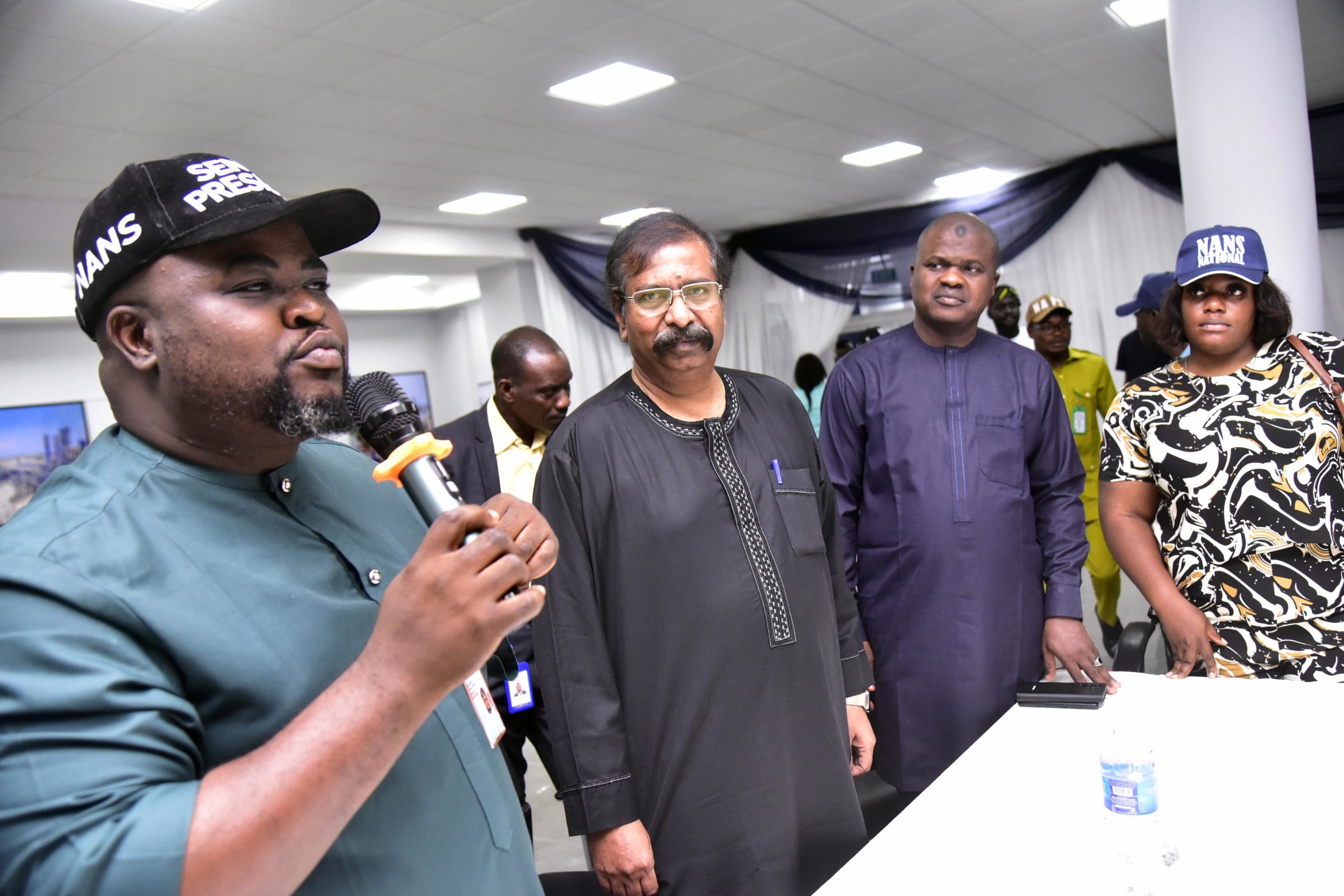
Students across tertiary institutions in the country under the aegis of National Association of Nigerian Students (NANS) have passed a vote of confidence on the Dangote Refinery describing the recent demarketing of the world’s largest single train refinery by the Nigeria National Petroleum Corporation Limited (NNPC Ltd) as a disservice to Nigeria’s economy.
After a tour of the Refinery facility, on Wednesday in Lagos, leaders of the students’ body comprising of those from Universities, Polytechnics and Colleges of Education, noted that it would take an enemy of Nigeria to rubbish the gigantic project that would stop importation of fuel once and for all and save the nation of the scarce forex.
The NANS Senate President, Akinteye Babatunde Afiz told the management of the Dangote Refinery that they had the mandate of Nigerian Students to come and assess the situation of the refinery having been told that the refinery was uncompleted and inferior in all standards.
He said, “We had a meeting on the situation in the country vis-a-vis the uncertainty in the oil and gas industry, especially the current fuel scarcity and we resolved to visit Dangote refinery to see things for ourselves. Having gone round the facility, our heart melted at the humongous size of the refinery.
ALSO READ: BREAKING: Sell Crude To Dangote Refinery In Naira – Tinubu To NNPC Ltd
“We are speaking the minds of all Nigerian students that Government should direct all marketers to patronize Dangote refinery and ease the current fuel hardship. If anyone wants to compete with Dangote let them go and build their own. Government has four refineries and they are not working yet they don’t want the one that is available to sell. We will not accept that.
“Dangote Refinery has come to stay. We have discovered that all claims being bandied around are false. Our impression is that they never expected the refinery to stand, that is why they are against you. But we are pledging our resolve to stand by you.
“We have seen the refinery laboratory and we could see that it is world class. We can’t allow this type of project that holds great potential for Nigeria’s economy to go down through some people’s disdain for the success of Alhaji Aliko Dangote.”
He then urged the government to do all possible to support Dangote Refinery and protect it from saboteurs.
Earlier, the Vice-President, Dangote Industries Limited, Devakumar Edwin while welcoming the student leaders, thanked them for the concern for the facility and the resolve to stand for the truth.
He told the students that President Tinubu had intervened and commended the President for the directive for crude to be sold to Dangote Refinery in Naira currency.
Edwin said the concern of the students was well placed as all Nigerians should be worried indeed because about 90 percent of Nigeria forex goes into importation of fuel and that Dangote Refinery could help solve the problem as 43 percent of its capacity production could satisfy domestic demand while the remaining would be exported to generate more forex into Nigeria.
Wondering why anyone would want to frustrate the refinery, Edwin noted “So much has been spent on the government refineries and there was nothing to show for it as they remained moribund.
“What we want to do in Refinery, we have done it other businesses, Nigeria used to be the biggest importer of Sugar, we came in and change the narrative. We led the backward integration scheme of the federal government, and we now produce sugar locally for domestic consumption and others have joined us. We did same in Cement by opening up production plant and today Nigeria exports cement to other countries.
“In a business no one was interested in investing into, Dangote delved into it determined to ensure Nigeria no longer imports fuel, invested massively and come up with the world’s largest single train refinery.
“He said he would not take his money to Dubai or Swiss banks as others are doing, he decided to invest at home and now they are saying he wants to create monopoly.
“We didn’t ask for any favour other than that we want to buy crude to produce, first they said there was no crude, later they said we would have to pay some dollars above the prevailing crude market price. And this is a global market where you can track crude prices anytime. We resorted to buying crude from Brazil and United States. Later they said we should not be announcing the price of the products.
“Even the US that is the leading proponent of free market economy protects its local industries by imposing huge duty on from foreign imports just to protect local industries. This is a man that Saudi Aramco once approached to come and cite his refinery in Saudi Arabia, promising steady supply of cruse. Abu Dahbi also invited him to do same on their soil but he rejected insisting he would build at home, now he did that and a facility that is supposed to add value to Nigeria’s economy is being frustrated.”
The Dangote Industries boss said the Company would continue to focus on its business strategy which is to add value to Nigeria economy through investments and job creation for the teeming Nigerian masses.









Sahara Energy Geneva has highlighted the power of business collaboration to deliver lasting impact, with Mercy Ships Cargo Day celebrating more than $20 million raised over the past decade to support healthcare interventions in Africa.
More than 500 guests from over 150 shipping and trading companies gathered in Geneva recently for the 10th anniversary Gala of Mercy Ships Cargo Day, celebrating a decade of industry support for the international charity.
David Walker, Head of Chartering at Sahara Energy Geneva and Chairman of the Cargo Day Geneva Committee, joined industry leaders at the event, where he thanked the global shipping community, sponsors, media partners and Cargo Day committees in Geneva, London, Houston, Dubai and Singapore for supporting the initiative.
Cargo Day brings together charterers, shipowners, shipbrokers, and other shipping professionals who contribute through pledges, cargo commissions, and address commissions to support the work of Mercy Ships.
READ ALSO: 30 Nigerians Bag Postgraduate Scholarship from NNPC Ltd, Eni
Kola Motajo, Director, Sahara Geneva said Sahara’s involvement reflects the company’s belief in the ability of enterprise and partnerships to deliver impact beyond business.
“At Sahara, our focus is always on impact and lives transformed. Cargo Day demonstrates what is possible when businesses and individuals unite around a shared purpose. The $20 million milestone reflects the collective commitment of the global shipping community to improving healthcare in Africa. As Sahara looks Beyond XXX, we remain committed to building connections that create lasting value and possibilities for generations to come,” Motajo said.
Reflecting on Cargo Day’s growth, Walker said: “Ten years ago, we raised $300,000 and there were 70 people at the Gala. Today, we have more than 500 people coming from around the world to support such a great cause.”
Cargo Day 2025 raised more than $2.5 million, with 93 companies participating, including charterers, brokers, shipowners, and other partners.
Mercy Ships operates two hospital ships supporting patients in Africa with free life-changing surgeries, while also providing training and mentoring for local healthcare professionals. Cargo Day funding contributes to expenses associated with operating the hospital ships.
The 2026 Cargo Day campaign begins November 4 and will run through November and December, with companies participating through Mercy Cargoes, address commissions and pledges.

Up to 30 Nigerian graduates have bagged postgraduate scholarships to pursue further studies both locally and in the Diaspora.
According to the Nigerian National Petroleum Company Limited (NNPC Ltd) and Italian energy company, Eni have awarded postgraduate scholarships
The beneficiaries emerged from more than 3,000 applicants following assessments of their academic records and performances in a recently conducted computer-based test (CBT).
The awards are under the 2026/2027 Postgraduate Scholarship Scheme of Nigerian Agip Exploration Limited (NAE), an Eni subsidiary, on behalf of the NNPC-NAE Production Sharing Contract (PSC) partners.
In a statement, NAE’s Vice Chairman and Managing Director, Maurizio Pinna, said the initiative was designed to develop local talent and equip young Nigerians with skills relevant to the oil and gas industry. Pinna congratulated the beneficiaries, noting that the scholarships would enable them to pursue their academic ambitions and achieve their career goals.
According to NAE, the programme reflects its commitment to education, innovation and capacity building in Nigeria.
The company urged the beneficiaries to make good use of the opportunity by acquiring valuable knowledge and skills that would contribute to national development, particularly in the energy sector.
Ten of the awardees will undertake postgraduate studies in universities abroad, including Imperial College London, Robert Gordon University in Aberdeen, Newcastle University, the University of Aberdeen and the University of Hull in the United Kingdom.
READ ALSO: Navy Recovers 98,000 Litres of Suspected Stolen Crude in Rivers
The remaining 20 beneficiaries will study at Nigerian universities in fields including engineering, geosciences, petroleum and environmental technology, energy economics, renewable energy and energy transition.
Established in 2007, the NNPC-NAE PSC postgraduate scholarship scheme is part of the partners’ human capital development programme aimed at promoting specialised knowledge and addressing skills shortages in Nigeria’s deep offshore oil and gas operations.
NAE said 380 Nigerian graduates had benefited from the scheme since its inception, gaining knowledge and skills required by the oil and gas industry.
Beyond education, Eni, through NAE, has implemented sustainability initiatives in Nigeria covering healthcare, access to water, infrastructure and community empowerment.
Eni has operated in Nigeria since 1962 and currently has an equity production of about 55,000 barrels of oil equivalent per day. The company also holds a 10.4 per cent stake in Nigeria LNG.
NAE was incorporated in 1996 to manage Eni’s deep offshore exploration and production assets. It became the first oil and gas company in Nigeria to produce oil from the country’s deep offshore when its Abo floating production, storage and offloading (FPSO) vessel began operations in 2003.
The company has interests in nine offshore blocks in Nigeria, either as operator or co-venturer, including PML 102 and PML 103, where the Zabazaba-Etan fields are being developed.
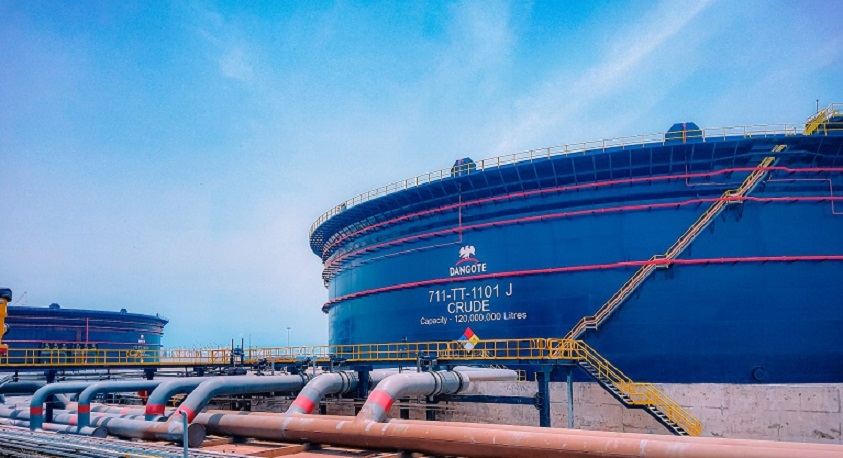
The Dangote Petroleum Refinery and Petrochemicals’ (DPRP) decision to seek leave to appeal a Federal High Court (FHC) judgment directing the Nigerian Midstream and Downstream Petroleum Regulatory Authority (NMDPRA) to continue issuing petroleum product import licences to three major oil marketers is being backed by the Energy Watchdog.
This was detailed in a statement by Martins Tayo, which considers the move as necessary to protect Nigeria’s domestic refining industry and reduce dependence on imported petroleum products.
The judgment, delivered on September 28, 2026, by Justice Inyang E. Ekwo in Suit No. FHC/ABJ/CS/1363/2026, ordered the NMDPRA to continue issuing import licences to Matrix Energy, AA Rano and AYM Shafa.
The Energy Watchdog argued that the ruling undermined the objectives of the Petroleum Industry Act (PIA) and threatened investments in domestic refining capacity.
“We completely reject and condemn in totality the judgment of the lower court. It is a deeply flawed decision that disregards the clear intent of the Petroleum Industry Act and the national interest in building a robust domestic refining industry,” the statement said.
READ ALSO: NNPC Petrol Discount: Oyedele Explains How Lower Margins Could Boost Profits
The group further cited a reported decline in petrol imports in the first quarter of 2026, alongside increased supplies from local refineries, particularly the Dangote facility, as evidence of the country’s growing domestic refining capacity.
It argued that sustaining import licences despite rising local production could undermine efforts to achieve self-sufficiency in refined petroleum products and weaken investor confidence in the sector.
According to the organisation, Dangote Refinery’s decision to seek leave to appeal as an interested party was timely, given the potential implications of the judgment for the future of Nigeria’s downstream petroleum industry.
“The lower court’s decision amounts to a judicial endorsement of continued importation irrespective of local capacity.
“We condemn it without reservation because it threatens to reverse the hard-won gains of the last few years,” Tayo stated
The Energy Watchdog maintained that the Petroleum Industry Act was designed to encourage investment in midstream and downstream infrastructure, warning that allowing the ruling to stand could send a negative signal to investors who have committed substantial resources to domestic refining projects.
The group urged the Court of Appeal to grant the DPRP leave to appeal and ultimately set aside the FHC’s order, describing the case as significant to Nigeria’s energy security and the development of its refining industry.
“Any judgment that forces the continued importation of fuel products when local refineries can supply the market is a setback for Nigeria.
“We condemn the lower court ruling in the strongest terms and fully support the appeal filed by Dangote Refinery,” the statement concluded, “The Court of Appeal must correct this error and reaffirm that the era of automatic import licences is over.”





Sahara Champions Global Shipping Collaboration for $20m Mercy Ships Healthcare Impact

30 Nigerians Bag Postgraduate Scholarship from NNPC Ltd, Eni

2027: ‘Algorithms Will Not Decide Election Results’, INEC Chairman Declares

Navy Recovers 98,000 Litres of Suspected Stolen Crude in Rivers

DPRP’s Appeal Against Fuel Import Licence Ruling Earns Stakeholder Backing

State Govs, Wike Endorse One-Party State, Join APC Campaign Council

Trump’s Family Unveils New Cryptocurrency Platform

Senate Denies Receiving Petitions Against Tinubu’s Ambassadorial Nominees

Dangote Cement Lights Up Benue Host Communities With CSR Initiatives

Reps Recommend 3-year Jail Term For Aviation minister

Tems Sets New Record On Billboard Hot 100 Chart
