
NEWS
NLC Ultimatum: Wage Demands Can Be Resolved in Two Weeks – HR Expert

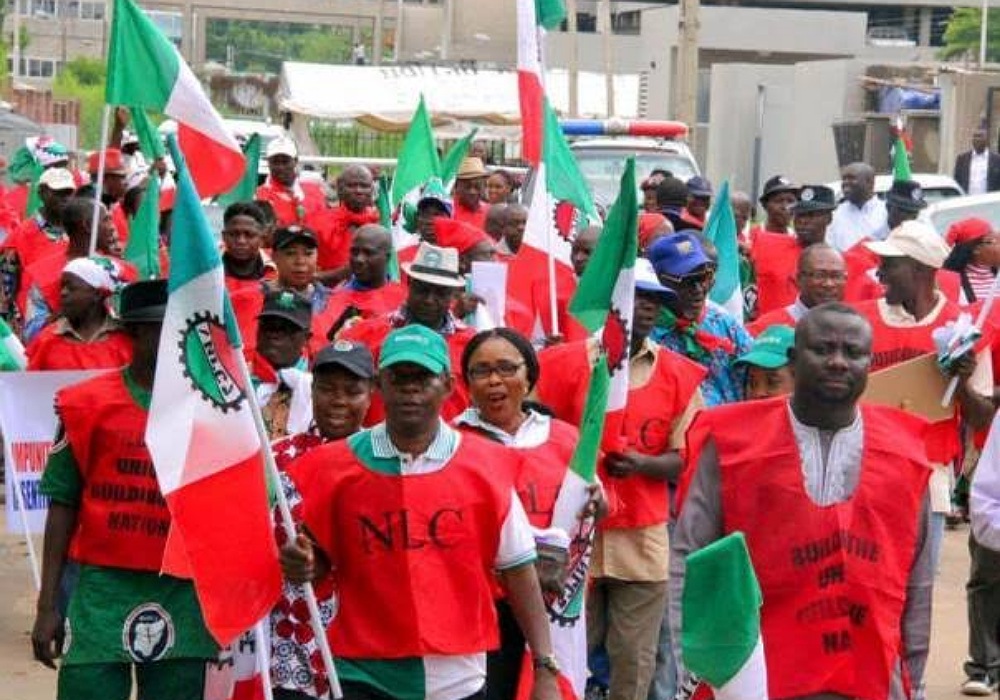
Minna Onomroba Abell, Registrar of the Chartered Institute of Human Resource and Strategic Management, has said wage-related demands by the Nigeria Labour Congress (NLC) can be negotiated within two weeks, urging the Federal Government and organised labour to reach an agreement through constructive engagement.
Abell made this known during an interview on Arise News on Sunday, while assessing the feasibility of the NLC’s demands and its two-week ultimatum to the Federal Government.
SEE ALSO: Spike in Petrol Price Moves NLC to Demands Emergency Palliatives
He explained that while some of the demands could be addressed within the stipulated period, others would require more time because of prevailing economic conditions and the measures needed for implementation.
“On the wage aspect, negotiations and all that, yes, those can be achieved in two weeks,” he said.
According to him, the government could invite labour unions and other representatives to a roundtable discussion to review existing wages and awards and consider additional incentives, including tax relief measures.
He said such discussions would provide an opportunity for both parties to examine workers’ concerns and identify areas where immediate progress could be made.
However, Abell ruled out the possibility of returning to the economic conditions and price arrangements that existed when negotiations were held in 2024, citing changes in exchange rates, crude oil prices and the operational status of Nigeria’s refineries.
“But asking the government to go back to 2024 when the negotiation was held, it is not possible because there are a lot of factors that will lead to that,” he said.
The human resource expert also questioned conflicting claims about the operational capacity of Nigeria’s refineries, arguing that the issue should be considered in discussions about persistent increases in petrol prices.
He criticised labour representatives over what he described as an inconclusive struggle, questioning their previous claims about the operational status of the refineries.
“And I want to draw the attention of the NLC that they’ve been fighting a war or do I put it a war now? They’ve been fighting an unjust fight or inconclusive fights. Let me put it inconclusive,” he said.
Abell argued that labour representatives had previously told Nigerians that the refineries were operating at full capacity, only for subsequent developments to raise questions about their actual performance.
“They are the same people who went and came to tell Nigerians that the refineries are working to full capacity. And today, we find out that the refineries are not working to full capacity,” he said.
He further argued that full-capacity refinery operations could reduce the country’s reliance on imported petroleum products.
“So, you cannot be the one telling Nigerians that the refineries are working in full capacity and also come back that to say that the refineries are not working, because if they are working to full capacity, this importations of fuel and all that might not really be there as such,” he added.
Abell maintained that resolving the disagreements over wages and fuel prices would require proper engagement between the Federal Government and organised labour.
He urged both parties to reach an agreement that takes prevailing economic realities into account while addressing workers’ demands.
“The issue is that there should be an agreement and a proper discussion between the Federal Government and the labour unions to achieve these goals they are talking about,” he said.
He added that although some demands could be addressed immediately, others might require longer-term measures to ensure lasting results.
“However, there are some certain goals or demands that can be achieved in the immediate, but at the long run it will also fail,” Abell said.
His remarks come amid the NLC’s demands for action by the Federal Government on workers’ welfare and petrol prices, with the union giving the government a two-week ultimatum to address its concerns.




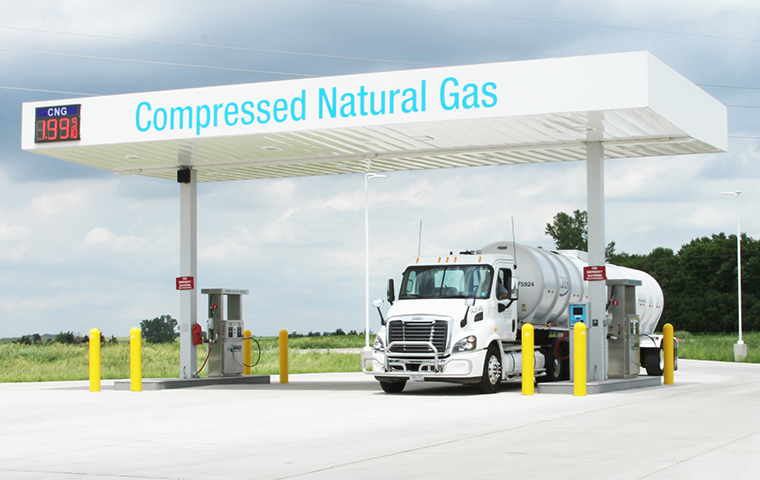
The Federal Government changed its initial plan to deploy 3,000 buses in favour of a broader Compressed Natural Gas (CNG) initiative after reviewing how best to address Nigeria’s transportation challenges, Tosin Coker, Chief Operating Officer of the Presidential CNG and Electric Vehicles Initiative, has said.
Coker explained that the initial plan, announced in July 2023, was subsequently reviewed, leading to the establishment of the Presidential CNG Initiative in October 2023.
SEE ALSO: CNG Can Cut Fuel Cost From N200,000 to N40,000 — FG
Speaking during an interview on Sunday, he said the government recognised that deploying buses alone would not adequately address the transportation needs of Nigerians, particularly in densely populated cities such as Lagos.
According to him, the revised strategy was designed to reach more people by expanding beyond buses to include vehicle conversion kits, tricycles and other interventions aimed at reducing transportation costs.
“The announcement that $100 million was being set aside was made in July 2023, and the plan was to go ahead with 3,000 buses,” Coker said.
He explained that further consideration of the plan revealed the need for a broader approach, which informed the establishment of the initiative.
“When the initiative was set up, that moved to not just buses, because we realised it’s not just buses that move people around, and we couldn’t reach everyone with just even 3,000 buses,” he said.
Coker noted that although deploying 3,000 buses in Lagos would make a difference, the number would still fall short of the city’s transportation requirements.
“Believe me, 3,000 buses, if you drop them in Lagos today, will do something, but it’s nowhere near enough for what Lagos needs,” he added.
Coker disclosed that the initiative began its rollout towards the end of 2023, with the procurement of approximately 25,000 vehicle conversion kits and about 600 buses, alongside tricycles.
He said the expanded approach was intended to reach more Nigerians, improve their transportation experience and reduce the amount they spend on commuting.
According to him, the change in strategy resulted in a broader programme that seeks to encourage the adoption of CNG-powered vehicles rather than relying solely on the deployment of buses.
Coker said the shift from the initial 3,000-bus proposal to the wider initiative was necessary to ensure that more people could benefit from the government’s intervention.
Coker Explains CNG Infrastructure Funding
The Presidential CNG and Electric Vehicles Initiative chief also addressed funding for infrastructure, explaining that government interventions were being complemented by mechanisms designed to encourage private-sector investment.
He said funding for CNG infrastructure was being provided through interventions under the initiative and mechanisms such as the Midstream and Downstream Gas Infrastructure Fund.
According to Coker, private organisations can apply for funding to invest in infrastructure across the CNG sector and its value chain.
He emphasised that private-sector participation would be crucial to expanding the infrastructure needed to support the adoption of CNG-powered vehicles across the country.
FG Urges States to Invest More in Transportation
Coker also called on state governments to increase their involvement in improving transportation, stressing that the Federal Government could not be expected to address every challenge on its own.
He explained that the distribution of buses to states formed part of the Federal Government’s intervention to make an initial impact in selected locations.
However, he maintained that state governments needed to complement the federal initiative with their own investments and policies.
“The Federal Government cannot be the one expected to do everything. We will intervene, we will catalyse, show what is possible, and support as much as possible, but states should do more, and we’re enabling them to do that,” he said.
He added that the government intended to create an enabling environment for private-sector participation through appropriate business conditions, training standards and safety measures.
Cheaper Transport Fares Remain the Goal
Coker said the ultimate objective of the initiative was to ensure that Nigerians experienced tangible benefits, particularly through reduced transportation costs.
He noted that the programme’s success should not be measured solely by the number of buses deployed or conversion kits purchased, but by whether commuters and vehicle owners experienced lower costs.
“Nigerians are not interested in the statistics, they just want to know that this is impacting me and I’m paying less for my transportation,” he said.
He cited commuters travelling from Nyanya to the Secretariat in Abuja and from Ikorodu to Ojuelegba in Lagos as examples of people expected to benefit from more affordable transportation.

The Transmission Company of Nigeria (TCN) has restored bulk power supply to its Katampe 330kV Transmission Substation in Abuja following an earlier disruption caused by a fault on the Shiroro–Katampe 330kV Line 1.
The development was disclosed in a statement released by TCN management on Friday, October 9, 2026.
SEE ALSO: Kainji–Birnin Kebbi Power Line: TCN Begins Final Phase of Restoration
According to the statement, bulk power supply was restored to the Katampe substation at 4:15 p.m. through the Gwagwalada–Katampe 330kV Line 1.
TCN explained that the Shiroro–Katampe 330kV Line 1 remains out of service due to a fault, necessitating the use of the Gwagwalada–Katampe line to restore supply to the substation.
The company also announced the suspension of planned maintenance work on the Gwagwalada–Katampe 330kV Line 1 to enable the line to continue supplying the Katampe substation.
The suspended maintenance work involved replacing defective line isolators and the associated earthing switch.
TCN apologised to electricity consumers in the affected areas for any inconvenience caused by the disruption and maintenance arrangements.
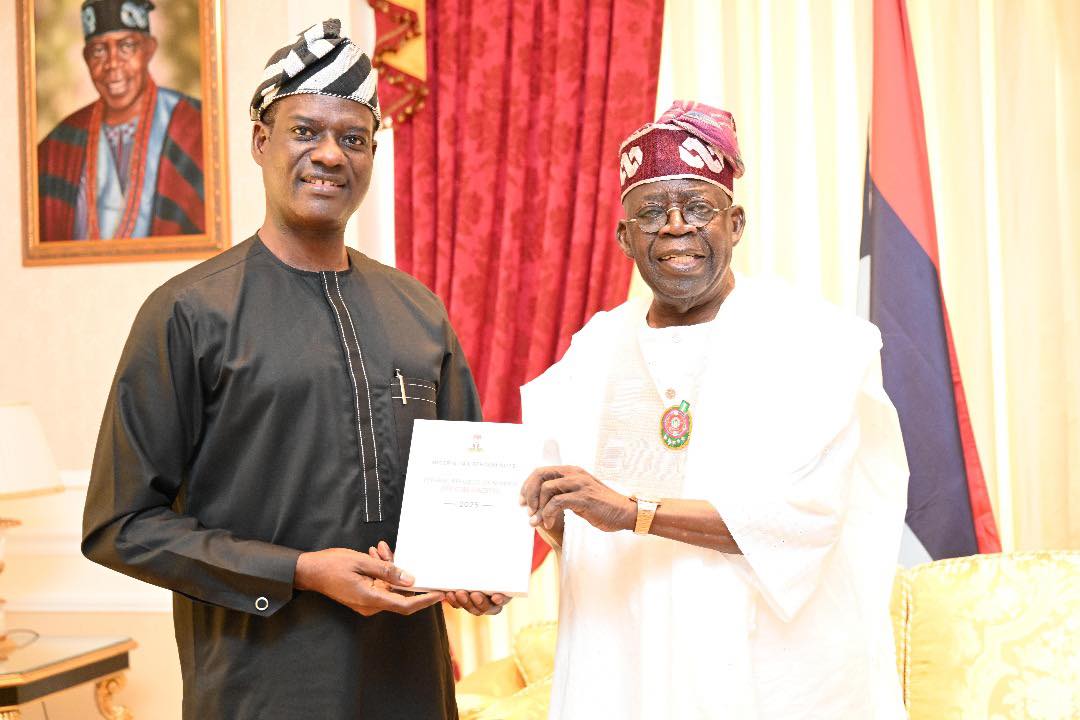
The Federal Government has warned politicians against making promises that could reverse Nigeria’s economic reforms, insisting that it will not restore fuel subsidy amid renewed debate over the Nigerian National Petroleum Company Limited’s (NNPC) petrol discount.
The Minister of Finance and Coordinating Minister of the Economy, Taiwo Oyedele, disclosed this during an interview on Channels Television on Friday, saying the government would not bring back subsidies on petroleum products.
“This government is not bringing back subsidy on fuel products. We need to be clear,” Oyedele said.
ALSO READ: NNPC Petrol Discount: Oyedele Explains How Lower Margins Could Boost Profits
The minister also criticised politicians who, according to him, make promises to win elections without fully considering the implications of implementing them.
He suggested that some politicians make sweeping promises during election campaigns only to offer excuses when confronted with the realities of governance.
“I think I would pardon people who say all manner of things because they want to get elected. It’s almost like ‘whatever I need to say, when I get there, I’ll give excuses.’ But we have the data,” he said.
Oyedele added that he felt a personal responsibility not to remain silent about the economic realities known to the government or allow populist positions to push Nigeria in the wrong direction.
“I feel the personal responsibility that I cannot see what I see and keep quiet, or populism to move our country in the wrong direction,” he said.
NNPC Petrol Discount Sparks Fresh Subsidy Debate
The minister’s remarks come amid renewed debate over fuel subsidy following the Federal Government’s announcement of a 30-day petrol discount at NNPC retail stations.
The initiative was introduced as a temporary measure to provide relief to Nigerians amid elevated global crude oil prices and concerns about the cost of petroleum products.
NNPC Retail had also announced a N66-per-litre petrol discount to mark Nigeria’s 66th Independence Anniversary, with the offer scheduled to run until October 31, 2026, across its retail stations nationwide.
The company maintained that the discount was a customer-relief initiative and did not represent a return to the petroleum subsidy regime.
The distinction has become central to the debate, with the government insisting that temporary price relief at NNPC stations does not amount to restoring the subsidy policy abolished in May 2023.
The administration has maintained that the current arrangement differs from the former subsidy system, under which the government intervened to cover part of the cost of petrol.
FG Defends Economic Reforms
During the interview, Oyedele also referred to a World Bank update, saying the institution had acknowledged a reduction in poverty levels and increased spending on infrastructure, particularly roads.
He urged Nigerians not to reverse the progress he said had been made, arguing that the country was approaching a point where the benefits of ongoing reforms should begin to emerge.






NLC Ultimatum: Wage Demands Can Be Resolved in Two Weeks – HR Expert

LASTMA Alerts Motorists to Traffic Delays on Ogunnusi Road
CNG Initiative: Why Tinubu’s Gov’t Moved Beyond Plan for 3,000 Buses – Coker

2027: Yilwatda Lists Tinubu’s Projects, Appointments as Reasons for North Central Support

Domestic Flight delays, Cancellations Compound Air Travellers’ Woes

2027 Election Might Witness Voter-Apathy as Registered Voters Shun PVC Collection

Trump’s Family Unveils New Cryptocurrency Platform

Senate Denies Receiving Petitions Against Tinubu’s Ambassadorial Nominees

Dangote Cement Lights Up Benue Host Communities With CSR Initiatives

Reps Recommend 3-year Jail Term For Aviation minister

Tems Sets New Record On Billboard Hot 100 Chart
