Gas
NLNG resumes legal battle with GWVS/NIMASA over tax levies


Nigeria Liquefied Natural Gas, NLNG owners of six trans with an overall capacity of some 22 million tonnes per annum of LNG and 4 million tonnes per annum of LPG said it was resuming its legal battle against Nigerian Maritime Safety and Administration Agency, NIMASA and Global West Vessel Specialist Ltd, GWVS in its bid to be exempted from paying freight levies on the gas cargoes its ships.
NLNG action is sequel to a ruling on August 11th, 2014 by Nigeria’s court of appeal sitting in Lagos which upheld NLNG’s request to sue a private security company, Global West Vessel Specialist Ltd, employed by state maritime security agency NIMASA to carry out blockades of shipment of LNG cargoes in between May and June 2013, NLNG said in a statement.
Gas exports by NLNG were halted between May and June, 2013 for three weeks after NIMASA blocked ships from entering and leaving the Bonny LNG plant’s loading bay.
The blockade led to more than N76 billion losses in revenue to NLNG in 2013, IMASA then wanted NLNG to pay $140 million to coverfreight levy arrears.
NLNG said then that Nigerian law exempts the company from paying freight levies, and took NIMASA and West Global to court challenging the imposition of the levies andthe resulting blockade.
But after initially withdrawing the case, which allowed the blockade to be lifted, NLNG said on Wednesday the court ruling delivered on Monday “affirmed a previous judgment by a Federal High Court also in Lagos, which granted NLNG the rights to sue the security company Global West, for its role in the blockade of the gas export cargoes.”
NLNG said last year it lost more than Naira 76 billion ($475 million) in revenue because of the blockade.
NLNG is owned jointly by state oil firm Nigerian National Petroleum Corp. (49%), Shell (25.6%), Total (15%) and Eni (10.4%).
Kudo Eresia-Eke, NLNG General Manager, External Relations in statement said the Court of Appeal in Lagos on Monday, August11, 2014 upheld a preliminary objection by Nigeria LNG Limited and dismissed an appeal filed by Global West Vessel Specialist Limited, challenging an earlier Federal High Court decision to continue a substantive suit over the blockade of NLNG’s jetty in Bonny, from where the Company exports cargoes of liquefied natural gas and allied products.
The statement reads “In a lead judgment delivered by Hon. Justice Rita Nosakhare Pemu, with which the other Justices that heard the appeal concurred, the Appeal Court ruled that the Notice of Appeal filed by Global West was “incompetent” as contended by NLNG, having been filed without leave either of the Federal High Court or the Court of Appeal.
“The ruling affirms a previous one by the Federal High Court in Lagos dismissing Global West’s Notice of Preliminary Objection against a substantive suit by NLNG on the ground that Global West was a proper party to the suit.
“Following the refusal by the Federal High Court, Global West then proceeded to the Appellate Court to set aside the decision and stay proceedings at the lower Court pending the determination of the appeal.
“Nigeria LNG Limited in 2013 filed a case at the Federal High Court against the Attorney General of the Federation and Global West, seeking a judicial determination on, among other things, the legality or otherwise of certain levies sought to be imposed on NLNG by Nigerian Maritime Administration and Safety Agency (NIMASA), an agency of the Federal Government and the consequent blockade of NLNG vessels by NIMASA and Global West as a result of the dispute.”

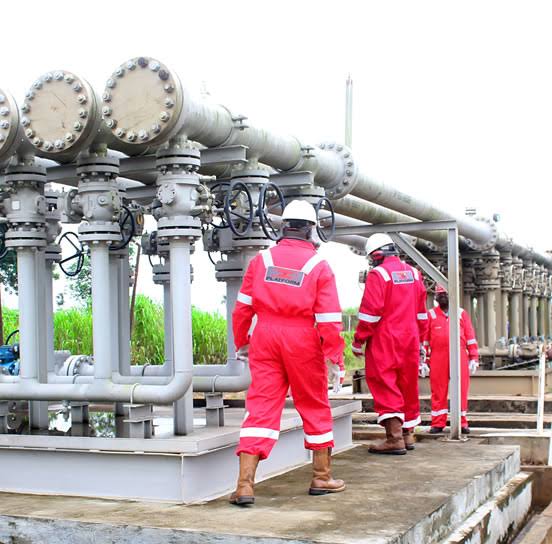
Announces ambitious expansion plans
Platform Petroleum says the company is targeting a billion-dollar investment as it announces an ambitious strategic plan to bring 3 marginal fields into production by 2025, with a target of 10,000 barrels of oil and at least 50 billion standard cubic feet of gas per day.
Speaking on the sidelines of the 2024 Offshore Technology Conference (OTC) in Houston, USA, Chief Dumo Lulu-Briggs, Chairman of Platform Petroleum said that the company has scheduled a roadshow in London this June 2024 to raise extra funding to finance their ambitious expansion plans.
“The upcoming roadshow aims to attract equity partners and prepare for future opportunities, targeting a billion-dollar investment. We are seeking partners ready to invest in Nigeria’s oil and gas potential.
Our goal is to showcase the country’s vast opportunities and its potential to international investors” Lulu-Briggs said.
Platform Petroleum’s roadshow in London will highlight the company’s efficient production, upgraded flow stations, increased capacity, and achievements in nearly zero emissions.
With about one percent gas flare currently, Platform aims for zero gas flares by the last quarter.
“Nigeria is a vast market, and Platform Petroleum is thinking big. With the government’s ambitious plans, such as the Lagos-Calabar coastal line, Platform is poised for growth; pushing itself to the next level, building on a strong foundation and following Seplat’s successful precedent”, Lulu-Briggs said.
Despite being a small company, he emphasized that Platform Petroleum has demonstrated significant success and efficiency, showcasing that smaller oil and gas entities can indeed achieve remarkable feats adding that he believes that the company deserves recognition and more assets.
“Platform Petroleum is ambitious, aspiring to become a tier-1 company akin to international oil companies (IOCs) or a tier-2 company like Seplat. Interestingly, Seplat originated from Maurel & Prom, Shebah Petroleum, and Platform Petroleum, and today stands as a major player in the industry.
This history underlines Platform’s potential for substantial growth”, Lulu-Briggs said.
Furthermore, the Platform Petroleum Chairman said that the Offshore Technology Conference (OTC) is a crucial event for promoting Nigeria’s significant market potential.
“Partnering with the Petroleum Technology Association of Nigeria (PETAN) at OTC is key to attracting investment. The current proactive government understands the necessity for economic growth, and Platform is prepared to leverage every opportunity in the oil and gas industry to contribute to this expansion”, he concluded.
Precious ADELOLA
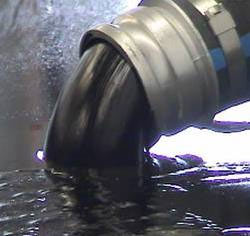
The NNPC/Aiteo Joint venture has announced the introduction of Nembe Crude Oil Grade, a new crude oil grade into the international crude oil market.
The announcement of the Nembe Crude Oil Blend, produced by Aiteo, the Operator of the NNPC/Aiteo Oil Mining Lease (OML) 29 Joint Venture (JV), was made at the ongoing Argus European Crude Conference in London, on Tuesday.
OML 29, an asset located onshore Nigeria, is operated by Aiteo Eastern Exploration & Production Ltd, Africa’s leading indigenous hydrocarbon producer, following a historic acquisition from Shell in 2014.

NNPCL Boss, Engr. Mele Kyari
The Nembe Crude was previously blended with the popular Bonny Light grade and exported via the Bonny Oil & Gas Terminal.
The unique selling point of the Nembe Crude Oil grade with an API gravity was highlighted by both the Aiteo E & P and NNPC Limited Leadership at the Argus Conference in London.
The Nembe Crude Oil grade also has a low sulphur content and low carbon footprint due to flare gas elimination, fitting perfectly into the required spec of major buyers in Europe.
Two cargoes of 950,000 barrels each of the Nembe Crude Oil grade have since been exported to France and the Netherlands. With its attractive Assay of API 29 and low sulphur content, the Nembe Crude Oil grade commands a premium to the global Brent benchmark.
With the NNPC-Aiteo OML 29 JV back on-stream, Nigeria now boasts of an additional crude oil export of 2 Cargoes at 950,000 barrels each per month and 1.2 Bcf of export gas monthly.
This remarkable achievement signals the commencement of activities at Nigeria’s newest crude oil terminal, the Nembe Crude Oil Export Terminal (NCOET), which was licensed in line with the extant laws and Crude Oil Terminal establishment regulations.
The terminal was conceived as a Floating Storage and Offloading Vessel (FSO) with a storage capacity of two (2) Million Barrels and the ability to offload crude oil to any export tanker from AFRAMAX to Very Large Crude Carriers (VLCC).
It has a loading capacity of 25,000 barrels per hour and will be exporting over 3.6 million barrels of Crude oil monthly at full scale of operation.
Currently, hydrocarbon production from OML 29, which was hitherto constrained due to evacuation challenges owing to the security issues around the Nembe Creek Trunk Line (NCTL) corridor, has now been resolved through a collaborative and creative approach that led to the innovation of the Alternative Crude Oil Evacuation Solution.
The Argus European Crude Conference 2023 in London is a gathering of energy majors, refiners, NOCs, traders, financial institutions, and other representatives from across the global oil markets. The event also provides a critical opportunity for business leaders to connect, discuss, share and learn from one another.

Modupe Asudo
Major players in the oil and gas sector in Nigeria led by the Nigerian National Petroleum Company Limited (NNPCL) have covenanted to optimise operations by reducing contracting cycle to not more than 180 days.
A statement issued by the company disclosed that the Memorandum of Understanding (MoU) to this effect was endorced on Monday in Abuja at the company’s head office.
Other parties to the the contract include, the Nigerian Content Development and Monitoring Board, (NCDMB) and international oil companies.
Biztellers reports that an optimised contracting cycle was expected to improve the ease of doing business, reduce cost and drive efficiency, which would eventually translate to production growth, increased revenues, and ultimately improved profitability.
In addition, the MoU was expected to contribute significantly to the double-digit economic growth rate agenda of the Federal Government and generate value for all stakeholders, including investors, companies, host communities and Nigeria.
Notable elements in the framework of the MoU, going by the statement, included a reduction of the contracting cycle for open competitive tender, selective tender, and single sourcing tender to 180, 178, and 128 working days respectively.
This was in contrast with the current best effort performance of 327, 333, and 185 working days respectively.
According to Group Chief Executive Officer, NNPCL, Mele Kyari, signing the agreement portends exciting times for Nigeria’s oil and gas industry, in addition to standing as a bold testimony that the company was plunging into the future of hope, productivity and success.
Kyari, represented at the occasion by Executive Vice President, Upstream, NNPCL, Oritsemeyiwa Eyesan, pointed out that with oil and gas as the bedrock of Nigeria’s economy, there was need to get the contracting process in the Industry right so as to get the economy back on track.
In his remarks, Executive Secretary, NCDMB, Simbi Wabote, described the MoU as a way forward and a critical step towards enhancing the nation’s crude oil production.





Tinubu To Attend Africa Heads of State Energy Summit In Tanzania

Italy Collaborates With Edo To Combat Irregular Migration

Terrorism: Police Neutralises ESN Kingpins, Destroys Camps In Imo
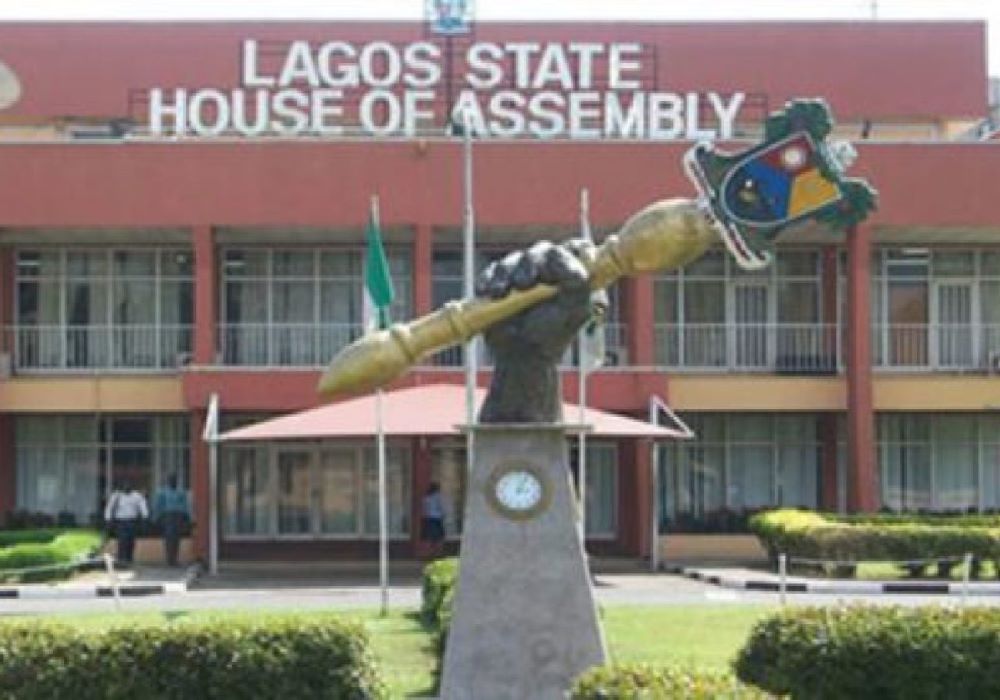
JUST IN: Security Beefed Up As Obasa’s Supporters Occupy Speaker’s Lodge
9mobile Commends NCC For 50% Tariff Adjustment To Boost Telecom Sector

Kano Police Warn Residents Of Imminent Terror Attack Threats

OSSG Raises Alarm Over Murder Plot By APC Chieftain

NCC, SMEDAN, NAICOM, SEC, Others Set for SUPERNEWS SMEs Conf June 13

Sahara’s Tonye Cole resigns from GPHCDA

Niger Delta Avengers: President Buhari Reads riot Act …considers the carrot and stick option

Oando opens ultra-modern petrol station in Lagos