
Other News
NOGICD Act enforcement: NCDMB teams up with security agencies

Precious ADELOLA
IN a bid to drive compliance and enforcement of the provisions of the Nigerian Oil and Gas Industry Content Development (NOGICD) Act, the Nigerian Content Development and Monitoring Board (NCDMB) has held a workshop for law enforcement agencies, with the theme “understanding the objectives and philosophy of the Nigerian Oil and Gas Industry Content Development Act.
The two-day workshop was held this week in Abuja, and it was attended by personnel from the Economic and Financial Crimes Commission, (EFCC), Independent Corrupt Practices Commission (ICPC), Nigeria Police, Nigerian Customs Service and other relevant agencies.
In his welcome address, the Executive Secretary of NCDMB, Engr. Simbi Kesiye Wabote explained that the Board organised the workshop to create synergy and collaboration with regulatory and enforcement agencies in the discharge of its mandate.
He indicated that the Board held these types of workshops regularly with a view to strengthen collaboration with key stakeholders, particularly those that are not familiar with the Board’s roles in the oil and gas industry.
The former Inspector General of Police, Dr Solomon Arase made a presentation at the workshop and identified gaps in the provisions of the NOGICD Act that would hamper the successful prosecution and conviction of companies deemed to have breached the provisions of the Act.
He proposed some amendment to the Act, notably, explicit definition of offences, expansion of the parties to offences and stiffer punishments for noncompliance.
The former IGP also advised the Board to build a small team of experts, with competences in investigation and identification of ingredients critical for proving cases of noncompliance. He suggested that the team should include officers of the Nigeria Police, ICPC, EFCC and other relevant agencies, who would be trained on Nigerian Content.
The Director, Legal Services, Barrister Umar Mohammed Babangida presented the draft Nigerian Oil and Gas Industry Content Development Compliance and Enforcement Regulation 2020 and added that the document was designed to plug some of the gaps that were identified in the NOGICD Act.
He also explained that non-compliance and breach of Nigerian Content guidelines have been categorized into Minor Infraction and Serious Infractions.
Minor offences refer to first time defaults, deficits in meeting deadlines for periodic reports and similar defaults and applicable sanctions would include Letter of Warning, Invitation of Management Team of the Operator/ stakeholder for corrective dialogue with the Board.
On the other hand, serious infraction includes repeated or persistent defaults; and/or deliberate refusal to comply with directives issued by the Board.
Punishment for such offences will include “Name and shame of defaulting Operator/stakeholder with publicity within national and international Oil and Gas communities; Notification to other MDAs about the non-compliance of the Operator/stakeholder, including request for the withdrawal of tax privileges, and/or preventing the Operator/stakeholder from getting “cost recovery”, where applicable; Withdrawal of Certificate of Authorization issued for the project under Section 8 of the Act; Withdrawal of any approval given by the Board as required under the provisions of Sections 17, 19 and 20 of the Act on Nigerian Content Compliance Certificate and Prosecution of the offenders in accordance with the provisions of part I of the draft regulation ( as a last resort.”
Explaining further, the Director said the Board shall first give notice in writing to any operator or other stakeholder, specifying the identified default(s) and corrective step, action and/or remediation required to address an identified non-compliance.
He added that failure to comply shall attract the imposition of appropriate sanctions and/or penalties as may be deemed applicable in the circumstances.
Also speaking, the Director, Monitoring and Evaluation, NCDMB, Mr. Akintunde Adelana explained that the pioneer promoters of the NOGICD Act focused on building consensus and collaboration with stakeholders, especially the international oil companies who were the drivers of the business. “We needed to focus on value addition and domiciliation. The issue of securing conviction against noncompliance was not the priority at that time.”
He listed some challenges faced by the Board in implementing enforcing the NOGICD Act to include inadequate strategic collaboration among stakeholders in the industry; overlapping of tasks by various government agencies, non-submission/late submission of statutory reports and inadequate coverage of the projects and activities in the Nigerian oil and gas industry as a result of manpower shortage.
Other challenges include execution of projects, contracts/services without approval from the Board and non-execution of NCDMB HCDI Training on the back of projects; non-deduction and remittance of NCDF one percent; utilization of non-registered vendors in the NOGICJQ, deployment of expatriates without approval from NCDMB; use of Manpower License designated for Nigerian personnel only to deploy Expatriates; refusal to Nigerianise expatriate positions after statutory four years as captured in the Act and non-submission of Research and Development Plan by Service Companies.
In his presentation, the Director, Planning Research & Statistics, Mr. Daziba Patrick Obah proposed that the Nigeria Immigration Service (NIS) and Nigerian Civil Aviation Authority (NCAA) should enforce the guidelines of NCDMB on expatriate utilization by oil & gas companies on land and offshore locations. “Enforcement and checks can be conducted at various entry points and access points to offshore locations by demanding for biometrics identity card before approving flight request by expatriates to offshore oil and gas operations,” he said.
He also suggested that the Military should collaborate with the Board in deepening R&D and domesticate hardware and software technology, maintenance techniques for military equipment. Enforcement agencies should also join the essential services sectoral working group and shipping and logistics sectorial working group to share insights and open channels of communication, he added.


The Fédération Royale Marocaine de Football (FRMF) has defended its position following the controversial ruling by the Confederation of African Football Appeal Board over the disputed 2025 Africa Cup of Nations final.
In a statement issued on Wednesday, the Moroccan football authority said its appeal was strictly aimed at ensuring the proper application of competition rules, and not to question the sporting merit or performance of any team involved in the final.
The federation emphasized its commitment to fairness, transparency, and the stability of African football competitions, noting that its actions were guided by respect for established regulations.
ALSO READ: JUST IN: Senegal Stuns Hosts Morocco To Lift AFCON 2025 Trophy
“The Federation reiterates that its approach has always been grounded in respect for the rules and stability of African competitions,” the statement read.
FRMF also praised all participating nations in the tournament, describing the 2025 AFCON as a significant milestone in the growth and development of football across the continent.
However, the body revealed that a more detailed position would be made public after a scheduled meeting of its governing organs.
The statement is expected to further clarify Morocco’s stance and outline any possible legal or administrative steps moving forward.
The CAF Appeal Board’s decision has continued to generate widespread reactions among football stakeholders, with growing calls for clearer regulations, improved transparency, and consistency in the administration of African football.
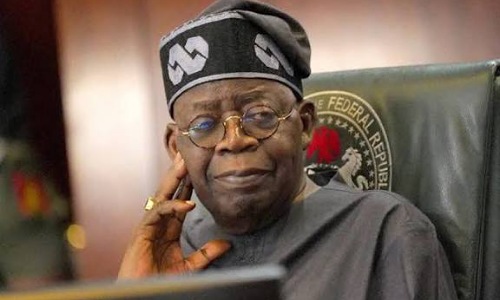
The Social Democratic Party (SDP) and the Inter-Party Advisory Council (IPAC) have disclosed details of their recent closed-door meeting with President Bola Tinubu, explaining that the engagement focused on strengthening Nigeria’s democratic process ahead of the 2027 general elections.
The clarification came amid speculation surrounding the meeting, which took place at the Presidential Villa in Abuja after leaders of several opposition parties attended an Iftar dinner hosted by the president earlier in the week.
ALSO READ: NNPC Secures Tinubu’s Approval for $20bn FID on Bonga Deepwater Project
Speaking during a gathering hosted in Abuja by the SDP’s former presidential candidate, Adewole Adebayo on Friday, the party’s National Chairman, Prof. Sadiq Gombe, said the meeting with Tinubu followed an official invitation from the Presidency and lasted about an hour.
According to Gombe, the discussion centred on the need to strengthen Nigeria’s electoral laws and restore public confidence in the country’s electoral process ahead of the 2027 polls.
He explained that the meeting provided an opportunity for party leaders to remind the president of the importance of conducting transparent, free, and credible elections.
Gombe noted that democracy can only thrive when governments listen to the concerns of citizens and ensure electoral processes that guarantee fairness and accountability.
The SDP chairman also expressed concern over growing voter apathy, pointing to the low turnout recorded in the recent Area Council election in the Federal Capital Territory.
He said the Abuja Municipal Area Council election witnessed only about seven per cent voter turnout, which he described as a clear sign that many Nigerians are losing confidence in the electoral system.
Gombe urged the government and members of the National Assembly to take urgent steps to review electoral laws and rebuild public trust in Nigeria’s democracy.
Also speaking, the National Chairman of IPAC, Dr. Yusuf Dantalle, said political parties used the meeting to raise concerns about aspects of proposed electoral reforms, particularly issues related to indirect primaries and the mandatory electronic transmission of results.
Dantalle explained that the parties appealed to the president to use his influence to encourage legislative review where necessary, noting that reforms should strengthen, rather than complicate, the democratic process.
He expressed optimism that Tinubu would consider the concerns raised and support necessary amendments that would improve the electoral system.
The IPAC chairman also called on the Independent National Electoral Commission (INEC) to strictly adhere to electoral guidelines as preparations for the next election cycle begin.
Earlier in his remarks, Adebayo cautioned political actors against turning the 2027 general elections into a do-or-die contest, stressing that the primary goal of democracy should be the progress and stability of Nigeria rather than personal political victories.
He urged leaders across political parties to encourage citizens to actively participate in the democratic process and ensure that elections are conducted peacefully and transparently.
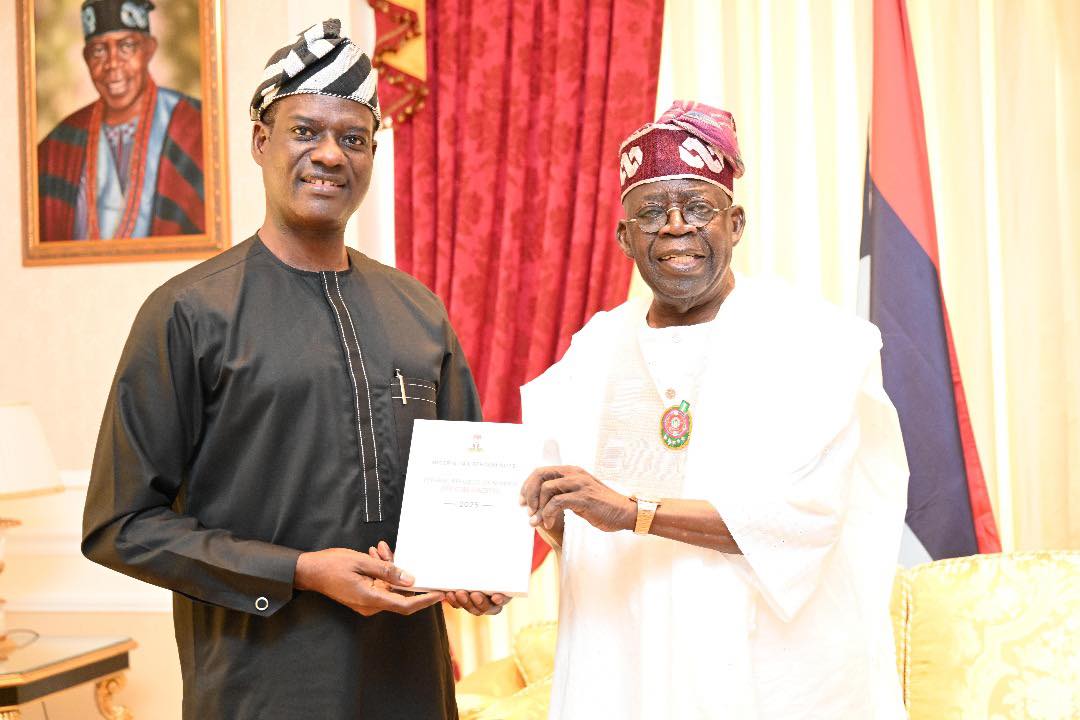
President Bola Tinubu and Mr. Taiwo Oyedele during his nomination on Wednesday.






Israel Kills Iran Intel Chief, Tehran Threatens Retaliation

Tinubu Makes History at Windsor Castle, Vows Stronger Nigeria-UK Partnership

Workers Rejoice as Yobe Pays Salaries Early Ahead of Eid

AFCON 2025 Drama: Morocco Defends CAF Ruling Amid Growing Controversy

Fear of Crisis Looms as Sanusi, Bayero Plan Rival Sallah Durbar

Maiduguri Blasts: Atiku Warns of Terror Resurgence, Slams Govt Response

Trump’s Family Unveils New Cryptocurrency Platform

Dangote Cement Lights Up Benue Host Communities With CSR Initiatives

Reps Recommend 3-year Jail Term For Aviation minister

Senate Denies Receiving Petitions Against Tinubu’s Ambassadorial Nominees

Tems Sets New Record On Billboard Hot 100 Chart
