
International News
Trump Dismisses Four Biden-Appointed Officials, Signals More Shake-ups

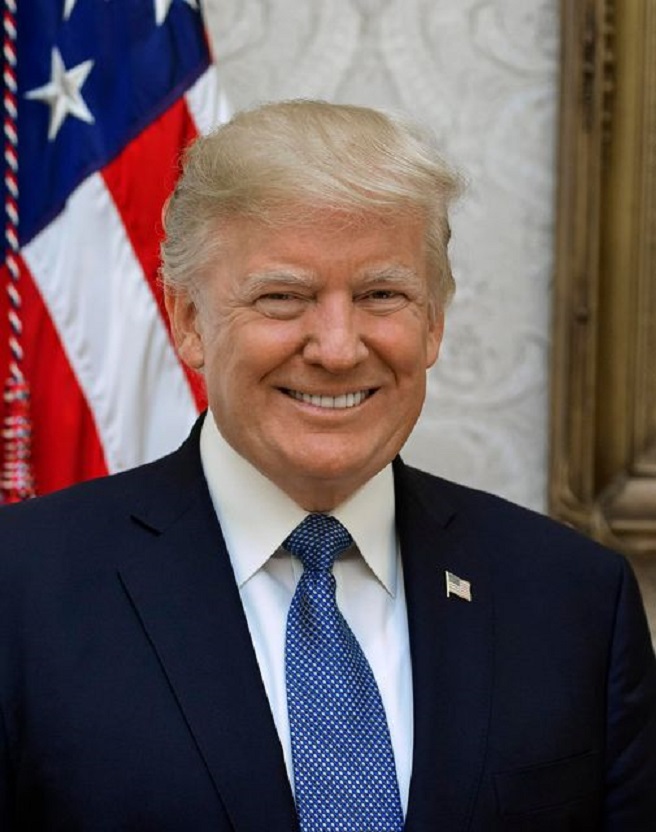
In a bold and controversial move on his first day back in office, President Donald Trump fired four senior officials appointed by his predecessor, Joe Biden, and signaled additional dismissals as imminent.
The announcement was made in Trump’s first Truth Social post following his inauguration as the 47th President of the United States.
READ MORE:Trump Completes Return To White House, As 47th US President
“Our first day in the White House is not over yet! My Presidential Personnel Office is actively in the process of identifying and removing over a thousand Presidential Appointees from the previous Administration, who are not aligned with our vision to Make America Great Again,” Trump wrote in the post, titled “YOU’RE FIRED.”
The dismissed officials include Jose Andres of the President’s Council on Sports, Fitness, and Nutrition; Mark Milley from the National Infrastructure Advisory Council; Brian Hook of the Wilson Center for Scholars; and Keisha Lance Bottoms from the President’s Export Council.
Trump used his signature phrase from The Apprentice to emphasize their departure: “YOU’RE FIRED!”
The dismissals are part of a series of sweeping actions Trump has undertaken to reverse Biden-era policies and assert control over federal governance.
Among his first executive orders, Trump instituted a regulatory freeze, halting the implementation of any new rules until his administration has reviewed them.
Additionally, he ordered all federal employees to return to full-time, in-office work, reversing remote work policies from the previous administration.
In a further demonstration of his intent to reshape government, Trump suspended 78 executive orders issued during Biden’s tenure and reiterated his campaign pledge to streamline the federal workforce.
During his 29-minute inauguration speech, Trump outlined his vision for what he called a “Golden Age” in America while delivering sharp criticism of Biden’s administration.
He accused the previous administration of being “radical and corrupt,” pointing to the ongoing Los Angeles wildfires as evidence of its inability to manage domestic crises.
Several government institutions are now preparing for significant upheaval as Trump’s administration moves to implement additional campaign promises, including potential department closures and cuts to civil service roles.
Trump’s immediate and decisive actions have drawn both praise and criticism.
Supporters argue these steps are necessary to restore efficiency and align the government with Trump’s vision, while critics warn that such abrupt changes could deepen divisions and create instability within federal agencies.










Federal agents raided the Washington, D.C., home of Democratic Congresswoman Ilhan Omar early Monday morning as part of an ongoing federal criminal investigation, the United States Department of Justice (DOJ) has confirmed.
Homeland Security Investigations agents arrived at the Minnesota congresswoman’s residence at about 6:00 a.m. Eastern Time, according to a report by Fox News.
SEE MORE: Trump Sparks Outrage With Shock Proposal to Rename New Mexico
The report said both the Department of Homeland Security (DHS) and the DOJ are involved in the investigation.
A DOJ spokesperson confirmed the operation, stating: “Today in the Washington, D.C. area, Homeland Security Investigations executed a judicially authorized search warrant secured by the Department of Justice.”
The spokesperson added: “This enforcement action is part of an ongoing federal criminal investigation.”
Details later……….
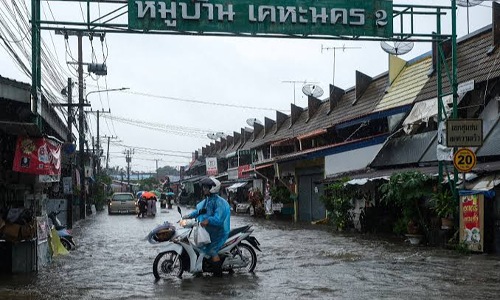
Heavy rains have triggered severe flooding across parts of Bangkok, Thailand, forcing nearly 4,900 residents to evacuate to shelters as floodwaters swept through roads and residential areas.
The flooding has disrupted movement across parts of the Thai capital, with motorists and pedestrians forced to navigate submerged roads and seek alternative routes.
SEE ALSO: NAFDAC Warns Nigerians As Fake Cowbell Milk Floods Market
According to the Bangkok Metropolitan Administration, about 52,000 households have been affected by the flooding, prompting authorities to declare a flood disaster and intensify emergency response efforts.
Emergency teams have been deployed to assist affected communities and move residents from vulnerable areas to safer locations as water levels rise.
Bangkok is accustomed to seasonal heavy rainfall, but intense downpours can overwhelm drainage systems, particularly in low-lying areas, resulting in widespread flooding and disruption.
Authorities are continuing to monitor affected locations while coordinating evacuations and other emergency measures.
For thousands of residents, the immediate priority remains securing safe shelter and protecting homes and livelihoods as authorities work to manage the situation and restore normal activities once the floodwaters recede.
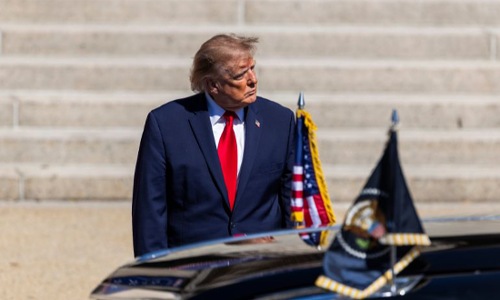
US President Donald Trump has explained his decision to reject Iran’s latest proposal to reopen the Strait of Hormuz, saying Tehran was seeking an agreement because it was losing revenue.
Speaking to reporters at the White House, Trump said Iran wanted to immediately reopen the strategically important waterway but argued that the proposal was not acceptable to his administration.
“They want to make a deal, and I think that’s fine. I like making a deal, too, but that deal would not be acceptable,” Trump said.
SEE ALSO: How the Strait of Hormuz Attack Could Trigger a Fresh Global Oil Shock
According to the US president, Iran’s push to reopen the strait was driven by the economic pressure it was facing.
“What they want to do is immediately open the Hormuz Strait. Do you know why? Because they are dying,” Trump said.
“You know why they’re dying? Because they have no money coming in, because they get their money from the Hormuz Strait.”
Trump also claimed that the US had established an unprecedented naval blockade against Iran, describing it as “a wall of steel.”
“So they outsmarted themselves. We put up the greatest blockade ever in military history. It’s a wall of steel,” he said.
“And guess what? They don’t have any money now because they wanted to close the strait.”
The Strait of Hormuz is a major global energy shipping route, and disruption to traffic through the waterway has significant implications for international oil markets and countries that depend on energy imports.
Trump’s remarks came amid continued tensions between Washington and Tehran over the reopening of the strategic waterway and negotiations involving Iran.






Delta Begins ₦5bn Empowerment Scheme for 100,000 Beneficiaries
Alausa Hails Dangote Foundation’s Plan to Give Four Million Students IPO Shares

APC Campaign Council Sets Inaugural Meeting for Tuesday Ahead of Kaduna Flag-Off

Renaissance Capital Sees Significant Upside in Dangote Refinery, Lifts Valuation by 33.4%

Dangote Refinery IPO Elicits Participation in 90 Countries Globally

Makinde Fires Back at Presidency, Insists on ₦9tn NLNG Dividend Shortfall

Trump’s Family Unveils New Cryptocurrency Platform

Senate Denies Receiving Petitions Against Tinubu’s Ambassadorial Nominees

Dangote Cement Lights Up Benue Host Communities With CSR Initiatives

Reps Recommend 3-year Jail Term For Aviation minister

Tems Sets New Record On Billboard Hot 100 Chart
