
NEWS
Off Season Elections: PDP, APC War Over Imo State Gets Messier

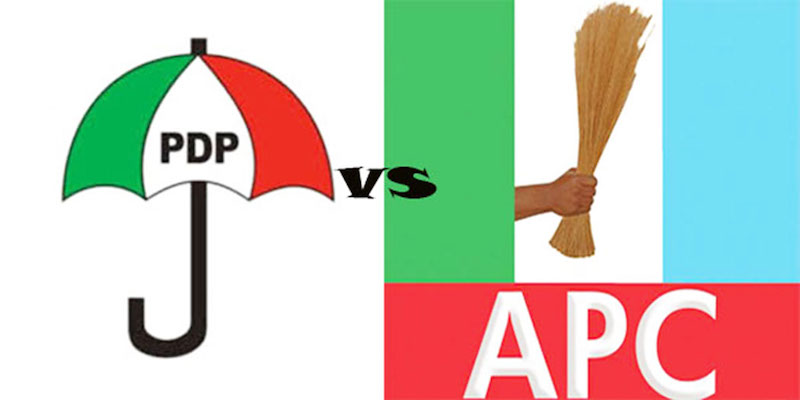
The war between the main opposition party, the Peoples Democratic Party (PDP) and the ruling All Progressives Congress (APC) on who wins the off season gubernatorial election in Imo State has gotten messier.
While voting is underway in Imo as well as Bayelsa and Kogi States for the people to speak with their votes over who would be their governor for the next four years, the situation in Imo has been remarkably tense.
The Saturday, November 11, 2023 in Imo State has been attracting global attention for all the wrong reasons.
Recall that the President of the Nigerian Labour Congress, Comrade Joe Ajaero, an indigene of Imo State, almost lost his life in events believed to closely connected with the desperation of a political party to win the election.
Operatives of the Nigerian Police Force (NPF) allegedly apprehended him and left him at the mercy of thugs who had a field day manhandling him.
The entire organised labour in Nigeria is still licking its wounds and strategising on how to take a pound of flesh over the incident.
In another curious incident, another main actor, the Labour Party (LP) had decried the desperate antics of the APC, feared to be conniving with the umpire to effect unwarranted last-minute changes on deployment of the Polling Unit Officers (PUO).
In the bid to drive their point home, the Spokesperson for the LP’s governorship candidate, Chibuikem Diala, opined that the INEC was doing the same thing throughout the state.
According to him, the LP campaign organisation stumbled on the startling reality that the actual PUOs trained by the INEC were dropped at the dying minute, with people who didn’t take part in the INEC’s training being deployed to conduct the election.
He said, “The Senator Athan Achonu Media Centre wishes to alert security agents and patriotic INEC staff, especially those sent from outside Owerri for this election, about plans already concluded to compromise the BVAs for use for today’s election by the RATECH team.
“A reliable intel from some LGAs in Owerri Federal Constituency has uncovered plans by the technical team in those LGAs discussing issuing wrong passwords to some of the ad hoc staff for this election.
“Specifically, this devious plan was being discussed at the Owerri Municipal and Owerri North Local Government Areas where the Head of the RATECH team has concluded plans to issue wrong passwords to PO, especially those posted to polling units with large voters. According to the source, the instruction is to ensure that some of the BVAS malfunction at the Polling Units.
“The purpose is to either generate a fake result or frustrate the voting process in specific areas where the riggers do not have a strong presence. This is shameful and devilish.
“All party agents in every booth and ward, as well as voters, should hold the ‘RATHEC Team responsible, not the POs, wherever BVAs password is wrong because it has been compromised. We also urge all POs to escalate this criminality wherever it is found.
“The agents and indeed all Imo Voters must resist this and insist that the proper thing is done.
“We vehemently condemn this evil plot and call on the INEC Commissioners we have been told were seconded to the state to ensure a free, fair, and smooth exercise to forestall this, as the opposition parties can never accept it.
“We request that the head of the RATECH team in Owerri Federal Constituency and indeed all other LGAs should be cautioned before they discredit a process that is meant to yield positive outcomes.
“We also charge security operatives to ensure that compromised INEC staff do not create a crisis during this electoral exercise.”
And as if that was not enough, the PDP has taken to its verified X handle to lament what is going on in Imo State in the name of conducing gubernatorial elections.
The PDP appear to have taken its fate into its hands by going public with the matter copying the APC and the INEC on its post on X.
The PDP, tweeted, “#ImoDecides2023:
“@OfficialAPCNg Members Cannot Serve as @inecnigeria Ad-Hoc Staff
“The Peoples Democratic Party (PDP) has busted plans by the All Progressives Congress (APC) to plant is members as ad-hoc staff to conduct election in Imo State.
“Of particular reference is the APC Woman Leader in Owerri Ward caught taking delivery of INEC materials.
“This is apparently part of the rigging plots designed by the compromised Imo REC, Prof. Sylvia Agu.
“The people of Imo State know such APC members and will not accept them as INEC officers.
“INEC should immediately withdraw such APC members and re-profile their staff to avert crisis.”







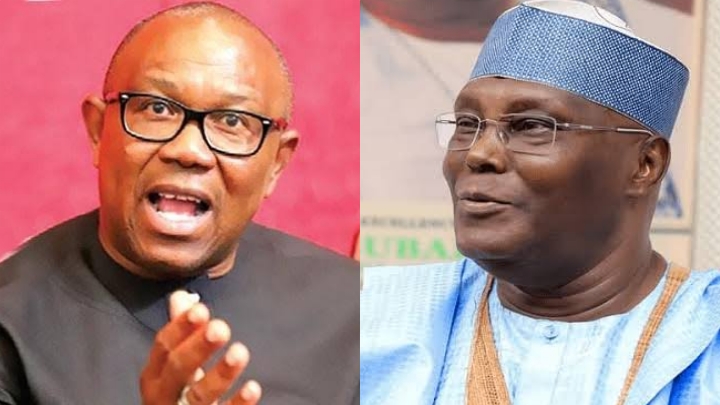
Former Vice President Atiku Abubakar has questioned President Bola Tinubu’s third consecutive absence from the United Nations General Assembly (UNGA), demanding an explanation for the president’s decision not to attend the global gathering.
Atiku made the remarks in a statement issued by his Senior Special Assistant on Public Communication, Phrank Shaibu, as Vice President Kashim Shettima leads Nigeria’s delegation to the 81st UNGA in New York.
According to Atiku, Tinubu was absent from the 79th UNGA in 2024 and the 80th session in 2025, and has again stayed away from the 81st session in 2026.
ALSO READ: ‘Calling Tinubu Bola, Giving Him Orders Is Insolence’ — Sunday Dare Blasts Atiku
The former vice president said the repeated absences could no longer be regarded as a coincidence or routine delegation, arguing that they required an explanation.
Atiku also questioned whether Tinubu’s documented history with United States law-enforcement agencies had become a burden on Nigeria’s foreign relations.
“The United Nations General Assembly is one of the world’s most important diplomatic gatherings. It brings together the representatives of the UN’s 193 member states and provides a unique platform for presidents and prime ministers to defend their countries’ interests, negotiate partnerships and shape global decisions on trade, security and development,” Atiku said.
He acknowledged that Shettima could represent Nigeria at the gathering but maintained that the vice president’s representation could not permanently substitute for the president’s personal authority and visibility.
“Vice President Shettima may represent Nigeria capably, but representation by delegation cannot permanently substitute for the personal authority, visibility and responsibility of the president,” he said.
“Tinubu cannot continue to treat Nigeria’s seat at the world’s biggest diplomatic table as though it were an inconvenient appointment that can be endlessly outsourced.”
Atiku further argued that UNGA was not simply a ceremonial event, noting that important bilateral meetings, investment discussions, trade negotiations and development-financing engagements take place on the sidelines of the gathering.
“Presidential absence on the global stage has consequences. UNGA is not merely a ceremonial gathering or an annual photo opportunity,” he said.
“Its side-lines are where leaders hold decisive bilateral meetings, court investors, negotiate trade partnerships, mobilise development finance and make the case for their countries.”
The former vice president said Nigeria could lose investment and other economic opportunities as a result of the president’s continued absence.
“When a president makes himself absent from that stage for three consecutive years, his country loses opportunities. Investment does not follow silence. International capital does not pursue a country whose leader repeatedly abandons the room in which consequential economic relationships are being built,” Atiku said.
He linked the issue to investment, employment and capital inflows, arguing that reduced investment could increase pressure on the naira and contribute to higher costs for Nigerians.
“The cost is eventually transferred to ordinary citizens: fewer investments mean fewer businesses and fewer jobs. Reduced capital inflows place additional pressure on the local currency,” he said.
“A weaker naira raises the cost of imports, production, transportation and food. These are among the economic pressures now punishing Nigerian families through the worst cost-of-living crisis in living memory.”
Atiku concluded by saying that while the president could regard attendance at UNGA as a matter of personal prerogative, Nigeria would ultimately bear the consequences of the decision.
“Tinubu may consider attending UNGA a matter of personal prerogative, but the economic and diplomatic consequences of his absence are being paid by Nigerians. A President may surrender his seat, but a nation cannot escape the bill,” he said.
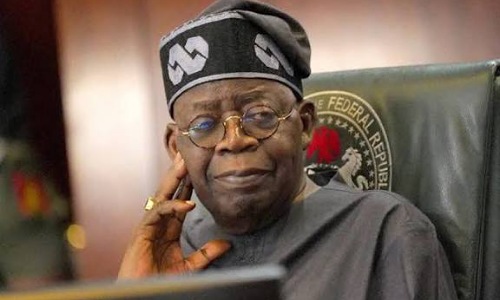
President Bola Ahmed Tinubu has reacted to the death of former Kogi State Governor, Alhaji Ibrahim Idris, who died on Sunday at the age of 77.
Tinubu expressed deep sorrow over the former governor’s death and extended his heartfelt condolences to the Idris family, the government and people of Kogi State, as well as his friends, associates and political colleagues.
The President’s reaction was contained in a statement issued on Monday, September 21, 2026, by his Special Adviser on Information and Strategy, Bayo Onanuga.
SEE MORE: Tinubu Sets October 1 Deadline for Lower Transport Fares Nationwide
Tinubu described Idris’ death as a significant loss to Kogi State and Nigeria, noting that the former governor devoted a substantial part of his life to public service and the development of the state.
Ibrahim Idris served as Governor of Kogi State from 2003 to 2011.
According to the President, Idris’ administration recorded interventions in infrastructure, education, healthcare and other critical sectors.
Tinubu also acknowledged the late former governor’s contributions to Nigeria’s democratic development and his many years of engagement in public affairs.
The President said: “Alhaji Ibrahim Idris was a committed public servant whose years in office formed an important chapter in the political and developmental history of Kogi State.
“His passing is a painful loss to his family, Kogi State and Nigeria. At this difficult moment, we must remember and honour his contributions to the growth of his state and our nation.
“I extend my deepest condolences to his family and the people of Kogi State. May Almighty Allah forgive his shortcomings, accept his good deeds and grant him Aljannah Firdaus.”
Tinubu further prayed that Almighty Allah would grant the deceased’s family the strength and fortitude to bear the loss.

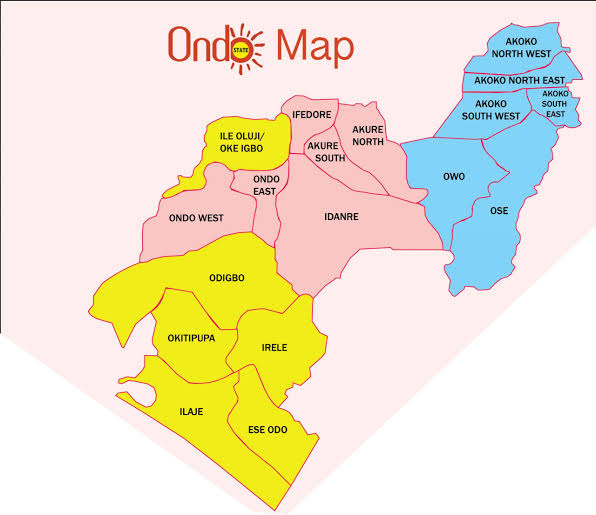
In the bid to promote wealth creation and expose youths to investment opportunities, the Ondo State Government has unveiled plans to buy shares for 500 young entrepreneurs in the state in the Dangote Group.
Ondo State Governor, Lucky Aiyedatiwa, made the disclosure on Saturday at the 2026 ONDEA Entrepreneurs Summit in Akure, with the theme: “Positioning entrepreneurs for emerging opportunities”, where he also launched the Lucky Light Initiative, a programme designed to provide reliable solar power support for 1,000 small businesses across the state’s 18 local government areas.
READ ALSO: NMDPRA Points to PIA for Price Control Lapses
The governor also unveiled an N80 million grant package for 20 entrepreneurs under the Ondo State Entrepreneurship Agency (ONDEA) My IDEA initiative, with each beneficiary receiving N4 million alongside business support, mentorship and international business exposure opportunities.
Aiyedatiwa further promised to purchase shares in the Dangote Group of Companies for 500 young entrepreneurs in Ondo State as part of efforts to expose them to investment opportunities and encourage wealth creation.
He said the initiatives form part of his administration’s vision to transform Ondo from a civil service-driven economy into an entrepreneurship and innovation hub.
According to him, the state is deliberately building an entrepreneurial ecosystem that connects ideas to skills, skills to businesses, businesses to finance and businesses to markets.
“Our fundamental objective is to move from simply producing raw materials to processing, packaging, branding and exporting value-added products. We must build enterprise not only for markets within Ondo State, but other parts of Nigeria and ultimately to the world,” Aiyedatiwa stated.
He said ONDEA has become a strategic platform for opening opportunities for entrepreneurs through business formalisation, training, equipment support and enterprise development.
The governor noted that the number of beneficiaries under the ONDEA My IDEA programme was increased from 10 to 20 to accommodate more innovative entrepreneurs.
On the Lucky Light Initiative, Aiyedatiwa said the programme would provide clean and affordable energy to small businesses to enhance productivity and reduce operating costs.
“Lucky Light is an initiative designed specifically to support 1,000 small businesses with reliable, clean and affordable power. It is not a household electrification programme; it is an economic intervention designed to power businesses across all 18 Local Government Areas of Ondo State,” he said.
While speaking during the summit, the Minister of Finance and Coordinating Minister of the Economy, Mr Taiwo Oyedele, represented by his Special Adviser, Toba Oyedele, said entrepreneurs would be central to the Federal Government’s ambition of building a $1 trillion economy by 2030.
He urged entrepreneurs to take advantage of emerging opportunities created by economic reforms, innovation and investment initiatives.
Speaking on the impact of the summit, the Special Adviser to the Governor on Entrepreneurship, Innovation and Investment, Dr Summy Smart Francis, said the event demonstrated the state’s commitment to entrepreneurship and innovation.
“We received over 2,703 applications. We have three levels of screenings and they get to the final judges where we identify the 20 ideas that have the strategy to be able to add economic impact to the state. Each of them was given N4 million and they are entitled to a business trip outside the country,” Francis said.
Also speaking, media entrepreneur and former Managing Director of TVC Entertainment, Morayo Afolabi-Brown, called for increased investment in the Southwest, saying the region possesses vast opportunities beyond Lagos and should attract greater economic attention.






‘Obi Has Nowhere to Hide’ — APC Campaign Council Tackles Peter Obi Over Anambra Record

‘A Nation Cannot Escape the Bill’ — Atiku Questions Tinubu’s Third UNGA Absence

Tinubu Reacts as Former Kogi Governor Ibrahim Idris Dies at 77

Why Ondo is Buying Dangote Shares for 500 Citizens

NMDPRA Points to PIA for Price Control Lapses

Indonesia’s Pertamina Leads Foreign Interest in Nigeria’s 2026 Oil Licensing Round

Trump’s Family Unveils New Cryptocurrency Platform

Senate Denies Receiving Petitions Against Tinubu’s Ambassadorial Nominees

Dangote Cement Lights Up Benue Host Communities With CSR Initiatives

Reps Recommend 3-year Jail Term For Aviation minister

Tems Sets New Record On Billboard Hot 100 Chart
