
NEWS
Ojulari Drives Nigeria’s Crude Oil Output to 5-Year High


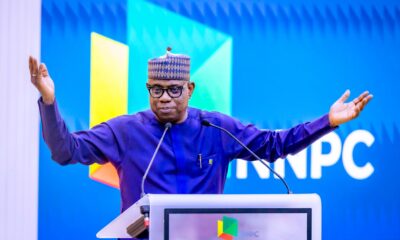
The leadership of Bayo Ojulari, as the Group Chief Executive Officer at the Nigerian National Petroleum Company Limited (NNPC Ltd) has resulted in a mega increase in crude oil production to 1.71 million barrels per day, the highest level recorded in five years.
This was detailed in its one-year performance report under Ojulari, made public at the official X handle of the GCEO on Sunday.
He described the report as a demonstration of accountability and measurable progress across the oil giant’s operations.
Providing a breakdown of achievements between April 2025 and April 2026, the company said its upstream subsidiary, NNPC Exploration and Production Limited, also recorded a milestone, reaching an all-time peak production of 365,000 barrels per day in December 2025.
It read, “Oil Production: Increased crude oil production to 1.71 million bpd (highest in five years). NEPL achieved an all-time peak production of 365,000 bpd in December 2025.
ALSO READ: Dangote Leads East Africa’s Industrial Revolution
PPLS 2000, 2001 PSC: Executed a model PSC for PPL 2000 & 2001 successfully. The first PSC to include comprehensive terms designed to facilitate the development of deepwater non-associated gas resources.”
The report further highlighted the execution of a new Production Sharing Contract model for oil blocks PPL 2000 and 2001, noting that the framework includes comprehensive terms to unlock deepwater non-associated gas resources, an area long considered underdeveloped in Nigeria’s energy mix.
It also disclosed that it supported the resolution of the long-standing dispute surrounding the former OPL 245 (Zabazaba/Etan) asset, which has now been converted into new Production Sharing Contracts covering PMLS 102 and 103, as well as PPLs 2011 and 2012.
In the gas segment, the company reported major infrastructure milestones, including the completion of the River Niger crossing of the Ajaokuta-Kaduna-Kano pipeline in July 2025, alongside the welding of the entire pipeline network.
It also confirmed the commissioning of the Assa North-Ohaji South processing plant and its connection to the Obiafu-Obrikom-Oben pipeline, a critical link in Nigeria’s domestic gas supply chain.
According to the report, gas supply rose to 7.5 billion standard cubic feet per day in 2025, supported by multiple commercial agreements. These include a Network Exit Agreement between NGIC and Dangote Fertiliser Limited, as well as supply deals involving NGML, Dangote Cement, and the Dangote Refinery.
The company added that it launched a Gas Master Plan in January 2026 and signed additional supply agreements, including one with CNG Ibese, while continuing optimisation work on the Soku gas pipeline infrastructure.
On refining, NNPC Ltd said it had introduced an Incorporated Joint Venture model aimed at repositioning its refineries to operate as commercially viable and self-financing entities.
It also confirmed the consolidation of its 7.25 percent equity stake in the Dangote Refinery, describing the move as critical to safeguarding national energy interests.
The company reiterated its continued crude oil supply to the refinery under the “crude-for-naira” initiative, a policy designed to reduce foreign exchange pressure and stabilise domestic fuel supply.
“Sustained support for Dangote Refinery through crude oil supply under the ‘crude-for-naira’ programme,” it added.
The NNPC Ltd said it strengthened its international footprint through strategic shipping partnerships with global firms, including Stena Bulk and Sonangol, while also launching a new crude grade, Cawthorne. It added that its Oleum lubricant brand had been expanded into the West African subregion.
In terms of project development, the company disclosed that it secured presidential approval for incentives aimed at unlocking the Final Investment Decision on the Bonga South West Aparo project under the OML 118 Production Sharing Contract.
Additionally, it signed a tripartite Memorandum of Understanding with China Gas Holding Limited and Peiyang Chemical Singapore PTE Ltd to accelerate gas commercialisation.
A major highlight of the report is the resumption of full monthly remittances to the Federation Account Allocation Committee since July 2025.
The NNPC Ltd added that it had also reintroduced monthly performance reporting and held its first-ever earnings call in November 2025, moves seen as part of efforts to improve transparency and investor confidence.
“Transparency: Reinstated monthly performance reporting. Held NNPC Limited’s first earnings call in November 2025. FAAC Remittances: Resumed full monthly payment into the Federation Account and continued consistent payment since July 2025.”
On human capital development, the company said it onboarded 1,000 new employees, dubbed “The Tigers,” and launched a new performance management system to drive efficiency and accountability. It also inaugurated the Women in NNPC programme to enhance gender inclusion and leadership opportunities.
The firm noted that it had embarked on a major internal restructuring under its “Fit4Future” initiative, aimed at transforming it into a globally competitive, profit-driven energy company.
Commenting on the report, Ojulari said the company’s performance reflects deliberate efforts to reposition NNPC Ltd as a transparent and results-driven organisation.
He stated, “Over the past year, we have delivered steady progress against our mandate, with measurable results across production, financial performance, infrastructure, and organisational culture.
“But this is more than a report on targets met. It is a statement of accountability to every Nigerian. At NNPC Limited, we are committed to leading with purpose, putting our best foot forward to build a more prosperous and sustainable energy future for our country.”
The NNPC Ltd transitioned into a fully commercial entity under the Petroleum Industry Act, with expectations to operate profitably while maintaining transparency and contributing to national revenue.
However, the company has faced scrutiny in recent years over oil theft, declining production, and delays in remittances to the Federation Account.
The latest report signals a strategic shift, particularly with the recovery in production levels, renewed focus on gas as a transition fuel, and reforms in refinery operations.
The sustained implementation of the “crude-for-naira” policy and deeper collaboration with private sector players such as the Dangote Group are also seen as critical to stabilising Nigeria’s downstream sector and reducing dependence on fuel imports.
Ojulari was appointed on April 2, 2025, following the dissolution of the NNPC board and the removal of his predecessor, Mele Kyari, in what the presidency described as a strategic overhaul aimed at repositioning the national oil company.
The decision was part of a broader effort to improve operational efficiency, boost crude oil production, and restore investor confidence in the sector.
Ojulari, a seasoned petroleum engineer, brought decades of industry experience into the role, having previously served as Managing Director of Shell Nigeria Exploration and Production Company and later as Chief Operating Officer at Renaissance Africa Energy.







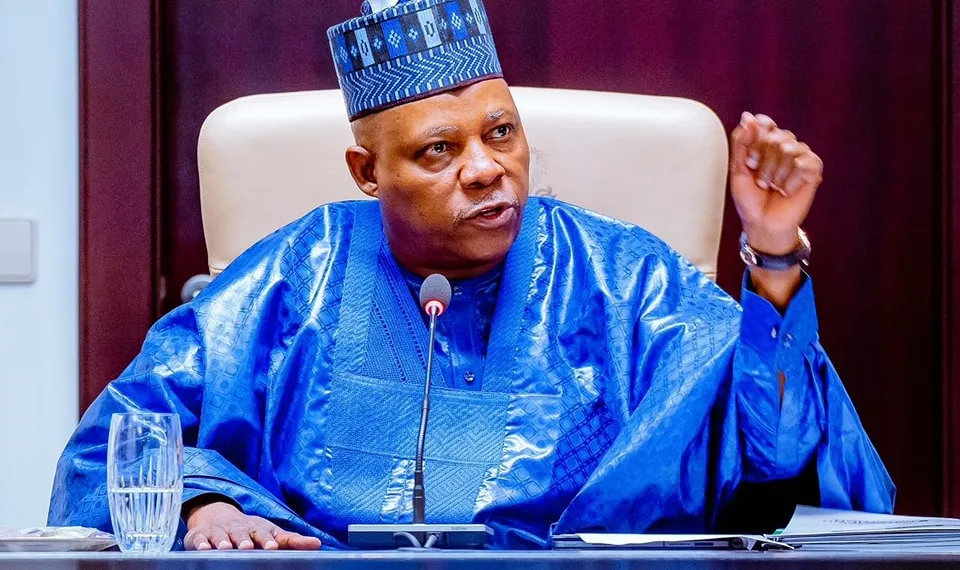
Vice President Kashim Shettima has urged Nigerians to celebrate President Bola Tinubu, saying his leadership saved the country from a potential implosion.
Shettima said Nigeria’s economy had been teetering on the edge of collapse before Tinubu’s intervention, adding that the country could have faced a different situation.
“The economy was teetering on the edge of collapse, we were on a cliff edge,” the Vice President said.
ALSO READ: Subsidy Removal, FX Reforms Driving Fresh Oil Sector Investment – Shettima
“So he literally saved the nation from an implosion. That could have been the scenario. So, instead of demonizing him, Nigerians ought to celebrate this poor man.”
Shettima also called for a return to the drawing board, expressing confidence in the leadership’s commitment and the prospects for the 2027 elections.
“I believe on the bottom of my heart that with this presentation I have seen, and with the commitment of our leadership, by the grace of God, we are going to win,” he said.
Speaking about the 2027 elections, the Vice President reminded his audience that social media platforms should not be mistaken for actual polling stations.
“There are no polling stations on Facebook or Instagram,” he said.
Shettima also expressed gratitude for the efforts made towards promoting the cause of the 2027 elections.
Following observed mis-steps, the Federal Government of Nigeria has withdrawn the eight-count criminal charge brought against the alleged fake Director General (DG) of the Presidential Foreign Intervention Promotion Council (PFIPC), Adeniyi Adeyemi.
Biztellers reports that the matter, in accordance with the counsel of the Attorney General of the Federation (AGF) and Minister of Justice, Prince Lateef Olasunkanmi Fagbemi, (SAN), the matter will be filed at the High Court of the Federal Capital Territory (FCT), instead of the Federal High Court (FHC).
Consequently, upon an unopposed application for termination by the prosecution counsel and Director of the Public Prosecution of the Federation (DPPF), Rotimi Oyedepo (SAN), on Monday, Justice Mohammed Umar of a Federal High Court, Abuja on Monday, struck out the matter.
READ ALSO: Shell Identifies Keys to Nigeria’s Energy Future
In a motion for the termination of the charges, Oyedepo informed the court that the Attorney General of the Federation (AGF) and Minister of Justice has carried out a review of the case file of Adeyemi and the charge filed by the Inspector General of Police (IGP) and found some loopholes.
The DPPF added that the documents allegedly forged by Adeyemi during his operations of the fake agency are those that can be prosecuted by the High Court of the Federal Capital Territory (FCT).
He also informed the court that a new charge has been filed at the High Court of the FCT and that Adeyemi would be expeditiously arraigned afresh.
He therefore urged the judge to strike out the charge as required by law.
Following no objections from Ibrahim Angulu (SAN), who stood in for Adeyemi, Justice Umar subsequently terminated the charge.
Adeniyi, 38, was being tried alongside two others whose whereabouts are unknown, on charges bordering on conspiracy and forgery.
The two others said to be at large were identified as Femi (surname unknown) and Anu (surname unknown).
The charge marked: FHC/ABJ/CR/25/2025, was entered against the defendant by the DPPF.
To secure a bright energy for her teeming population, Nigeria must sustain the momentum of reform, accelerate investment, and deepen partnerships.
This view was expressed by Managing Director, Shell Nigeria Exploration and Production Company of Nigeria Limited (SNEPCo) Ronald Adams in Lagos at the weekend.
Delivering a keynote address at the Africa Energy Conference (AEC) of the Lagos Business School (LBS), Adams called for regulatory certainty through efficient execution of reforms, sustained investment appeal to enable projects to move more swiftly from opportunity to production and partnership by operators, regulators, NNPC Limited and communities to unlock the full value of Nigeria’s resources.
Adams cited Nigeria’s huge oil and gas resources as an advantage but pointed out: “Resources alone do not guarantee prosperity. Prosperity comes when resources are matched with investment, technology, sound policy and disciplined execution. Success will be determined not by the size of our resources, but by our ability to convert them into investment and economic growth.”
Adams pledged the support of Shell towards a bright energy future of Nigerians. He said: “For more than six decades, Shell has been part of Nigeria’s energy journey. Together with our partners, we have helped develop major energy infrastructure, supported Nigerian businesses, invested in talent, and contributed to economic development. Bonga remains a powerful example of what technology, partnership and Nigerian capability can achieve in deepwater operations. Today, that story continues through Bonga North.”
READ ALSO: ADF Targets 5 Million Students, 2 Million Vulnerable Women
Issuing a clarion call for action by all stakeholders, he added: “The world is not standing still. Capital is moving, technology is advancing and competition is intensifying. The countries that attract investment tomorrow are those that improve competitiveness today. Nigeria has begun that journey. Our task is to sustain the momentum and translate reform into projects, projects into growth, and growth into shared prosperity.”
The conference, the 4th in the series had at its theme; “Securing Nigeria’s Energy Future: Policy Reform, Capital Mobilisation, and Pathways to a Sustainable Power and Energy Market” and was attended by top government officials, industry captains, energy professionals, and students.
Lagos State Deputy Governor Obafemi Hamzat represented Lagos State Governor Babajide Sanwo-Olu as the guest of honour. SNEPCo was a principal sponsor of the Africa Energy Conference (AEC) and mounted a well-received exhibition on its deepwater operations and social investments across Nigeria.






State Govs, Wike Endorse One-Party State, Join APC Campaign Council

2027: ‘Tinubu Has Done Well’ – Wike Tells Opposition to Speak the Truth

‘Celebrate This Poor Man’ – Shettima Defends Tinubu Over Economic Crisis
FG Withdraws Charges Against ‘Fake Agency’ DG, Adeniyi Adeyemi

Shell Identifies Keys to Nigeria’s Energy Future

Nigeria Records Biggest Rise in Multidimensional Poverty Among Five Countries – UN

Trump’s Family Unveils New Cryptocurrency Platform

Senate Denies Receiving Petitions Against Tinubu’s Ambassadorial Nominees

Dangote Cement Lights Up Benue Host Communities With CSR Initiatives

Reps Recommend 3-year Jail Term For Aviation minister

Tems Sets New Record On Billboard Hot 100 Chart
