
International News
Opposition Leaders Shot Dead In Mozambique As Protests Loom Over Election Dispute

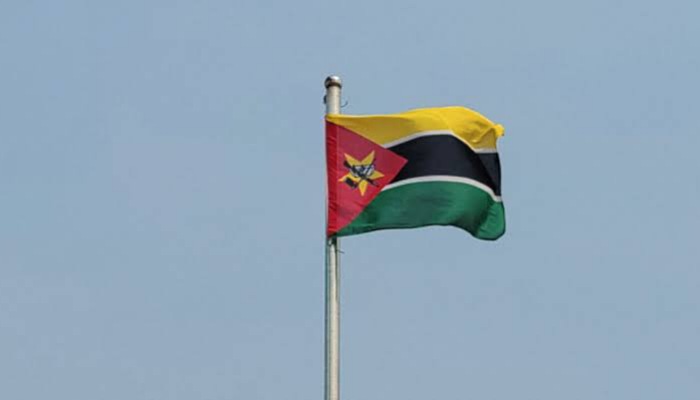
In a shocking act of violence, gunmen fatally shot a lawyer and a party official from the opposition Podemos Party, on Saturday, in Maputo, exacerbating the already tense political climate as protests loom over disputed election results.
Elvino Dias, the party’s lawyer, and Paulo Guambe, a party representative, were killed when assailants opened fire on their vehicle in the Bairro Da Coop neighborhood, according to human rights organizations.
Read Also: Drone Attack Targets Israeli PM’s Home
The attack comes just days ahead of a nationwide strike called by Podemos, led by presidential candidate Venancio Mondlane, who has vehemently rejected provisional election results that indicate a likely victory for Frelimo, the ruling party that has held power for nearly 50 years.
Adriano Nuvunga, director of the Mozambique Center for Democracy and Human Rights (CDD), described the incident as a “cold-blooded murder,” stating, “The indications are that around 10 to 15 bullets were shot, and they died instantly.”
Human Rights Watch confirmed the incident, highlighting the alarming trend of violence against opposition members in Mozambique.
As of now, Frelimo is reported to be leading in all 11 provinces in the Oct. 9 election, with its candidate Daniel Chapo poised for victory.
However, the credibility of the election has been challenged by Western observers who have cited numerous irregularities, including vote buying, intimidation, and inflated voter rolls in areas dominated by Frelimo.
These issues have marred the democratic process in Mozambique since the party first adopted democratic reforms in 1994 after two decades of single-party rule.
The full results of the election are expected to be released on Oct. 24, but the political atmosphere remains fraught with tension as many citizens fear that Monday’s protests could turn violent.
In the past, Mozambique’s security forces have been known to use excessive force against political demonstrators, as seen after last year’s local elections.
Rights groups are calling for accountability and transparency in the electoral process, urging the government to ensure the safety of all political actors and the right to peaceful assembly.
As the nation braces for potential unrest, the situation remains critical, with citizens anxiously awaiting the outcome of the electoral controversy.







Federal agents raided the Washington, D.C., home of Democratic Congresswoman Ilhan Omar early Monday morning as part of an ongoing federal criminal investigation, the United States Department of Justice (DOJ) has confirmed.
Homeland Security Investigations agents arrived at the Minnesota congresswoman’s residence at about 6:00 a.m. Eastern Time, according to a report by Fox News.
SEE MORE: Trump Sparks Outrage With Shock Proposal to Rename New Mexico
The report said both the Department of Homeland Security (DHS) and the DOJ are involved in the investigation.
A DOJ spokesperson confirmed the operation, stating: “Today in the Washington, D.C. area, Homeland Security Investigations executed a judicially authorized search warrant secured by the Department of Justice.”
The spokesperson added: “This enforcement action is part of an ongoing federal criminal investigation.”
Details later……….
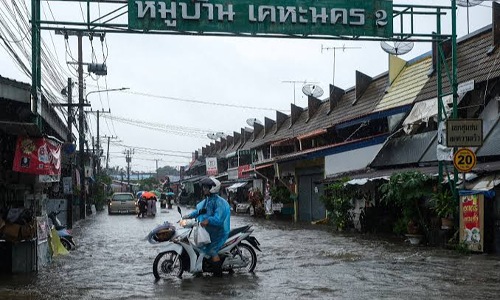
Heavy rains have triggered severe flooding across parts of Bangkok, Thailand, forcing nearly 4,900 residents to evacuate to shelters as floodwaters swept through roads and residential areas.
The flooding has disrupted movement across parts of the Thai capital, with motorists and pedestrians forced to navigate submerged roads and seek alternative routes.
SEE ALSO: NAFDAC Warns Nigerians As Fake Cowbell Milk Floods Market
According to the Bangkok Metropolitan Administration, about 52,000 households have been affected by the flooding, prompting authorities to declare a flood disaster and intensify emergency response efforts.
Emergency teams have been deployed to assist affected communities and move residents from vulnerable areas to safer locations as water levels rise.
Bangkok is accustomed to seasonal heavy rainfall, but intense downpours can overwhelm drainage systems, particularly in low-lying areas, resulting in widespread flooding and disruption.
Authorities are continuing to monitor affected locations while coordinating evacuations and other emergency measures.
For thousands of residents, the immediate priority remains securing safe shelter and protecting homes and livelihoods as authorities work to manage the situation and restore normal activities once the floodwaters recede.
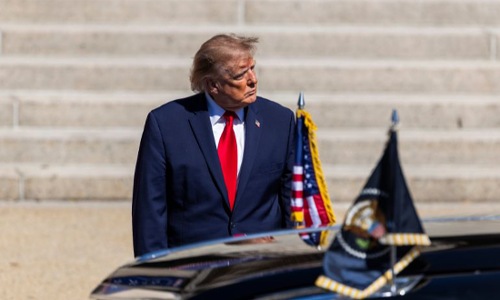
US President Donald Trump has explained his decision to reject Iran’s latest proposal to reopen the Strait of Hormuz, saying Tehran was seeking an agreement because it was losing revenue.
Speaking to reporters at the White House, Trump said Iran wanted to immediately reopen the strategically important waterway but argued that the proposal was not acceptable to his administration.
“They want to make a deal, and I think that’s fine. I like making a deal, too, but that deal would not be acceptable,” Trump said.
SEE ALSO: How the Strait of Hormuz Attack Could Trigger a Fresh Global Oil Shock
According to the US president, Iran’s push to reopen the strait was driven by the economic pressure it was facing.
“What they want to do is immediately open the Hormuz Strait. Do you know why? Because they are dying,” Trump said.
“You know why they’re dying? Because they have no money coming in, because they get their money from the Hormuz Strait.”
Trump also claimed that the US had established an unprecedented naval blockade against Iran, describing it as “a wall of steel.”
“So they outsmarted themselves. We put up the greatest blockade ever in military history. It’s a wall of steel,” he said.
“And guess what? They don’t have any money now because they wanted to close the strait.”
The Strait of Hormuz is a major global energy shipping route, and disruption to traffic through the waterway has significant implications for international oil markets and countries that depend on energy imports.
Trump’s remarks came amid continued tensions between Washington and Tehran over the reopening of the strategic waterway and negotiations involving Iran.






JUST IN: Ex-Delta Governor Emmanuel Uduaghan Is Dead

Delta Begins ₦5bn Empowerment Scheme for 100,000 Beneficiaries
Alausa Hails Dangote Foundation’s Plan to Give Four Million Students IPO Shares

APC Campaign Council Sets Inaugural Meeting for Tuesday Ahead of Kaduna Flag-Off

Renaissance Capital Sees Significant Upside in Dangote Refinery, Lifts Valuation by 33.4%

Dangote Refinery IPO Elicits Participation in 90 Countries Globally

Trump’s Family Unveils New Cryptocurrency Platform

Senate Denies Receiving Petitions Against Tinubu’s Ambassadorial Nominees

Dangote Cement Lights Up Benue Host Communities With CSR Initiatives

Reps Recommend 3-year Jail Term For Aviation minister

Tems Sets New Record On Billboard Hot 100 Chart

729984 137140Somebody necessarily support to make seriously articles I may state. That could be the really very first time I frequented your internet page and to this point? I surprised with the research you made to make this actual put up amazing. Great task! 999932
301681 664337I really like your wp format, exactly where did you get a hold of it? 551244